
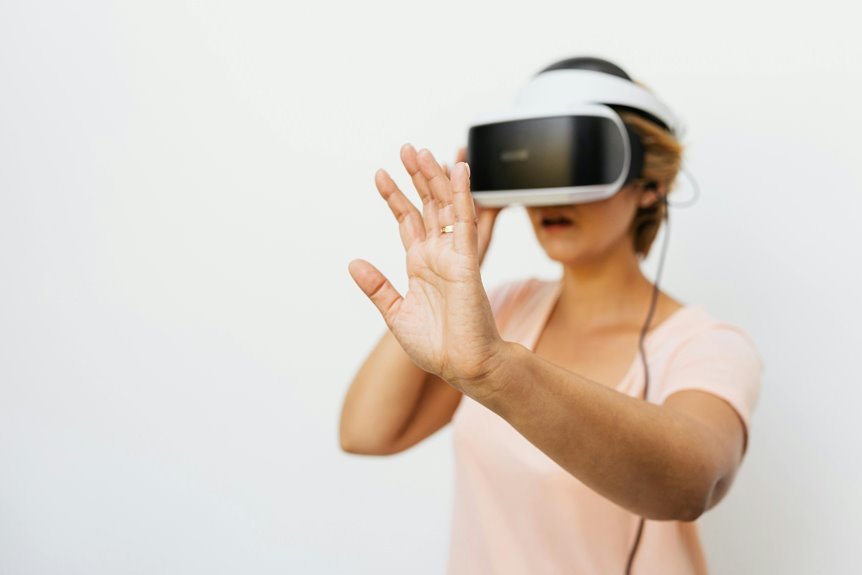

VR motion sickness happens because your eyes and inner ear don’t agree on what your body is doing. The easiest ways to cut the discomfort are a better headset fit, the right IPD setting, gentler games, and short play sessions. Most people feel better with a few small adjustments and a slower start. A little setup work can make VR feel much smoother and far more comfortable.
How to Reduce VR Motion Sickness
Should VR makes your stomach flip or your balance feel off, you can lower those symptoms by fixing the headset setup initial and easing your body into the experience.
Begin via adjusting the IPD so the lenses match your eyes. Then choose a headset with low latency, a high refresh rate, and 6DoF tracking, because smoother motion helps your brain trust what it sees.
Next, build habits that help you stay comfortable and confident. Keep sessions short, take pauses early, and try gentle games before intense ones. Good posture, steady room lighting, and pre play hydration also make a real difference.
You can add VR comfort accessories like counterweights, face pads, or a fan for extra support. Should you move in place while playing, your body feels more included, and that sense of harmony matters.
What VR Motion Sickness Feels Like
You could initially notice nausea, dizziness, eye strain, or a cold sweat, and your body can feel off balance even after you take the headset off.
At the same time, your mind can feel foggy, disoriented, or unusually tired because what you see doesn’t match what your body feels.
Whenever that happens, you’re not imagining it, and being aware of these physical and sensory signs can help you spot VR motion sickness at an initial stage.
Common Physical Symptoms
For many people, VR motion sickness starts as a strange mix of nausea, dizziness, and eye strain that can hit within minutes and make the whole experience feel unsettling instead of fun.
You may notice early nausea indicators like a queasy stomach, sudden warmth, or sweating. As that builds, your head can feel heavy, and headache patterns may show up as pressure behind your eyes or across your forehead. You may also feel lightheaded, unsteady, or briefly lose balance when you take the headset off.
Some people deal with blurred vision, tired eyes, or a need to sit down right away. If this happens to you, you’re not odd or alone. Your body is reacting to a real physical mismatch, and those symptoms can linger for a while after you stop playing too.
Mental And Sensory Effects
Disorientation often hits before you can even name it, and that’s what makes VR motion sickness feel so unsettling on a mental and sensory level. Your brain tries to trust what your eyes see, but your body disagrees, so you feel detached, foggy, and oddly unsteady.
As that mismatch builds, you may struggle to focus, reason clearly, or feel fully present in the room around you.
That mental haze can feel like cognitive overload, especially while bright visuals, fast motion, and delayed tracking all compete for your attention.
At the same time, your senses keep searching for balance through sensory adaptation, but that process can leave you feeling off, anxious, or drained.
Should this happen, you’re not weak or alone. Many people feel this strange split between mind and body, and it can shake your confidence fast.
Why VR Motion Sickness Happens
Your brain gets mixed signals in VR because your eyes say you’re moving while your body says you’re still.
Then, whenever the headset lags or drops frames, those delayed visuals make that confusion worse and can quickly turn into nausea or dizziness.
On top of that, strong visual motion cues like fast turns or rushing scenes can push your senses even further out of sync.
Sensory Mismatch Causes
Whenever you put on a VR headset, your eyes could tell your brain that you’re moving fast, turning, or falling, even though your body stays still. That split creates vestibular conflict. Your inner ear reports calm, while vision signals action. Then a proprioceptive mismatch joins in, because your muscles and joints say, “We’re still here.” You’re not weak or alone. Your brain is trying to protect you.
| Signal source | What your brain hears |
|---|---|
| Eyes | “We’re moving now” |
| Inner ear | “No movement here” |
| Muscles | “Body is standing still” |
| Joints | “Position hasn’t changed” |
If those messages clash, your nervous system struggles to build one clear story. As a result, you could feel dizzy, uneasy, sweaty, or disconnected from the experience and from the group around you.
Latency And Frame Drops
Because VR has to react to each head turn almost instantly, even a tiny delay can make your brain lose trust in what it sees. When latency rises, the image updates a split second late, and you can feel off fast. You might notice dizziness, eye strain, or that uneasy, floaty feeling nobody wants.
Frame drops add another problem. Instead of smooth motion, you get little stutters that break frame pacing consistency. That choppy rhythm makes the world feel less solid, so your body stops feeling fully at ease. Good render pipeline stability matters here, too, because unstable performance can turn a fun session into a rough one. Should you’ve ever felt sick in a cheap or poorly tuned headset, you’re not imagining it. Your system needs steady timing so you can stay comfortable and connected.
Visual Motion Cues
Even though the headset runs smoothly, visual motion cues can still make you feel sick whenever what you see says “you’re moving” but your body says “you’re standing still.”
In VR, your eyes can catch speed, turns, drops, or swaying scenes, while your inner ear detects little or no real motion. That mismatch can make you feel off fast.
For example, optic flow cues tell your brain that you’re rushing forward as walls, floors, and objects slide past. At the same time, peripheral motion cues can amplify that feeling because your side vision is very sensitive to movement.
You’re not doing anything wrong though this hits you. It’s a common response, especially in intense games or ride-like scenes. Your brain is trying to protect you, even though it feels unfair wherever everyone else seems fine.
Common VR Motion Sickness Triggers
Although VR can feel thrilling, a few common triggers can push your brain into conflict and make you feel sick fast. You’re not alone whenever it happens. headset fit issues can press your face, blur the image, and throw off your focus.
A poor room lighting setup can also make tracking less stable, which adds to that uneasy feeling.
Beyond comfort, display problems often spark symptoms. Whenever your headset has high latency, a low refresh rate, or weak tracking, what you see won’t match what your body feels.
Fast games, roller-coaster scenes, and heavy visual effects can overload your senses too. Incorrect IPD, low resolution, and limited movement tracking make your eyes work harder and raise disorientation.
At the time your inner ear says still but your eyes say moving, your whole system protests, and that’s completely normal.
Start With Short VR Sessions
Usually, the best way to ease into VR is to keep your initial sessions short, since longer exposure gives symptoms more time to build. When you give yourself room to adapt, you help your brain settle into the experience without feeling pushed. That makes session pacing and break scheduling feel less like rules and more like smart habits your whole VR crowd can relate to.
| If you feel | What to do |
|---|---|
| Fine after 5 minutes | Stop at 10 |
| Slightly warm or tired | Rest for 15 |
| Dizzy or uneasy | End play now |
| Great the next day | Add 5 minutes |
You don’t need to prove anything by staying in longer. Short sessions help you build confidence, stay included, and enjoy VR with everyone else without your body tapping out early.
Adjust Your Headset for Comfort
A few small headset tweaks can make a big difference, because comfort settings directly affect how your eyes and brain handle VR. Start with careful headset fit adjustments, so the display sits level and clear instead of sliding or pinching. Whenever the image looks blurry, your eyes work harder, and that can leave you feeling off.
Next, check strap pressure balance. You want the headset snug, not tight, with weight shared across your forehead and the back of your head. That helps you feel supported, not squeezed.
Then line up the lenses with your eyes, including your IPD setting, because poor alignment can trigger strain fast. Whenever you wear glasses, make sure they don’t press into your face. Once your headset feels right, you feel more settled, steady, and part of the experience.
Change VR Settings to Reduce Sickness
Often, the fastest way to feel better in VR is to change the settings before you change the game. When your headset matches your eyes and movements better, your brain has less to fight. That means you can stay in the fun with everyone else, not sit out feeling queasy.
- Turn on comfort settings that soften motion intensity and reduce visual overload.
- Raise refresh rate if your headset allows it, since smoother motion lowers sensory mismatch.
- Check display calibration, including brightness, sharpness, and horizon level, so your view feels stable.
- Fine-tune IPD and tracking sensitivity to match your eyes and head movement more closely.
These small changes matter because lag, poor alignment, and harsh visuals can push your body out of sync fast. A few tweaks can help VR feel welcoming again.
Use Teleport and Snap Turn First
| Setting | What you do | Why it helps |
|---|---|---|
| teleport movement | Point, click, arrive | Less drifting motion |
| snap turn | Turn in small steps | Reduces spinning feeling |
| Short moves | Travel in stages | Easier on balance |
| Pause often | Reset between actions | Lets symptoms settle |
You’re not behind. You’re learning smart, like the rest of us.
Pick Games With Gentler Movement
Once you’ve set comfort options like teleport and snap turn, the next big win is choosing games that move in a gentler way.
That choice helps your brain feel safer because what you see stays calmer and more predictable, which makes it easier to enjoy VR with everyone else.
- Start with gentle puzzle games that keep you mostly still and focused.
- Try calm exploration games with slow walking, simple spaces, and soft visuals.
- Skip games with sprinting, flying, racing, or sudden drops until you feel more confident.
- Look for titles labeled comfort-friendly, beginner-friendly, or seated, so you can ease in.
When you pick smoother experiences initially, you give yourself room to adapt, build trust in the headset, and stay part of the fun without feeling left behind or swamped.
Use a Fan to Stay Oriented
A small fan can do more than keep you cool. It gives you a steady real-world cue, which helps your brain feel grounded while your eyes scan VR. That extra point of reference can ease the mismatch that often sparks dizziness, nausea, and that odd floating feeling. Among the cooling airflow benefits, you might notice less sweating, calmer breathing, and a stronger sense that you’re still in your room, not drifting alone.
To make that support work better, use simple fan placement tips. Aim the breeze toward your face or upper body without blasting too hard. Keep the fan in one fixed spot so your body learns that direction. Whenever you turn in VR, the airflow can quietly remind you where forward is. It’s a small comfort, but it helps you feel more secure together.
Reduce Eye Strain During VR
That same sense of comfort matters for your eyes, too, because VR can tire them out fast whenever the screen, fit, and motion don’t work together. Whenever your view feels clear and natural, you stay more relaxed and connected to the experience with everyone else.
- Lower display brightness until the image feels easy, not harsh.
- Check your fit and IPD so both eyes focus without fighting.
- Keep lens cleanliness in check, because smudges force your eyes to work harder.
- Choose calmer scenes and good room lighting, which helps your eyes settle.
These small fixes work together. A clean, well-fitted headset with softer brightness reduces strain, headaches, and that worn-out feeling. You deserve VR that feels welcoming, smooth, and easier on your eyes every time you put the headset on.
Build VR Tolerance धीरे-धीर
You can build VR tolerance slowly by starting with short sessions and adding just a few minutes at a time.
Should you keep a steady routine, your brain gets more practice matching what you see with what your body feels.
That way, you ease into VR with less stress, and you’ll give yourself a better shot at staying comfortable.
Gradual Session Increases
Because your brain needs time to learn the new mix of visual motion and still body signals, the safest way to build VR tolerance is to increase session length slowly. You don’t need to prove anything. Smart session pacing helps you stay comfortable, confident, and part of the fun.
- Start with 5 to 10 minutes in calm apps, then stop before symptoms begin.
- Add only a few minutes next time, so gradual acclimation feels steady, not stressful.
- Choose low-motion experiences initially, because fast movement can overwhelm you at the start.
- End immediately if you feel warm, dizzy, tired, or off balance, then rest fully.
This step-by-step approach lets your senses adapt without pushing too hard. You build trust with your body, and that makes VR feel more welcoming, natural, and enjoyable for you over time.
Consistent Exposure Routine
While short sessions help at the start, a steady routine trains your brain even better, because regular practice gives your eyes, inner ear, and balance system time to adapt without getting overloaded.
Whenever you show up often, VR feels less like a shock and more like something your body can learn.
What to Do if VR Sickness Starts
If VR sickness starts, stop the session right away and take the headset off, even though you feel tempted to push through. You’re not failing. You’re listening to your body, and that helps you stay part of the VR crowd for the long run.
- Sit down, breathe slowly, and take immediate breaks before symptoms build.
- Focus on a fixed point in the room, like a framed artwork, to help your senses settle.
- Sip water, loosen tight clothing, and move to a cool, well-lit space so your body can reset.
- Close your eyes for a minute as needed, then stand only once you feel steady again.
As your body calms, keep screens and quick movement low for a bit. Giving yourself grace now helps you return feeling confident, steady, and included.
When to Stop Playing VR
Even after a short break helps, you should stop playing VR for the day whenever symptoms don’t fade quickly or start getting stronger. Should nausea, dizziness, eye strain, sweating, or disorientation keeps building, your body’s asking for a full stop, not another round. Catching warning signs promptly helps you protect yourself and stay confident about returning later.
That matters because pushing through often makes symptoms last for hours and can leave you feeling off balance. Pay attention to session exit timing whenever headaches sharpen, your stomach turns, or you feel unusually tired or foggy. Should you can’t focus, stand steadily, or feel normal within minutes, call it done. You’re not failing or missing out. You’re taking care of yourself so you can rejoin the fun feeling better, safer, and more in control tomorrow.
Frequently Asked Questions
Can Children Experience VR Motion Sickness Differently Than Adults?
Children can react to VR motion sickness differently from adults because developing vision, balance, and sensory processing may increase disorientation, eye strain, and nausea. The safest approach is to keep sessions brief, watch closely for discomfort, and stop use as soon as symptoms appear.
Does Wearing Glasses Affect VR Motion Sickness Risk?
Yes. Glasses can increase the chance of VR motion sickness if they affect headset fit or change the distance between your eyes and the lenses. Most people do better when they adjust lens spacing, match the IPD correctly, and wear frames that feel stable, comfortable, and familiar.
Can Medications Make VR Motion Sickness Worse?
Yes, some medications can worsen VR motion sickness if they cause dizziness, drowsiness, blurred vision, or balance problems. Combining certain drugs can also increase these effects. Review the label for side effects and ask your doctor or pharmacist if a medication could affect your balance or make VR use harder.
Why Do Some People Never Get Sick in VR?
Some people never get sick in VR because they are less sensitive to motion, their brain resolves visual and balance signals more easily, and they adapt to the experience quickly. This kind of response is common, since motion sensitivity and adjustment differ a lot from person to person.
Can VR Motion Sickness Happen Hours After Playing?
Yes, VR motion sickness can show up hours after playing. Nausea, dizziness, headache, or a lingering sense of imbalance may appear after the headset comes off and can last for a while. This tends to happen more often after long sessions, fast paced or visually intense games, or a headset that is not adjusted correctly.