
You might want a powerhouse for AV1 streaming, or you might need a quiet card that will not overheat mid-session.
In 2026, you have both ends of the spectrum, from the RX 7800 XT and RTX 5080 to smaller options like the RTX 5070 and budget picks for basic use.
The real question is which one fits your workflow best, and that is where the differences start to matter.
| GIGABYTE Radeon RX 7800 XT Gaming OC Graphics Card | 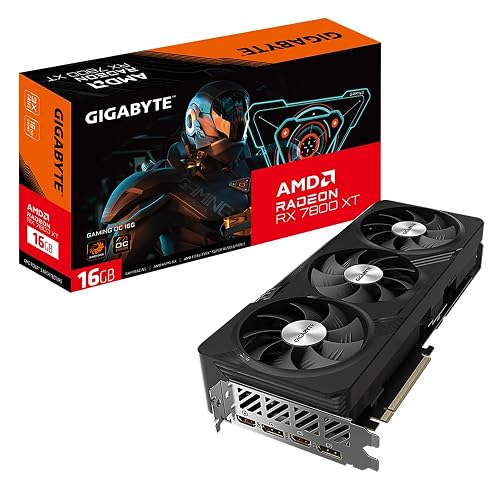 | Best AMD Pick | GPU: AMD Radeon RX 7800 XT | VRAM: 16GB GDDR6 | Memory Bus: 256-bit | VIEW LATEST PRICE | Read Our Analysis |
| ASUS TUF GeForce RTX 5080 OC Graphics Card | 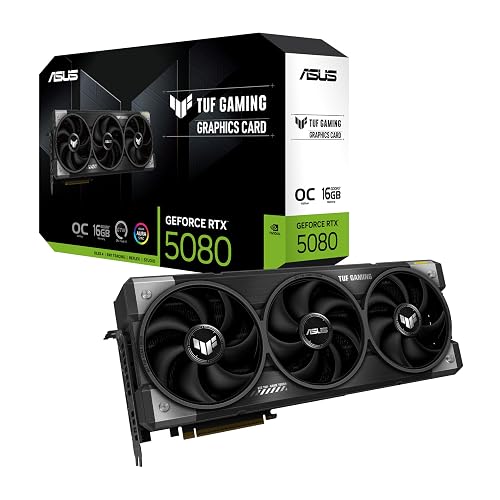 | Best Premium Pick | GPU: NVIDIA RTX 5080 | VRAM: 16GB GDDR7 | Memory Bus: Not specified | VIEW LATEST PRICE | Read Our Analysis |
| PNY NVIDIA GeForce RTX 5070 Epic-X ARGB OC Graphics Card |  | Best SFF Pick | GPU: NVIDIA RTX 5070 | VRAM: 12GB GDDR7 | Memory Bus: 192-bit | VIEW LATEST PRICE | Read Our Analysis |
| ASUS Prime GeForce RTX 5070 Graphics Card | 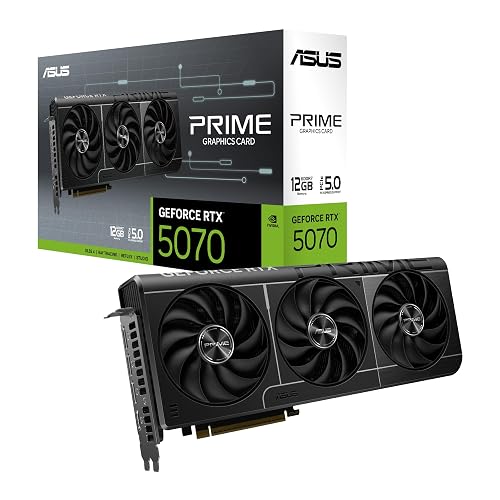 | Best SFF Pick | GPU: NVIDIA RTX 5070 | VRAM: 12GB GDDR7 | Memory Bus: Not specified | VIEW LATEST PRICE | Read Our Analysis |
| MOUGOL Radeon RX 580 Gaming Graphics Card | 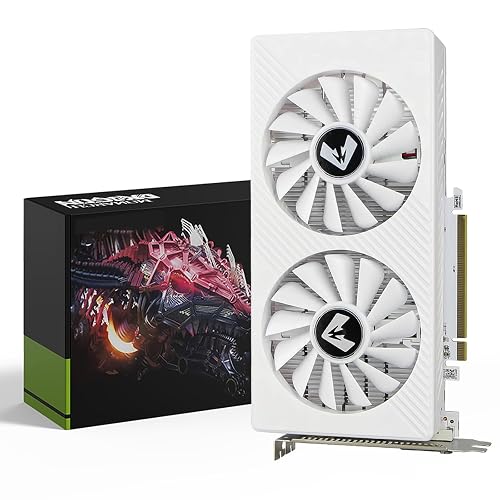 | Budget-Friendly Pick | GPU: AMD Radeon RX 580 | VRAM: 8GB GDDR5 | Memory Bus: 256-bit | VIEW LATEST PRICE | Read Our Analysis |
| MSI GeForce GT 1030 4GB Graphics Card (GT 1030 4GD4 LP OC) | 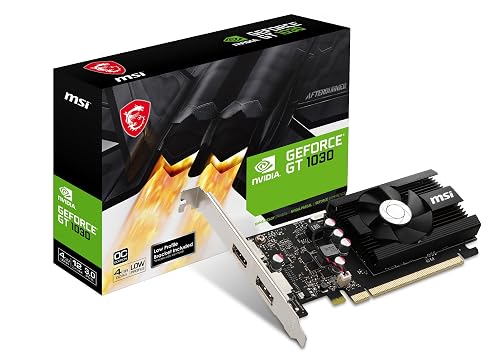 | Entry-Level Pick | GPU: NVIDIA GT 1030 | VRAM: 4GB DDR4 | Memory Bus: 64-bit | VIEW LATEST PRICE | Read Our Analysis |
More Details on Our Top Picks
GIGABYTE Radeon RX 7800 XT Gaming OC Graphics Card
The GIGABYTE Radeon RX 7800 XT Gaming OC 16GB is a strong pick if you want a high-performance AV1 encoder for a desktop build without jumping to the most expensive tier. It features AMD RDNA 3 graphics, 16GB of GDDR6 memory, a 256-bit bus, and a 2565 MHz boost clock for smooth 4K gaming and creator work. It supports DirectX 12 Ultimate, ray tracing, and AI acceleration. You can connect up to four displays via two DisplayPort 2.1 and two HDMI 2.1 outputs. The Windforce cooler helps maintain thermal stability under load, and a 700 W PSU is recommended for reliable operation.
- GPU:AMD Radeon RX 7800 XT
- VRAM:16GB GDDR6
- Memory Bus:256-bit
- PCIe Version:PCIe 4.0
- Display Outputs:2x DP, 2x HDMI
- Cooling:Triple-fan
- Additional Feature:AV1 encoding support
- Additional Feature:RGB Fusion I/O
- Additional Feature:3-year warranty
ASUS TUF GeForce RTX 5080 OC Graphics Card
If you want a high-end AV1-ready card that can handle serious gaming and heavy creative workloads, the ASUS TUF GeForce RTX 5080 OC is a strong fit. It features NVIDIA Blackwell architecture, DLSS 4, PCIe 5.0, and HDMI and DisplayPort 2.1 support, plus 16 GB of GDDR7 for demanding tasks. Its 3.6-slot build uses three Axial-tech fans, a massive fin array, and a vapor chamber to move heat efficiently. The phase-change thermal pad boosts longevity, and military-grade parts and PCB coating help you trust it in tough desktop setups.
- GPU:NVIDIA RTX 5080
- VRAM:16GB GDDR7
- Memory Bus:Not specified
- PCIe Version:PCIe 5.0
- Display Outputs:HDMI, DP 2.1
- Cooling:Triple-fan
- Additional Feature:DLSS 4 support
- Additional Feature:Vapor chamber cooling
- Additional Feature:Military-grade components
PNY NVIDIA GeForce RTX 5070 Epic-X ARGB OC Graphics Card
PNY’s GeForce RTX 5070 Epic-X ARGB OC is a strong pick if you want AV1 encoding plus a modern mid-range GPU that can handle gaming, streaming, and creator work without moving into flagship pricing. It has 6,144 CUDA cores, Blackwell architecture, 12GB of GDDR7, and a 250W TDP, so you should pair it with solid airflow. The card uses a triple-fan 2.4-slot cooler, features ARGB lighting, supports PCIe 5.0, and includes a 16-pin to dual 8-pin adapter to simplify setup. You will also benefit from DLSS 4, Reflex, and Studio drivers.
- GPU:NVIDIA RTX 5070
- VRAM:12GB GDDR7
- Memory Bus:192-bit
- PCIe Version:PCIe 5.0
- Display Outputs:3x DP, HDMI
- Cooling:Triple-fan
- Additional Feature:Fifth-Gen Tensor Cores
- Additional Feature:ARGB lighting
- Additional Feature:SFF-ready design
ASUS Prime GeForce RTX 5070 Graphics Card
ASUS’s Prime GeForce RTX 5070 is a strong fit if you want AV1 encoding in a small form factor without sacrificing modern GPU features. You get NVIDIA’s Blackwell-based RTX 5070, 12 GB of GDDR7 memory, and a 2542 MHz boost clock for gaming or creator work. Its 2.5 slot cooler uses three Axial-tech fans, a phase-change GPU thermal pad, and a side-panel friendly heatsink layout to keep temperatures in check. You also get PCIe 5.0, HDMI 2.1b, three DisplayPort 2.1b outputs, and 8K support. ASUS backs it with a 3 year warranty.
- GPU:NVIDIA RTX 5070
- VRAM:12GB GDDR7
- Memory Bus:Not specified
- PCIe Version:PCIe 5.0
- Display Outputs:3x DP, HDMI
- Cooling:Triple-fan
- Additional Feature:Phase-change GPU pad
- Additional Feature:SFF-ready design
- Additional Feature:2.5-slot design
MOUGOL Radeon RX 580 Gaming Graphics Card
The MOUGOL Radeon RX 580 Gaming Graphics Card is a practical choice for an entry-level to mid-range PC and delivers dependable 1080p gaming and solid creative support. It includes 2048 stream processors, 8 GB of Samsung GDDR5, and a 256-bit memory bus, so it runs Fortnite, GTA V, Apex Legends, and Valorant smoothly. Dual-fan cooling, heat pipes, and smart fan control help keep noise low. You can connect via DisplayPort, HDMI, and DVI for a triple-monitor setup. It is compatible with Windows 11, 10, and 7, and AMD Adrenaline lets you update drivers, optimize games, and record gameplay.
- GPU:AMD Radeon RX 580
- VRAM:8GB GDDR5
- Memory Bus:256-bit
- PCIe Version:PCIe 3.0
- Display Outputs:DP, HDMI, DVI
- Cooling:Dual-fan
- Additional Feature:Triple-display support
- Additional Feature:6-pin power
- Additional Feature:AMD Adrenalin support
MSI GeForce GT 1030 4GB Graphics Card (GT 1030 4GD4 LP OC)
MSI’s GeForce GT 1030 4GB DDR4 64-bit LP OC is a sensible pick if you need a compact, low-power GPU for basic desktop acceleration, light gaming, and everyday media work rather than heavy AV1-focused encoding. You get NVIDIA’s Pascal-based GT 1030, 4GB of DDR4 memory, a 64-bit bus, and a 1430 MHz boost clock. Its low-profile, single-fan design fits small desktops. HDMI 2.0b and DisplayPort 1.4a handle 4K output. You can also rely on DirectX 12 support, GeForce Experience updates, and MSI’s three-year warranty for peace of mind.
- GPU:NVIDIA GT 1030
- VRAM:4GB DDR4
- Memory Bus:64-bit
- PCIe Version:PCIe x16
- Display Outputs:DP, HDMI
- Cooling:Single-fan
- Additional Feature:Low-profile design
- Additional Feature:GeForce Experience
- Additional Feature:4K UHD output
Factors to Consider When Choosing Graphics Cards With AV1 Encoding
When choosing a graphics card for AV1 encoding, confirm it provides hardware AV1 encoding and that the GPU architecture suits your workload. Check memory capacity, as it influences multitasking and editing performance. Finally, evaluate power requirements and cooling efficiency to ensure the card runs reliably without overheating or stressing your system.
AV1 Encoding Support
AV1 support is worth prioritizing because this royalty-free codec can deliver roughly 20 to 30 percent better compression than HEVC at similar quality, which helps you save bandwidth and storage while streaming or archiving video. You should verify that the card offers true hardware encoding, not just decoding, so you can cut CPU load and power use during live capture. Check supported resolutions, frame rates, and profiles, since some encoders cap 4K throughput or restrict advanced features. Do not stop at “AV1 supported”; compare CBR, VBR, latency presets, and quality-per-bit results to gauge real-world performance. You will also need current drivers and OS-level API support so apps can access the encoder reliably. That matters if you want smooth, low-latency livestreaming.
GPU Architecture
Beyond AV1 support itself, the GPU’s architecture determines how well that encoder actually performs in real use. You should look for a fixed-function AV1 encoder, because dedicated media hardware handles encoding far more efficiently than software or hybrid approaches, and it keeps CPU usage low. Newer architectures usually improve power efficiency and throughput, which helps when you are encoding 4K+ video or running multiple streams at once. Pay attention to media engines, parallel encode pipelines, and hardware bitstream assembly, since they affect session counts, bitrate stability, and latency. Support for features like film grain, tile-based encoding, and hardware rate control depends on both the media block and driver quality. Also, bandwidth and PCIe generation can still limit performance, even when AV1 support is present.
Memory Capacity
Memory capacity matters because AV1 encoding gets more demanding as resolution and workload rise. You should look for at least 8 to 12 GB of fast VRAM if you want smooth 4K60 AV1 encoding, since the GPU needs room for frame staging, bitrate control, and multi-pass or denoising steps. If you encode 4K and above, or run multiple streams, extra VRAM helps larger frame buffers and lookahead buffers stay fed without bottlenecks. You will also benefit from a wider memory bus and higher bandwidth, such as 256 bit interfaces or faster GDDR6 or GDDR7, because they cut stalls during motion search and entropy coding. If you game, render, or run AI at the same time, add 25 to 50 percent more VRAM than your single-task need to prevent swapping and keep throughput steady.
Power Requirements
Power matters a lot here, because AV1 encoding pushes the GPU harder than light gaming or idle use, so you should size your PSU for sustained load rather than best-case estimates. Check the card’s TDP and choose a power supply with that rating plus about 20 to 30% headroom. That extra margin helps you avoid brownouts when AV1 encoding runs for hours. Remember that hardware encoding can run alongside rendering, so your CPU, GPU, and peripherals may draw far more power than a gaming session. If you use multiple GPUs or offload cards, add each card’s TDP to your total budget. Also verify the PSU’s continuous rail rating and PCIe connectors can support the load.
Cooling Efficiency
When you are evaluating cooling efficiency for AV1 encoding, focus on sustained thermals rather than peak temps, because real-time streaming or long transcoding sessions can keep the GPU at high utilization for hours. You want a cooler that holds low junction temperatures without throttling, so look for multi-fan layouts, large fin stacks, and vapor chambers or heat pipes that move heat quickly. Check the card’s TDP and expected encoding power draw, then match them to the heatsink mass, fan size, and surface area. Good case airflow matters too; balanced intake and exhaust cut recirculation and help VRAM and encoder chips stay safe. Direct-contact copper plates or phase-change pads can also improve heat transfer and keep your AV1 performance stable over long sessions.
Frequently Asked Questions
Which Graphics Cards Support AV1 Encoding and Decoding Simultaneously?
You should choose Intel Arc, NVIDIA GeForce RTX 40 and 50 series, or AMD Radeon RX 7000 and 8000 series, as they all support AV1 encoding and decoding simultaneously. Older cards typically support AV1 decoding but do not support encoding.
Does AV1 Encoding Improve Livestream Quality at Lower Bitrates?
Yes, if you stream with AV1 encoding, you will usually get cleaner motion, fewer artifacts, and better detail at lower bitrates than with older codecs. You will still need sufficient upload speed, though.
Are Av1-Capable GPUS Better for Video Editing Workflows?
Yes, you will often edit faster with AV1-capable GPUs, because they accelerate playback, encoding, and export. You will still need a strong CPU, sufficient RAM, and fast storage. AV1 support is most helpful when your footage uses that codec.
Can AV1 Encoding Work With Older Motherboards and Systems?
Yes, you can use AV1 encoding on older motherboards if your GPU supports it, for example a 2011 laptop can stream smoothly with a modern card. You will need compatible PCIe slots, sufficient power, and up-to-date drivers; you do not need a new motherboard.
Which Streaming Apps Support AV1 Hardware Encoding Today?
You’ll find AV1 hardware encoding in apps like OBS Studio, FFmpeg, HandBrake, Adobe Premiere Pro, DaVinci Resolve, and Streamlabs. You can also use it in Discord screen sharing and in some browsers for live broadcasts.