

If your PC’s USB ports feel like they have been stuck in a traffic jam, the right internal USB card can clear the road fast. In 2026 you will want speed, stable power, and a clean fit more than flashy claims. The best picks stand out for real-world use.
From 7-port USB 3.0 cards and StarTech’s steady four-lane model to USB 3.2 Gen 2 boards, USB-C options, and slot-powered choices, the details ahead could save you from a very annoying upgrade.
| 7-Port USB 3.0 PCIe Expansion Card | 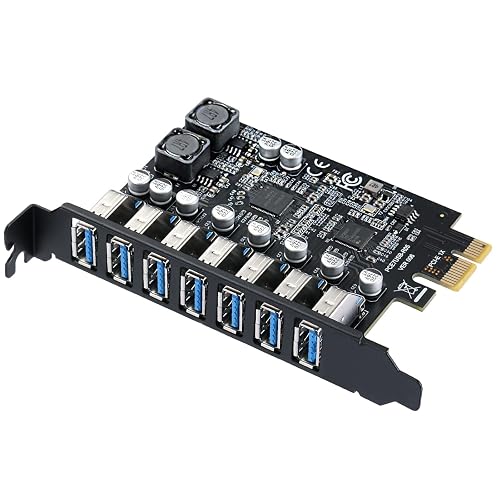 | Best Overall | USB Speed: USB 3.0 5 Gbps | Port Count: 7 ports | Port Types: USB-A | VIEW LATEST PRICE | Read Our Analysis |
| StarTech.com 4 Port USB 3.0 PCIe Card (PEXUSB3S44V) | 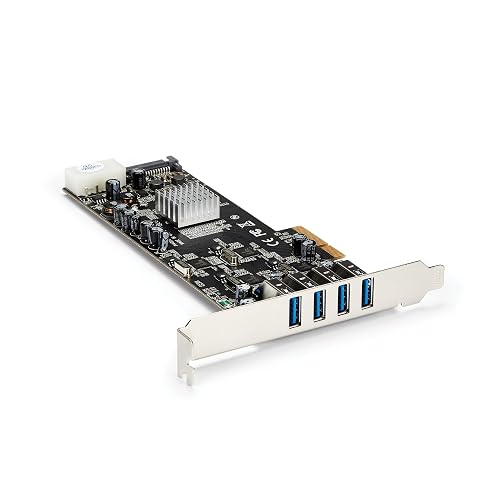 | Best Premium | USB Speed: USB 3.0 5 Gbps | Port Count: 4 ports | Port Types: USB-A | VIEW LATEST PRICE | Read Our Analysis |
| PCIe to USB 3.2 Gen 2 Expansion Card | 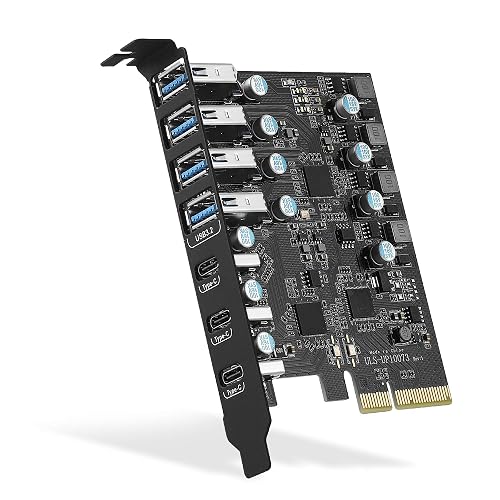 | Highest Speed | USB Speed: USB 3.2 Gen 2, 10 Gbps | Port Count: 7 ports | Port Types: USB-A/USB-C | VIEW LATEST PRICE | Read Our Analysis |
| StarTech.com 2-Port USB 3.2 Gen 2 PCIe Card | 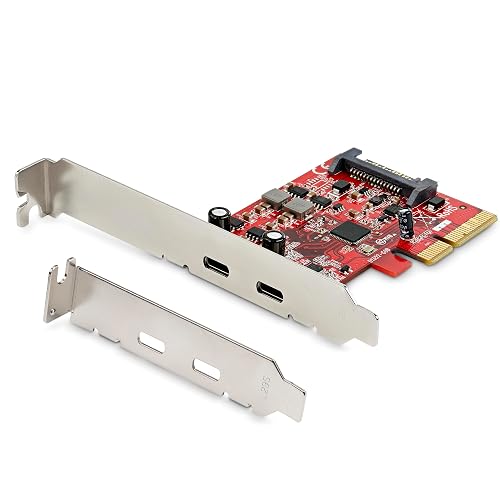 | Best USB-C | USB Speed: USB 3.2 Gen 2, 10 Gbps | Port Count: 2 ports | Port Types: USB-C | VIEW LATEST PRICE | Read Our Analysis |
| USB PCIe 5-Port Expansion Card for Desktop PC | 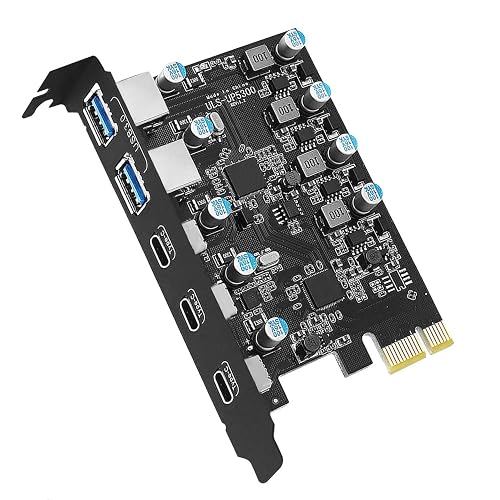 | Best Budget | USB Speed: USB 3.0 5 Gbps | Port Count: 5 ports | Port Types: USB-A/USB-C | VIEW LATEST PRICE | Read Our Analysis |
| ELUTENG PCIe USB 3.0 Expansion Card 7 Ports | 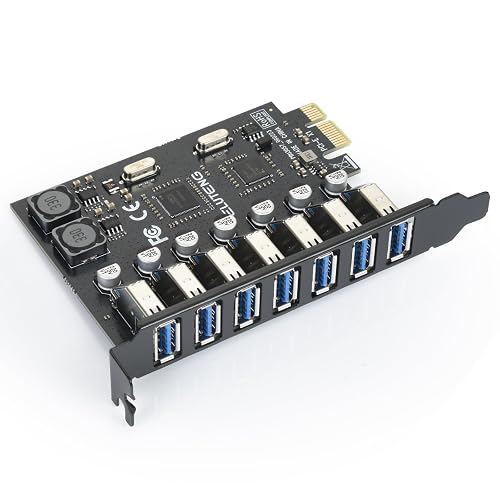 | Most Reliable | USB Speed: USB 3.0 5 Gbps | Port Count: 7 ports | Port Types: USB-A | VIEW LATEST PRICE | Read Our Analysis |
| PCI-E 1X to USB 3.2 Gen1 Expansion Card |  | Best Front Panel | USB Speed: USB 3.2 Gen1, 5 Gbps | Port Count: 2 ports | Port Types: Type-E + USB-A | VIEW LATEST PRICE | Read Our Analysis |
More Details on Our Top Picks
7-Port USB 3.0 PCIe Expansion Card
If your desktop feels cramped and your USB ports vanish the moment you plug in a mouse, printer, or external drive, a 7-port USB 3.0 PCIe expansion card can be a smart fix. You get seven USB 3.0 ports, 5 Gbps speeds, and UASP support for faster, smoother transfers. Because it uses four dedicated channels, it helps you move large files without dragging your system down. It works with Windows, Linux, gaming PCs, workstations, and servers. You can install it easily, and the aluminum heatsink, plus over-current protection, help it stay safe and steady.
- USB Speed:USB 3.0 5 Gbps
- Port Count:7 ports
- Port Types:USB-A
- UASP Support:Yes
- OS Support:Windows/Linux
- Form Factor:PCIe internal card
- Additional Feature:Four dedicated channels
- Additional Feature:Over-current protection
- Additional Feature:Aluminum heatsink cooling
StarTech.com 4 Port USB 3.0 PCIe Card (PEXUSB3S44V)
The StarTech.com 4 Port USB 3.0 PCIe Card (PEXUSB3S44V) is a smart pick for anyone who needs more fast, reliable USB ports inside a desktop PC without giving up stability or speed. You get four dedicated USB 3.0 channels at up to 5 Gbps each, plus UASP support for quicker transfers with the right enclosure. It also works with USB 2.0 and 1.1 gear, so your older devices will not be left behind. For hard drives, VR headsets, controllers, or charging needs, you can add LP4 or SATA power.
- USB Speed:USB 3.0 5 Gbps
- Port Count:4 ports
- Port Types:USB-A
- UASP Support:Yes
- OS Support:Windows/Linux
- Form Factor:PCIe internal card
- Additional Feature:Optional LP4/SATA power
- Additional Feature:Battery charging support
- Additional Feature:Free lifetime support
PCIe to USB 3.2 Gen 2 Expansion Card
Need fast, reliable USB expansion for a desktop that is running out of rear ports? This PCIe to USB 3.2 Gen 2 expansion card gives you seven ports, including four Type-A and three Type-C, with up to 20 Gbps total bandwidth. You can move files at up to 10 Gbps on a single port, as long as your device and cable can keep up. It fits PCIe x4, x8, or x16 slots, requires no extra power, and works with Windows, Mac, and Linux. Just watch slot clearance, because the bracket can feel a bit snug.
- USB Speed:USB 3.2 Gen 2, 10 Gbps
- Port Count:7 ports
- Port Types:USB-A/USB-C
- UASP Support:Not stated
- OS Support:Windows/Mac/Linux
- Form Factor:PCIe internal card
- Additional Feature:20 Gbps total bandwidth
- Additional Feature:Two independent bandwidth groups
- Additional Feature:No PD fast charging
StarTech.com 2-Port USB 3.2 Gen 2 PCIe Card
StarTech.com’s 2-Port USB 3.2 Gen 2 PCIe Card is a smart pick for anyone who wants fast, reliable USB-C expansion without giving up space inside a desktop. You get two data-only USB-C ports that deliver up to 10 Gbps each, so your drives move quickly and your workflow stays smooth. Because it uses a PCIe 3.0 x4 interface and the ASMedia ASM3142 controller, you can trust steady performance. It also supports UASP, works with Windows, macOS, and Linux, and includes a low-profile bracket. A SATA power connector helps support larger devices.
- USB Speed:USB 3.2 Gen 2, 10 Gbps
- Port Count:2 ports
- Port Types:USB-C
- UASP Support:Yes
- OS Support:Windows/macOS/Linux
- Form Factor:PCIe internal card
- Additional Feature:ASM3142 controller
- Additional Feature:USB-C 15W output
- Additional Feature:TAA compliant
USB PCIe 5-Port Expansion Card for Desktop PC
If your desktop keeps running out of USB ports, a USB PCIe 5-port expansion card can feel like a small upgrade with a big payoff. The YEELIYA PCI Express 3 card provides 3 USB-C and 2 USB-A ports through one PCIe x1 slot, so you can plug in drives, printers, cameras, and game controllers with less hassle. It runs on slot power, so you will not need an extra adapter. You also get USB 3.0 speeds up to 5 Gbps, with per-port protection against overloads and shorts.
- USB Speed:USB 3.0 5 Gbps
- Port Count:5 ports
- Port Types:USB-A/USB-C
- UASP Support:Not stated
- OS Support:Windows/macOS
- Form Factor:PCIe internal card
- Additional Feature:Independent port protection
- Additional Feature:No external power
- Additional Feature:Mac Pro compatible
ELUTENG PCIe USB 3.0 Expansion Card 7 Ports
The ELUTENG PCIe USB 3.0 Expansion Card 7 Ports is a smart choice if your desktop keeps running out of USB space and you need steady power at the same time. It provides seven external Type A ports, so you can connect more drives, dongles, and accessories without crowding your case. Its 2-phase power design helps each port operate independently, and solid capacitors support stable voltage. You also get USB 3.0 transfer speeds up to 5 Gbps and broad Windows and Linux compatibility. The card fits PCIe x1, x4, x8, and x16 slots.
- USB Speed:USB 3.0 5 Gbps
- Port Count:7 ports
- Port Types:USB-A
- UASP Support:Not stated
- OS Support:Windows/Linux
- Form Factor:PCIe internal card
- Additional Feature:2-phase power supply
- Additional Feature:Solid capacitor design
- Additional Feature:5V/2A output
PCI-E 1X to USB 3.2 Gen1 Expansion Card
A PCI-E 1X to USB 3.2 Gen1 expansion card such as the BEYIMEI BY-PEXUSB3C is a practical choice if you need to add a USB Type-C front panel header and an extra internal USB 3.0 port to a desktop without replacing the motherboard. It uses one PCIe x1 slot, and it also fits x4, x8, and x16 slots. The Renesas D720201 chipset delivers 5 Gbps USB 3.2 Gen1 speed. The card supports Windows and Linux, and it includes a low-profile bracket to keep your build neat and ready.
- USB Speed:USB 3.2 Gen1, 5 Gbps
- Port Count:2 ports
- Port Types:Type-E + USB-A
- UASP Support:Not stated
- OS Support:Windows/Linux
- Form Factor:PCIe internal card
- Additional Feature:Type-E front header
- Additional Feature:Internal USB socket
- Additional Feature:Renesas D720201 chipset
Factors to Consider When Choosing Internal USB Port Cards
When choosing an internal USB port card, match the port count to the devices you plan to connect. Also check USB speed, PCIe slot compatibility, power delivery options, and operating system support so the card fits your setup without any surprises. Once those basics line up, you will have an easier time picking a card that works smoothly and keeps your build tidy and future ready.
Port Count Needs
Start by tallying every device you plug in on a normal day, then add a little room for the gear you may buy next month or next year. If you mostly connect one keyboard, one drive, and a charger, a modest card can fit you well. But if you juggle external SSDs, VR gear, or a dock, you will want more ports with separate channels so devices do not slow each other down. Also check power needs. Some cards need SATA or LP4 power, and every port has current limits, so your PSU and motherboard must be able to keep up. Next, make sure the card fits your case, slot, and rear opening. Then balance cost and heat. The smallest card that still gives you breathing room is usually the smartest pick.
USB Standard Speed
USB speed matters more than many people expect, because it sets the ceiling for how fast your devices can move data. If you move large files or use external drives, aim for USB 3.2 Gen 2 for up to 10 Gbps. USB 3.2 Gen 1 gives you 5 Gbps, while USB 2.0 tops out at 480 Mbps. In practice, you will see less than the label says, because overhead, cable quality, and shared bandwidth slow things down a bit. For storage, look for UASP support, since it can boost speed and reduce CPU usage. Also check that the card can feed the ports well enough, or those fast ports may feel oddly sleepy. Newer ports remain compatible with older gear, but operate at lower speeds.
PCIe Slot Compatibility
A great internal USB port card only helps if your PC can actually use it well, so PCIe slot compatibility should be one of the first things you check. You need the card’s lane width to match an open slot, because a x4 card squeezed into x1 space can bottleneck performance or simply not fit. Next, confirm your motherboard’s PCIe version. A PCIe 3.0 slot may still run a newer card, but you will not get the card’s full speed. Then check clearance, bracket style, and nearby slots, especially in tight cases. Also make sure your BIOS or UEFI can initialize add-in cards during boot, and that enough lanes remain free. In small systems, measure twice and install once.
Power Delivery Options
Once you know the card will fit your PCIe slot, the next question is how well it can actually power your gear. Check whether it uses SATA, Molex, or only PCIe slot power, because a small x1 slot cannot feed every hungry device. Next, read the per-port ratings. USB 3.0 usually provides 5 V at 900 mA, while some USB-C ports can reach 3 A, which helps when you plug in drives or chargers. Also look for USB Battery Charging or USB Power Delivery if you want faster charging and higher negotiated power. Even then, watch the board’s total 5 V limit, since several devices can still pull too much at once. For multiple drives, choose cards with solid capacitors, dedicated power phases, and over-current protection.
Operating System Support
Even if a card looks perfect on paper, it still has to play nicely with your operating system. Check driver support first, because Windows 7, 8, 10, and 11, macOS, and Linux all handle cards differently. Older systems may need vendor drivers, while newer ones often work right away. Make sure the controller supports both 32 bit and 64 bit builds, since that can affect setup and performance. Also look for UASP or other protocol support if you will use storage devices, because it can boost throughput and reduce CPU load. If the maker provides Linux kernel updates or macOS fixes, that is a good sign. If you want USB C extras, such as alternate modes or power delivery, confirm your OS can detect them, not just the data link.
Form Factor Clearance
Before you buy an internal USB port card, make sure it actually fits inside your case, because size can turn a great spec sheet into a frustrating return. Measure the rear-slot space and the room near the PCIe area, since tall ports or stacked connectors may need about 3.2 inches of height behind the bracket. Then check whether your case needs a low-profile bracket or a full-height card, because not every model includes both. Also look at nearby slots and heatsinks, since wide cards can run into other parts. Next, confirm the PCIe lane and slot position, especially in mini-ITX builds. Finally, leave space for any 20-pin or Type-E cable so it bends gently and does not crowd the board.
Device Protection Features
Now that the card’s shape and slot fit are clear, the next thing to check is how well it protects the gear you plug into it. You want per-port over-current and short-circuit protection, because one bad device should not drag down the rest. Next, look for thermal help, such as heatsinks or temperature monitoring, since hot transfers can wear parts out fast. Stable power matters too. Solid capacitors, independent power rails, or an extra power connector can keep hungry USB drives steady. Then check for ESD protection and surge suppression on the data and power lines, because hot-plugging can send nasty spikes through the card. Finally, make sure the controller and firmware handle proper power negotiation, including BC 1.2 or USB-C current rules, so charging stays safe and predictable.
Warranty And Support
When you buy an internal USB port card, warranty and support can matter just as much as the ports themselves. A card is only a good deal if help is available when something goes wrong. Check whether the warranty lasts one to two years, and confirm it covers controller failure, power issues, and heatsink problems. Read the fine print for exclusions such as damage, improper installations, or case modifications that are not covered. Next, verify how support is provided. You may get free lifetime help, or only limited-hour service, so do not guess. Clear RMA procedures are important as well, including who pays shipping costs and how long repairs typically take. Finally, make sure drivers and firmware remain available, especially if you use an older system.
Frequently Asked Questions
Do Internal USB Cards Work With All Motherboard Chipsets?
No, internal USB cards do not offer universal chipset support. You need a compatible PCIe slot and proper drivers; most modern motherboards support internal USB cards. Check your board’s lane layout, BIOS settings, and operating system compatibility first.
Can I Use an Internal USB Card for VR Headsets?
Yes, you can, provided your headset requires an internal USB header and the card supplies sufficient bandwidth. Think of it like adding new roads; your VR rig will perform well when traffic is managed properly.
Will a PCIE USB Card Fit in a Small Form Factor PC?
Sometimes, but you will need to check your case clearance and the card slot size. You cannot fit a full-length PCIe USB card in many small form factor PCs, so choose a low-profile model instead.
Do These Cards Support Booting From USB Devices?
Some cards do, but only if the system BIOS or UEFI supports USB booting and the card includes bootable firmware. Do not assume this capability is enabled by default. Verify the motherboard settings and the card specifications before relying on USB boot.
How Do I Know if I Need Powered USB Ports?
You need powered USB ports if your devices draw more current than your motherboard or expansion card can supply, or if you experience disconnects, slow charging, or instability. Check each device’s power requirements and compare them to your card’s specifications.