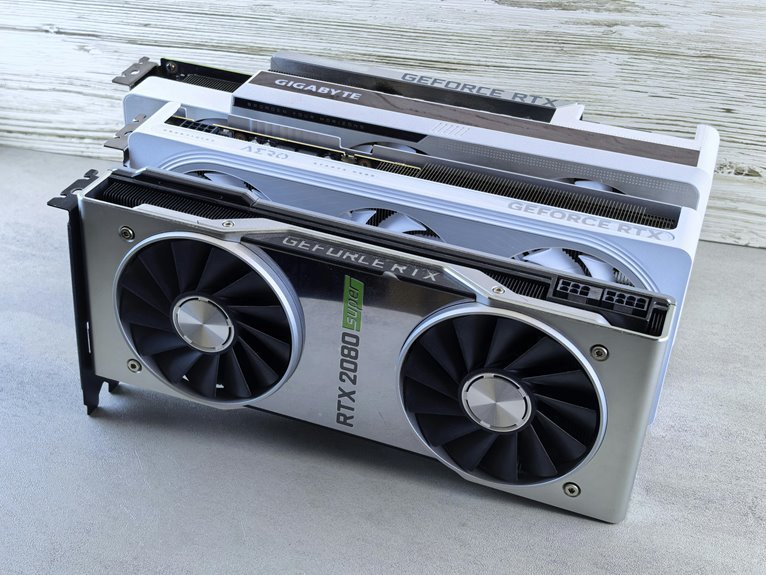


When your Ryzen 7500F is ready to stretch its legs, which GPU will actually keep pace?
You will see everything from tiny low-profile picks like the GT 710 and GT 1030 to stronger 1080p options such as the RX 580 family and the RX 7600 XT, each with different demands on power, space, and cooling.
The right choice is not just about raw speed, it can determine how smoothly your whole build runs.
| maxsun GeForce GT 710 2GB Low Profile Graphics Card | 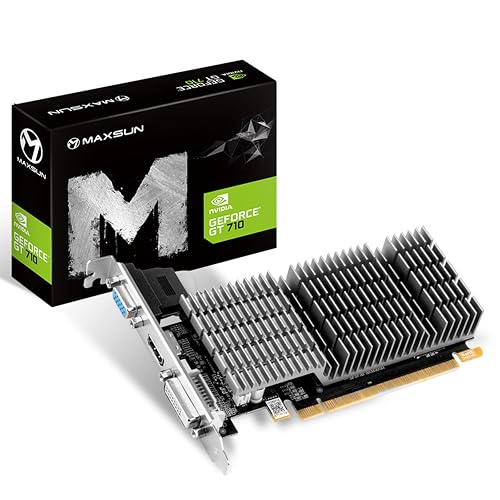 | Ultra Budget | GPU Chip: NVIDIA GeForce GT 710 | Memory: 2GB GDDR3 | Outputs: HDMI/DVI-D/VGA | VIEW LATEST PRICE | Read Our Analysis |
| GIGABYTE Radeon RX 7600 XT Gaming OC Graphics Card |  | Best Overall | GPU Chip: AMD Radeon RX 7600 XT | Memory: 16GB GDDR6 | Outputs: HDMI/DisplayPort | VIEW LATEST PRICE | Read Our Analysis |
| maxsun AMD Radeon RX 580 8GB Graphics Card | 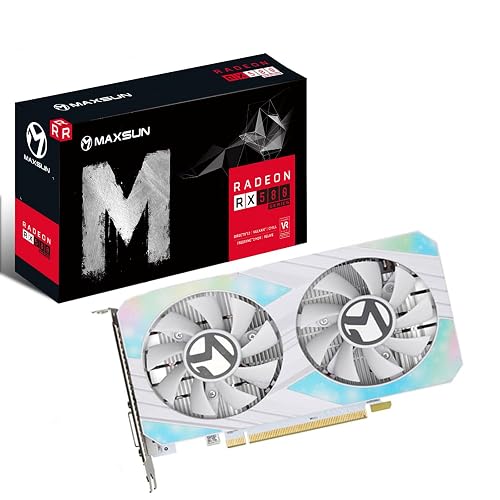 | Best Value | GPU Chip: AMD Radeon RX 580 | Memory: 8GB GDDR5 | Outputs: HDMI/DisplayPort/DVI | VIEW LATEST PRICE | Read Our Analysis |
| MOUGOL AMD Radeon RX 580 Gaming Graphics Card | 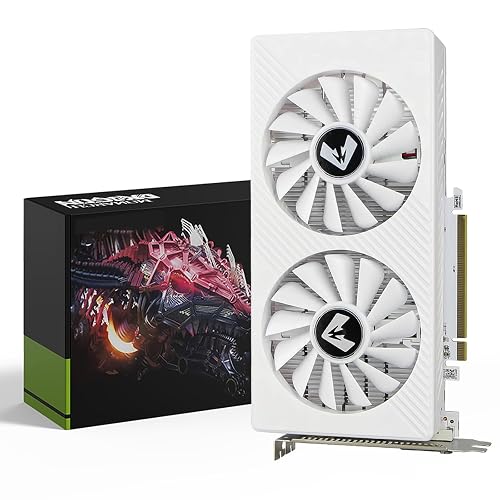 | Best 1080p | GPU Chip: AMD Radeon RX 580 | Memory: 8GB GDDR5 | Outputs: HDMI/DisplayPort/DVI | VIEW LATEST PRICE | Read Our Analysis |
| MOUGOL AMD Radeon RX 580 Graphics Card 8GB | 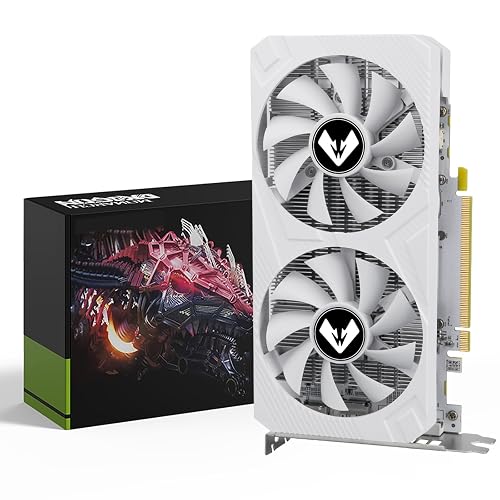 | Budget 1080p | GPU Chip: AMD Radeon RX 580 | Memory: 8GB GDDR5 | Outputs: HDMI/DisplayPort/DVI | VIEW LATEST PRICE | Read Our Analysis |
| MSI GeForce GT 1030 4GB Graphics Card (GT 1030 4GD4 LP OC) | 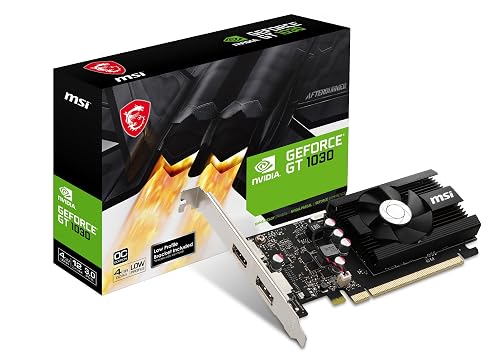 | Compact Pick | GPU Chip: NVIDIA GeForce GT 1030 | Memory: 4GB DDR4 | Outputs: HDMI/DisplayPort | VIEW LATEST PRICE | Read Our Analysis |
| GPU Support Bracket Adjustable Anti-Sag Aluminum Stand |  | Essential Accessory | GPU Chip: GPU support bracket | Memory: N/A | Outputs: Fan mount support | VIEW LATEST PRICE | Read Our Analysis |
More Details on Our Top Picks
maxsun GeForce GT 710 2GB Low Profile Graphics Card
The maxsun GeForce GT 710 2GB Low Profile is best for you if you need a tiny, ultra-low-power GPU for a basic 7500F build rather than a gaming powerhouse. It includes 2GB of GDDR3 memory, a 1000 MHz memory clock, and support for DirectX 12 and OpenGL 4.5. Its fanless heatsink keeps noise at zero, and the low-profile bracket fits slim ITX cases. You can run HDMI, DVI-D, and VGA displays, including multiple monitors. It handles 1080p output, HDCP, and 4K decode, making it a simple, quiet, warranty-backed choice.
- GPU Chip:NVIDIA GeForce GT 710
- Memory:2GB GDDR3
- Outputs:HDMI/DVI-D/VGA
- Cooling:Passive fanless
- Form Factor:Low profile
- Warranty:3 years
- Additional Feature:Passive fanless cooling
- Additional Feature:Multi-monitor support
- Additional Feature:HDR support
GIGABYTE Radeon RX 7600 XT Gaming OC Graphics Card
GIGABYTE’s Radeon RX 7600 XT Gaming OC 16G is a strong pick if you want a 7500F-friendly GPU with plenty of VRAM for modern games. You get AMD’s Radeon RX 7600 XT, 16GB of GDDR6, and a 128-bit bus, so it handles 1080p and 1440p play well. Its triple WINDFORCE fans and metal backplate help keep temperatures in check, and RGB Fusion adds style. You also get HDMI 2.1a and DisplayPort 2.1 outputs, plus PCIe 4.0 x8 support. With a 3-year warranty, it is a solid, balanced upgrade.
- GPU Chip:AMD Radeon RX 7600 XT
- Memory:16GB GDDR6
- Outputs:HDMI/DisplayPort
- Cooling:Triple-fan
- Form Factor:Full-size desktop
- Warranty:3 years
- Additional Feature:RGB Fusion lighting
- Additional Feature:Metal backplate
- Additional Feature:AMD RX 7000 series
maxsun AMD Radeon RX 580 8GB Graphics Card
If you are building a budget gaming PC around the Ryzen 5 7500F, the maxsun AMD Radeon RX 580 8GB 2048SP is a practical pick for 1080p play and basic multi-monitor use. It includes 8GB of GDDR5 on a 256-bit bus, and offers HDMI, DisplayPort, and DVI outputs for flexible setups. The dual-fan cooler helps keep temperatures in check. DirectX 12 and Vulkan support cover many games. It works well in white-theme builds, and the 3-year warranty adds peace of mind.
- GPU Chip:AMD Radeon RX 580
- Memory:8GB GDDR5
- Outputs:HDMI/DisplayPort/DVI
- Cooling:Dual-fan
- Form Factor:PCIe x16 card
- Warranty:3 years
- Additional Feature:4K video decode
- Additional Feature:White-themed design
- Additional Feature:2048 SP variant
MOUGOL AMD Radeon RX 580 Gaming Graphics Card
MOUGOL’s AMD Radeon RX 580 Gaming Graphics Card is a solid, budget-friendly match for the 7500F and is well suited to 1080p gaming. It includes 8 GB of Samsung GDDR5 on a 256-bit bus, 2048 stream processors, and a 1206 MHz core clock for smooth performance in Fortnite, GTA V, Apex Legends, and Valorant. The card also assists with video editing, streaming, and 3D rendering. It uses PCIe 3.0 x16, requires one 6-pin power connector, and supports HDMI, DisplayPort, DVI, and triple-monitor setups. The dual-fan cooler runs quietly, and AMD Adrenalin support makes tuning straightforward.
- GPU Chip:AMD Radeon RX 580
- Memory:8GB GDDR5
- Outputs:HDMI/DisplayPort/DVI
- Cooling:Dual-fan
- Form Factor:Mid-tower/micro-ATX
- Warranty:1 year
- Additional Feature:1206 MHz core
- Additional Feature:Intelligent fan control
- Additional Feature:6-pin power
MOUGOL AMD Radeon RX 580 Graphics Card 8GB
Built around 8GB of GDDR5 memory and a 256-bit bus, the MOUGOL AMD Radeon RX 580 Graphics Card provides a solid entry-level option for a Ryzen 5 7500F build if you want dependable 1080p or lighter 1440p gaming without overcomplicating your setup. It features a 1244 MHz GPU clock, 7000 MHz memory speed, and 2048 stream processors for steady everyday performance. The card uses a PCIe 3.0 x16 interface, requires one 6-pin power connector, and offers HDMI, DisplayPort, and DVI outputs. Dual fans help keep temperatures in check, and it supports DirectX 12, OpenGL 4.6, and Vulkan.
- GPU Chip:AMD Radeon RX 580
- Memory:8GB GDDR5
- Outputs:HDMI/DisplayPort/DVI
- Cooling:Dual-fan
- Form Factor:PCIe x16 card
- Warranty:1 year
- Additional Feature:1244 MHz GPU
- Additional Feature:7000 MHz memory
- Additional Feature:1-year warranty
MSI GeForce GT 1030 4GB Graphics Card (GT 1030 4GD4 LP OC)
The MSI GeForce GT 1030 4GD4 LP OC is a compact, low-profile option that works best when you need basic display output, light HD video work, or very casual gaming on a tight budget. It includes 4GB of DDR4 memory, a 64-bit bus, and a Pascal-based GPU running at 1430 MHz. It fits desktop systems via PCIe x16, offers DisplayPort and HDMI 2.0b, and supports 4K UHD output. The single-fan design keeps things simple, and GeForce Experience helps you maintain drivers and optimize settings. It is not built for heavy gaming.
- GPU Chip:NVIDIA GeForce GT 1030
- Memory:4GB DDR4
- Outputs:HDMI/DisplayPort
- Cooling:Single-fan
- Form Factor:Low-profile
- Warranty:3 years
- Additional Feature:Pascal architecture
- Additional Feature:GeForce Experience
- Additional Feature:Factory overclocked
GPU Support Bracket Adjustable Anti-Sag Aluminum Stand
If you pair a heavier GPU with a 7500F build, this adjustable anti-sag aluminum stand is a smart choice because it props up the card while mounting neatly to a case fan without blocking airflow. It fits 9 cm, 12 cm, or 14 cm fans, and it works in ITX, mATX, and ATX cases. Its 10 mm to 129 mm height range helps you dial in support, and the anodized black aluminum construction looks clean. Screws and a mini bubble level are included, so you can set the card flat and secure it quickly.
- GPU Chip:GPU support bracket
- Memory:N/A
- Outputs:Fan mount support
- Cooling:Aluminum stand
- Form Factor:Adjustable bracket
- Warranty:Seller/platform policy
- Additional Feature:Adjustable height range
- Additional Feature:Mini bubble level
- Additional Feature:No tools required
Factors to Consider When Choosing Graphics Cards GPUs for 7500F
When choosing a GPU for the 7500F, prioritize performance per dollar so you get the best gaming value for your budget. Ensure the card has sufficient VRAM for the games you play, and pick a model that matches your power supply and cooling capabilities. Also check case clearance, because even an excellent GPU is useless if it does not fit your build.
Performance Per Dollar
For performance per dollar, compare each GPU’s real-world benchmark result, such as 1080p average FPS or a synthetic score, against its current street price. Favor the cards that hit your target frame rate without paying extra for only small gains. Look for cards that deliver your needed 60+ FPS at 1080p medium while staying cheaper than models that only nudge performance a few percent higher. Also factor in total platform cost, since a stronger PSU, better cooling, or extra adapters can erase a bargain. Check recent price history and local stock, since discounts and shortages can swing value fast. That way you rank GPUs by true cost per frame, not just sticker price, and you spend where it matters most.
VRAM Capacity
VRAM capacity matters because it determines how well your GPU handles textures, frame buffers, and other game assets without stuttering. If you are gaming at 1080p, aim for at least 4 GB; 6 to 8 GB provides smoother high settings and some headroom for lighter 1440p play. For high-refresh 1440p or 4K, 10 to 16+ GB helps keep textures high and reduces the risk of forced compromises. Modern AAA games, texture packs, and mods can push usage past 6 to 8 GB quickly, so insufficient VRAM can cause stutters or lower texture quality. Since 1440p can raise demand 30 to 50 percent and 4K can nearly double it, match VRAM to your target resolution and settings.
Power Requirements
After you have matched VRAM to your target resolution, the next thing to check is power demand. Compare the GPU’s recommended PSU wattage with your system’s total needs. Many midrange cards want 450 to 650 W, while high-end models may call for 750 W or more. Then check the card’s TGP or TDP. A 75 W, 150 W, or 300 W board still needs extra headroom for your 7500F, drives, and peripherals. Aim for 20 to 30 percent above peak draw. Also verify the PCIe connectors you will need, such as 6-pin, 8-pin, or multiple plugs, and confirm your PSU has them. Do not ignore 12 V rail limits, especially in small cases or older systems. If you plan to overclock, budget for 10 to 30 percent more draw.
Cooling Solution
Cooling matters just as much as raw GPU power, so make sure the card’s cooler fits your case and does not clash with your CPU cooler, top-mounted radiator, or side panel. Check the card’s length, thickness, and slot count, especially if your build has tight internal spacing. You will usually get better thermals from GPUs with multiple heat pipes, a large fin stack, or a vapor chamber, since they spread heat more effectively and can run 5 to 15 degrees Celsius cooler under load than basic heatsinks. If you are building small or running a low-power setup, a passive or single-fan low-profile cooler can help avoid airflow conflicts. Also confirm your case airflow is strong enough, because even triple-fan cards need directed intake and exhaust to avoid throttling.
Case Clearance
When it comes to case clearance, measure the GPU length against your case’s stated clearance, since many mid-tower cases fit around 300 to 370 mm while compact cases may only allow 150 to 210 mm. Then check the height from the PCIe slot to the side panel, because slim cases often leave just 40 to 60 mm and oversized shrouds can rub. Also confirm how many expansion slots you can spare; some premium cards take 2.5 to 3 slots and need extra room behind the bracket. Do not forget front radiators, drive cages, and cable bundles, as they can steal usable space. Aim for at least 10 to 20 mm of extra gap for better airflow and easier upgrades, so your 7500F build stays cool, clean, and trouble free for years.
Display Outputs
For display outputs, make sure the GPU offers the ports your monitor or monitors need, such as HDMI 2.1 or DisplayPort 2.1, so you can run your native resolution and refresh rate without adapters. Check that each output supports your display’s resolution, whether that is 4K at 3840×2160 or multi‑4K at 7680×4320, to avoid compatibility issues. Also confirm bandwidth for HDR, VRR or Adaptive Sync, and high refresh rates if you want smooth gaming or rich media. If you use multiple screens, count the available HDMI and DisplayPort connections and make sure the card can handle your layout. Finally, verify HDCP support if you stream protected video or watch Blu‑ray content.
Warranty Coverage
After checking display outputs, review warranty coverage before buying a GPU for your 7500F build. Compare warranty length, since three years provides better protection than one year if early defects appear. Make sure the policy covers parts and labor, including memory, PCB traces, and fan assemblies, not only the core chip. Check whether opening the card, adding third party cooling, or using factory overclocks voids coverage. You will also want clear RMA steps, fast turnaround, and prepaid shipping so your system is not down long. Confirm support for DOA units and for thermal or fan failures. See if you can purchase an extended warranty for extra peace of mind.
Frequently Asked Questions
Which GPUS Offer the Best Ray Tracing Performance for the 7500F?
You’ll get the best ray tracing performance from Nvidia RTX 4080 Super, RTX 4070 Ti Super, and RTX 4070 Super. For top-tier results, pair your 7500F with one of these cards.
How Much VRAM Is Ideal for Future-Proof Gaming on the 7500F?
You should have at least 12 GB of VRAM; 16 GB provides more reliable future-proofing for gaming on the 7500F. Higher VRAM helps with heavier textures and larger game worlds, keeping the 7500F performing well for longer.
Do All Motherboards Support PCIE 4.0 for These Graphics Cards?
No, you cannot assume that. You need to check each motherboard’s specifications. Most AM5 boards support PCIe 4.0, but some budget models may limit slot bandwidth or run devices at PCIe 3.0 speeds.
What Power Supply Wattage Is Recommended for High-End GPU Pairings?
For high-end GPU pairings, choose a quality power supply rated 750W to 850W. If you are running an especially power-hungry card, select 1000W. This ensures a steady current that powers every frame without strain or flicker.
Can the 7500F Handle 1440P or 4K Gaming With Stronger GPUS?
Yes. You can pair the 7500F with powerful GPUs for 1440p and even 4K gaming, because higher resolution shifts most of the workload to the graphics card. You will generally enjoy smooth performance, though occasional CPU limitations may appear in some titles.