

If you’re still using AM4, you’re not stuck at all. In fact, you can still get real value from chips like the Ryzen 5 3400G, Ryzen 5 5500, Ryzen 7 5700, and Ryzen 9 5900XT, plus a few smart bundle picks that make setup easier.
Some focus on strong integrated graphics, while others lean hard into gaming, work, or multitasking, and that choice matters more than hype. The tricky part is matching the chip to your board, cooling, and use case, because one wrong pick can waste a very good upgrade.


More Details on Our Top Picks
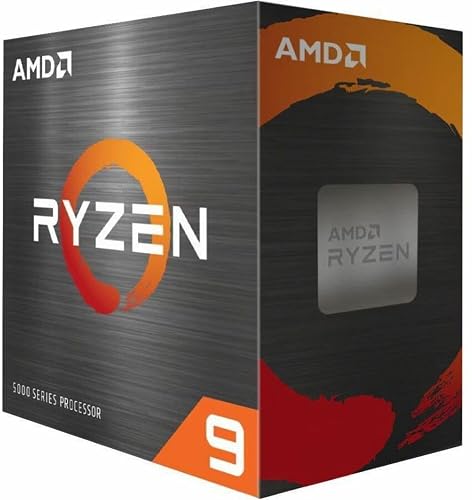
AMD Ryzen™ 9 5900XT 16-Core 32-Thread Unlocked Desktop Processor
If you want a top-tier AM4 chip that still feels like a serious upgrade in 2026, the AMD Ryzen 9 5900XT is hard to ignore. It provides 16 Zen 3 cores and 32 threads, with an unlocked design so you can overclock it if your cooling can keep up. The 3.3 GHz base clock and 4.8 GHz boost support heavy workloads and fast gaming. With 72 MB of cache, PCIe 4.0, and DDR4-3200 support, it remains capable. Note that you will need an aftermarket cooler.
- Core Count:16 cores
- Thread Count:32 threads
- Max Boost:4.8 GHz
- Socket:AM4
- Overclocking:Unlocked
- Cooling:Cooler not included
- Additional Feature:Zen 3 architecture
- Additional Feature:72 MB cache
- Additional Feature:PCIe 4.0 support
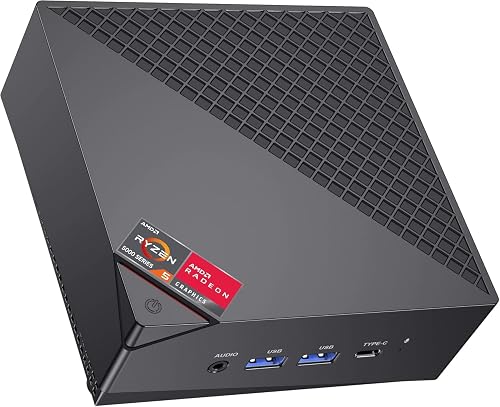
KAMRUI Mini PC E3B Win-11Pro Ryzen V2748
The KAMRUI Mini PC E3B Win-11Pro with the Ryzen Embedded V2748 is a smart pick when you need a compact machine that still feels fast, stable, and ready for real work. It delivers 8 cores, 16 threads, and up to 4.3 GHz, so apps open quickly and keep pace during multitasking. The integrated Radeon graphics handle light gaming, editing, and design with ease. You also get 16 GB DDR4, a 512 GB SSD, WiFi 6, dual LAN, and support for three 4K displays. It is VESA mountable, so it saves space.
- Core Count:8 cores
- Thread Count:16 threads
- Max Boost:4.3 GHz
- Socket:AM4
- Overclocking:Not listed
- Cooling:Not listed
- Additional Feature:WiFi 6 wireless
- Additional Feature:Triple-display support
- Additional Feature:64 GB memory max
Micro Center Ryzen 5 5500 with ASUS TUF Motherboard
Micro Center’s Ryzen 5 5500 bundle with the ASUS TUF Gaming A520M-PLUS WiFi is a smart pick if you want a simple, affordable AM4 build that still feels strong in day-to-day use. You get 6 cores, 12 threads, a 4.2 GHz boost, and a Wraith Stealth cooler, so setup stays easy. Because it lacks integrated graphics, you will need a discrete GPU. The board supports DDR4, WiFi, M.2 storage, and USB 3.2, and it includes solid 5X Protection III, which helps you build with confidence.
- Core Count:6 cores
- Thread Count:12 threads
- Max Boost:4.2 GHz
- Socket:AM4
- Overclocking:Unlocked
- Cooling:Wraith Stealth included
- Additional Feature:Included Wraith Stealth
- Additional Feature:128 GB memory max
- Additional Feature:BIOS FlashBack button
AMD Ryzen 7 5700 Processor with Wraith Stealth Cooler
Built for steady, no-drama gaming and everyday speed, the AMD Ryzen 7 5700 with Wraith Stealth cooler is a smart pick when you want strong 8-core performance without paying for extra flash. You get 16 threads, a 3.7 GHz base clock, and boost speeds up to 4.6 GHz, so your PC feels quick in games and multitasking. The AM4 socket keeps setup simple, and the 65W design helps you stay cool and efficient. Since AMD leaves all cores unlocked, you can tweak it further if you like. The included stock cooler adds real value.
- Core Count:8 cores
- Thread Count:16 threads
- Max Boost:4.6 GHz
- Socket:AM4
- Overclocking:Unlocked
- Cooling:Wraith Stealth/Spire included
- Additional Feature:20 MB cache
- Additional Feature:3-year warranty
- Additional Feature:Wraith Stealth included
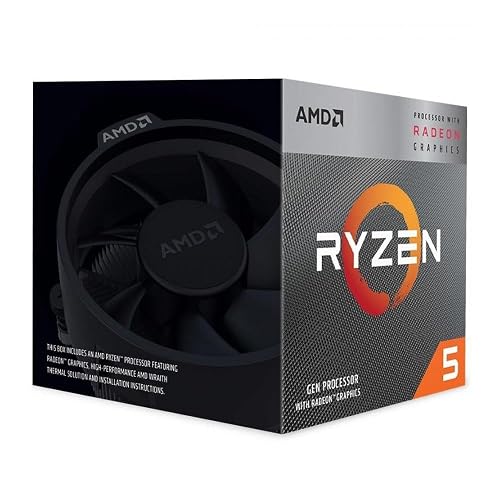
AMD Ryzen 5 3400G Processor with Vega Graphics
The AMD Ryzen 5 3400G is a smart pick if you want a low-cost AM4 CPU that still carries its weight for everyday use and light gaming without a separate graphics card. It has 4 cores, 8 threads, a 3.7 GHz base clock and boost speeds up to 4.2 GHz, so applications feel responsive. The integrated Radeon RX Vega 11 graphics enable Full HD gaming and handle daily tasks with ease. This 65 W processor also includes the Wraith Stealth cooler, so you can build with less stress and more value.
- Core Count:4 cores
- Thread Count:8 threads
- Max Boost:4.2 GHz
- Socket:AM4
- Overclocking:Unlocked
- Cooling:Wraith Stealth included
- Additional Feature:Radeon RX Vega 11
- Additional Feature:6 MB cache
- Additional Feature:Full HD gaming
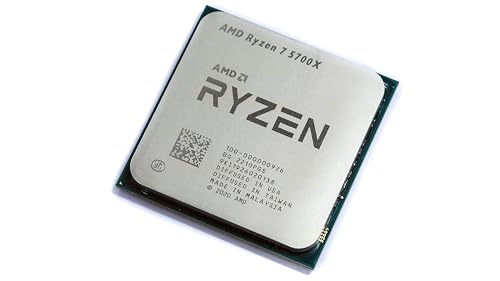
AMD Ryzen 7 5700X 8-Core Desktop Processor
The Ryzen 7 5700X is a smart pick if you want strong gaming and multitasking power without jumping to a pricier platform. It has 8 cores and 16 threads on Zen 3, so games feel responsive and streams stay smooth. It can boost up to 4.6 GHz, and the 32 MB L3 cache helps keep frame pacing steady. With a 65 W TDP it runs efficiently and stays cooler. It fits AM4 boards, supports DDR4-3200, and uses PCIe 4.0, so you can upgrade with less fuss and more confidence.
- Core Count:8 cores
- Thread Count:16 threads
- Max Boost:4.6 GHz
- Socket:AM4
- Overclocking:Unlocked
- Cooling:Cooler included
- Additional Feature:32 MB L3 cache
- Additional Feature:Precision Boost Overdrive
- Additional Feature:PCIe 4.0 support
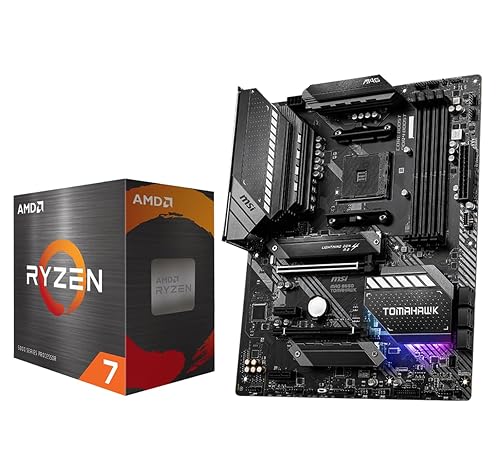
Micro Center Ryzen 7 5800XT with MSI Motherboard
Micro Center’s Ryzen 7 5800XT bundle with the MSI MAG B550 Tomahawk MAX WiFi is a smart pick if you want a strong AM4 setup without the stress of matching parts on your own. You get 8 cores, 16 threads, and boost speeds up to 4.8 GHz, so your games and heavy apps stay responsive. The Wraith Prism cooler makes initial setup easier, and the board adds Wi Fi 6E, PCIe 4.0, and a robust 10 plus 2 plus 1 power delivery system. With four DDR4 slots, you can upgrade memory capacity as needed.
- Core Count:8 cores
- Thread Count:16 threads
- Max Boost:4.8 GHz
- Socket:AM4
- Overclocking:Unlocked
- Cooling:Wraith Prism included
- Additional Feature:Wi‑Fi 6E support
- Additional Feature:13 USB ports
- Additional Feature:2x M.2 slots
Factors to Consider When Choosing a Ryzen AM4 CPU
When choosing a Ryzen AM4 CPU, start by matching the chip to what you do most, whether that is gaming, streaming, or heavy multitasking. Balance core count, thread performance, clock speed, and cache size, because each factor influences overall system responsiveness. If you require built-in display output, consider processors with integrated graphics, as they can delay or eliminate the need for a separate graphics card.
Core Count Needs
Your Ryzen AM4 CPU should match what you actually do day to day, because core count matters a lot more than people think. If you mainly browse, stream, and handle office work, 4 to 6 cores usually feel smooth and sensible. For gaming and light multitasking, 6 to 8 cores gives you room to breathe without wasting money. If you edit video, render, or run heavy workloads, aim for 8 or more cores with 16 or more threads. More cores can also help your system stay useful longer as software grows. Still, do not chase core count alone. You also need enough boost speed, a solid cooler, and a motherboard with strong VRMs and BIOS support, so your CPU stays fast, stable, and ready for busy days.
Thread Performance
Thread performance is where a Ryzen AM4 CPU really shows what it can do, because raw core count only tells part of the story. You want enough threads for heavy jobs like rendering, encoding, and streaming, but you also need strong per-thread speed for snappy everyday use. That means you should care about SMT, since it lets each core handle more work at once, though gains can shrink in some tasks. A CPU’s microarchitecture and boost behavior shape how much work each thread finishes. Good cooling and a solid motherboard help the chip hold up under load, so performance stays steady. Faster, lower-latency memory can trim stalls too. In short, balanced thread throughput makes your AM4 system feel capable, not just busy.
Clock Speed
Clock speed gives Ryzen AM4 CPUs their snap, so it is worth looking at it right after thread performance. Check both base and boost clocks, because they indicate how the chip behaves at rest and under load. Higher clocks usually make games feel quicker and desktop tasks feel smoother, especially when one core handles most of the work. Still, clocks do not tell the whole story. Cooling, TDP, and motherboard power delivery determine how long the CPU can sustain boost. Precision Boost and PBO can help, but only if your BIOS, voltage settings, and case airflow cooperate. Compare clock speeds with core count as well. A slightly slower chip with more cores may win in heavy multitasking, while a faster one often feels snappier.
Cache Size
Cache size can make a bigger difference than many people expect, especially when you want a Ryzen AM4 CPU that feels fast in real use. When choosing one, look past raw clocks and check both L2 and L3 cache. Larger total cache helps the chip keep hot data close, so your games, apps, and browser tabs respond faster. On AM4, L3 often ranges from 8 MB to 32 MB, and the higher end can help with heavy multitasking and large projects. L2 matters too, because more per core can speed up small, snappy tasks. For content creation, compiling, or big data work, favor CPUs with stronger combined cache, since fewer trips to memory keep performance steadier under pressure.
Integrated Graphics
Need built-in display support on your Ryzen AM4 CPU? Then an APU with Vega or Radeon-class graphics can save you money and help you skip a separate card. You should still check the GPU core count and clock speed, because they determine how well you can handle 1080p gaming, video playback, and light creative work. Also, pair it with fast dual-channel DDR4, such as 3200 MT/s, since integrated graphics rely heavily on memory bandwidth. If you plan to drive multiple high-resolution monitors or run GPU-heavy apps, onboard graphics may feel cramped. In that case, a discrete GPU gives you more headroom. For everyday use, integrated graphics keep your build simpler, cooler, and easier on your budget.
Cooling Requirements
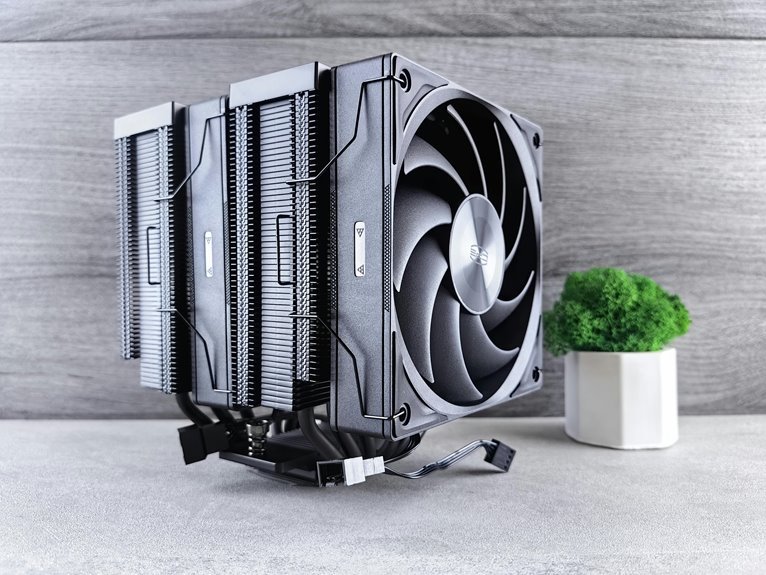
When you pick a Ryzen AM4 CPU, cooling should be high on your list because a chip that runs hot can quietly hold back the performance you paid for. Most AM4 chips sit around 65 W to 105 W, so choose a cooler that can handle at least that much, and go higher if you want steady boost speeds. For Zen 3 models with many cores, aim for strong airflow and a cooler with more than 150 W of thermal headroom if you plan to overclock. If you will use Precision Boost Overdrive or manual tuning, a big air cooler or a 120 mm or larger AIO helps keep temperatures steady. Also check case clearance, mounting fit, fan curves, and thermal paste, since small tweaks can cut temperatures and keep your CPU happy.
Motherboard Compatibility
A great cooler can keep your Ryzen AM4 chip calm, but the motherboard decides whether that chip can truly stretch its legs. First, make sure the board uses the AM4 socket and fits your CPU family. Then check the chipset. A520, B550, and X570 each offer different perks, like PCIe 4.0, overclocking support, and faster memory limits. Next, look at the BIOS version. If it is too old, your CPU may not boot until you update it. Also, do not ignore the VRMs and their cooling, because weak power delivery can throttle a strong chip quickly. Finally, match the board to your needs for DDR4 speed, RAM slots, M.2 drives, SATA ports, and spare PCIe lanes.
Frequently Asked Questions
Which Ryzen AM4 CPU Offers the Best Gaming Performance per Dollar?
Ryzen 7 5800X3D delivers the best gaming performance per dollar, thanks to its large cache that boosts frame rates without requiring more expensive platforms. If you are budget-minded, the 5700X still offers strong performance.
Do AM4 Ryzen CPUS Still Support Modern GPUS and Fast SSDS?
Yes, you can pair AM4 Ryzen CPUs with modern GPUs and fast NVMe SSDs, especially on motherboards that support PCIe 3.0 or 4.0. Verify motherboard support, PCIe lane limits, and BIOS compatibility first.
Can I Upgrade to a Ryzen 5000 CPU Without Changing My Motherboard?
Yes. You can often upgrade to a Ryzen 5000 CPU without changing your motherboard. About 75% of AM4 boards support these processors after a BIOS update, so you will usually only need a firmware update rather than a new platform.
Which AM4 Processor Is Best for Streaming and Multitasking?
You’ll get the best streaming and multitasking performance from a Ryzen 9 5900X; its 12 cores handle heavy workloads smoothly. If you’re on a tighter budget, the Ryzen 7 5700X still delivers excellent value.
Are Integrated Graphics on AM4 Ryzen Chips Good for Casual Use?
Yes, if you are browsing and streaming video you will be fine. For example, a Ryzen 5 5600G can handle office work and Netflix smoothly, but you should not expect strong gaming performance without a dedicated GPU.