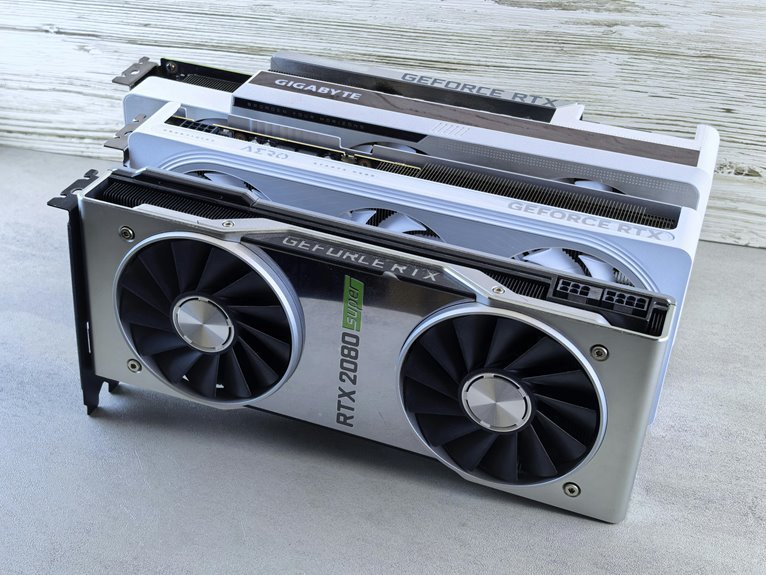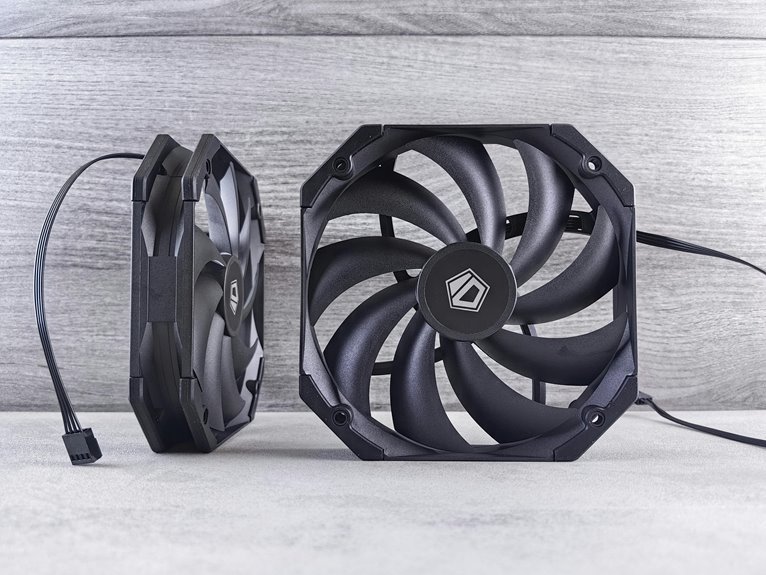


If you are chasing the best graphics cards for pure performance, you have more to weigh than raw frame rates. Compare architecture, VRAM, cooling, and the ports that match your setup.
Some cards push high-end gaming with strong AI features, while others stay compact or budget-friendly, without giving up too much.
The real question is which one fits your build best. A few choices here may surprise you.


More Details on Our Top Picks
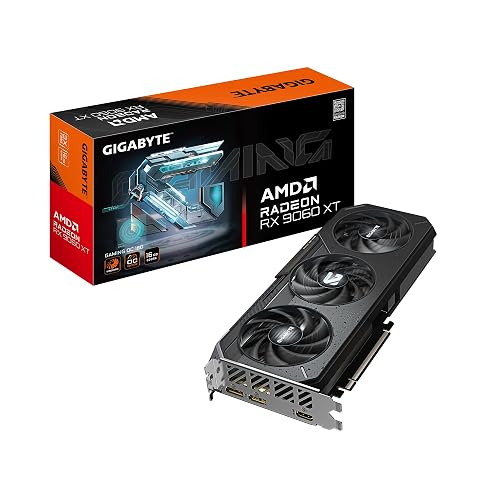
GIGABYTE Radeon RX 9060 XT Gaming OC 16G Graphics Card
If you need a high-performance card for gaming, creative work, and AI acceleration, the GIGABYTE Radeon RX 9060 XT Gaming OC 16G is designed to deliver. It features AMD RDNA 4 architecture, 16 GB of GDDR6 memory, and a 2700 MHz GPU clock for fast, responsive performance. The card supports PCIe 5.0, DisplayPort, and HDMI, so it integrates with modern desktop builds. The WINDFORCE cooler, Hawk Fan, and server-grade thermal gel help manage heat, and RGB lighting adds style. It can drive 8K output and includes a 3 year warranty.
- GPU Brand:AMD Radeon
- Memory Capacity:16 GB
- Memory Type:GDDR6
- PCIe Support:PCIe 5.0
- Max Resolution:7680 x 4320
- Fan Count:1 fan
- Additional Feature:WINDFORCE cooling
- Additional Feature:Hawk Fan
- Additional Feature:RGB lighting
PNY NVIDIA GeForce RTX 5070 Epic-X ARGB OC Graphics Card
The PNY NVIDIA GeForce RTX 5070 Epic-X ARGB OC is a strong fit for gamers and creators who want high-end performance in a compact, SFF-ready card. It features NVIDIA’s Blackwell GPU with 6,144 CUDA cores, fifth-gen Tensor Cores, and fourth-gen ray tracing for fast gaming and AI workloads. Its 12GB of GDDR7 on a 192-bit bus delivers up to 672 GB/s bandwidth, and the 2,685 MHz boost helps keep frame rates high. You also get DLSS 4, Reflex, Studio drivers, triple ARGB fans, four-display support, and PCIe 5.0 compatibility.
- GPU Brand:NVIDIA GeForce
- Memory Capacity:12 GB
- Memory Type:GDDR7
- PCIe Support:PCIe 5.0
- Max Resolution:7680 x 4320
- Fan Count:3 fans
- Additional Feature:DLSS 4 support
- Additional Feature:ARGB triple-fan
- Additional Feature:16-pin adapter cable
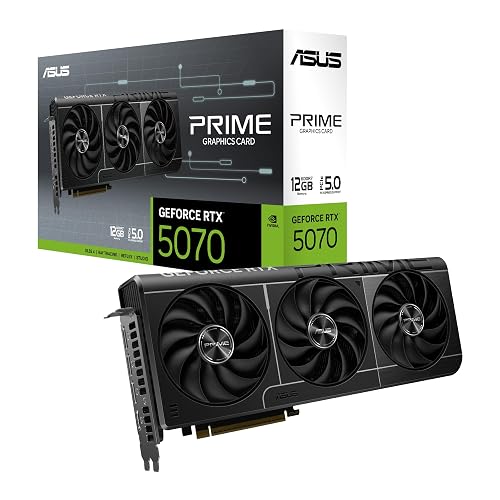
ASUS Prime GeForce RTX 5070 Graphics Card
Built for compact power, the ASUS Prime GeForce RTX 5070 (SFF-Ready) is a strong pick if you want top-tier gaming or creative performance in a small form factor desktop. You get NVIDIA’s Blackwell-based RTX 5070 with 12GB of fast GDDR7 memory, a 2542 MHz boost clock, and PCIe 5.0 compatibility. Three Axial-tech fans, a phase-change thermal pad, and dual BIOS help keep temperatures in check. HDMI 2.1b and three DisplayPort 2.1b outputs support 8K displays. Its 2.5 slot design fits tighter builds without sacrificing sustained performance or reliability under heavy loads.
- GPU Brand:NVIDIA GeForce
- Memory Capacity:12 GB
- Memory Type:GDDR7
- PCIe Support:PCIe 5.0
- Max Resolution:7680 x 4320
- Fan Count:3 fans
- Additional Feature:Dual BIOS
- Additional Feature:Phase-change thermal pad
- Additional Feature:SFF-ready design
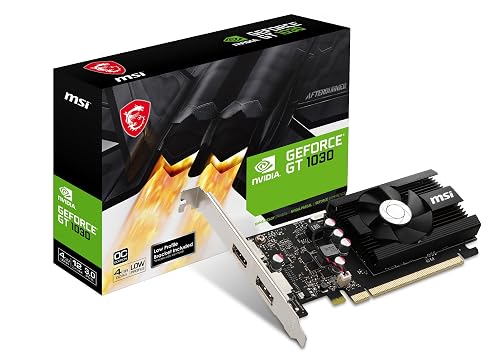
MSI GeForce GT 1030 4GB Graphics Card (GT 1030 4GD4 LP OC)
MSI’s GeForce GT 1030 4GB DDR4 LP OC is a smart pick when you need a compact, low-profile graphics card that boosts everyday PC performance without demanding much power or space. It features NVIDIA’s Pascal-based GT 1030, 4GB of DDR4 memory, a 1430 MHz boost clock, and a 64-bit bus for light gaming, HD video, photo editing, and general acceleration. The card supports HDMI 2.0b and DisplayPort 1.4a, 4K UHD output, DirectX 12, and GeForce Experience updates. With one fan and PCIe x16 support, it fits tight builds easily.
- GPU Brand:NVIDIA GeForce
- Memory Capacity:4 GB
- Memory Type:DDR4
- PCIe Support:PCIe x16
- Max Resolution:3840 x 2160
- Fan Count:1 fan
- Additional Feature:Low-profile form factor
- Additional Feature:DirectX 12 support
- Additional Feature:HD video acceleration
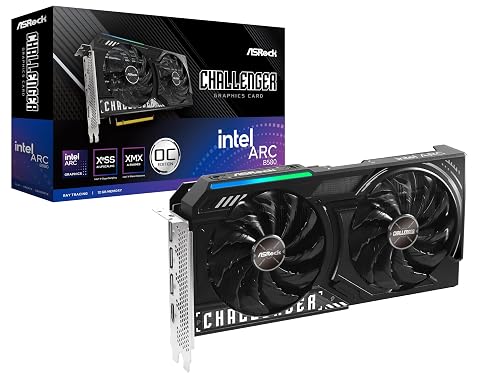
ASRock Intel Arc B580 Challenger 12GB OC Graphics Card
If you want a strong 1440p graphics card with AI-boosted upscaling, the ASRock Intel Arc B580 Challenger 12GB OC is a smart pick. It uses Intel’s Arc B580 GPU with Xe2-HPG, 20 compute units, and 160 XMX engines, and includes 12GB of GDDR6 on a 192-bit bus. The 2740 MHz boost clock helps drive modern games smoothly. XeSS 2 can raise frame rates without severely impacting image quality. You also get dual fans, a metal backplate, 0 dB silent operation, three DisplayPort 2.1 outputs, one HDMI 2.1a port, and support for up to four displays.
- GPU Brand:Intel Arc
- Memory Capacity:12 GB
- Memory Type:GDDR6
- PCIe Support:PCIe 4.0 x8
- Max Resolution:7680 x 4320
- Fan Count:2 fans
- Additional Feature:XeSS 2 support
- Additional Feature:0dB Silent Technology
- Additional Feature:Metal backplate
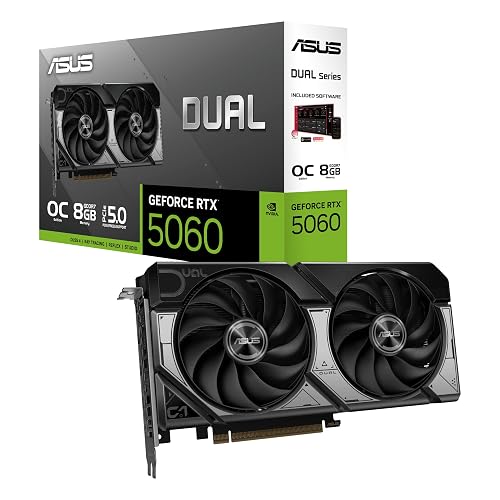
ASUS Dual GeForce RTX 5060 8GB OC Edition
The ASUS Dual GeForce RTX 5060 8GB OC Edition is a strong pick if you want modern gaming performance in a compact, SFF-ready card that still leaves room for serious cooling and quiet operation. It features NVIDIA’s Blackwell GPU, 8GB of fast GDDR7 memory, DLSS 4, and 623 AI TOPS for smoother frame pacing and smarter upscaling. Its OC boost reaches 2565 MHz. PCIe 5.0 compatibility and three DisplayPort 2.1b plus HDMI 2.1b outputs keep it versatile. Dual Axial-tech fans and a 0dB mode help you stay cool and quiet.
- GPU Brand:NVIDIA GeForce
- Memory Capacity:8 GB
- Memory Type:GDDR7
- PCIe Support:PCIe 5.0
- Max Resolution:7680 x 4320
- Fan Count:2 fans
- Additional Feature:623 AI TOPS
- Additional Feature:0dB technology
- Additional Feature:SFF-ready design
GIGABYTE GeForce RTX 5070 AERO OC 12G Graphics Card
Built on NVIDIA’s Blackwell architecture with DLSS 4, the GIGABYTE GeForce RTX 5070 AERO OC 12G targets gamers and creators who want high-end performance without moving into top-tier flagship pricing. It includes 12GB of fast GDDR7 memory, a 192-bit bus, and a 2600 MHz clock for smooth 1440p performance and capable 4K play. Enhanced RT and Tensor Cores let you push ray tracing and AI features harder. GIGABYTE’s WINDFORCE cooling and triple-fan design keep temperatures in check. PCIe 5.0, DisplayPort, and HDMI round out a polished, well-equipped card.
- GPU Brand:NVIDIA GeForce
- Memory Capacity:12 GB
- Memory Type:GDDR7
- PCIe Support:PCIe 5.0
- Max Resolution:7680 x 4320
- Fan Count:3 fans
- Additional Feature:WINDFORCE cooling
- Additional Feature:DLSS 4 support
- Additional Feature:Enhanced RT Cores
Factors to Consider When Choosing Graphics Cards GPUs Ranking
When ranking graphics cards, start with GPU performance because it sets the baseline for gaming and creative work. Also check memory capacity, power requirements, and cooling design, so the card fits your system and remains stable under load. Do not forget the display outputs; they determine which monitors and resolutions you can use.
GPU Performance
To rank GPUs accurately, look beyond core counts and check the architecture generation, since newer CUDA or stream processor designs usually deliver more work per clock than older ones. Compare base and boost clocks along with IPC gains, because these factors shape how well a card handles game loads and other demanding tasks. Do not trust specs alone; sustained performance matters when TDP and cooling allow a GPU to hold higher boosts for longer. For the clearest ranking, rely on benchmark results from real games, 3DMark, and compute tests run at the same resolution and settings. Those scores show which card actually wins, not just which one looks better on paper, so you can choose with confidence and avoid hype.
Memory Capacity
After you’ve compared architecture, clocks, and real-world benchmarks, memory capacity is the next spec that can reshape a GPU’s ranking. You should match VRAM to your workload. 4 to 8 GB works for 1080p gaming and everyday desktop use, 8 to 12 GB suits most 1440p setups, and 12 to 16 plus GB gives you room for 4K gaming, creative apps, and AI models. If you run high-resolution textures, multi-monitor layouts, or large datasets, too little VRAM can cause stutter, texture pop-in, or fallback to slower system RAM. Memory type also matters, because GDDR6 or GDDR7 paired with a 192 to 256 bit bus and high Gbps clocks can feed the cores much faster. Since VRAM is not upgradeable, choose at least your target’s minimum and leave headroom for updates and mods.
Power Requirements
Power matters just as much as performance, so check the GPU’s TDP or rated power draw before you buy. Modern mid to high end cards often sit around 150 W to 350 W or more, so your PSU needs enough wattage for the GPU and the rest of your system. For a strong gaming build, 650 to 850 W is common, depending on your CPU and peripherals. You should also confirm the required connectors, such as 6 pin, 8 pin, or 16 pin, because the wrong plugs can block installation and strain cables. Look at +12 V amperage, PSU efficiency, and age as well. A newer 80 Plus Gold or Platinum unit usually handles load better. Add a 20% to 30% safety margin for boost spikes and transient draws.
Cooling Design
When you are choosing a graphics card, cooling design can make a big difference in real-world performance and noise. Favor multi-slot heatsinks, ideally 2 to 2.5+ slots thick, with several heat pipes to spread heat across more surface area. Triple-fan or dual-axial layouts with well-shaped blades and large fins usually move air better, so your GPU stays cooler and quieter under load. Look for zero-RPM or 0dB modes if you want silent idle operation, but make sure the card restarts fans around 40 to 60°C. Better thermal materials, such as vapor chambers or phase-change pads, can lower temperatures further. Also, do not ignore your case; weak intake or exhaust can raise GPU temps by 5 to 15°C, even with a strong cooler.
Display Outputs
Display outputs can make or break how well a graphics card fits your setup. Check the port types and versions first; DisplayPort 2.1 and HDMI 2.1a deliver more bandwidth, higher refresh rates, and extras like VRR and ALLM. Count the physical outputs as well, since multi-monitor rigs often need three or more ports. Match those outputs to your target resolution and refresh rate, because not every port can handle 4K at 120 Hz or 8K at 60 Hz. Verify support for HDR, HDCP, and adaptive sync, especially if you stream protected video or want tear-free gaming. Finally, plan for cable and adapter needs, since some high-bandwidth modes require native connections or active adapters instead of simple passive ones.
Form Factor
Beyond ports and refresh rates, a graphics card also has to physically fit your build. Check the slot size first, because a 1-slot, 2-slot, or 3-slot card can block nearby PCIe slots or clash with a bulky cooler. Measure the card’s length as well; compact models may be around 170 mm, while full-size cards can exceed 320 mm. In a small case, verify cooler height and bracket shape so a tall shroud will not hit the side panel. Also confirm power connector placement and cable routing, since edge-mounted plugs can be awkward in tight builds. Finally, consider exhaust direction. Blower-style, open-air, and downward-venting designs all need the right airflow and clearance to cool effectively.
Warranty Coverage
Warranty can make or break the value of a graphics card, so check it before you buy. Compare coverage lengths, since most manufacturers offer one to three years of protection for defects and failures. Read the fine print to see what is included, typically manufacturing defects and component failure, not physical damage, incorrect installation, overclocking, or software problems. You will also want to know the claim process. Some brands require an RMA and proof of purchase, and you may pay shipping or diagnostics. Do not skip transferability, because if you sell the card coverage can affect resale value. Finally, watch for regional limits and exclusions. Modified cooling, third party repairs, or mining use can void your warranty quickly.
Frequently Asked Questions
Which GPU Offers the Best Value for High-Refresh-Rate 1440P Gaming?
You’ll usually get the best value with the Radeon RX 7800 XT. It handles high-refresh-rate 1440p gaming well, costs less than flagship options, and delivers strong raster performance without blowing your budget.
How Much Power Supply Wattage Do These Graphics Cards Typically Require?
A humble GPU can still demand a substantial PSU. You will typically need 650 to 850 watts for midrange cards, and 850 to 1000 watts for high-end models, depending on the CPU, overclocking, and additional components.
Which Card Is Most Suitable for Compact Small-Form-Factor PC Builds?
For compact small-form-factor builds, choose a very compact, power-efficient card such as an RTX 4060. It fits tight cases, runs cooler, and requires less power, so you avoid clearance and airflow problems in your SFF build.
Do These GPUS Support the Latest Ray Tracing and AI Upscaling Features?
Yes, you will get ray tracing and AI upscaling on most modern GPUs, including DLSS or FSR support. Check each card’s generation; newer models handle these features faster, smoother, and with better image quality.
Which Graphics Card Is Best for Content Creation and Streaming Tasks?
The RTX 4080 Super is the top choice for content creation and streaming. Some call it overkill; however, its AV1 encoder, CUDA support, and powerful AI tools make workflows faster, smoother, and more reliable.