

If you are hunting for AMD chips that punch like hidden heavyweights, these six stand out for very different reasons.
You will find a balanced everyday option, a multitasking workhorse, and several gaming-focused picks that can outclass pricier rivals.
One model even targets serious workstation workloads. The catch is that the best value depends on what you build, and that is where the details start to matter.
| AMD Ryzen 7 8700G 8-Core 16-Thread Desktop Processor | 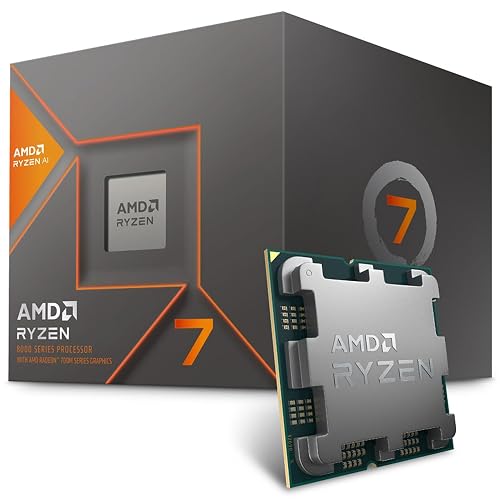 | Best Integrated Graphics | Core Count: 8 cores | Thread Count: 16 threads | Socket: AM5 | VIEW LATEST PRICE | Read Our Analysis |
| AMD Ryzen™ 9 5900XT 16-Core 32-Thread Unlocked Desktop Processor | 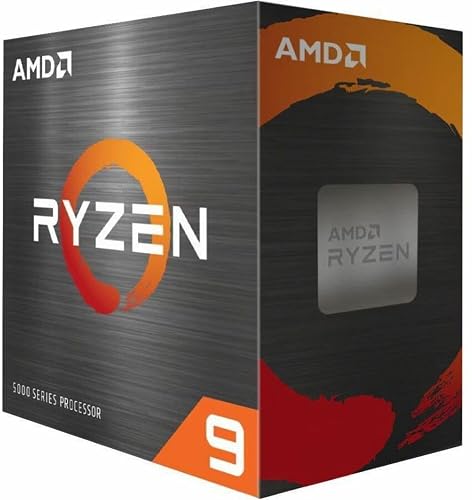 | Best Budget Flagship | Core Count: 16 cores | Thread Count: 32 threads | Socket: AM4 | VIEW LATEST PRICE | Read Our Analysis |
| AMD Ryzen 9 9900X3D 12-Core Processor |  | Best Gaming CPU | Core Count: 12 cores | Thread Count: 24 threads | Socket: AM5 | VIEW LATEST PRICE | Read Our Analysis |
| AMD Ryzen™ 7 9850X3D Desktop Processor | 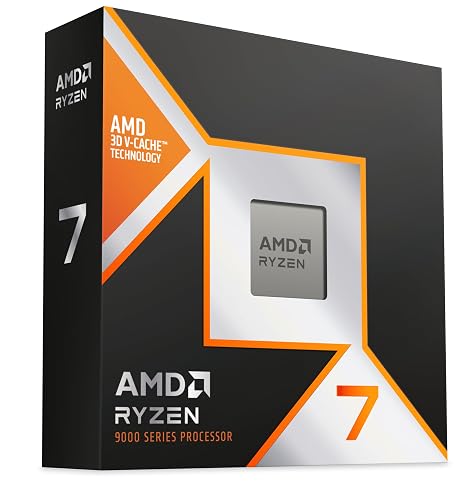 | Best Premium Gaming | Core Count: 8 cores | Thread Count: 16 threads | Socket: AM5 | VIEW LATEST PRICE | Read Our Analysis |
| AMD Ryzen 5 7600X3D AM5 6-Core Processor |  | Best Midrange Gaming | Core Count: 6 cores | Thread Count: 12 threads | Socket: AM5 | VIEW LATEST PRICE | Read Our Analysis |
| AMD Ryzen™ Threadripper™ 7960X 24-Core 48-Thread Processor | 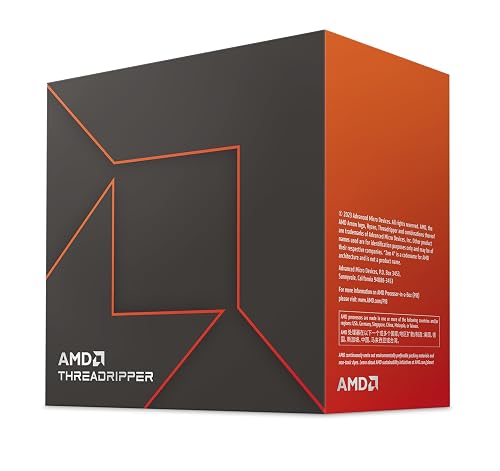 | Best Workstation CPU | Core Count: 24 cores | Thread Count: 48 threads | Socket: TRX50 | VIEW LATEST PRICE | Read Our Analysis |
More Details on Our Top Picks
AMD Ryzen 7 8700G 8-Core 16-Thread Desktop Processor
The AMD Ryzen 7 8700G is a strong pick if you want a compact, future-ready desktop CPU that can handle gaming, multitasking, and everyday performance without needing a separate graphics card. You get 8 cores and 16 threads, so you can juggle demanding apps with ease. Its Zen 4 design boosts up to 5.1 GHz, and it is overclockable if you want to increase performance. DDR5 support and the AM5 socket give you a platform that can grow with you. AMD even includes a Wraith Spire cooler, so you are ready to build right away.
- Core Count:8 cores
- Thread Count:16 threads
- Socket:AM5
- Boost Speed:5.1 GHz max boost
- Cache:Not listed
- Cooling:Wraith Spire included
- Additional Feature:Zen 4 architecture
- Additional Feature:Integrated graphics
- Additional Feature:Unlocked for overclocking
AMD Ryzen™ 9 5900XT 16-Core 32-Thread Unlocked Desktop Processor
If you want a high-core-count AM4 chip for serious multitasking, content creation, or gaming with plenty of headroom, the AMD Ryzen 9 5900XT stands out with 16 cores, 32 threads, and an unrestricted design for overclocking. You get Zen 3 performance, a 3.3 GHz base clock, and boost speeds up to 4.8 GHz. Its 72 MB cache and DDR4-3200 support help keep workloads moving. Since it is a 105 W AM4 processor, you will need an aftermarket cooler, but PCIe 4.0 support keeps your platform current. With a 3 year warranty and strong customer ratings, it is a capable long-term upgrade.
- Core Count:16 cores
- Thread Count:32 threads
- Socket:AM4
- Boost Speed:4.8 GHz max boost
- Cache:72 MB cache
- Cooling:Cooler not included
- Additional Feature:Zen 3 architecture
- Additional Feature:PCIe 4.0 support
- Additional Feature:105-watt TDP
AMD Ryzen 9 9900X3D 12-Core Processor
AMD’s Ryzen 9 9900X3D 12-Core Processor is a strong pick for you if you want top-tier gaming performance and serious multitasking in one chip. You get 12 cores and 24 threads, so it can handle demanding games, streaming, and content creation without slowing down. Its 4.4 GHz speed and Socket AM5 support make it a solid fit for modern Windows systems. The 2nd gen AMD 3D V-Cache delivers 140 MB of cache for faster game responsiveness, while the 120 watt design keeps power use manageable. This CPU’s compact footprint also fits cleanly into your build.
- Core Count:12 cores
- Thread Count:24 threads
- Socket:AM5
- Boost Speed:4.4 GHz base speed
- Cache:140 MB cache
- Cooling:Not listed
- Additional Feature:2nd Gen 3D V-Cache
- Additional Feature:140 MB cache
- Additional Feature:Gaming and creation
AMD Ryzen™ 7 9850X3D Desktop Processor
Built for serious gamers and high-performance desktop users, the AMD Ryzen 7 9850X3D delivers 8 cores, 16 threads, and a 4.7 GHz processor speed on Socket AM5, providing the responsiveness needed for demanding play and multitasking. It includes 104 MB of cache and a 140-watt design, which help maintain performance under heavy loads. As part of AMD’s Ryzen 7 lineup, this desktop chip is engineered to keep systems fast, fluid, and ready for competitive gaming. The 9850X3D continues AMD’s push for faster top-tier gaming.
- Core Count:8 cores
- Thread Count:16 threads
- Socket:AM5
- Boost Speed:4.7 GHz speed
- Cache:104 MB cache
- Cooling:Not listed
- Additional Feature:104 MB cache
- Additional Feature:140-watt wattage
- Additional Feature:“Worlds Best Gaming”
AMD Ryzen 5 7600X3D AM5 6-Core Processor
The AMD Ryzen 5 7600X3D is a strong pick for gamers and everyday users who want a 6-core, 12-thread AM5 processor with 96 MB of L3 cache. You get a 4.1 GHz desktop chip built on AMD’s Raphael platform. It fits A620, B650, B650E, B840, B850, X670, X670E, X870, or X870E motherboards. It supports up to 128 GB of DDR5-5200 memory, so you can pair it with a fast modern system. AMD ships the processor only, so you will need to provide your own heatsink. The product includes a 3-year limited warranty.
- Core Count:6 cores
- Thread Count:12 threads
- Socket:AM5
- Boost Speed:4.1 GHz
- Cache:6 MB L2 / 96 MB L3
- Cooling:Heatsink not included
- Additional Feature:96 MB L3 cache
- Additional Feature:DDR5-5200 support
- Additional Feature:Heatsink not included
AMD Ryzen™ Threadripper™ 7960X 24-Core 48-Thread Processor
If you need a serious workstation chip for demanding professional work, the AMD Ryzen Threadripper 7960X stands out with 24 cores, 48 threads, and a 5.3 GHz max boost. It offers a 4.2 GHz base speed, 152 MB of cache, and an unencumbered design with automatic overclocking. On TRX50, it supports quad-channel DDR5 RDIMM memory, up to 1 TB, and 80 PCIe lanes for heavy expansion. Its 350W TDP means you will need strong cooling, since it does not include one. For prosumers, it is an ultimate platform.
- Core Count:24 cores
- Thread Count:48 threads
- Socket:TRX50
- Boost Speed:5.3 GHz max boost
- Cache:152 MB cache
- Cooling:Cooler not included
- Additional Feature:80 PCIe lanes
- Additional Feature:Quad-channel DDR5
- Additional Feature:350W TDP
Factors to Consider When Choosing AMD CPUs
When choosing an AMD CPU, match the core and thread counts to your actual tasks, since multitasking and heavy workloads require more of both. Also consider clock speed and cache size, as they influence how responsive your system feels in everyday use and in demanding applications. Finally, ensure the CPU is compatible with your motherboard socket, because an incompatible socket prevents the processor from working.
Core Count
Core count tells you how many processing cores your AMD CPU has, and more cores usually mean more tasks can run at once. If you mostly browse, stream, and handle office work, six cores can do the job well. For gaming and everyday multitasking, eight cores usually give you a better balance without overspending. If you create content, stream while gaming, or keep many apps open, 12, 16, or even 24 cores can help you stay smooth under load. Match core count to your workload, not chase the biggest number. More cores often boost multi threaded performance, but they will not always speed up simpler tasks. For the best pick, consider how parallel your work really is before you buy.
Thread Count
Thread count shows how many processing threads your AMD CPU can handle at once, and more threads usually help with multitasking and other parallel workloads. You will often see thread counts higher than core counts because some AMD CPUs use simultaneous multithreading, which lets each core work on more than one thread. That matters when you are rendering, encoding video, or running large simulations, since extra threads can spread work across more execution paths and finish jobs sooner. For example, a 16-core, 32-thread chip can handle twice as many threads as an 8-core, 16-thread model, which can help if you stream while gaming or create content. Still, do not chase thread count alone; balance it with clock speed and cache.
Clock Speed
Clock speed, measured in GHz, tells you how many processing cycles your AMD CPU can attempt each second, so higher numbers can improve performance in tasks that rely on fast instruction handling. You should look at both base clock and max boost clock, because your processor may spend most of its time at a steadier speed and then surge higher when thermals and workload allow it. A chip with a 5.3 GHz boost can feel snappier than one topping out at 4.2 GHz in games and lightly threaded apps. Still, do not judge clock speed alone; a lower GHz CPU with more cores can win in parallel work. Cooling and power limits matter too, since your CPU cannot always sustain peak boost without enough thermal and wattage headroom.
Cache Size
Cache size is another key factor, because more on-chip cache lets your AMD CPU keep frequently used data closer to the cores, which can reduce slower trips to system memory and improve responsiveness. You will often see AMD chips listed with L2 and L3 cache, and their combined total gives you a quick sense of fast storage available on the chip. Larger L3 cache can help in gaming and data-heavy workloads, especially when the same assets or instructions are reused often. Cache totals vary a lot, with some models around 104 MB and others reaching about 152 MB. Still, do not judge a CPU by cache alone; weigh it alongside core count, clock speed, and memory support to find the best overall fit.
Socket Compatibility
Socket compatibility is the first thing you should check, because your AMD CPU has to match the motherboard’s socket or it simply will not fit or work correctly. You will see labels like AM5, AM4, or TRX50, and each one matters. If the socket does not match, the chip will not install and it will not function. Confirm the socket designation before you buy anything. Keep in mind that CPU generations can change sockets, so an upgrade may force you to replace the motherboard too, even if you remain with AMD. AM5 indicates newer desktop platforms, while AM4 fits older systems. Workstation processors may require TRX50, which is not interchangeable with mainstream desktop boards.
Memory Support
Once you’ve confirmed the socket, check memory support next, because the right AMD CPU has to work with both your motherboard and your RAM. Match the processor to the memory standard your platform uses, since some AMD chips support DDR5 while older ones top out at DDR4 3200. That choice affects compatibility and real world speed. Also look at capacity, one CPU may handle 128 GB of DDR5, while another can address up to 1 TB of system memory. Channel design matters too, especially if you need quad channel DDR5 RDIMM bandwidth for demanding tasks. Finally, compare the rated memory speed, because DDR5 5200 and DDR4 3200 support can change performance. Pick a CPU that fits your chipset, modules, and workload.
Power Requirements
Power matters just as much as cores and clock speed when you pick an AMD CPU, so check the processor’s wattage or TDP first. Higher-end chips can draw far more power than you’d expect, with ratings like 105 W, 120 W, 140 W, or even 350 W. Verify that your power supply can handle the CPU’s peak draw plus the rest of your system, especially if you are buying a high-core-count model with strong boost clocks. If the processor does not include a cooler, add extra power and headroom for your cooling choice. Do not assume integrated graphics or memory support lowers demand enough to matter. If the chip is unrestrained, leave extra capacity for boosted settings or overclocking.
Cooling Needs
Cooling goes hand in hand with power draw, so once you have checked an AMD CPU’s wattage, make sure your setup can keep it in a safe temperature range. Higher-wattage chips can need serious airflow, especially if they pull around 120 W, 140 W, or even 350 W under load. If your processor ships with a stock cooler, you will save money and simplify the build. If it does not, you will need to buy one separately. Small-form or efficiency-focused CPUs are easier to cool because they run cooler and draw less power. If you plan to overclock, expect more heat and choose a stronger cooler. For gaming, streaming, or content creation, pick a cooler with extra thermal headroom so your CPU can hold boost clocks longer.
Frequently Asked Questions
Which AMD CPU Offers the Best Value for Gaming Only?
If gaming is your only goal, consider the Ryzen 5 7600X. It hits the sweet spot for gaming, delivering strong frame rates, excellent overclocking, and value that feels almost unfair.
Do AMD APUS Work Well Without a Dedicated Graphics Card?
Yes. You can use AMD APUs without a dedicated graphics card, and you will get solid everyday performance and light gaming. Use faster RAM, though, since the integrated graphics share system memory.
Is AM5 Worth Choosing for Future CPU Upgrades?
Yes, if you want room to grow, AM5 is a strong bet. It is the ladder you climb without rebuilding the house. You will likely be able to upgrade CPUs for longer, and DDR5 plus newer features should keep you covered.
Which AMD CPU Is Best for Streaming and Multitasking?
You should choose the Ryzen 9 7900X. It handles streaming and multitasking brilliantly with 12 cores and strong single-thread speed. If you need a cheaper option, the Ryzen 7 7700X still provides excellent performance.
Are Threadripper CPUS Overkill for Most Desktop Users?
Yes, they are overkill for most desktop users. You only need a Threadripper if you run heavy content creation, massive multitasking, or workstation workloads. For gaming, everyday tasks, and streaming, cheaper Ryzen chips usually make more sense.