

A 4K game can look like a window into another world, but only if your graphics card can keep pace.
When you are chasing sharp textures, smooth frame rates, and ray tracing without stutter, the right GPU matters more than ever.
From high VRAM powerhouses to smarter midrange picks, the seven cards below can change how you play, and one of them may be the better fit than you expect.


More Details on Our Top Picks
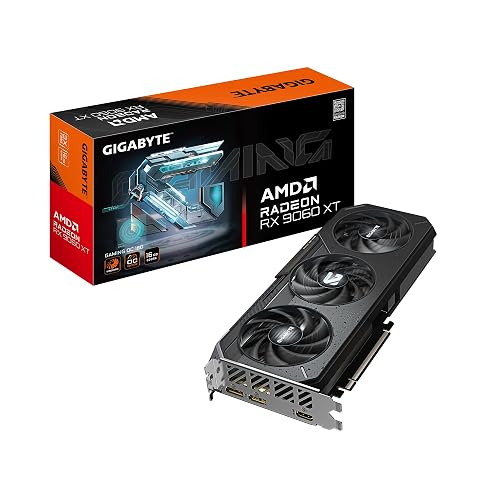
GIGABYTE Radeon RX 9060 XT Gaming OC 16G Graphics Card
If you want a 4K-ready card that balances strong performance with modern features, the GIGABYTE Radeon RX 9060 XT Gaming OC 16G is built for you. It features AMD RDNA 4 graphics, 16GB of GDDR6 memory, and a 2,700 MHz GPU clock for demanding desktop gaming. Its PCIe 5.0 x16 interface, DisplayPort and HDMI outputs, and support for up to 7680 x 4320 resolution make it suitable for high-end displays. The WINDFORCE cooling system, Hawk Fan, and server-grade thermal gel help keep temperatures in check. RGB lighting and AI acceleration add extra appeal.
- GPU:Radeon RX 9060 XT
- Memory:16 GB GDDR6
- Interface:PCIe 5.0 x16
- Cooling:WINDFORCE cooling
- Outputs:DisplayPort/HDMI
- Max Resolution:7680 x 4320
- Additional Feature:WINDFORCE Cooling System
- Additional Feature:Server-grade thermal gel
- Additional Feature:RGB lighting
PNY NVIDIA GeForce RTX 5070 Epic-X ARGB OC Graphics Card
The PNY NVIDIA GeForce RTX 5070 Epic-X ARGB OC is a strong pick for 4K gamers who want modern Blackwell performance in a compact, SFF-ready design. It features 6,144 CUDA cores, 12GB of GDDR7 memory on a 192-bit bus, and a 2,685 MHz boost clock for smooth Ultra HD play. DLSS 4, Reflex, and fourth-gen ray tracing cores help push higher frame rates with lower latency. The card uses a triple-fan, 2.4-slot cooler, supports PCIe 5.0, and offers HDMI 2.1b plus three DisplayPort 2.1b outputs for versatile connectivity.
- GPU:GeForce RTX 5070
- Memory:12 GB GDDR7
- Interface:PCIe 5.0 x16
- Cooling:Triple-fan cooling
- Outputs:DisplayPort/HDMI
- Max Resolution:7680 x 4320
- Additional Feature:DLSS 4 support
- Additional Feature:SFF-ready design
- Additional Feature:ARGB triple-fan
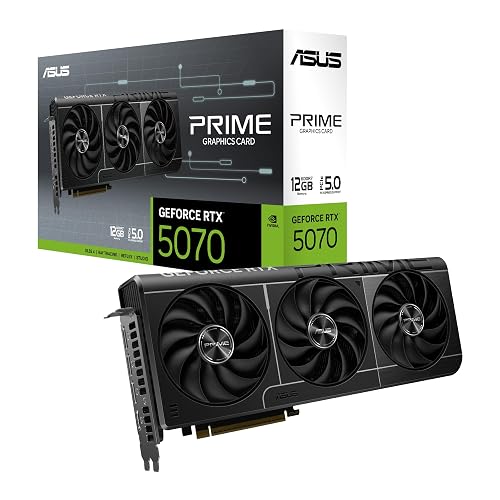
ASUS Prime GeForce RTX 5070 Graphics Card
ASUS Prime GeForce RTX 5070 delivers a strong 4K-ready option for gamers who want high-end performance in a compact build, thanks to its Blackwell GPU, 12GB of GDDR7 memory, and SFF-ready 2.5-slot design. You get PCIe 5.0 support, a 2542 MHz boost clock, and HDMI 2.1b plus three DisplayPort 2.1b outputs for up to 7680 x 4320 resolution. ASUS keeps temperatures in check with three Axial-tech fans, a phase-change thermal pad, and a side-panel friendly heatsink layout. Dual BIOS and a 3-year warranty add confidence for your desktop rig.
- GPU:GeForce RTX 5070
- Memory:12 GB GDDR7
- Interface:PCIe 5.0 x16
- Cooling:Triple Axial-tech fans
- Outputs:DisplayPort/HDMI
- Max Resolution:7680 x 4320
- Additional Feature:Dual BIOS
- Additional Feature:Phase-change thermal pad
- Additional Feature:Side-panel airflow
MOUGOL Radeon RX 580 Gaming Graphics Card 8GB
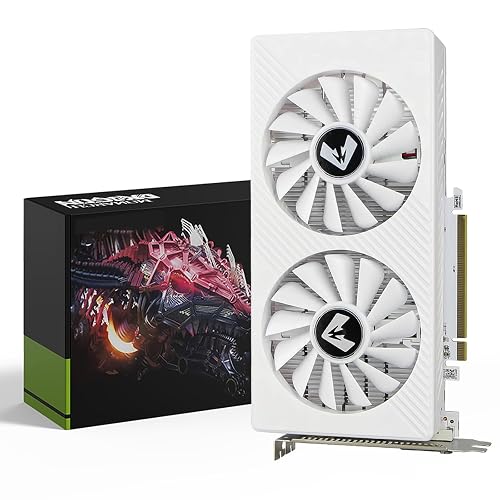
MOUGOL’s Radeon RX 580 8GB is a sensible pick if you want a budget-friendly, easy drop-in upgrade for 1080p gaming, streaming, and everyday creative work, rather than true 4K max-settings play. It features 2048 stream processors, a 1206 MHz core, and 8GB of Samsung GDDR5 on a 256-bit bus, which helps with multitasking. HDMI, DisplayPort, and DVI outputs support triple-monitor setups up to 7680 x 4320. Dual fans, heat pipes, and a single 6-pin power connector keep installation simple. AMD Adrenalin provides tuning, recording, and driver support.
- GPU:Radeon RX 580
- Memory:8 GB GDDR5
- Interface:PCIe 3.0 x16
- Cooling:Dual-fan cooling
- Outputs:HDMI/DP/DVI
- Max Resolution:7680 x 4320
- Additional Feature:2048 stream processors
- Additional Feature:Triple-monitor support
- Additional Feature:AMD Adrenalin software
ASUS TUF GeForce RTX 5070 Ti OC Graphics Card
If you want a rugged 4K-ready card that balances high-end performance with long-term reliability, the ASUS TUF GeForce RTX 5070 Ti 16GB GDDR7 OC Edition stands out. You get NVIDIA’s Blackwell GPU, DLSS 4, and 16GB of fast GDDR7 memory for smooth Ultra HD gaming. In OC mode it boosts to 2610 MHz, and its massive 3.125 slot cooler with three Axial-tech fans helps keep temperatures low. You also get PCIe 5.0, three DisplayPort 2.1a ports, two HDMI 2.1b outputs, and support for 7680 x 4320 resolution, plus durable military-grade components.
- GPU:GeForce RTX 5070 Ti
- Memory:16 GB GDDR7
- Interface:PCIe 5.0 x16
- Cooling:Triple Axial-tech fans
- Outputs:DisplayPort/HDMI
- Max Resolution:7680 x 4320
- Additional Feature:Military-grade components
- Additional Feature:Auto-Extreme manufacturing
- Additional Feature:Protective PCB coating
MSI GeForce GT 1030 4GB Graphics Card (GT 1030 4GD4 LP OC)
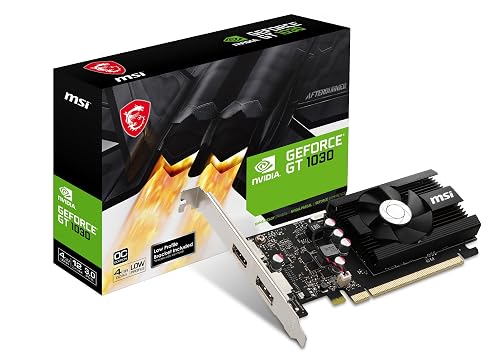
The MSI GeForce GT 1030 4GD4 LP OC is a compact, low-profile graphics card suited for a simple 4K-capable desktop upgrade for everyday use, HD video, and light gaming, not demanding AAA titles. It features a Pascal-based NVIDIA GeForce GT 1030 with 4GB DDR4, a 1430 MHz boost clock, and 4K output up to 3840 x 2160 via HDMI 2.0b or DisplayPort 1.4a. The card fits PCIe x16 systems, includes GeForce Experience support, and adds DirectX 12 compatibility. With a single fan, it remains small and quiet.
- GPU:GeForce GT 1030
- Memory:4 GB DDR4
- Interface:PCIe x16
- Cooling:Single-fan cooling
- Outputs:DisplayPort/HDMI
- Max Resolution:3840 x 2160
- Additional Feature:Low-profile design
- Additional Feature:GeForce Experience
- Additional Feature:Quick setup guide
ASRock Intel Arc B580 Challenger 12GB Graphics Card
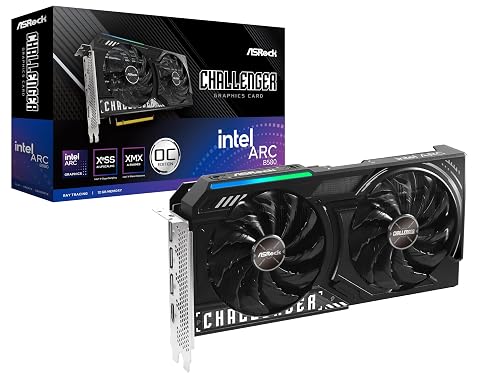
ASRock’s Intel Arc B580 Challenger 12GB is a practical pick if you want a value-focused card that can handle 1440p gaming well, and can step into 4K with Intel XeSS 2 support. It uses Intel’s Xe2-HPG architecture, features 160 XMX engines, and reaches a 2,740 MHz boost clock for solid modern performance. The 12GB of GDDR6 on a 192-bit bus helps with higher-resolution textures. DisplayPort 2.1 and HDMI 2.1a cover today’s monitors. Dual fans, a metal backplate, and a single 8-pin connector keep setup straightforward.
- GPU:Arc B580
- Memory:12 GB GDDR6
- Interface:PCIe 4.0 x8
- Cooling:Dual axial fans
- Outputs:DisplayPort/HDMI
- Max Resolution:7680 x 4320
- Additional Feature:XeSS 2 support
- Additional Feature:0dB silent cooling
- Additional Feature:Metal backplate
Factors to Consider When Choosing Graphics Cards for 4K Gaming
When choosing a graphics card for 4K gaming, ensure you have enough VRAM and memory bandwidth to handle high-resolution textures and maintain smooth frame delivery. Also consider ray tracing performance, upscaling support, and cooling efficiency, since each affects image quality and sustained performance. Finding the right balance delivers sharper visuals without sacrificing stability or speed.
VRAM Capacity
VRAM capacity is a major factor in 4K gaming, because high or ultra settings can quickly push memory demands beyond 8 to 10 GB, especially with large texture packs, ray tracing, and multiple render targets. For smooth play, you should aim for 12 to 16 GB so your GPU can hold big textures, framebuffers, and other heavy data without strain. If you skimp here, the driver may fall back to system RAM or lower mip levels, which leads to stutters, hitching, and texture pop-in. That risk grows in modern AAA games and with higher resolution texture packs. Even if today’s titles run fine, extra VRAM gives you more headroom for future releases and helps keep 4K visuals consistent as game assets get heavier.
Memory Bandwidth
Memory bandwidth is the data highway your GPU uses to move textures, framebuffers, and compute data, and at 4K it matters a lot because those workloads get huge. You want high GB/s so your card can read and write data fast enough to keep ultra-HD textures and large framebuffers flowing. Bandwidth comes from bus width and memory speed, so a wider 256-bit bus or faster GDDR6 or GDDR7 can boost performance. For 4K gaming, look for several hundred GB/s, not 1080p-level numbers. If bandwidth is too low, your GPU may stall, dip in frame rate, and lean on slower system memory. When you compare cards, check both bandwidth and memory design, since they help you sustain smoother, higher-resolution play with less bottlenecking.
Ray Tracing Power
Ray tracing is one of the biggest stress tests for a 4K GPU, and you should judge it by dedicated RT hardware rather than shader FLOPS alone. At 3840×2160, ray tracing can cut frame rates by 40 to 70 percent because each pixel needs far more work than rasterization. You will get a better read on capability by checking ray-triangle intersection throughput and BVH traversal performance, since those metrics track real ray workloads more closely. Real-time ray tracing also benefits from hardware denoising and temporal or sparse sampling, which reduce rays per pixel. Expect higher power draw and more heat, too. Strong cooling and extra TDP headroom matter if you want sustained performance during long sessions.
Upscaling Support
When you’re shopping for a 4K graphics card, upscaling support can make a huge difference in real-world performance. You can use AI-driven temporal or spatial upscalers to render games at 1440p or 1800p, then reconstruct them to 4K, which often boosts frame rates without wrecking perceived detail. Look for cards that support advanced methods with frame generation or neural reconstruction, since they can deliver about 1.5 to 3 times the effective performance of native 4K, depending on the game and settings. Hardware-accelerated upscaling also helps by cutting CPU and GPU overhead, so gameplay feels smoother and latency stays lower. Check for temporal AA compatibility, motion stability options, and strong game profiles. Then choose a preset that balances speed with acceptable softness, ghosting, or shimmering.
Cooling Efficiency
Upscaling can lift frame rates, but a 4K GPU still has to handle heavy sustained loads, so cooling efficiency matters just as much. You should look for a card with a large heatsink, strong airflow, and dual or triple fan cooling, because 250 W to 350 W plus workloads dump a lot of heat over long sessions. Multi fan designs with higher pressure fans move air better through denser cases and help hold boost clocks steady. Premium thermal gel, phase change pads, and direct contact heat pipes can also lower junction temperatures by improving heat transfer from the die. Do not ignore your case, either. Balanced intake and exhaust, clear airflow paths, and room around the card can cut temperatures by 5 to 15 degrees C and keep your rig quieter under pressure.
Power Requirements
Power requirements matter as much as raw GPU speed. Modern 4K cards often draw around 200 W to 450 W and can stress the rest of your system under sustained load. Add your CPU, drives, RAM, and peripherals, which can use another 150 to 250 W, and then choose a PSU with at least 20 to 30 percent extra headroom. Check the card’s connectors before you buy; 8-pin and 16-pin plugs need native support or approved adapters, not improvised cabling. You also need strong +12 V rails and enough PCIe amperage, because weak units can throttle, crash, or damage parts during long gaming sessions. Finally, keep your case well ventilated, because higher power draw creates more heat and increases PSU stress.
Display Output Support
Once you have confirmed the PSU can handle the load, the next thing to check is what the card can actually send to your display. You want DisplayPort 1.4 or 2.0 or later, or HDMI 2.1 or 2.1b, so you can game at 4K 120 Hz or higher with VRR and HDR. Do not assume every port works the same; verify each output’s maximum resolution and refresh-rate combinations. If you plan on dual monitors, streaming, or recording, choose a card with enough DisplayPort and HDMI connections to avoid adapters. Make sure your cable and monitor support HDCP, DSC, VRR, and ALLM. In small cases or complex setups, check the port layout so plugs remain accessible and nothing is blocked.
Frequently Asked Questions
Can 4K Gaming Work With 60 FPS on a Budget GPU?
Yes, but only with significant compromises. Expect to lower visual settings, use upscaling technologies, and stick to older or less demanding titles. Achieving native 4K at a consistent 60 fps on a budget GPU is usually beyond its capabilities.
Do These Graphics Cards Support Ray Tracing at 4K?
Yes, you can use ray tracing at 4K, but you will need a very powerful graphics card and either lower in-game settings or an upscaling solution. Budget GPUs typically struggle, so you should not expect smooth performance in demanding titles.
How Much VRAM Is Enough for Ultra HD Gaming?
Think of VRAM as a texture backpack. You should have at least 12 GB for Ultra HD gaming, and 16 GB gives you more headroom. You can run some titles at 4K with less, but future games may be more demanding on VRAM.
Which Card Is Best for 4K Gaming and Content Creation?
You’ll get the best mix of 4K gaming and content creation from an RTX 4090. It crushes ultra HD, handles demanding edits, and provides top-tier CUDA, ray tracing, and excellent AI-accelerated workflows.
Do I Need a New Power Supply for 4K Graphics Cards?
Yes, you may need a new power supply if your 4K graphics card draws more wattage than your current unit can safely handle. Check your GPU’s requirements, then choose a quality PSU with sufficient headroom.