

If you need a quiet card for office work, smooth media playback, or real 1080p gaming on a tight budget, you have options, and some will surprise you.
You might choose a low-profile GT 710, a compact GT 730 or GT 1030, or step up to an RX 580 if performance matters more than size.
The right card depends on your case, power supply, and ports, and a few picks stand out for reasons you may not expect.

More Details on Our Top Picks
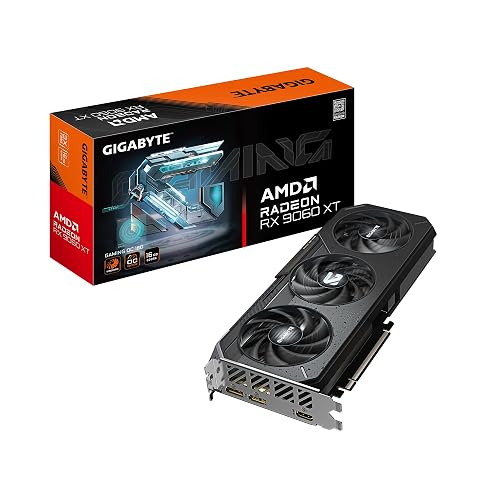
GIGABYTE Radeon RX 9060 XT Gaming OC 16G Graphics Card
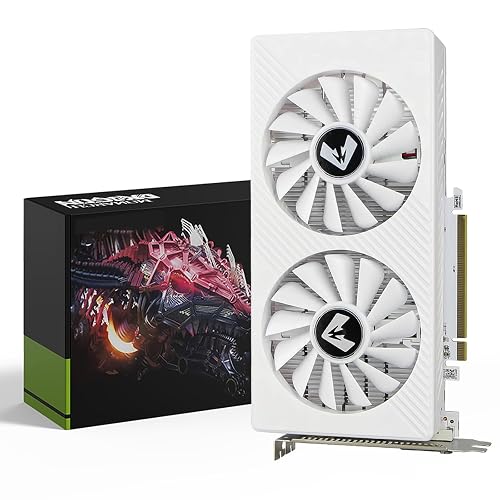
If you want strong modern gaming performance and creative-apps support in a desktop build, the GIGABYTE Radeon RX 9060 XT Gaming OC 16G stands out with 16 GB of GDDR6, AMD RDNA 4 architecture, and AI acceleration. The GPU runs at 2700 MHz, memory at 20,000 MHz, and the card is PCIe 5.0 compatible for current systems. The WINDFORCE cooler uses a Hawk fan and server-grade thermal gel to keep temperatures in check, and RGB lighting adds visual flair. It outputs via DisplayPort and HDMI, supports 4K gaming, and can reach 8K resolution.
- GPU Model:Radeon RX 9060 XT
- VRAM:16 GB
- Memory Type:GDDR6
- Form Factor:Standard desktop
- Video Outputs:DisplayPort/HDMI
- Max Resolution:7680 x 4320
- Additional Feature:WINDFORCE cooling system
- Additional Feature:Hawk fan design
- Additional Feature:RGB lighting
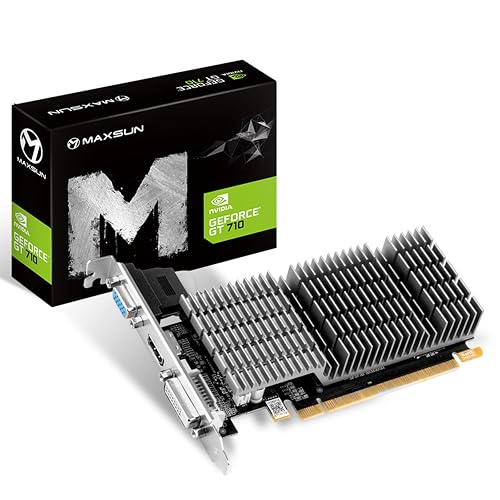
maxsun GeForce GT 710 2GB Low Profile Graphics Card
The maxsun GeForce GT 710 2GB Low Profile Graphics Card is a smart pick if you need a quiet, low-profile GPU that fits into an ITX or small-form-factor build without adding extra power draw. It includes 2GB of GDDR3 memory and outputs via HDMI, DVI-D, and VGA, with support for dual displays at up to 1920 x 1080. Its fanless heatsink keeps noise at 0 dB and helps manage temperatures. With DirectX 12, OpenGL 4.5, CUDA, and HDCP support, it is well suited for office work, media playback, and light gaming.
- GPU Model:GeForce GT 710
- VRAM:2 GB
- Memory Type:GDDR3
- Form Factor:Low profile
- Video Outputs:HDMI/DVI/VGA
- Max Resolution:1920 x 1080
- Additional Feature:Passive 0 dB cooling
- Additional Feature:G-Sync Ready
- Additional Feature:Multi-monitor support
ASUS GeForce GT 730 Low Profile Graphics Card
ASUS’s GeForce GT 730 Low Profile Graphics Card is a smart pick if you need a compact, quiet GPU for a basic desktop, HTPC, or older system upgrade. It features 2GB of GDDR5 memory, a 927 MHz clock, and PCIe x16 support in a low-profile, single-slot design. Its passive cooler keeps operation at 0 dB, so it will not add noise to your setup. You can connect via DVI-D, VGA, or HDMI and drive resolutions up to 2560 x 1600. ASUS also includes low-profile brackets, GPU Tweak II, and a 3-year warranty.
- GPU Model:GeForce GT 730
- VRAM:2 GB
- Memory Type:GDDR5
- Form Factor:Low profile
- Video Outputs:DVI/HDMI/VGA
- Max Resolution:2560 x 1600
- Additional Feature:GPU Tweak II
- Additional Feature:Auto-Extreme Technology
- Additional Feature:0 dB silent operation
MOUGOL Radeon RX 580 8GB Gaming Graphics Card
MOUGOL’s Radeon RX 580 8GB is a strong pick for budget gamers who want solid 1080p performance without stretching past $100. You get 2048 stream processors, a 1206 MHz core, and 8GB of Samsung GDDR5 on a wide 256-bit bus, so it can handle Fortnite, GTA V, Apex Legends, and Valorant smoothly. It supports DirectX 12, Vulkan, and OpenGL 4.6, plus AMD Adrenalin for driver updates and optimization. Dual fan cooling and a sturdy backplate help keep it quiet and reliable. You also get DisplayPort, HDMI, DVI, and triple monitor support.
- GPU Model:Radeon RX 580
- VRAM:8 GB
- Memory Type:GDDR5
- Form Factor:Standard desktop
- Video Outputs:DisplayPort/HDMI/DVI
- Max Resolution:7680 x 4320
- Additional Feature:2048 stream processors
- Additional Feature:Dual-fan heat pipes
- Additional Feature:AMD Adrenalin support
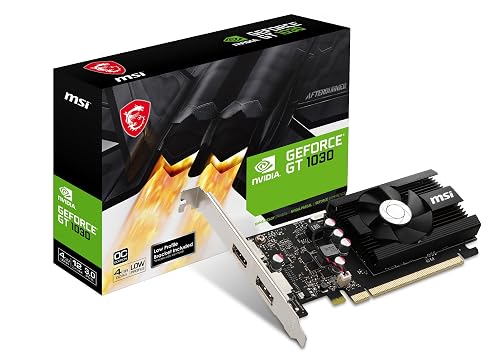
MSI GeForce GT 1030 4GB Graphics Card
MSI’s GeForce GT 1030 4GB DDR4 Low Profile OC is an affordable choice for everyday PC acceleration, HD video, light gaming, and basic photo editing without a bulky setup. It delivers NVIDIA Pascal performance, a 1430 MHz boost clock, DirectX 12 support, and 4GB of DDR4 memory on a 64-bit bus. The card provides one DisplayPort 1.4a and one HDMI 2.0b output, supports 4K UHD, and fits PCIe x16 desktops. Its single-fan, low-profile design remains compact. GeForce Experience helps you keep drivers current.
- GPU Model:GeForce GT 1030
- VRAM:4 GB
- Memory Type:DDR4
- Form Factor:Low profile
- Video Outputs:DisplayPort/HDMI
- Max Resolution:3840 x 2160
- Additional Feature:GeForce Experience
- Additional Feature:Low-profile design
- Additional Feature:3-year warranty
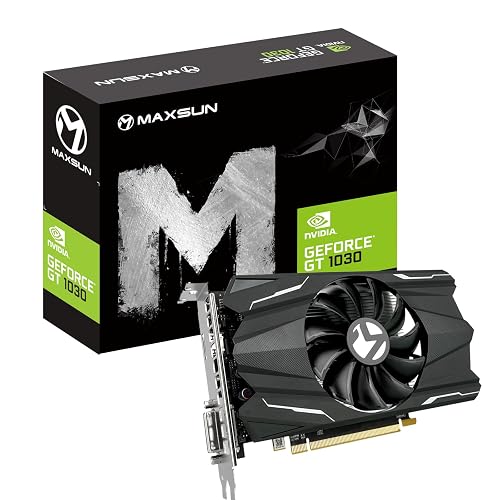
maxsun GeForce GT 1030 4GB Graphics Card
If you need a compact, budget-friendly card for a small desktop or ITX build, the MAXSUN GeForce GT 1030 4GB is a strong fit. It features an NVIDIA GeForce GT 1030 GPU with 4GB of GDDR4 memory, a boost clock up to 1380 MHz, and PCIe x4 support. Its mini ITX form factor fits tight cases, and HDMI and DVI-D cover display needs up to 4K. The single 3.5-inch fan runs quietly, and the silver-plated PCB with solid capacitors helps improve stability. A 3-year warranty is included.
- GPU Model:GeForce GT 1030
- VRAM:4 GB
- Memory Type:GDDR4
- Form Factor:Mini ITX
- Video Outputs:HDMI/DVI-D
- Max Resolution:4096 x 2160
- Additional Feature:Silver plated PCB
- Additional Feature:Solid capacitors
- Additional Feature:Mini ITX design
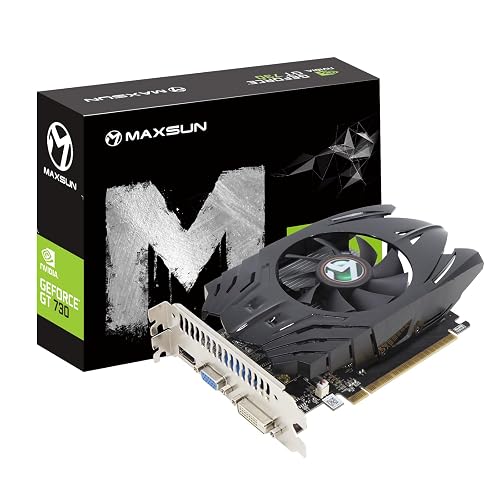
maxsun GeForce GT 730 4GB Graphics Card
The maxsun GeForce GT 730 4GB Graphics Card is a practical choice for a budget build focused on basic gaming, office tasks, or light professional work, especially in compact ITX systems. It features 384 CUDA cores, 4GB of GDDR3 memory, and a low-power PCIe x16 design that fits systems with a 250W PSU or better. The card provides HDMI, DVI-I, and VGA outputs, and supports triple-display configurations. It can drive 4K at 30 Hz. A single 8 cm fan, solid capacitors, and a 3-year warranty help keep the card cool and reliable.
- GPU Model:GeForce GT 730
- VRAM:4 GB
- Memory Type:GDDR3
- Form Factor:ITX
- Video Outputs:HDMI/DVI-I/VGA
- Max Resolution:3840 x 2160
- Additional Feature:Triple display support
- Additional Feature:Eagle radiator cooling
- Additional Feature:250W PSU recommended
Factors to Consider When Choosing Graphics Cards GPUs For 100 Dollars
When choosing a graphics card under $100, first check VRAM capacity so it can handle the games and applications you use. Also match the card’s power requirements, form factor, display outputs, and cooling design to your PC. These factors help you avoid compatibility problems and get the best value for your money.
VRAM Capacity
VRAM is the memory vault that can make or break a budget GPU buy. For around $100, you will usually see 2 to 4 GB on new or used cards, and 4 GB is the practical floor for smooth 1080p play in older or lighter games. If you want modern games to feel steady at 1080p, watch texture settings closely, because high detail assets can push needs past 6 GB and trigger stutter or pop in. Do not confuse VRAM with raw shader speed, though; a larger memory pool will not save a weak GPU. For multi monitor use or 1440p and 4K video playback, aim for at least 4 GB. When you shop used, check real world VRAM use in your target games and lower textures or resolution if the card’s memory runs tight.
Power Requirements
Power matters just as much as performance in a $100 GPU buy, because even a modest card can strain an underpowered system. Check your PSU’s wattage headroom first. Many budget cards draw 30 to 150W, so leave 50 to 100W free beyond your CPU and peripherals. Verify whether the card pulls all power from the PCIe slot or needs a 6-pin connector, and do not buy until you know your PSU can match it. Also confirm your +12V rail amperage, since the GPU mainly uses that rail. Make sure your motherboard’s PCIe slot and BIOS settings support the card’s power profile. Good airflow matters too, because heat and power limits can hurt stability.
Form Factor
Once you have confirmed your PSU can handle the card, check the physical fit. Measure the card length against your case clearance, including front-mounted drive cages, because budget GPUs can still be long. Then check height and bracket type so a full-height card will not clash with a low-profile slot opening. Also verify slot width; a dual-slot card can block nearby PCIe slots you may need for add-in cards or for cooler clearance. If you are building a small form-factor PC or HTPC, look for low-profile, single-fan, or passive models that suit tight spaces. Finally, confirm the motherboard PCIe placement will not interfere with CPU coolers, and make sure the card connector orientation supports steady airflow in cramped cases.
Display Outputs
Display outputs matter just as much as raw specs when you are shopping for a GPU under $100. You need to match the card’s ports to your monitor, TV, or projector. Most budget GPUs give you at least HDMI plus DVI or DisplayPort, but check before you buy. HDMI works best for modern displays. DisplayPort suits higher refresh monitors. DVI or VGA can help with older screens. Also confirm the maximum resolution and refresh rate on each output, many cards handle 1080p at 60 Hz, while 1440p or 4K may drop to 30 Hz on older ports. If you want multiple screens, verify simultaneous display support. Make sure the output version supports HDR, 4K at 60 Hz, or adaptive sync.
Cooling Design
Cooling design matters a lot in a sub-$100 GPU, because a cheap card can run quietly or become a hot, noisy problem depending on how it is built. You will often see passive, fanless cards in this price range, and they are effective if your case has strong airflow. For active cooling, a single fan can work well on low TDP cards, but larger fans or blower-style shrouds usually move more air at lower RPMs and keep noise down. Look for real heatsink mass, thin fins, heat pipes, or direct-touch GPU contact instead of tiny metal plates. Check the card’s TDP as well. Smart fan curves and zero-RPM idle modes help reduce noise, cut dust buildup, and extend fan life.
Frequently Asked Questions
Which GPU Offers the Best Value for Esports Gaming Under $100?
You’ll usually get the best esports value from a used Radeon RX 580 8GB or a GTX 1650. They handle 1080p well, cost little, and you will not need to compromise much on competitive settings.
Can These Cards Handle Dual-Monitor Setups Smoothly?
Yes. You can run dual monitors smoothly for esports and everyday use, but keep settings modest. Expect performance dips if you game on both screens or push heavy multitasking.
Do These GPUS Support Modern Video Decoding Features?
Yes, most do, but verify each model. Smooth streaming is the point. You will generally get H.264 and HEVC support, and some cards also decode VP9 or AV1 depending on the generation.
Are There Power Supply Requirements to Check Before Buying?
Yes. Check your PSU’s wattage, available PCIe power connectors, and the amperage on the 12V rail before buying. This prevents instability and crashes, avoids the need for adapters, and ensures the card fits and runs safely.
Which Card Is Best for Small-Form-Factor PC Builds?
For small-form-factor builds, choose the Gigabyte GTX 1650 Mini ITX. It fits tight spaces, uses little power, and still delivers solid 1080p gameplay. Check your case clearance, then you are set.