

If you want AAA games to run smoothly without giving up visual detail, the GPU you choose matters more than ever.
You will see high end options built for 1440p and 4K, compact cards that punch above their size, and budget picks that still handle 1080p well.
The real difference comes down to power, cooling, and features that match your setup, and a few of these cards may surprise you.
More Details on Our Top Picks
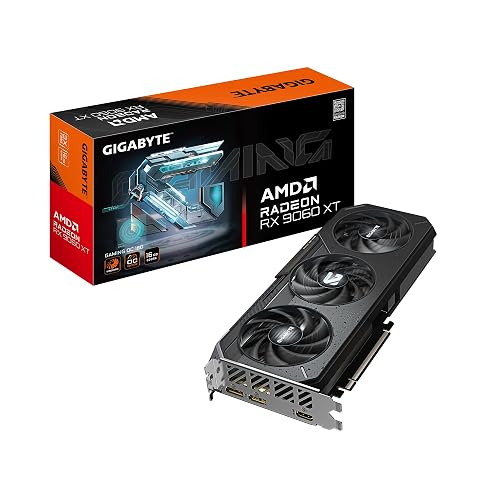
GIGABYTE Radeon RX 9060 XT Gaming OC 16G Graphics Card
If you want a strong 1440p to 4K ready card for modern AAA games, the GIGABYTE Radeon RX 9060 XT Gaming OC 16G stands out with 16GB of GDDR6 memory, RDNA 4 architecture, and a 2700 MHz boost clock. You get PCIe 5.0 support, HDMI and DisplayPort outputs, and up to 3840 x 2160 resolution; 8K support is also available. Its WINDFORCE cooling, Hawk Fan, and server grade thermal gel help keep temperatures in check during long sessions. RGB lighting adds style, AI acceleration is included, and a 3 year warranty provides extra confidence.
- GPU Brand:AMD Radeon
- VRAM:16GB
- Memory Type:GDDR6
- Interface:PCIe 5.0 x16
- Max Resolution:8K
- Cooling:WINDFORCE dual-fan
- Additional Feature:RDNA 4 architecture
- Additional Feature:RGB lighting
- Additional Feature:Server-grade thermal gel
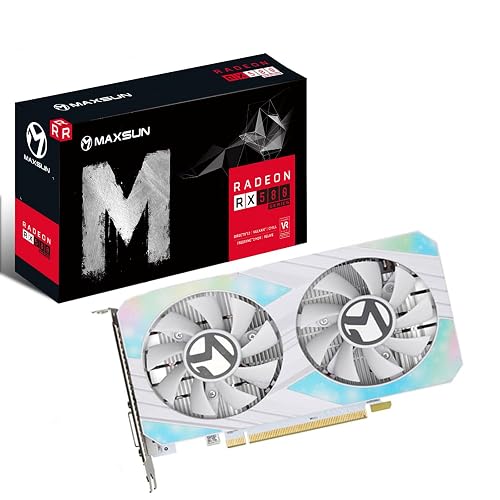
maxsun Radeon RX 580 8GB Graphics Card
The maxsun Radeon RX 580 8GB Graphics Card is a solid pick for gamers who want affordable 1080p AAA performance, with enough VRAM to handle modern textures more comfortably. It uses AMD’s Polaris 20 XL GPU, 2048 stream processors, and 8GB of GDDR5 on a 256-bit bus, so you can push many games with steady frame delivery. It supports DirectX 12, Vulkan, and OpenGL 4.6, and its HDMI, DisplayPort, and DVI outputs make setup easy. Two fans, included heatsink cooling, and a three-year warranty add reassuring value for your build.
- GPU Brand:AMD Radeon
- VRAM:8GB
- Memory Type:GDDR5
- Interface:PCIe x16
- Max Resolution:8K
- Cooling:Dual-fan heatsink
- Additional Feature:2048SP variant
- Additional Feature:White-themed design
- Additional Feature:4K video decode
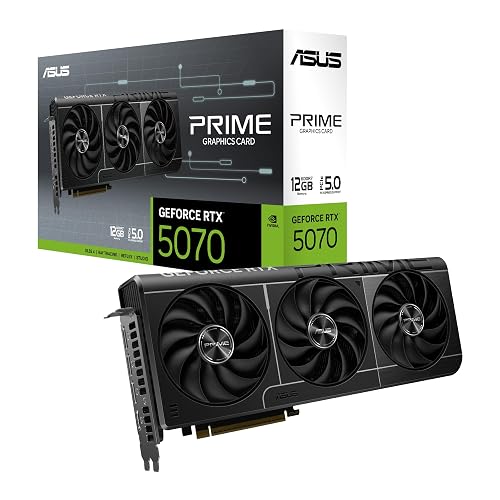
ASUS Prime GeForce RTX 5070 Graphics Card
Built on NVIDIA’s Blackwell architecture with DLSS 4 support, the ASUS Prime GeForce RTX 5070 delivers AAA-level performance and efficient operation. It includes 12 GB of GDDR7 memory, a PCIe 5.0 interface, and the GeForce RTX 5070 GPU for fast, responsive gameplay. The SFF-ready design fits compact builds, and the 2.5-slot profile provides room for effective cooling. Axial-tech fans and a phase-change GPU thermal pad help reduce temperatures. The card also offers HDMI 2.1, DisplayPort 2.1, and Dual BIOS for flexible connectivity and configuration.
- GPU Brand:NVIDIA GeForce
- VRAM:12GB
- Memory Type:GDDR7
- Interface:PCIe 5.0
- Max Resolution:8K
- Cooling:Axial-tech fans
- Additional Feature:Blackwell architecture
- Additional Feature:DLSS 4 support
- Additional Feature:Dual BIOS
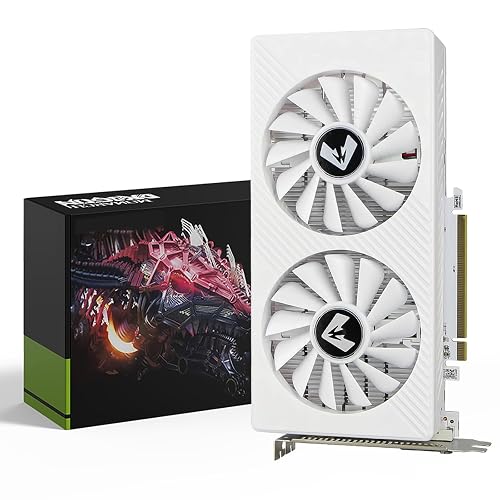
MOUGOL Radeon RX 580 8GB Gaming Graphics Card
MOUGOL’s Radeon RX 580 8GB is a smart pick for gamers who want solid 1080p performance without overcomplicating their setup. It includes 8GB of Samsung GDDR5 on a 256-bit bus, 2048 stream processors, and a 1206 MHz core clock for dependable frame rates in games such as Fortnite, GTA V, Apex Legends, and Valorant. The dual-fan cooler, heat pipes, and backplate help keep temperatures and noise in check. You can run triple displays via HDMI, DisplayPort, and DVI. The compact PCIe 3.0 design fits most mid-tower cases and requires a single 6-pin power connector.
- GPU Brand:AMD Radeon
- VRAM:8GB
- Memory Type:GDDR5
- Interface:PCIe 3.0 x16
- Max Resolution:8K
- Cooling:Dual-fan heatsink
- Additional Feature:Samsung GDDR5 memory
- Additional Feature:Triple-display support
- Additional Feature:6-pin power
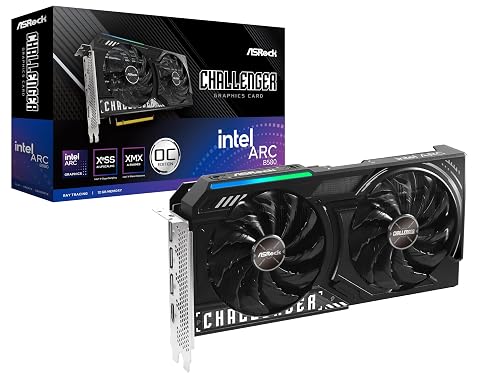
ASRock Intel Arc B580 Challenger 12GB Graphics Card
If you want a strong 1440p-ready card with modern AI features, the ASRock Intel Arc B580 Challenger 12GB OC is a compelling pick for AAA gaming. It uses Intel’s Arc B580 with Xe2-HPG, 20 compute units, and 160 XMX engines for AI-heavy tasks. The 12GB GDDR6 memory, 192-bit bus, and 2740 MHz boost help you handle demanding titles smoothly. Intel XeSS 2 can lift frame rates, and the dual-fan cooler, metal backplate, and 0dB mode keep noise down. It also provides DisplayPort 2.1, HDMI 2.1a, and four-monitor support.
- GPU Brand:Intel Arc
- VRAM:12GB
- Memory Type:GDDR6
- Interface:PCIe 4.0 x8
- Max Resolution:8K
- Cooling:Dual-fan silent
- Additional Feature:Xe2-HPG architecture
- Additional Feature:XMX AI engines
- Additional Feature:0dB Silent Technology
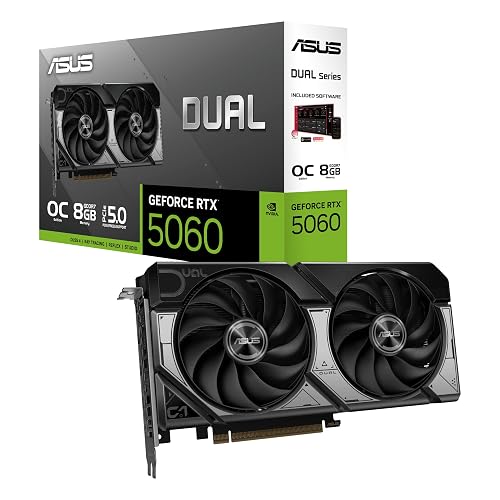
ASUS Dual GeForce RTX 5060 8GB OC Edition
The ASUS Dual GeForce RTX 5060 8GB GDDR7 OC Edition is a strong choice if you want a compact, SFF-ready GPU that still delivers modern AAA gaming features. It uses NVIDIA’s Blackwell architecture, includes 8GB of fast GDDR7 memory, and reaches a boost clock up to 2565 MHz in OC mode. DLSS 4 helps increase frame rates, while 623 AI TOPS provide additional smart performance headroom. Dual Axial-tech fans, 0dB idle mode, and a 2.5-slot design keep cooling efficient. With three DisplayPort 2.1b outputs and one HDMI 2.1b port, it is ready for high-resolution gaming.
- GPU Brand:NVIDIA GeForce
- VRAM:8GB
- Memory Type:GDDR7
- Interface:PCIe 5.0 x16
- Max Resolution:8K
- Cooling:Dual Axial-tech fans
- Additional Feature:Blackwell architecture
- Additional Feature:623 AI TOPS
- Additional Feature:SFF-ready design
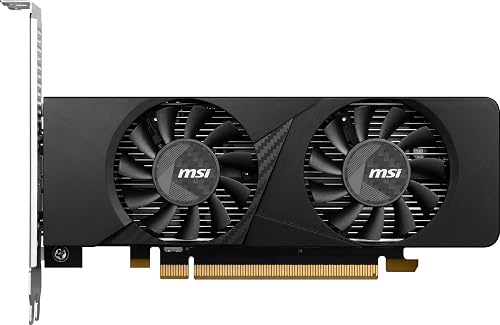
MSI RTX 3050 LP 6G OC Graphics Card
MSI’s RTX 3050 LP 6G OC is a smart pick if you need AAA-ready gaming power in a low-profile build, especially for compact desktops that cannot fit a full-size card. You get NVIDIA Ampere performance, 6GB of GDDR6 memory, and dedicated ray tracing and AI Tensor cores for smoother modern gaming and accelerated workloads. Its 1492 MHz boost clock, 14 Gbps memory, and dual-fan cooling help keep it responsive. You also get one DisplayPort and two HDMI 2.1a outputs, and support for up to 4K displays.
- GPU Brand:NVIDIA GeForce
- VRAM:6GB
- Memory Type:GDDR6
- Interface:PCIe x16
- Max Resolution:4K
- Cooling:Dual-fan cooling
- Additional Feature:Low-profile form
- Additional Feature:Ray Tracing Cores
- Additional Feature:AI Tensor Cores
Factors to Consider When Choosing Graphics Cards GPUs for AAA Games
When choosing a GPU for AAA games, start with the architecture, since it determines performance and supported features. You should also ensure enough VRAM for high quality textures, and select a card that matches your resolution target, whether 1080p, 1440p, or 4K. Finally, consider cooling and power requirements, as they affect noise, stability, and whether your system can handle the card.
GPU Architecture
GPU architecture is the foundation of how a graphics card handles AAA games, because it shapes raw rasterization, compute, and ray tracing performance. When you compare RDNA, Ampere, Blackwell, or Xe, look at how many shader, RT, tensor, or XMX units the chip includes, since they drive effects, lighting, and AI upscaling. You should also check the memory subsystem. Bus width, memory type, clock speed, and design efficiency all affect bandwidth in demanding, high detail scenes. Architecture also influences power efficiency and thermal headroom, so a better node can hold boost clocks longer during extended sessions. Finally, make sure the GPU supports modern APIs and features like DirectX, Vulkan, mesh shading, variable rate shading, and compression formats so you can run today’s AAA optimizations natively.
VRAM Capacity
VRAM capacity is a major factor in how smoothly AAA games run, because it determines how much high resolution texture and scene data your card can keep ready at once. At 1440p, you will usually want at least 8 to 12 GB so textures load cleanly and scenes stream without stutter. If you game at 4K or use high resolution texture packs, 12 to 16+ GB helps prevent memory overflow and texture pop in. You should also account for ray tracing, long draw distances, and high quality settings, since they all raise VRAM demand. If your card runs out, it can offload data to system RAM or storage, which causes big frame drops. For longer useful life, choose extra headroom now.
Resolution Targets
Your target resolution should be one of the first things you decide, because it directly shapes the kind of GPU you need for AAA games. If you are playing at 1080p, a GPU with 6 to 8 GB of VRAM and a 128 to 256 bit memory bus can usually hit 60 to 120 plus FPS on high settings. At 1440p, step up to 8 to 12 GB of VRAM and stronger bandwidth to keep 60 plus FPS with high or ultra presets. For native 4K, aim for 12 to 16 plus GB of fast VRAM and top tier rendering, Tensor, and RT performance, since 60 FPS is tough without upscaling. If you want 120 to 240 Hz, your GPU must match that pace, or you will need DLSS, XeSS, FSR, or lower settings.
Cooling Solutions
Once you set your resolution target, cooling becomes the next major factor. A card that looks fast on paper can lose performance if it runs too hot during long AAA sessions. Favor GPUs with multi-fan or vapor chamber coolers and ample fin area so they can hold boost clocks without thermal throttling. Heat pipes, a large fin stack, and a well designed shroud move heat away from the die and the VRAM more efficiently. Check for 0dB or semi-passive modes and adjustable fan curves, as these keep idle noise down and manage ramping smoothly. Also confirm the cooler fits your case, and ensure the VRMs and memory receive solid thermal pads and sufficient airflow for stable long term gaming.
Power Requirements
Power needs matter just as much as raw speed, check a GPU’s board power or TGP, then make sure your PSU has about 20 to 30% headroom above your system’s total draw so AAA gaming stays stable under load. Modern AAA cards often sit around 150 W at the low end and 300 W or more at the high end, so do not size your PSU by guesswork. Confirm the required PCIe connectors, 6-pin, 8-pin, or 12VHPWR, and use the right native cables or certified adapters. Also verify your case and motherboard can physically fit and support the card, and that your PSU can deliver steady +12 V current without brownouts or throttling. For overclocking or extra expansion, add 100 to 200 W more and choose a continuous, 80 Plus rated unit.
Display Outputs
What good is a fast GPU if it cannot actually drive your display the way you need? Make sure it includes at least one HDMI 2.1 or DisplayPort 2.1 output so you can run 4K at 120 Hz or even 8K with the proper bandwidth. If you are building a multi-monitor setup, check how many HDMI, DisplayPort, or DVI ports it offers; many cards support three or four displays at once. Also confirm each output’s maximum resolution and refresh-rate limits, and verify whether it uses FRL or UHBR for full performance. Ensure it supports FreeSync or G-Sync compatible adaptive sync, and use native ports with certified cables or you will risk losing HDR, color depth, or smooth high-refresh gameplay.
Form Factor
Even the best display outputs will not matter if the card does not fit your build, so check form factor before you buy. Measure the card’s length, height, and slot thickness against your case clearance, motherboard layout, and drive bays to ensure it will not block cables or connectors. Confirm whether it is a single, dual, 2.5, or 3 slot model so you do not crowd nearby PCIe slots or expansion cards. Also verify the PCIe version and power connectors, for example PCIe x16, 4.0 or 5.0, plus 6 pin, 8 pin, or 12VHPWR, so your board and PSU match. If you are building small, favor low profile or shorter cards with enough airflow. Finally, check weight and backplate support; large GPUs can sag and may need a bracket.
Frequently Asked Questions
Which GPU Offers the Best Ray Tracing for AAA Gaming?
You’ll get the best ray tracing performance from NVIDIA’s GeForce RTX 4090, with the RTX 4080 Super close behind. You will enjoy higher frame rates, stronger DLSS support, and smoother AAA gaming overall.
How Much VRAM Is Ideal for Future AAA Titles?
Money in the bank: you will want 12 GB minimum, but 16 GB is the sweet spot for future AAA titles. You will avoid texture bottlenecks and remain comfortable longer, especially at higher resolutions and settings.
Do These Cards Support 1440P and 4K Gaming Smoothly?
Yes, these cards provide smooth 1440p gaming, and many can handle 4K as well. For demanding AAA titles you will need higher-tier models and careful settings, but overall performance is strong.
Which GPU Is Best for Small Form Factor PC Builds?
You are shopping tiny cases, so choose a compact RTX 4070 or Radeon RX 7800 XT. They fit better, use less power, and will not turn your SFF build into a toaster.
How Important Is DLSS or FSR for AAA Performance?
DLSS or FSR is highly important for AAA performance because they boost frame rates, keep visuals sharp, and allow higher settings. If you are gaming at 1440p or 4K, you will notice a significant difference.