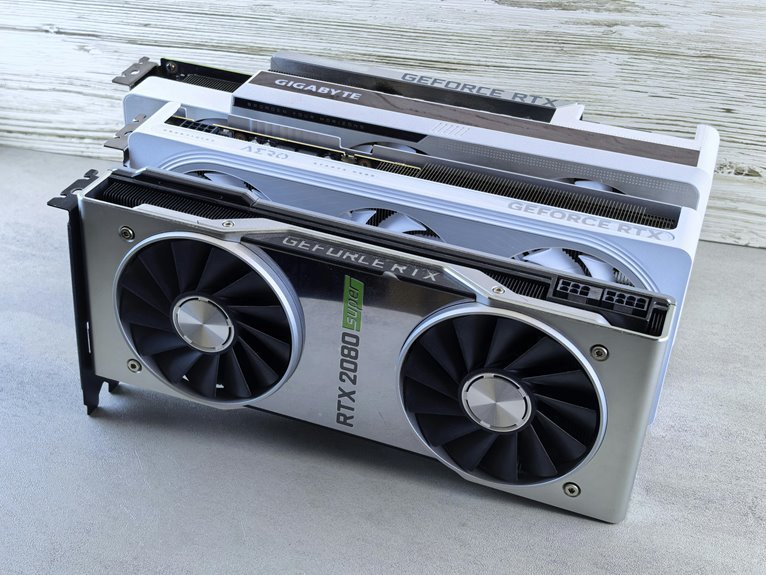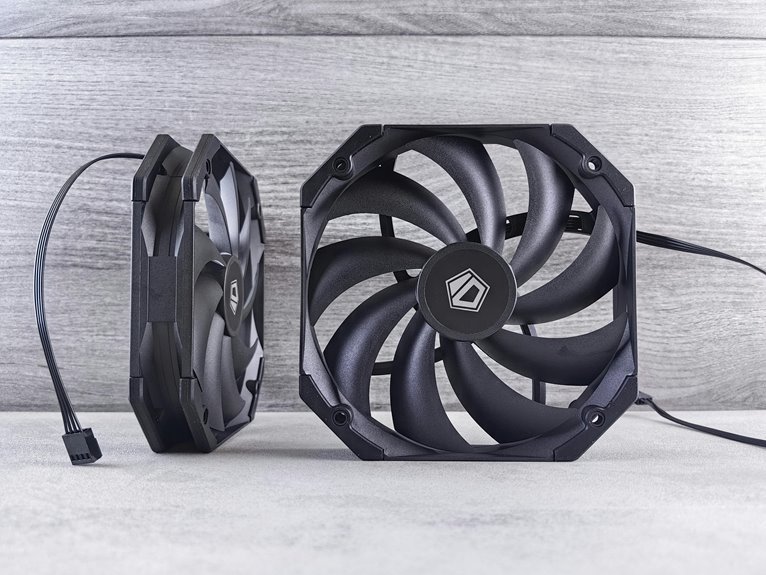

A new GPU can turn a stuttering screen into a smooth, sharp canvas.
Whether you are eyeing the Gigabyte RX 9060 XT, a Blackwell RTX 5070, or a humble GT 1030, you have options for every budget, case, and workload.
The right choice is not just about raw frames, though; the trade-offs can change everything in ways you might not expect.
| Gigabyte Radeon RX 9060 XT Gaming OC 16G Graphics Card |  | Best Overall | GPU Type: Radeon RX 9060 XT | PCIe Interface: PCIe 5.0 | Video Outputs: DP / HDMI | VIEW LATEST PRICE | Read Our Analysis |
| PNY GeForce RTX 5070 Epic-X ARGB OC Graphics Card |  | Best for Creators | GPU Type: GeForce RTX 5070 | PCIe Interface: PCIe 5.0 | Video Outputs: HDMI / DP 2.1 | VIEW LATEST PRICE | Read Our Analysis |
| ASUS Prime GeForce RTX 5070 Graphics Card |  | Best SFF | GPU Type: GeForce RTX 5070 | PCIe Interface: PCIe 5.0 | Video Outputs: DP 2.1b / HDMI 2.1b | VIEW LATEST PRICE | Read Our Analysis |
| MOUGOL AMD Radeon RX 580 Gaming Graphics Card | Budget Pick | GPU Type: Radeon RX 580 | PCIe Interface: PCIe 3.0 | Video Outputs: DP / HDMI / DVI | VIEW LATEST PRICE | Read Our Analysis | |
| ASUS TUF GeForce RTX 5070 Ti OC Graphics Card |  | Premium Pick | GPU Type: GeForce RTX 5070 Ti | PCIe Interface: PCIe 5.0 | Video Outputs: HDMI 2.1 / DP 2.1 | VIEW LATEST PRICE | Read Our Analysis |
| MSI GeForce GT 1030 4GB Graphics Card (GT 1030 4GD4 LP OC) | 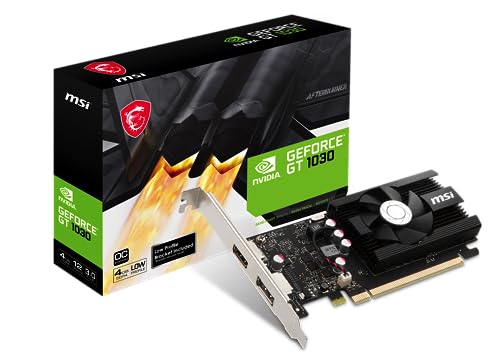 | Entry-Level Choice | GPU Type: GeForce GT 1030 | PCIe Interface: PCIe x16 | Video Outputs: DP / HDMI | VIEW LATEST PRICE | Read Our Analysis |
| Adjustable Anti-Sag GPU Support Bracket 129mm |  | Best Accessory | GPU Type: GPU support bracket | PCIe Interface: Chassis mount | Video Outputs: Fan mount | VIEW LATEST PRICE | Read Our Analysis |
More Details on Our Top Picks
Gigabyte Radeon RX 9060 XT Gaming OC 16G Graphics Card
The Gigabyte Radeon RX 9060 XT Gaming OC 16G is a strong pick if you want a modern gaming card with 16GB of GDDR6 memory and solid 4K-ready output support. It uses AMD’s Radeon RX 9060 XT GPU, features a 3320 MHz core clock, and relies on a 128-bit memory bus to keep performance responsive. Gigabyte adds a WINDFORCE triple-fan cooler, a reinforced structure, RGB lighting, and Dual BIOS so you can choose performance or quiet operation. It connects through PCIe 5.0, and you can use two DisplayPort ports plus HDMI for a desktop build.
- GPU Type:Radeon RX 9060 XT
- PCIe Interface:PCIe 5.0
- Video Outputs:DP / HDMI
- Fan Count:3 fans
- Memory:16 GB GDDR6
- Cooling:WINDFORCE
- Additional Feature:Dual BIOS switch
- Additional Feature:RGB lighting
- Additional Feature:Reinforced structure
PNY GeForce RTX 5070 Epic-X ARGB OC Graphics Card
PNY’s GeForce RTX 5070 Epic-X ARGB OC is a strong pick if you want a modern 1440p gaming card that also handles creative work well. It includes 12GB of GDDR7 memory, a 192-bit bus, and a 2685MHz boost clock on NVIDIA’s Blackwell architecture. Fourth-generation ray tracing cores, fifth-generation Tensor cores, DLSS, and Reflex help you push higher frame rates with lower latency. PCIe 5.0, HDMI, and DisplayPort 2.1 add flexibility, while the triple-fan, 2.4-slot design keeps the card cool. NVIDIA Studio support and ARGB lighting round out the package.
- GPU Type:GeForce RTX 5070
- PCIe Interface:PCIe 5.0
- Video Outputs:HDMI / DP 2.1
- Fan Count:3 fans
- Memory:12 GB GDDR7
- Cooling:Triple fan
- Additional Feature:Blackwell architecture
- Additional Feature:DLSS AI rendering
- Additional Feature:ARGB illumination
ASUS Prime GeForce RTX 5070 Graphics Card
If you are building a compact gaming rig, the ASUS Prime GeForce RTX 5070 is a strong fit thanks to its SFF-ready 2.5 slot design, triple fan cooling, and support for the Blackwell-powered RTX 5070 GPU with DLSS 4. You get 12 GB of GDDR7 memory, a 2542 MHz boost clock, and PCIe 5.0 support for fast, modern performance. ASUS also adds Dual BIOS, a phase change thermal pad, and side panel ventilation tuning to help keep temperatures in check. With three DisplayPort 2.1b ports, HDMI 2.1b, and 8K output, it is ready for serious desktop gaming.
- GPU Type:GeForce RTX 5070
- PCIe Interface:PCIe 5.0
- Video Outputs:DP 2.1b / HDMI 2.1b
- Fan Count:3 fans
- Memory:12 GB GDDR7
- Cooling:Axial-tech triple-fan
- Additional Feature:SFF-ready design
- Additional Feature:Dual BIOS
- Additional Feature:Phase-change thermal pad
MOUGOL AMD Radeon RX 580 Gaming Graphics Card
MOUGOL’s AMD Radeon RX 580 Gaming Graphics Card is a solid choice for affordable 1080p gaming and has enough VRAM to keep Fortnite, GTA V, Apex Legends, and Valorant running smoothly. It includes 8GB of Samsung GDDR5 on a 256-bit bus, 2048 stream processors, and a 1206 MHz core clock. The card supports DirectX 12, Vulkan, and OpenGL 4.6, so you can game, stream, and edit in Premiere Pro or Blender. The dual-fan cooler remains quiet under light loads, and its 240 mm frame fits most mid-tower cases.
- GPU Type:Radeon RX 580
- PCIe Interface:PCIe 3.0
- Video Outputs:DP / HDMI / DVI
- Fan Count:2 fans
- Memory:8 GB GDDR5
- Cooling:Dual-fan
- Additional Feature:1080p gaming target
- Additional Feature:Triple-display support
- Additional Feature:6-pin power connector
ASUS TUF GeForce RTX 5070 Ti OC Graphics Card
The ASUS TUF GeForce RTX 5070 Ti OC is a strong pick if you want a high-end gaming GPU that balances serious performance with long-term durability. It uses NVIDIA Blackwell architecture and supports DLSS 4, with boost clocks up to 2610 MHz in OC mode for smooth, fast gameplay. Its 16 GB of GDDR7 memory and PCIe 5.0 interface keep you ready for demanding titles, while HDMI 2.1 and DisplayPort 2.1 support modern displays. The 3.125-slot cooler, Axial-tech fans, and a phase-change thermal pad keep temperatures in check. Military-grade components, PCB coating, and GPU Tweak III add reliability and control.
- GPU Type:GeForce RTX 5070 Ti
- PCIe Interface:PCIe 5.0
- Video Outputs:HDMI 2.1 / DP 2.1
- Fan Count:3 fans
- Memory:16 GB GDDR7
- Cooling:Axial-tech triple-fan
- Additional Feature:Military-grade components
- Additional Feature:Protective PCB coating
- Additional Feature:GPU Tweak III
MSI GeForce GT 1030 4GB Graphics Card (GT 1030 4GD4 LP OC)
The MSI GeForce GT 1030 4GB DDR4 LP OC is a solid choice if you need a compact, low-profile graphics card for light gaming, HD video, and general PC upgrades. It uses NVIDIA’s Pascal-based GT 1030 GPU, includes 4GB of DDR4 memory, and supports DirectX 12 in a 64-bit design. The single-fan PCIe x16 layout fits small cases easily. Outputs include DisplayPort 1.4a and HDMI 2.0b. You can drive 4K UHD displays, use GeForce Experience for driver updates, and rely on a 3-year warranty for added peace of mind.
- GPU Type:GeForce GT 1030
- PCIe Interface:PCIe x16
- Video Outputs:DP / HDMI
- Fan Count:1 fan
- Memory:4 GB DDR4
- Cooling:Single fan
- Additional Feature:Low-profile form factor
- Additional Feature:HDCP support
- Additional Feature:3-year warranty
Adjustable Anti-Sag GPU Support Bracket 129mm
If you are using a heavier GPU in an ITX, mATX, or ATX build, the Adjustable Anti-Sag GPU Support Bracket 129mm is a practical add-on that keeps your graphics card level and reduces strain on the PCIe slot. You can mount it to a 9 cm, 12 cm, or 14 cm fan, and adjust the height from 10 to 129 mm. Its aluminum, anodized black body feels solid, yet it weighs only 0.07 kg. Installation is easy and tool-free; the package includes two fan screws and a mini bubble level for precise alignment without blocking airflow.
- GPU Type:GPU support bracket
- PCIe Interface:Chassis mount
- Video Outputs:Fan mount
- Fan Count:N/A
- Memory:Aluminum
- Cooling:Anti-sag brace
- Additional Feature:Adjustable height range
- Additional Feature:Mini bubble level
- Additional Feature:Aluminum CNC construction
Factors to Consider When Choosing Graphics Cards GPUs for PC Gaming
When choosing a GPU for PC gaming, balance performance with memory capacity so your games run smoothly at the settings you want. Also check the cooling design and power requirements to ensure your system can handle the card safely and efficiently. Do not forget the display outputs, since they must match your monitor setup and connection needs.
GPU Performance
GPU performance depends on more than the model number. Compare core and boost clocks, VRAM size and type, memory bus width, and the hardware for ray tracing and AI features. Clock speeds in MHz indicate raw frequency, but architecture efficiency and driver quality determine real FPS. Prefer faster memory such as GDDR6 or GDDR7 and a wider bus, since they help at higher resolutions and with detailed textures. Check ray tracing and tensor or AI core counts to assess upscaling and frame generation. Verify benchmarks at 1080p, 1440p, and 4K, using average and 1% low FPS. Finally, ensure your PSU and case cooling can handle the card’s power draw.
Memory Capacity
Memory capacity matters just as much as raw speed, especially once you move beyond 1080p and start pushing high texture settings or ray tracing. You should aim for at least 8 to 12 GB for 1440p gaming, and 12 to 16+ GB if you want smooth 4K play or content creation without an early upgrade. When VRAM runs short, your GPU has to pull data from system RAM or storage, which can cause stuttering and texture pop-in in open-world games. Also check memory bus width and effective clock speed, since they determine bandwidth and affect frame pacing at ultra settings. Faster GDDR6 or GDDR7 memory can help in memory-bound scenes, especially with high-resolution anti-aliasing and ray tracing.
Cooling Design
Cooling design can determine a graphics card’s real-world performance, so do not judge a GPU by specs alone. Triple-fan and other multi-fan coolers generally deliver lower temperatures and less noise, because they move more air and spread heat over a larger area than single-fan or blower designs. Look for heat pipes and large fin stacks, since they transfer heat away from the GPU faster and help prevent boost clocks from dropping during long sessions. Better contact solutions, such as phase-change pads or direct-touch pipes, also keep VRAM and VRMs stable. Check card thickness and shroud shape as well, because a 3.0-slot cooler may crowd your case. Dual-BIOS, fan-stop modes, and custom curves let you tune for silence or aggressive cooling.
Power Requirements
Power requirements matter just as much as raw performance, because even a fast card will underperform if your system cannot feed it safely. Check the GPU’s recommended PSU range, then choose a power supply that comfortably exceeds it for your CPU, drives, and sudden spikes. Verify the required PCIe connectors, 6-pin, 8-pin, or both, and make sure your PSU has enough free plugs or the right adapters. Also review the card’s TGP or TDP to estimate 12V rail demand, heat, and amperage needs. In compact or power-limited builds, compare idle, gaming, and boost draw to confirm headroom. If you plan to overclock, add 10 to 30 percent extra PSU capacity and cooling so you do not run into instability or throttling.
Display Outputs
Once your PSU is sorted, the next thing to check is the GPU’s display outputs, since they determine how well the card connects to your monitor setup. Match HDMI and DisplayPort versions to your monitor’s inputs, especially if you need 4K at 120 Hz, 8K at 60 Hz, HDR, or full color depth. Older ports like HDMI 2.0 or DP 1.4 can cap performance. If you run multiple screens or VR, make sure the card has enough native outputs, as some GPUs offer three or more. Also watch bandwidth, HDMI 2.1 and DisplayPort 2.1 handle far more data for ultrawide and high-refresh displays. Finally, check cable and adapter needs; passive adapters often limit advanced features.
Form Factor
When choosing a graphics card, form factor matters as much as raw performance, because the wrong size can make a great GPU unusable in your build. Check the card’s slot width first: single slot, 2-slot, 2.5-slot, or 3-slot designs must fit your PCIe layout and leave room for nearby cards. Then measure the card’s length against your case’s GPU clearance. Compact models may be about 170 mm, while flagship cards can exceed 330 mm. If you use a small-form-factor or HTPC case, confirm the height and bracket style, since low-profile cards will not suit every chassis. Also plan power cable routing so connectors reach without strain. Finally, leave room for bulky coolers and strong airflow so your GPU stays cool and avoids throttling.
Warranty Coverage
Warranty coverage matters as much as fit and cooling, because a GPU that fails early can turn a great purchase into a costly headache. Check the warranty length, since many cards only offer one to three years, and confirm it protects the GPU core, memory, and PCB against defects. Read the fine print so you know what voids coverage: physical damage, aftermarket cooling, modifications, or overclocking without factory OC support. Also review the claim process, proof-of-purchase rules, RMA steps, and whether you will get prepaid shipping or pay return postage. If you buy used hardware, look for transferable terms. Finally, learn whether repairs mean replacement, component swap, or full-card exchange, and note turnaround times.
Frequently Asked Questions
Which GPU Offers the Best Ray Tracing Performance for Gaming?
You get the best ray tracing performance with NVIDIA RTX 4090, which leads current gaming benchmarks. If that is too pricey, the RTX 4080 Super still delivers excellent ray tracing and strong DLSS support.
How Much VRAM Is Enough for Future-Proof PC Gaming?
For most users, 12GB is the sweet spot for future-proof gaming. Sixteen gigabytes provides extra headroom, letting you handle high-resolution textures, 1440p play, and the majority of 4K titles more comfortably. Eight gigabytes can start to feel tight sooner.
Do I Need a New Power Supply for High-End Graphics Cards?
Yes, you will often need a new power supply for high-end graphics cards because they draw more power. Check your GPU’s recommended wattage, your PSU’s total output, and the required power connectors before upgrading.
Which GPU Is Best for 1440P Versus 4K Gaming?
For 1440p, choose a Radeon RX 7800 XT or an RTX 4070 Super. For 4K, pick an RTX 4080 Super or an RX 7900 XTX. 4K pushes nearly four times as many pixels.
How Important Is DLSS or FSR for Smoother Frame Rates?
DLSS or FSR is important for smoother frame rates, especially at 1440p and 4K. You gain extra performance with minimal visual loss, and these technologies make demanding games noticeably more playable.