
You probably do not realize how much VRAM headroom can matter more than raw GPU speed in deep learning. When you are choosing between Blackwell, RDNA4, and budget 8 GB cards, the right pick depends on model size, bandwidth, and cooling, not just AI TOPS. The six GPUs below cover flagship training, compact builds, and cost-conscious workstations. The differences between them may change which one fits your setup best.
| GIGABYTE Radeon RX 9060 XT Gaming OC 16G Graphics Card | 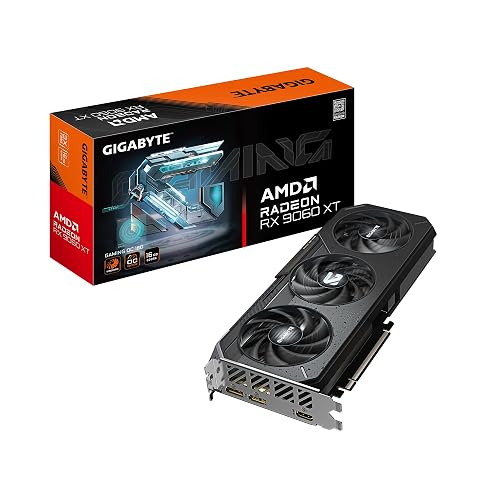 | Best AMD Pick | GPU Model: Radeon RX 9060 XT | VRAM: 16 GB GDDR6 | Architecture: AMD RDNA 4 | VIEW LATEST PRICE | Read Our Analysis |
| PNY NVIDIA GeForce RTX 5070 Epic-X ARGB OC Graphics Card |  | Best Performance | GPU Model: GeForce RTX 5070 | VRAM: 12 GB GDDR7 | Architecture: NVIDIA Blackwell | VIEW LATEST PRICE | Read Our Analysis |
| ASUS Dual GeForce RTX 5060 8GB OC Edition | 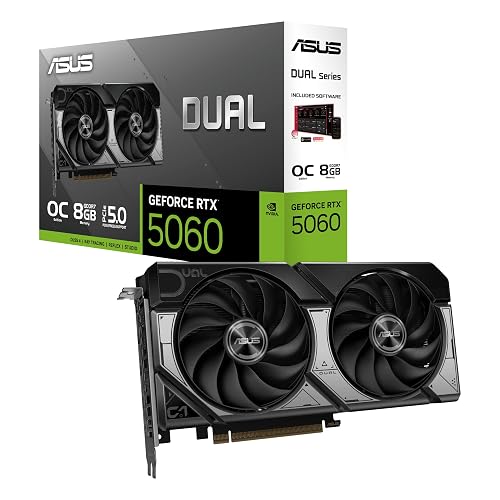 | Best Budget | GPU Model: GeForce RTX 5060 | VRAM: 8 GB GDDR7 | Architecture: NVIDIA Blackwell | VIEW LATEST PRICE | Read Our Analysis |
| GIGABYTE GeForce RTX 5060 WINDFORCE OC 8G Graphics Card | 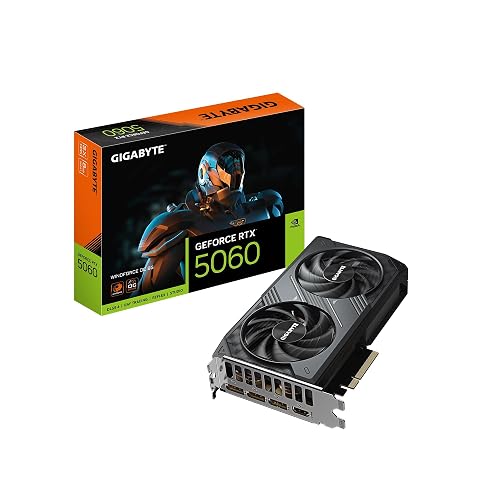 | Best Compact | GPU Model: GeForce RTX 5060 | VRAM: 8 GB GDDR7 | Architecture: NVIDIA Blackwell | VIEW LATEST PRICE | Read Our Analysis |
| ASUS Dual GeForce RTX 5060 Ti 16GB Graphics Card | 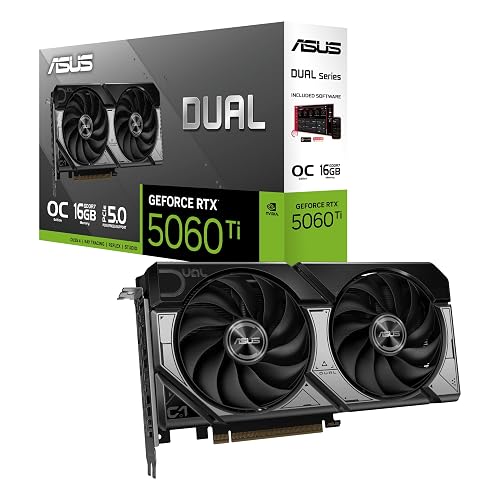 | Best Balanced | GPU Model: GeForce RTX 5060 Ti | VRAM: 16 GB GDDR7 | Architecture: NVIDIA Blackwell | VIEW LATEST PRICE | Read Our Analysis |
| PNY GeForce RTX 5080 Epic-X ARGB OC Graphics Card |  | Best Premium | GPU Model: GeForce RTX 5080 | VRAM: 16 GB GDDR7 | Architecture: NVIDIA Blackwell | VIEW LATEST PRICE | Read Our Analysis |
More Details on Our Top Picks
GIGABYTE Radeon RX 9060 XT Gaming OC 16G Graphics Card
If you are building a deep learning rig on a tighter budget, the GIGABYTE Radeon RX 9060 XT Gaming OC 16G is a smart pick thanks to its 16 GB of GDDR6 memory and RDNA 4 architecture. It features a Radeon RX 9060 XT GPU, 20,000 MHz memory, and a 2,700 MHz clock for solid throughput in training and inference tasks. Its PCIe 5.0 x16 interface, WINDFORCE cooling, Hawk Fan design, and server-grade thermal gel help keep things stable. You can also use it for creative work, AI acceleration, and 4K-plus output through DisplayPort or HDMI.
- GPU Model:Radeon RX 9060 XT
- VRAM:16 GB GDDR6
- Architecture:AMD RDNA 4
- PCIe Version:PCIe 5.0 x16
- Max Resolution:7680 x 4320
- Warranty:3-year
- Additional Feature:WINDFORCE cooling
- Additional Feature:Hawk Fan
- Additional Feature:RGB lighting
PNY NVIDIA GeForce RTX 5070 Epic-X ARGB OC Graphics Card
The PNY NVIDIA GeForce RTX 5070 Epic-X ARGB OC Triple Fan is a strong pick for you if you want a Blackwell-based GPU that balances deep learning work, creative tasks, and gaming in a desktop build. You get 6,144 CUDA cores, 12GB of GDDR7, and up to 672GB/s bandwidth, so your models and assets can move fast. Its fifth-gen Tensor Cores, fourth-gen RT cores, DLSS 4, and Reflex help you train, render, and play smoothly. The triple-fan, 2.4 slot cooler, PCIe 5.0 support, and 250W draw make it practical.
- GPU Model:GeForce RTX 5070
- VRAM:12 GB GDDR7
- Architecture:NVIDIA Blackwell
- PCIe Version:PCIe 5.0 x16
- Max Resolution:7680 x 4320
- Warranty:3-year
- Additional Feature:Triple-fan cooling
- Additional Feature:ARGB lighting
- Additional Feature:16-pin adapter
ASUS Dual GeForce RTX 5060 8GB OC Edition
The ASUS Dual GeForce RTX 5060 8GB OC Edition is a compact, SFF-ready GPU well suited for entry-level deep learning, smaller desktop builds, and budget-conscious AI experimentation. It features NVIDIA’s Blackwell architecture, delivers 623 AI TOPS, and includes 8GB of fast GDDR7 memory, with DLSS 4 support for broader versatility. In OC mode it reaches 2565 MHz; the default clock is 2535 MHz. Dual Axial-tech fans, a 2.5-slot heatsink, and a 0dB mode help keep temperatures under control. The card is PCIe 5.0 compatible and offers three DisplayPort 2.1b outputs plus HDMI 2.1b.
- GPU Model:GeForce RTX 5060
- VRAM:8 GB GDDR7
- Architecture:NVIDIA Blackwell
- PCIe Version:PCIe 5.0 x16
- Max Resolution:7680 x 4320
- Warranty:3-year
- Additional Feature:623 AI TOPS
- Additional Feature:0dB technology
- Additional Feature:SFF-ready design
GIGABYTE GeForce RTX 5060 WINDFORCE OC 8G Graphics Card
GIGABYTE’s GeForce RTX 5060 WINDFORCE OC 8G is a solid choice if you want an affordable Blackwell GPU for entry-level deep learning, light model training, and AI-assisted creative work without moving to a higher-power card. It includes 8GB of GDDR7 memory, a 128-bit bus, PCIe 5.0 support, and a 2,512 MHz boost clock. Enhanced RT and Tensor Cores, plus DLSS 4, help you run modern AI workloads more efficiently. The dual-fan WINDFORCE cooler should keep temperatures in check, and the compact 7.83 x 4.57 inch card fits most desktops well.
- GPU Model:GeForce RTX 5060
- VRAM:8 GB GDDR7
- Architecture:NVIDIA Blackwell
- PCIe Version:PCIe 5.0 x16
- Max Resolution:7680 x 4320
- Warranty:3-year
- Additional Feature:WINDFORCE cooling
- Additional Feature:Two-fan design
- Additional Feature:DLSS 4
ASUS Dual GeForce RTX 5060 Ti 16GB Graphics Card
If you want a compact, modern deep learning GPU that still gives you 16GB of fast GDDR7 memory, the ASUS Dual GeForce RTX 5060 Ti 16GB OC Edition is a strong fit for smaller desktop builds. You get NVIDIA’s Blackwell GPU, 767 AI TOPS, and PCIe 5.0 support in a 2.5-slot, SFF-ready card. Its Dual Axial-tech fans, 0dB mode, and improved airflow help keep temperatures in check during training runs. You also get DLSS 4, three DisplayPort 2.1b outputs, HDMI 2.1b, and up to 8K output for flexible use.
- GPU Model:GeForce RTX 5060 Ti
- VRAM:16 GB GDDR7
- Architecture:NVIDIA Blackwell
- PCIe Version:PCIe 5.0 x16
- Max Resolution:7680 x 4320
- Warranty:3-year
- Additional Feature:767 AI TOPS
- Additional Feature:Dual Axial-tech fans
- Additional Feature:0dB technology
PNY GeForce RTX 5080 Epic-X ARGB OC Graphics Card
The PNY GeForce RTX 5080 Epic-X ARGB OC Triple Fan is a strong pick for deep learning builders who want Blackwell performance in a mainstream, practical package, with 16GB of GDDR7 memory, a PCIe 5.0 interface, and a 2775 MHz boost clock. You get a 256-bit memory bus, three-fan cooling, and a 2.99-slot footprint that fits many workstations. Its DLSS 4, RTX AI, and Studio support assist training-adjacent creative workflows. The card includes HDMI and DisplayPort 2.1 outputs, plus a support bracket and a 16-pin power adapter.
- GPU Model:GeForce RTX 5080
- VRAM:16 GB GDDR7
- Architecture:NVIDIA Blackwell
- PCIe Version:PCIe 5.0 x16
- Max Resolution:7680 x 4320
- Warranty:3-year
- Additional Feature:Triple-fan cooling
- Additional Feature:ARGB lighting
- Additional Feature:Support bracket
Factors to Consider When Choosing Graphics Cards GPUs Workstation for Deep Learning
When choosing a GPU workstation for deep learning, start with VRAM capacity, because larger models and batches require more memory. Also consider Tensor Core support, memory bandwidth, driver stability, and power efficiency, as each factor affects training speed, reliability, and operating cost. Balancing these elements helps you build a system that performs well today and remains useful as your workloads grow.
VRAM Capacity
VRAM is the buffer that determines how much of your deep learning workload fits on a GPU at once. Size it for your largest models and inputs, because billions of parameters or large tensors can require 24 GB or more to avoid out-of-memory errors. If you run short, you will split models, checkpoint gradients, or move data between CPU and GPU, and that slows training. Plan for 20 to 30% extra headroom above your peak memory use. Remember that activations, optimizer states, and augmentation can push training memory to about two to three times the model parameter size. More VRAM also helps with high-resolution images, long sequences, and larger batches. When you compare workstation GPUs, focus on usable VRAM and memory bandwidth.
Tensor Core Support
Tensor cores, or the equivalent matrix-acceleration units on newer GPUs, can make a huge difference because they run the fused multiply-accumulate math behind transformers and CNNs far faster than regular CUDA cores. You should check which precisions your GPU supports, since FP16, BF16, FP8, and INT8 or INT4 each deliver different throughput. Higher TOPS for the format you will actually use usually means better training and inference speed. Make sure your framework, drivers, and runtime versions support mixed precision, cuBLASLt, cuDNN, or equivalent kernels, or you will not get the full benefit. For quantized workloads, confirm accelerated lower-precision math and libraries for those kernels. If you are tuning large batches, remember that feeding tensor cores efficiently still depends on the rest of the system.
Memory Bandwidth
Memory bandwidth, measured in GB/s, indicates how quickly a GPU can feed tensors and activations to its cores, so it is important in memory-bound deep learning workloads. Look for a strong combination of fast memory clocks and a wide bus, because effective rates above 20 Gbps and 128 to 384 bit buses can raise peak throughput sharply. That helps when you train on large batches, use high-resolution images, or work with transformer-style models that have heavy activations. Do not judge bandwidth alone, though; you also need enough VRAM to keep data on the card and avoid slow host-to-device transfers. In practice, sustained bandwidth depends on cooling, power headroom, and clock stability, so real-world performance can fall short of the spec sheet if the card throttles.
Driver Stability
Driver stability matters just as much as raw speed, because even a fast GPU becomes a liability if its drivers crash, miscompile kernels, or break framework compatibility. Favor GPUs with long-term, actively maintained drivers that include certified support for major ML frameworks like CUDA and cuDNN, or their equivalents. Check release notes and compatibility matrices for your OS, toolkit, and framework versions before you buy. Mismatches often trigger crashes or failed builds. Choose platforms with enterprise or LTS driver channels and clear bug fix timelines so your stack stays predictable. Before scaling up, search issue trackers and forums for memory, synchronization, and feature bugs. Test new driver releases in staging with mixed-precision and multi-GPU workloads to catch regressions early.
Power Efficiency
Power efficiency can matter as much as raw speed, because it determines how much training throughput you get for every watt you spend. You should compare performance per watt, such as TFLOPS/W or TOPS/W, instead of chasing peak specs alone. Check whether the card sustains its boost clocks under long training runs; a low TDP GPU that throttles will not stay efficient. Also weigh memory power draw, since higher bandwidth and faster VRAM can raise consumption, especially when your models do not need it. Look at board-level power delivery too, because weak VRMs waste energy. In multi GPU systems, factor in PSU losses, cabling, and data center overhead. Those extras can add 10 to 20 percent to total power, so your real efficiency is lower than the GPU’s rating.
Cooling Design
When you run deep learning workloads for hours at a time, cooling design becomes a hard performance factor, not just a noise concern. Prioritize active cooling with multiple high-flow fans or blower-style radial coolers, so your GPU stays below its Tj max under 200 to 400 plus watt loads. Look for large heatsinks, dense fin stacks, heat pipes, and vapor chambers, because they spread heat and reduce throttling during long training epochs. You will also need strong case airflow with clear intake and exhaust paths. Poor chassis airflow can raise temperatures by 10 to 20 degrees Celsius. In multi-GPU workstations, choose cooler designs with two to three slot thickness and enough spacing between cards. Quiet features like semi-passive modes and smart fan curves help keep performance stable.
PCIe Compatibility
PCIe compatibility matters more than many buyers expect, especially in deep learning workstations where large models and frequent GPU-to-GPU transfers can expose a bottleneck quickly. Match your motherboard and GPU to the same PCIe generation, because PCIe 5.0 can roughly double per-lane bandwidth over PCIe 4.0. Check that each card fits the available slot wiring and runs at x16 or x8 as intended; a card forced into x8 bandwidth can slow large transfers. Make sure your power leads, risers, and 16-pin adapters do not throttle signaling. In multi-GPU rigs, confirm your CPU or chipset offers enough lanes, or use NVLink and peer-to-peer features. Finally, verify BIOS support for bifurcation, Gen negotiation, and above-4G decoding so GPUs enumerate correctly and link at full speed.
Form Factor
Form factor can make or break a deep learning workstation, because a GPU that fits on paper may still fail in a real chassis. You should check card length, height, and slot width, single, dual, 2.5-slot, or 3-slot, so it clears your case, motherboard, and nearby PCIe slots. Confirm your board has the right x16 PCIe slot and enough lanes for other cards. Next, match your PSU’s wattage and connectors, whether 8-pin or 16-pin, and make sure thick cables will not choke airflow. If you are building compact, favor low-profile or blower cards, and plan cooling carefully to avoid throttling during long training runs. For multi-GPU rigs, verify spacing, slot gaps, and any NVLink bridge needs so cards do not block each other.
Frequently Asked Questions
How Much VRAM Do Deep Learning Models Need in 2026?
Ironically, you will need enough VRAM, usually 12 to 24 GB for smaller models, 24 to 48 GB for serious work, and 80 GB or more for huge training runs. You will always want more, because memory limits your batch size, speed, and sanity.
Is CUDA Still Essential for GPU Deep Learning Workflows?
Yes, you will still want CUDA for most GPU deep learning workflows, especially if you use PyTorch or TensorFlow. Alternatives exist, but CUDA generally provides the broadest support, the best tooling, and the fastest performance.
Do Consumer GPUS Support Multi-Gpu Training Well?
Not really. You can use consumer GPUs for multi-GPU training, but you will hit bandwidth, driver, and cooling limits quickly. They provide workable scaling for experimentation, yet they do not match datacenter cards in smooth, efficient coordination.
How Important Is Power Efficiency for Training Workloads?
Power efficiency matters if you train frequently; it reduces electricity costs, heat, and cooling requirements. However, prioritize throughput, memory capacity, and reliability first. Less efficient GPUs can still complete training faster overall.
Can These GPUS Handle Local LLM Fine-Tuning?
Yes, if you test the theory you will find some can handle local LLM fine-tuning. You will need enough VRAM, fast memory, and good cooling. Smaller models fit easily, while larger ones may still require multi-GPU setups.