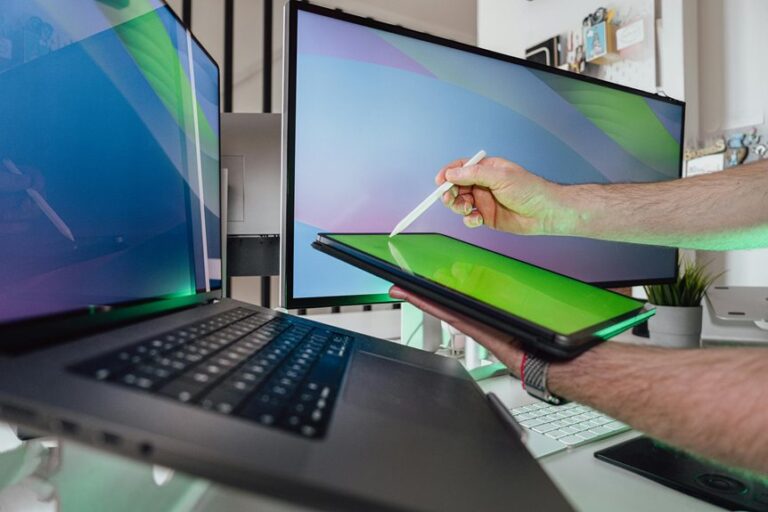



MacBooks usually feel faster in everyday use, while Windows laptops offer more variety for price, power, and gaming. The better pick depends on what you do every day. For battery life, quiet performance, and creative work, MacBook often leads. For flexibility, upgrades, and game support, Windows still has the edge.
MacBook vs Windows Laptop: Which Suits You?
Which laptop suits you best depends less on brand loyalty and more on how you actually work each day. If you want a laptop that feels calm, quick, and easy to trust, a MacBook often fits your rhythm. You get strong battery life, fast wake-ups, quiet performance, and tight ecosystem integration with your iPhone or iPad, so your daily flow feels connected.
If your circle depends on specialized tools, broad device support, or legacy software, a Windows laptop may help you fit in without workarounds. It also suits you if you like deeper settings control and wider hardware choice.
Best Value by Budget
Your budget shapes what kind of performance you’ll actually feel each day, so it helps to compare entry-level value picks, the midrange sweet spot, and premium tradeoffs side beside side.
Should you want smooth everyday speed and long battery life for less stress on the go, a MacBook can feel like the smarter buy, while many Windows laptops give you more options and stronger specs in key price bands.
As your budget climbs, you’ll need to decide whether you care more about steady real-world performance and efficiency or higher peak power, faster storage, and better gaming support.
Entry-Level Value Picks
If you’re shopping on a tighter budget, the best value pick often comes down to what kind of performance you need every day, not just the lowest price on the tag. Should you want smooth browsing, schoolwork, Office apps, and all-day battery life, an entry MacBook often feels faster and calmer than many budget starter laptops. You get quick wake-ups, quieter use, and stronger unplugged performance.
On the Windows side, entry price deals can still make sense should you need more ports, broader app support, or faster SSD speeds for moving big files. That said, some low-cost Windows models feel slower once you open many tabs or work unplugged.
Midrange Performance Sweet Spot
Stepping up from entry-level models, the midrange market is where value gets much more interesting, because this is the point where you’re no longer paying only for basic function. Here, you join the crowd that wants speed, battery life, and smooth multitasking without stretching too far. The real win is midrange CPU balance, where MacBooks feel polished in daily work, while many Windows ultrabooks answer with faster SSDs and strong value ultrabook benchmarks.
- You open tabs, docs, and edits fast, and your laptop stays calm.
- You unplug, keep working, and still feel steady performance.
- You move large files quicker on many Windows models with faster storage.
- You enjoy a community sweet spot where performance feels smart, not flashy.
That’s why this tier feels welcoming: you get dependable power, better efficiency, and fewer annoying slowdowns.
Premium Budget Tradeoffs
While the midrange tier gives you a comfortable balance, the premium budget range asks a sharper question: where does each extra dollar help most?
Should you want a laptop that feels fast all day, a MacBook often rewards premium pricing with smoother multitasking, stronger battery life, quiet performance, and full speed even while you’re unplugged.
That said, you shouldn’t feel left out should Windows fits your crowd better.
In this range, many Windows laptops turn extra money into faster SSDs, more ports, better gaming, or stronger GPU power for creative work.
Everyday Speed: MacBook vs Windows
Why does a MacBook often feel faster in everyday use, even when a Windows laptop looks similar on paper? You notice it in small moments that shape your day.
Apple Silicon and macOS work closely together, so browser responsiveness feels smoother, app launch speed feels quicker, and multitasking stays calm whenever your tabs and tools pile up. That creates a sense of ease you can trust.
- You open lots of tabs, and scrolling still feels fluid.
- You jump between Office, messages, and photos without the system feeling strained.
- You hear less fan noise, so your workspace feels calmer and more focused.
- You stay productive on a thin laptop that feels ready for your routine.
Boot and Wake Speed Compared
Upon you press the power button, you want your laptop ready fast, and that’s where cold boot timing starts to matter.
You’ll often notice that MacBooks wake from sleep almost instantly, while many Windows laptops can take a bit longer depending on their SSD speed, chip design, and power settings. That difference shapes how smooth your day feels, especially as you’re opening the lid, jumping back into work, or restarting in a hurry.
Cold Boot Timing
Often, the speed gap feels obvious the moment you open the lid. With a full shutdown, you notice how each laptop handles the startup sequence before you can join your flow again. MacBooks usually move through firmware initialization and loading with less visible delay, so you feel ready sooner. Many Windows laptops still vary a lot across brand, SSD, and background apps.
- You press power, and a MacBook often reaches the desktop with fewer pauses.
- You might see some Windows models linger on logos, checks, or vendor tools.
- You feel the difference most on rushed mornings, class starts, or quick coffee shop sessions.
- You trust the machine more after cold boots feel consistent every time.
That consistency helps you settle in fast and feel like your setup truly keeps up with your day.
Sleep Wake Latency
How quickly a laptop wakes can matter even more than a full boot, because this is the speed you feel many times a day. Whenever you open the lid, Apple Silicon MacBooks usually feel more ready, with stronger sleep resume efficiency and better instant wake reliability than many thin Windows laptops. That smooth return helps you stay in flow and feel like your tools are on your side.
| What you notice | Typical feel |
|---|---|
| Lid opens | MacBook often responds initially |
| Screen lights | MacBook appears more consistent |
| Apps return | Both can recover, Macs feel smoother |
| Battery mode | Macs stay responsive more often |
| Daily rhythm | Fewer hiccups help you feel settled |
SSD And Chip Impact
That quick wake feeling also comes from what sits under the hood: the SSD and the chip working together. As soon as you open your laptop, you notice more than raw SSD throughput. You feel how fast the system finds files, restores apps, and gets you back in rhythm. That’s where chip design matters. Apple Silicon often feels instant because macOS, memory, and storage act like one team. Many Windows laptops can boot quickly too, especially with fast NVMe drives, but cheaper thin models might hesitate more.
- Your apps reopen faster as storage and memory stay in sync.
- You feel fewer pauses as tabs, docs, and chats return together.
- Higher SSD throughput helps big files more than simple daily tasks.
- Better chip design often makes wake feel smoother, quieter, and more natural.
That smoothness helps you feel right at home, fast.
Battery Life in Daily Use
Whenever you use your laptop away from a charger, the biggest difference between a MacBook and many Windows laptops is consistency. You feel it in battery endurance and unplugged productivity. A MacBook usually keeps the same steady pace on battery, so your workday feels reliable, calm, and easy to trust.
That matters whenever you’re moving between class, work, or the couch and want your laptop to stay in step with you. Apple Silicon models often hold strong performance while sipping power, so you can edit photos, write, browse, and export video without a sharp slowdown.
Many Windows laptops still do well, but some reduce speed once you unplug, which can make the experience feel less dependable. Whenever you value a laptop that stays ready wherever life takes you, MacBooks often feel like the safer community pick.
Multitasking Performance Compared
Battery life shapes where you can work, and multitasking shows how calm the laptop stays once your day gets busy.
When you bounce between chats, playlists, documents, and creative tools, MacBooks with Apple Silicon usually feel steadier. You get smoother app switching, quicker wake-ups, and less fan noise, so your workflow feels more like a team effort than a fight.
- You open many tabs, and browser tab management stays fluid longer on a MacBook.
- You jump between apps, and Apple Silicon often keeps pauses shorter.
- You work unplugged, and MacBooks usually keep the same responsive feel.
- You stack light edits, streaming, and research, and many thin Windows laptops heat up sooner.
That said, stronger Windows laptops with better cooling can keep up well. Still, when you want a laptop that helps you feel in sync, MacBooks often feel more settled.
Office Work: MacBook vs Windows
How does each laptop feel during a normal workday filled with email, spreadsheets, video calls, and web apps? If you want a laptop that helps you stay in sync with your team, MacBooks often feel smoother. They wake fast, stay quiet, and keep strong speed on battery, so your routine feels steady anywhere. That helps when you’re juggling browser tabs, document formatting, and spreadsheet collaboration.
Windows laptops can still fit well, especially if your office depends on older apps, company tools, or wider device support. You could also get more hardware choice at your budget. Still, many thin models slow down more when unplugged or under heavier office multitasking.
Creative Apps: Which Performs Better?
Why do creative apps feel so different on these laptops, even before you start a big export? You notice it in the little moments that shape your flow. On a MacBook, timelines stay smoother, color grading feels more fluid, and fans usually stay quiet. That helps you stay in the zone with the rest of your creative crowd. Windows laptops vary more. Thin models can lag during layer management, while stronger systems with better cooling often push ahead in heavy effects, 3D work, or large asset loads.
- You scrub footage and feel fewer hiccups on battery
- You stack edits and notice how memory handling changes responsiveness
- You open huge libraries and faster SSDs on some Windows models help
- You render demanding visual work and powerful GPU-equipped Windows machines can finish sooner
Coding Tasks: MacBook or Windows?
That same feel shows up whenever you code, because a laptop that stays quick and calm helps you reason clearly. On a MacBook, wake times stay fast, fans often stay quiet, and battery performance usually holds steady. That means your train of thought breaks less when you jump between docs, terminals, and builds.
On Windows, you can still get a great coding machine, especially should you need wider hardware choice, legacy tools, or more ports. But your experience depends more on cooling, power settings, and the laptop class you pick.
In daily work, editor setup and IDE responsiveness often feel smoother on Apple Silicon, especially unplugged. Still, were your team to rely on Windows-only apps or enterprise tools, choosing Windows can help you fit in and work without friction every day.
Gaming Performance Compared
Should you care about gaming, you’ll want to compare real frame rates across the titles you actually play, not just spec sheets.
You should also watch how each laptop handles heat, because thermal throttling can cut performance fast during longer sessions.
And just as significant, you need to check game compatibility, since Windows gives you broader support for AAA releases, DirectX titles, and gaming gear.
Frame Rates Across Titles
Whenever you compare frame rates across real games, the gap between MacBooks and Windows laptops becomes easy to see.
If you play with friends, that difference feels personal. MacBooks handle mobile gaming and many indie titles well, but Windows laptops usually give you smoother play in more demanding games.
- In Apple Arcade and lighter games, you’ll often get playable, steady performance.
- In popular multiplayer titles, Windows laptops more often push higher settings and smoother frame delivery.
- In AAA releases, Windows systems with stronger graphics clearly stay ahead.
- In cross-platform libraries, you’ll usually find more games tuned well for Windows.
That matters because you want your laptop to fit your world, not fight it. If gaming helps you connect, Windows gives you a wider, more comfortable place to belong and play together.
Thermal Throttling Under Load
Raw frame rates only tell part of the gaming story, because heat decides whether your laptop can hold that speed after the initial few minutes.
When you play longer sessions, you feel the difference fast. A thin MacBook often stays quieter and more controlled, but it reaches sustained performance limits sooner in demanding games. A thicker Windows gaming laptop usually pushes higher wattage longer, so you get steadier results under pressure.
That shift comes from heat dissipation patterns. If your system can’t move heat away quickly, clocks drop and gameplay feels less stable. You may notice dips during big fights, dense scenes, or long matches. In that moment, you want a laptop that stays with you, not against you. Good cooling helps your whole setup feel reliable, connected, and ready for the sessions your friends invite you into.
Game Compatibility Differences
Why does game compatibility matter so much? It decides whether you can join friends quickly or spend the night troubleshooting. On MacBooks, platform licensing, Metal support, and fewer native ports limit many popular games.
Windows laptops usually fit in better with the wider PC gaming crowd because most developers target DirectX initially.
- You get broader access to AAA, indie, and multiplayer games on Windows.
- You face fewer issues with launchers, anti-cheat tools, and gaming peripherals.
- You may need emulator support or translation layers on Mac for older or Windows-only titles.
- You enjoy Apple Arcade and some optimized Mac games, but the library stays smaller.
That difference shapes your real gaming life. Whenever you want the easiest path into shared matches, mods, and accessories, Windows feels more welcoming today.
Which Laptop Fits Your Workflow?
How do you decide which laptop fits your workflow best? Start with your workflow fit, not trends. If you want smooth multitasking, long battery life, quiet editing, and easy Apple device sync, a MacBook helps you feel settled and supported. If your device priorities include gaming, legacy apps, upgrades, ports, or stronger GPU power, Windows gives you more room.
| Need | Better Match |
|---|---|
| All-day mobile work | MacBook |
| AAA gaming or 3D | Windows |
| iPhone-centered routine | MacBook |
| Custom tools and ports | Windows |
That difference matters in daily use. You’ll notice MacBooks stay fast on battery and wake instantly. Windows laptops shine when your work depends on specialized software, broad hardware support, or desktop-class graphics. Choose the system that matches how you already create, work, and belong.
Frequently Asked Questions
Can You Upgrade RAM or Storage After Buying a Macbook or Windows Laptop?
MacBook RAM and storage are usually fixed at purchase because most models use tightly integrated parts that are not designed for later replacement. Many Windows laptops make internal components easier to reach, so replacing the SSD is common and upgrading RAM is sometimes possible.
How Long Do Macbooks and Windows Laptops Typically Receive Software Updates?
MacBooks typically receive software updates for around 7 to 8 years, while most Windows laptops get them for about 4 to 6 years. Apple often supports devices longer, although some high end Windows models continue receiving updates for more years.
Which Laptop Platform Works Better With Older Peripherals and Legacy Applications?
Windows laptops generally work better with older peripherals and legacy applications. Even if you prefer Apple’s polished design, Windows gives you wider support for older devices, stronger compatibility with accessories, and a smoother match with the software and hardware many people around you still use.
Do Macbooks or Windows Laptops Hold Their Resale Value Better Over Time?
MacBooks typically retain more resale value over time. Demand in the secondhand market stays strong, and price drops tend to be less severe, particularly for Apple Silicon models. If long term resale matters, MacBooks are often the more dependable choice.
How Do Repair Costs Compare Between Macbooks and Windows Laptops?
MacBook repairs usually cost more than repairs for most Windows laptops because Apple parts and service tend to be priced higher. In a repair cost comparison, accidental damage coverage can reduce out of pocket expenses and provide peace of mind.