


Kids treat headphones roughly. They get sat on, stuffed into backpacks, yanked off mid-song, and loaned to siblings who never wind the cable back up. That reality shapes this list more than any spec sheet does.
The ten options below cover the full range: budget-friendly wired pairs built for classroom carts, a hard case that keeps folding headphones alive through the school year, and a couple of premium wireless picks for long flights and noisy households. Every pair here either limits volume or stores safely, because protecting young ears matters as much as keeping kids entertained. Let’s find the right match for your household.
A Closer Look At The Lineup

L LTGEM Kids Headphones Case for Folding Headphone (Black)

Acer HK03 Kids Headphones for School

iClever HS19 Kids Over-Ear Headphones for School

iClever HS19S Kids Over-Ear Headphones

JBL Junior 470NC Noise-Cancelling Kids Headphones (White)

Aechorhy Over Ear Kids Headphones with HD Mic

Candy Bila Wired Kids Over-Ear Headphones for School

Candy Bila Wired Kids Over-Ear Headphones (Gradient)

Acer OHW328 Wired Kids Headphones for School
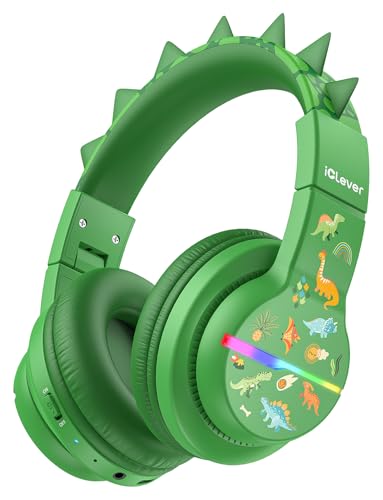
iClever BTH12 Kids Bluetooth Headphones with LED Lights
The Details Behind The Selections
Folding headphones live or die by what protects them between uses. This hard case from L LTGEM is built around that problem: an EVA shell, which is a firm molded foam material that resists crushing, wraps the headphones so a backpack slam or an accidental drop doesn’t fold them the wrong way.
The interior measures about 6.1 by 5.9 by 1.5 inches, sized for most popular folding kids headphones including models from iClever, noot products, ELECDER, and Candy Bila. A mesh pocket holds cables and adapters, and a hand strap makes it easy to clip onto a school bag.
Bright Spots
- EVA hard shell absorbs knocks that would crack exposed headbands
- Mesh interior pocket keeps charging cables and adapters in one spot
- Smooth 360-degree zipper opens wide enough for small hands to repack
- Hand strap lets kids carry it solo without fumbling
- Fits a wide range of brands, so it survives headphone upgrades
Things To Consider
- This listing covers the case alone, so measure your current headphones against the interior dimensions first
- Owners of bulkier over-ear designs report some larger cups fit snugly
Who It Suits Best
Families whose kids haul wired or wireless folding headphones to school, practice, or grandma’s house every week.
Where A Sibling Pick Shines
Shoppers wanting actual listening hardware should look at the Acer HK03 below, which pairs well with this case.
School districts keep asking for one thing in classroom audio: a volume cap that teachers don’t have to police. The Acer HK03 answers with a limiter you can set at either 85 or 94 decibels, the lower figure matching common hearing-safety guidance for children. No pairing menus, no charging, just a 3.5mm plug into whatever device the cart hands out.
For younger students, that simplicity is the whole point. Plug in, listen, unplug. The built-in microphone handles voice calls and reading apps that record pronunciation, and the on-ear design stays light during long study blocks.
Everyday Perks
- Dual 85/94dB limiter gives parents a strict mode and a slightly louder option
- Wired 3.5mm connection works instantly with Chromebooks and school tablets
- No battery means nothing dies halfway through a lesson
- Included mic supports online classes and voice-based learning apps
Honest Caveats
- A cable is still a cable: expect occasional tangles in shared spaces
- On-ear pads sit on the ear rather than around it, which some kids notice after hours
Quick Facts
Made For
Elementary and middle schoolers who need a no-fuss, always-ready pair for classroom carts and homework tablets.
Consider Something Else When
Households wanting richer stereo depth for music should step up to the iClever HS19S and its 40mm drivers.
Online learning changed what kids need from headphones: a clear mic now matters as much as the speakers. The iClever HS19 puts an in-line microphone on the cable, close enough to the mouth that teachers reportedly hear students without them shouting. That single detail has made it a staple for remote tutoring and voice-chat homework help.
Compatibility is broad, since anything with a standard 3.5mm jack works: Chromebooks, laptops, tablets, gaming handhelds, and desktop PCs. Compared with the Acer HK03 above, the HS19 leans harder into call quality and device flexibility rather than bare-bones simplicity.
Features That Help
- In-line microphone positioned for natural speaking volume during lessons
- Works across Chromebooks, iPads, laptops, PCs, and handheld consoles
- Over-ear cups cushion ears through multi-hour study sessions
- Volume-limited design tuned specifically for children’s listening
Potential Sticking Points
- In-line mics can pick up clothing rustle if the cable shifts around
- Wired-only design won’t suit kids who’ve gone fully Bluetooth at home
Feature Snapshot
Right Fit For
Students splitting time between virtual classes, homework apps, and after-school tablet time on mixed devices.
Swap It Out When
Families prioritizing maximum comfort for tiny heads may prefer the Acer OHW328 later in this list.
Think of the HS19S as the HS19’s sibling with more attention paid to the music side. Its 40mm drivers, the speaker components inside each cup, are sized to push fuller bass and clearer vocals than the small drivers found in many budget kids pairs. Cartoons sound punchy; audiobooks stay easy to follow.
The volume ceiling sits at 85dBA, the stricter end of the range, which in our view is the right default for daily wear. Everything else carries over from its sibling: 3.5mm wiring, broad device support, and an over-ear fit that grows with the child.
Everyday Wins
- 40mm drivers deliver noticeably fuller, balanced stereo than basic pairs
- 85dBA cap keeps daily listening within conservative hearing limits
- Plug-and-play 3.5mm connection spans tablets, laptops, and consoles
- Over-ear cushions spread pressure instead of clamping
Small Caveats
- Single fixed volume setting offers less flexibility than dual-mode rivals like the Aechorhy below
- Wired cable needs gentle coiling to avoid wear at the plug over a school year
The Numbers That Matter
Who Will Love This
Kids aged roughly five to twelve who split time between shows, music, and schoolwork on wired devices.
Look Elsewhere When
Parents wanting app-level customization and wireless freedom will find the JBL Junior 470NC worth the stretch.
Here’s where the category grows up. The JBL Junior 470NC brings active noise cancellation, circuitry that listens to ambient rumble and cancels it out, into a kids-focused frame capped at 85dB. On a plane or in a loud living room, that combination means children hear their content clearly without cranking the dial, which is exactly how overuse injuries tend to happen.
The companion JBL Headphones app lets parents customize the maximum volume rather than accept a factory preset. Clean white styling doesn’t hurt either, though it does show smudges faster than darker finishes.
The Practical Payoff
- Active noise cancelling keeps cabin and street noise out of young ears
- JBL app allows parent-controlled custom volume ceilings
- 85dB ceiling applies even when ANC is working hardest
- Wireless over-ear format frees kids from snagged cables
- Recognized JBL tuning gives music real presence, not toy-grade audio
Points To Note
- Battery and electronics add weight and cost compared with wired picks here
- ANC performance varies with earcup seal, so a poor fit reduces its benefit
At A Glance
The Right Fit
Frequent flyers and families in noisy homes who want adult-grade features scaled down for children.
Another Choice May Suit
Budget-conscious shoppers sticking to wired simplicity will be happier with the iClever HS19S.
Most volume limiters force a choice: safe forever, or occasionally useful. The Aechorhy sidesteps that with two switchable modes. At 85dB it aligns with standard children’s hearing-safety guidance for everyday listening; flip to 94dB and movies or games feel properly immersive without touching unsafe territory. One switch covers both worlds.
An HD-rated microphone handles calls and language-learning apps, and the wired setup means zero charging anxiety. Against the single-setting iClever HS19S, this is the pick for households that want a deliberate louder option under parental say-so.
Real-World Strengths
- Two-stage 85/94dB limiter adapts to quiet study versus movie night
- HD microphone keeps voices clear on calls and learning platforms
- Wired design never runs flat mid-lesson
- Over-ear cups suit longer wearing stretches
Less Ideal Details
- The louder 94dB mode needs a parent’s judgment about when it’s appropriate
- Being newer to market, long-term durability reports are thinner than for established names
- Cable management remains a manual chore, as with any wired pair
Core Details
Built With In Mind
Parents of kids who bounce between focused homework and weekend movie marathons on the same device.
Not Your Match When
Strict single-volume households may find the fixed 85dBA iClever HS19S easier to enforce.
Younger kids don’t read manuals, so controls have to be obvious. Candy Bila’s approach is a single button on the cable that handles play, pause, track skipping, and answering calls. A five-year-old can master that in a minute, which cuts down on the “Mom, fix it” interruptions during car rides.
The dual 85/94dB limiter matches what the Aechorhy offers, and the over-ear fit with a built-in mic covers online learning duties too. It’s a straightforward package aimed at families sharing tablets between several children.
Notable Gains
- One-button remote keeps playback control simple for small hands
- Dual volume limiter covers both cautious and lively listening
- Built-in mic supports distance learning and grandparent video calls
Trade Offs To Consider
- Single-button remotes can’t adjust volume directly, only the limiter sets the ceiling
- Padded headbands collect hair and dust, so an occasional wipe-down keeps them fresh
Who Should Grab It
Families with younger children, roughly preschool through second grade, sharing one tablet across siblings.
Reach For A Different Pick When
Kids old enough to appreciate bolder styling may click better with the gradient-finish Candy Bila model next up.
Style counts more than adults admit, especially once kids hit the age of having opinions. This Candy Bila variant keeps the practical bones of the previous entry, including the same one-button remote and 85/94dB limiter, then adds foldable hinges and gradient colorways in blue and purple fades that photograph beautifully and survive being seen at school.
Folding matters beyond looks: collapsed flat, these slip into a pencil pouch or the L LTGEM case from earlier in this list without hogging space.
What Earns Its Place
- Foldable frame shrinks for storage inside cases and backpack pockets
- Gradient finishes give kids a pair they’re proud to wear publicly
- Same trusted 85/94dB dual limiter as the brand’s core model
- In-line remote covers calls and track changes with one press
Details To Watch
- Folding hinges are one more moving part that rough handling can stress
Perfect Match For
Style-conscious grade-schoolers who rejected plain black headphones and parents who still want volume limits enforced.
Where Another Pick Suits Better
Minimalist families indifferent to colorways save a little with the plainer Candy Bila model reviewed just before this one.
Complaint #1 among kids wearing headphones all day is pressure behind the ears. Acer tackled that directly in the OHW328 with multi-directional earcups that tilt up to 10 degrees in any direction, letting the pads settle against each child’s head shape instead of forcing one rigid angle. The generous 54-by-40mm cup openings leave room for growing ears, too.
That focus on fit makes this the pair most likely to stay on through a full school day without the constant readjusting that derails reading time. Like its HK03 sibling reviewed earlier, it keeps the dual volume limiter and wired 3.5mm simplicity.
Noteworthy Benefits
- Earcups tilt ±10° to relieve hot spots during long wear
- Oversized cup openings accommodate growing ears comfortably
- Dual safe-volume modes carry over from Acer’s school lineup
- Light wired build suits classroom carts and shared devices
Where It May Fall Short
- Tilted cups shift slightly during vigorous movement, so sports use isn’t its strength
- Comfort-first padding needs air-drying after humid summer storage
Whose Shelf It Belongs On
Students with sensitive ears or smaller heads who abandon less forgiving headphones after an hour.
Skip It When
Travel-heavy families needing wireless freedom are better served by the iClever BTH12 coming next.
Closing the list is the crowd-pleaser. The iClever BTH12 goes wireless with Bluetooth, runs up to 85 hours per charge according to the manufacturer, and lights up: four LED lighting modes glow across both earcups, switched by a dedicated button. In Bluetooth mode that same button kills the lights entirely, trading flash for extra battery life on travel days.
Volume limiting stays part of the deal, so the party tricks don’t come at the expense of hearing safety. Compared with the wired iClever HS19 earlier in this roundup, this is the upgrade for kids who treat headphones as part gadget, part accessory.
Where It Helps
- Four LED lighting modes make road-trip listening genuinely fun
- Long advertised battery life shrugs off week-long trips between charges
- Independent light button doubles as a battery-saving toggle
- Cordless design ends seatbelt and stroller cable snags
- Volume-limited output keeps the fun within safe bounds
Worth Bearing In Mind
- LEDs drain the battery faster when left running, so expect shorter runtimes in light-show mode
- Bluetooth pairing takes a minute of adult help the very first time
- Charging becomes part of the routine, unlike any wired pick here
Essential Details
Who Should Grab It
Parents packing for flights and long drives who want one pair to entertain without a charger panic.
A Better Fit Elsewhere
Classroom-focused shoppers should stick with the Acer HK03, since schools rarely welcome glowing LEDs.
What Matters Most Before Choosing Kids Over Ear Headphones
Start With The Volume Story
Every serious kids pair caps output somewhere near 85 decibels, the level hearing specialists generally treat as safe for extended listening. Some add a second tier around 94dB for short, livelier sessions. Decide whether your household wants one locked ceiling or a switchable duo, then hold that line consistently.
Weigh Wired Versus Wireless Honestly
Wired models never need charging, cost less, and plug into any school Chromebook or tablet with a headphone jack. Wireless pairs free kids from cables but introduce charging routines and pairing steps. Match the format to where the headphones actually live: classrooms favor wires, road trips favor Bluetooth.
Comfort Decides Whether They Get Worn
Over-ear cups spread pressure across the whole ear, which matters enormously during hour-long lessons. Look for tilting or rotating earcups, roomy openings, and padded headbands. A pair that pinches gets pulled off within twenty minutes, limits and all.
Plan For Rough Treatment
Kids drop things; that’s the job description. Foldable frames, reinforced cables, and a protective case extend lifespan dramatically. Budget for the case alongside the headphones and you’ll likely buy half as many pairs per year.
Key Considerations Across These Picks
Common Shopping Slip Ups
The classic mistake is buying adult headphones and hoping the volume slider saves the day. Software caps get bypassed by curious fingers; hardware limiters don’t. Another trap: skipping the dimension check on cases, then discovering the cups don’t fold flat inside.
What The Higher Tier Buys
Spending up typically buys active noise cancellation, app-controlled volume ceilings, and stronger drivers. Those features earn their keep on flights and in loud houses. For quiet bedrooms and school carts, a solid wired pair delivers nearly everything that matters.
Frequently Asked Questions
What volume level is considered safe for children’s headphones?
Most experts point to 85 decibels as the ceiling for extended listening sessions. Many kids models also offer a 94dB mode reserved for shorter, supervised use.
Are wired headphones better than Bluetooth for school?
Wired pairs win on reliability since they never run out of battery and work with any 3.5mm device. Schools generally prefer them for exactly those reasons.
How long do kids headphones typically last?
With gentle handling, a quality pair often survives one to two school years. A hard case and cable discipline stretch that considerably.
Do noise-cancelling headphones make sense for kids?
They help in genuinely loud settings like airplanes, letting kids listen at lower volumes. In quiet homes, the added cost rarely pays off.
Can my child use these headphones with a gaming console?
Models with a standard 3.5mm plug connect to controllers and handhelds that accept wired audio. Check the specific console port before ordering.
Closing Remarks
The right choice comes down to where your child wears headphones most. Classroom days favor the Acer HK03 or OHW328, movie nights suit the dual-mode Aechorhy, and travel-heavy families get real value from the JBL Junior 470NC or the playful iClever BTH12. Whichever direction you lean, prioritize the volume limiter first and the extras second. Your child’s ears will thank you for years to come.
