


Basic 3d printers reward patience, but the right one trims a lot of friction from your first projects. You want sensible setup, stable leveling, and a build area that matches the kind of parts you actually plan to make, from desk toys to school models. Some of these picks are tiny and friendly, while others move closer to serious speed and enclosure quality. The trade-off is simple, faster and more capable machines usually ask for more space, more attention, or a higher learning curve.
The Shortlist At A Glance

FLASHFORGE Adventurer 5M 3D Printer 220x220x220mm

Entina Mini 3D Printers Tina2 Basic

Bambu Lab P1S 3D Printer

Flashforge Adventurer 5M 3D Printer
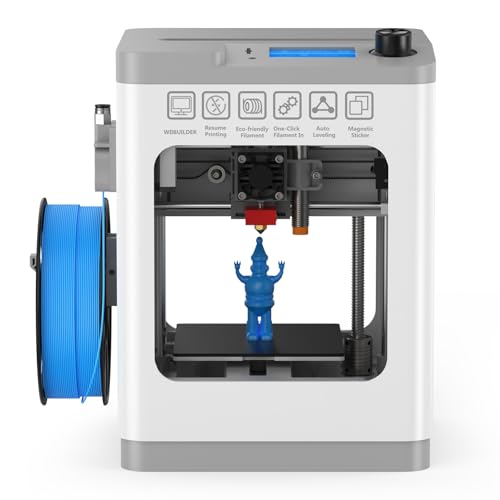
TINA2 3D Printer, HEPHI3D Mini

Bambu Lab A1 mini 3D Printer + LED Lamp Kit
Geeetech Mini 3D Printer

Portable 3D Printer, Compact FDM
More Details On Our Top Picks
For a first machine in a busy home, the Adventurer 5M keeps the learning curve low without feeling flimsy. Its 220 x 220 x 220 mm build area gives you room for practice parts, classroom projects, and household fixes without crowding a desk too badly.
The auto-leveling approach matters more than the spec sheet sounds, because first layers are where many new setups stumble. The trade-off is that a compact bed still limits oversized props, so this suits general use better than large-format hobby work. You also benefit from the 24/7 support and claims coverage mentioned on the listing, which adds peace of mind for a first-time setup.
Strong Points
- Auto-leveling reduces early setup friction.
- 220 x 220 x 220 mm suits many starter projects.
- Support access helps around-the-clock troubleshooting.
- Coverage for accidental damage adds a practical safety net.
Things To Consider
- The print area still fits best with smaller models.
- New owners should expect a little bed-surface upkeep.
Feature Card
Who It Suits Best
You benefit most here if you want a straightforward home printer for school projects, small models, or early-stage hobby use.
Another Choice May Suit
Bambu Lab P1S 3D Printer suits you better for enclosed, faster work and a more advanced workflow.
This one is built for the person who wants the printer to arrive ready, not as a weekend assembly project. A 2.4-inch LCD screen and offline MicroSD printing keep the control path simple, which is a real relief in a home classroom or on a crowded desk.
The fully assembled design does a lot of the heavy lifting for you, though the mini format means your finished parts stay modest in size. Compared with the Adventurer 5M, you give up some room, but you gain a very direct path to a first print. The included test models and slicer software on the card are also useful for a child or beginner who needs a clear starting point.
What We Like
- Fully assembled out of the box.
- LCD control keeps operation plain and clear.
- MicroSD-based printing helps with offline use.
- Starter files and software shorten the first setup path.
- Compact footprint works well on small furniture.
Areas To Watch
- Mini size limits larger projects.
- Small-screen navigation can feel basic after a while.
Who Should Grab It
You suit this pick best when you want a simple starter printer for kids, classroom use, or a tight work surface.
Look Elsewhere When
Flashforge Adventurer 5M 3D Printer 220x220x220mm fits better for anyone who wants more build room without leaving beginner territory.
The P1S sits in a different lane from the smaller starter machines. Its enclosed body helps keep the printing environment more controlled, and the listed 500 mm/s top speed with 20,000 mm/s² acceleration points to a machine aimed at quick output rather than casual pacing.
Multi-color printing through the AMS path expands what you can make, though that setup does add complexity. For hobbyists who already know they’ll stay involved with the machine, that trade can make sense. Compared with the Flashforge and Entina picks, this is less about ease and more about throughput, structure, and headroom.
Highlights
- Enclosed design supports more controlled printing.
- High speed suits frequent, repeat work.
- Multi-color capability broadens project range.
- Ready-to-use setup reduces early friction.
Softer Spots
- The AMS route adds setup complexity.
- Not as small-desk friendly as mini models.
- Better suited to committed hobby use than casual dabbling.
Made For
You fit this printer best when you want speed, enclosure benefits, and room to grow into more ambitious projects.
Swap It Out When
Bambu Lab A1 mini 3D Printer + LED Lamp Kit is the easier fit for compact spaces and lighter decorative work.
This Flashforge model leans into speed without losing the beginner-friendly angle. The direct drive setup keeps filament feeding close to the hot end, which helps with flexible materials in many FDM setups, and the 280°C hotend ceiling gives you useful material headroom.
The 8.7 x 8.7 x 8.7 inch PEI build plate matters because PEI, a textured print surface, usually helps parts release more cleanly once the plate cools. The catch is that faster printers still ask for careful tuning around material choice and maintenance. Compared with the entry-level Entina and HEPHI3D picks, this is the stronger fit for a home maker who wants pace, not just simplicity.
Reasons To Buy
- Fast output suits batch-style printing.
- Direct drive helps with broader filament handling.
- Auto-leveling lowers the setup burden.
- PEI surface supports easier part release.
Worth Noting
- Speed can expose poor slicer settings.
- PEI surfaces still need sensible cleaning habits.
- The bed size suits small and medium projects more than large props.
Core Details
Best Suited To
You fit this model best when you want a quicker home printer for prototypes, gifts, or repeat parts.
Where A Sibling Pick Shines
FLASHFORGE Adventurer 5M 3D Printer 220x220x220mm is a gentler starting point for anyone who values simpler day-one use.
The HEPHI3D TINA2 stays firmly in starter territory, and that’s the point. A fully assembled frame, a 2.4-inch LCD, and included sample PLA plus model files make it easy to hand to a beginner without a long setup session.
That kind of simplicity is valuable in a classroom or at a kitchen table where you want the machine to behave more like an appliance than a project. The modest scale is the obvious limitation, though, so you’ll feel the size cap sooner than you would with the Adventurer 5M. Still, for an early lesson in 3D printing, this one keeps the path direct.
Positives
- Arrives fully assembled.
- Starter media helps you begin quickly.
- LCD control keeps the interface straightforward.
- Compact body fits school tables well.
Small Caveats
- Smaller size limits ambitious projects.
- The controls are functional rather than fancy.
Whose Shelf It Belongs On
You fit this model best if you want a simple mini printer for first lessons, crafts, or home practice.
A Better Fit Elsewhere
Entina Mini 3D Printers Tina2 Basic works better for a similar setup with its own fully assembled beginner angle and offline print path.
The A1 mini earns attention because it pairs a compact printer with a lamp kit that gives your output a second life as décor. That matters for DIY rooms, gift projects, and hobby spaces where you want a use case beyond plain model figures.
Beginners should still appreciate the easy start, but the real appeal is the creative range, not raw build size. Compared with the plain starter machines, this feels more expressive without moving into the heavier-duty lane of the P1S. The modest footprint is helpful, though it does keep large prints out of reach.
Best Bits
- LED lamp kit adds a creative angle.
- Compact body suits tight desks and shelves.
- Good fit for decorative projects.
- Beginner-friendly entry keeps setup approachable.
Points To Note
- Decor projects still depend on compatible models.
- Small format limits larger functional parts.
- The extra kit makes sense mainly for display-focused use.
Perfect Match For
You fit this printer best if you want a compact setup for gifts, room décor, and creative light projects.
Reach For A Different Pick When
Bambu Lab P1S 3D Printer is the stronger match for faster, enclosed, more production-minded printing.
This Geeetech mini aims at hands-on hobbyists who want a small machine with more room to tinker. The listed open-source approach matters because open-source hardware and software usually make modification and community support more accessible than closed systems.
The 3.94 x 4.33 x 3.94 inch build area is tight, so this is a printer for small parts, not large props. Direct drive extrusion also helps keep the filament path short, which many makers prefer for control and consistency. Compared with the more guided Entina and HEPHI3D picks, this one asks a little more from you, but it gives back more flexibility.
Standout Traits
- Open-source design invites tinkering.
- Direct drive suits a broad hobby workflow.
- Auto leveling lowers basic setup friction.
- Compact footprint fits a small bench.
Room For Improvement
- Small build area limits larger models.
- Open systems suit tinkerers more than set-and-forget use.
- Fine-tuning may take more attention than simpler mini printers.
Who Will Love This
You fit this printer best if you enjoy small-format projects and want a machine you can learn from over time.
Another Choice May Suit
Flashforge Adventurer 5M 3D Printer 220x220x220mm is the easier path for someone who wants a larger beginner workspace.
The portable format makes this one stand out in a category that often hogs space. A 100 x 100 x 100 mm build volume is modest, but it’s enough for small figures, sample parts, and quick practice pieces on a dorm desk or narrow shelf.
PLA and TPU compatibility also helps, since TPU is a flexible filament often used for soft, bendable parts. The removable build plate is a useful ownership touch, because part removal and cleanup tend to be easier on a plate you can take off the machine. Compared with the larger Flashforge models, this is a space-saver first and a capacity play second.
Positives
- Very small footprint suits tight rooms.
- Removable plate simplifies cleanup.
- PLA and TPU support broadens material choices.
- Easy-use design lowers the first-step barrier.
Minor Gripes
- The build volume stays quite small.
- Best suited to light-duty projects.
- Portable format leaves less room for future growth.
The Right Fit
You fit this printer best if space is tight and you mainly want a compact machine for small, simple prints.
Where A Sibling Pick Shines
Entina Mini 3D Printers Tina2 Basic gives you a similarly approachable path with a more established beginner-first setup.
What Matters Most Before Choosing Basic 3d Printers
Wrong Turns To Avoid
A lot of first-time trouble starts with picking a machine that’s too large, too complex, or too bare-bones for the space you actually have. Build volume, leveling behavior, and software path matter more than flashy speed numbers for most home setups.
The Upgrade Payoff
Higher-tier models usually cost more because they add enclosure quality, faster motion systems, better extrusion control, and broader material handling. That extra spend makes sense when you print often, want cleaner repeatability, or plan to move beyond small classroom-style projects.
Frequently Asked Questions
What makes a basic 3D printer easier to live with?
Auto leveling, simple controls, and a sensible build area do a lot of the work. A ready-to-use setup also saves time and frustration during the first few prints.
Is a smaller build volume a real limitation?
Yes, for larger helmets, props, or multi-part models. For tabletop figures, mini tools, and school projects, a compact bed is often enough.
Do beginners need a printer with high speed?
Not usually on day one. Reliable leveling and predictable filament handling matter more than raw pace until you’re comfortable with slicing and calibration.
What filament types matter most in a starter machine?
PLA is the easiest place to start for most home use. TPU matters when you want flexible parts, while more demanding materials usually call for better heat control and a sturdier setup.
Is an enclosed printer worth it for a casual setup?
It helps when you want a more controlled printing environment and less exposure to drafts. For simple home projects, an open mini printer can still be the better fit because it takes less space.
