


A recording setup lives or dies by the weak link. You need the right mix of interface, mic, monitoring, and computer power, or sessions turn into driver issues, noise, and too many cables.
This roundup focuses on seven Amazon-listed picks that make sense for home studios, podcast corners, streaming desks, and entry-level production rooms. Some are full bundles, some are stripped-down tools, and one is a capable workstation PC for people who want a more traditional computer at the center of the setup.
Quick Look at the Shortlist

PreSonus AudioBox USB 96 Studio Recording Package

MAONO PD200W Hybrid Wireless Podcast Microphone

Dejasound Studio Recording Microphone with Isolation Shield

Also GO Podcast Equipment Bundle F998 Mixer

Podcast Equipment Bundle with Voice Changer

Dell Precision 3620 Music Production Workstation PC
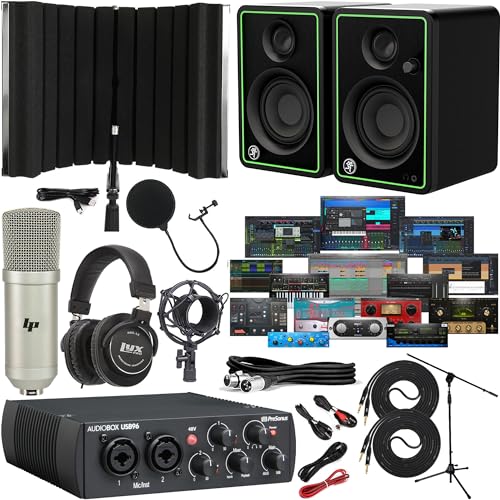
PreSonus AudioBox USB 96 Recording Bundle
More Details On Our Top Picks
For a first serious home setup, this package keeps the moving parts in one lane. You get an AudioBox USB 96 interface, so the computer side of the chain stays simple, and the rest of the bundle fills in the pieces most new studio desks still need.
The trade-off is obvious: bundles are convenient, not endlessly customizable. That said, for a spare room, bedroom desk, or apartment setup, this kind of all-in-one path avoids the slow piecemeal build that stalls a lot of projects.
Strong Points
- Interface-centered layout keeps recording anchored around a single connection point.
- The bundle approach helps you cover vocals, instruments, and monitoring without extra shopping.
- Useful for small rooms where you want fewer loose parts on the desk.
- A practical fit for a home studio that needs to start recording without a long setup trail.
Things To Consider
- Bundled gear can outgrow itself faster than a custom build.
- You may end up replacing individual pieces later as your workflow tightens.
Feature Snapshot
Who It Suits Best
You get the most value here as a beginner or casual creator building a first home studio around a computer.
Where A Sibling Pick Shines
PreSonus AudioBox USB 96 Recording Bundle is the stronger step for you if you want monitors and isolation gear in the same box.
Wireless freedom changes the feel of a desk setup fast, especially for podcasters who move between the mic, a keyboard, and a control panel. This MAONO model also gives you USB and XLR support, so you can keep it simple with a laptop or step into a more fixed interface-based chain later.
The cardioid pickup pattern, which favors sound from the front while reducing side pickup, matters in shared rooms with fans, traffic, or a loud computer. The honest read is that all that flexibility makes sense for creators more than for pure music recording, where a fixed studio mic may still feel cleaner.
Positives
- Three connection paths give you more room to adapt the mic to different desks.
- The wireless option helps keep the workspace less cramped during live sessions.
- USB support makes a laptop setup easier to manage.
- XLR compatibility opens the door to interface-based recording later.
Worth Noting
- Extra flexibility can mean extra setup decisions.
- Wireless use depends more on keeping the desk organized and charged.
- In a dedicated music booth, a simpler fixed mic may feel more direct.
Feature Card
Made For
You’re looking at a strong match for podcasters, streamers, and home creators who value desk flexibility.
A Better Fit Elsewhere
PreSonus AudioBox USB 96 Studio Recording Package suits you better for a more traditional music-first starter rig.
This one is built for a desk where space matters. A condenser mic, which tends to capture more detail than a dynamic model, pairs here with an isolation shield and pop filter, so the setup is aimed at cleaner vocal capture in a room that may not have much acoustic treatment.
That makes it a smart fit for laptop or smartphone recording, and the USB path keeps the hookup straightforward. The trade-off is that desk-mounted accessory bundles can take a little more fiddling than a plain mic, but for solo narration or home vocals, the added control is easy to appreciate.
Upsides
- Shield and pop filter help build a more controlled vocal corner.
- USB output keeps the connection path simple.
- Works across PC, laptop, and smartphone use cases.
- Good fit for home recording spaces where room echo is a concern.
Points To Note
- The desk footprint is larger than a bare mic alone.
- Accessory setup takes a little more placement care.
Core Details
Right Fit For
You’ll get the most from this setup in a solo room, especially for voice work and home vocal takes.
Skip It When
MAONO PD200W Hybrid Wireless Podcast Microphone is the better call for you if desk movement and wireless use matter more than accessory control.
Bundles like this speak to the shopper who wants a desk to look ready on day one. You get a mixer, microphone, boom arms, cabling, and the usual small accessories in one box, so the setup path is less scattered than assembling pieces one at a time.
The mixer-centered layout is the big difference from the earlier mic-only picks. It gives you more hands-on control, but it also means a little more learning at the desk, especially for first-time podcast work or voice-over setups.
Best Bits
- A wide bundle cuts down on separate accessory shopping.
- Audio mixer control suits creators who like physical adjustments.
- Boom arms and cabling make the desk easier to organize.
- Useful for podcast starters who want everything in one package.
Small Caveats
- More included parts usually means more setup steps.
- Mixed bundles can include gear you may outgrow later.
At A Glance
Who Should Grab It
You’re in the right zone here as a starter podcaster or solo creator who wants a fuller equipment spread.
A Better Fit Elsewhere
Dejasound Studio Recording Microphone with Isolation Shield works better for you when a smaller, cleaner desktop footprint matters more than a full bundle.
This bundle is aimed at people who want livestream flavor without building a stack from scratch. The voice changer and live sound card steer it toward broadcast-style use, while the included music and DJ orientation hints at a broader entertainment setup than a straight voice mic.
Power-surge coverage from day one is part of the protection plan data supplied here, which matters for desk rigs that stay plugged in. The catch is that sound-effect-heavy bundles can feel less focused than a clean music interface, so your use case should be rooted in streaming, vlogs, or casual production rather than purist studio work.
Bright Spots
- Voice effects make the setup more versatile for live content.
- Sound card support suits laptop-based broadcast desks.
- Broad entertainment focus works well for mixed media use.
- Protection plan details add a little peace of mind for plugged-in rigs.
Areas To Watch
- Effect-heavy gear can be more than a pure studio workflow needs.
- You may spend extra time dialing in the right voice settings.
- Casual creators will likely value it more than music purists.
Details At A Glance
The Right Fit
You’ll like this most as a streamer, vlogger, or casual broadcast creator who wants sound effects in the mix.
Another Choice May Suit
MAONO PD200W Hybrid Wireless Podcast Microphone is a better match for you if you want a simpler mic-first setup with more connection flexibility.
This is the only pick here that behaves like a classic desktop workstation rather than a creator bundle. The Intel i7-6700, 32GB of DDR4 memory, and paired SSD plus hard drive layout make sense for people running a DAW, sample libraries, and a separate file archive on the same machine.
For a studio desk, that split storage matters more than it first appears, because an SSD boots quickly while the larger drive gives you space to park projects. The honest caveat is that renewed desktops can vary in exterior condition, so the practical focus is performance and port layout rather than showroom polish.
Highlights
- 32GB of memory gives heavy project sessions more breathing room.
- SSD plus HDD storage supports fast startup and larger file storage.
- HDMI and USB 3.0 keep it easy to connect studio peripherals.
- Windows 11 Pro suits a more traditional desktop workflow.
Room For Improvement
- Renewed hardware can be more variable in exterior appearance.
- Graphics hardware is basic, which is fine for audio work but not visual-heavy tasks.
Technical Sheet
Built With In Mind
You’re the right match here if your studio runs on software instruments, plug-ins, and a desktop you plan to keep on a fixed desk.
Look Elsewhere When
PreSonus AudioBox USB 96 Studio Recording Package makes more sense for you if you want a complete audio bundle rather than a standalone workstation.
Compared with the simpler PreSonus bundle earlier in the list, this version leans harder into a finished desk. The included studio monitors, condenser mic, isolation shield, headphones, and cables mean the computer is only one part of the setup, not the whole story.
That makes it attractive for home producers who want to hear, record, and monitor from the same space without sourcing every piece separately. The trade-off is desk size, because a bundle with monitors and shielding needs more room than the mic-only choices above it.
Reasons To Buy
- Studio monitors help you move beyond headphones alone.
- The included shield supports cleaner desk recording.
- Headphones and cables round out the basic signal chain.
- Good for a home studio that wants a fuller starting point.
Points To Note
- It asks for more desk space than the smaller PreSonus package.
- Bundles can include pieces you may later replace one by one.
Feature Rundown
Perfect Match For
You fit this best as a home producer or podcast hobbyist building a fuller room-based studio.
Reach For A Different Pick When
Dell Precision 3620 Music Production Workstation PC is the smarter route if your priority is a standalone computer rather than a complete desk kit.
What Matters Most Before Choosing Computers For Recording Studio
Match The Machine To The Session
A desktop for basic voice tracks can be lighter than a workstation for layered music projects. Sample libraries, plug-ins, and multiple tracks place more pressure on processor headroom and memory than a simple spoken-word desk.
Don’t Ignore The Physical Chain
Ports, interface compatibility, and monitor placement matter just as much as internal specs. A computer that looks strong on paper can still frustrate you in a cramped room with poor cable routing.
Think In Terms Of Desk Life
Quiet operation, storage layout, and room for future gear all matter in a studio. A machine that keeps the workflow clean will usually feel better than one that only looks fast in a listing.
A Quick Reality Check
Common Shopping Slip Ups
A lot of shoppers focus on raw speed and skip the audio chain around the computer. That leads to mismatched mics, awkward connections, and too little room for monitoring gear.
The Upgrade Payoff
Higher-tier models often cost more because they pair stronger processors, more memory, and better storage arrangements with steadier connectivity. That extra spend makes sense for multi-track sessions, bigger plug-in counts, and a desk you plan to keep for years.
Frequently Asked Questions
What makes a computer good for recording studio work?
You want enough processing headroom, stable ports, and storage that handles both fast loading and larger project files. Quiet operation and easy peripheral support matter just as much in a real studio desk.
Is a bundle better than a standalone computer?
A bundle helps you get recording gear in one move, which is handy for a first setup. A standalone computer gives you more room to choose your own interface, mic, and monitors later.
Do you need 32GB of memory for home recording?
For simple voice tracks, less can still be workable. For larger music sessions with many plug-ins or sample libraries, 32GB gives the machine more breathing room.
Why does an audio interface matter so much?
An audio interface handles the link between your mic or instrument and the computer. It usually gives you cleaner control and more practical studio connections than a basic built-in input.
Should you choose a desktop or a bundle first?
A desktop suits you best when the computer itself is the priority and your studio gear is already chosen. A bundle makes more sense when you want a ready-made path into recording with fewer separate purchases.
