


Laptop graphics used to mean settling for whatever chip came soldered inside. That’s changed. Between external GPU docks, low-profile internal cards for compact builds, and affordable capture hardware that turns any laptop into a streaming station, there’s a real option here for gamers, creators, and office users alike. This list sorts through ten of them so you can match the right one to your machine and your workload without wading through spec sheets alone.
A Side-By-Side Look

ASUS ROG XG Mobile (2025) RTX 5070 Ti eGPU

BENFEI Video/Audio Capture Card Full HD 1080P 60FPS

BlueAVS 4K HDMI to USB Capture Card, 1080P@60Hz
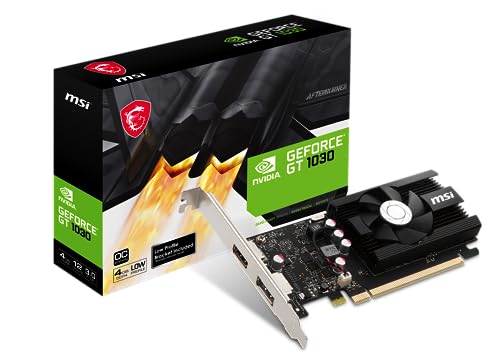
msi Gaming GeForce GT 1030 4GB DDR4 LP OC

GeForce GT 610 2GB DDR3 Low Profile Graphics Card

Fifine AmpliGame Video Capture Card, HD 1080P 60fps

Glorto GeForce GT 730 4GB Low Profile Graphics Card

PNY NVIDIA NVS 310 1GB DisplayPort Graphic Card
PCIE 3.0 x16 22Gbps eGPU Dock, Thunderbolt 4

4K Capture Card HDMI to USB A/C
A Closer Look At Each Pick
This is the pick for anyone whose laptop feels fine on a Tuesday and hopeless on game night. ASUS packs an NVIDIA GeForce RTX 5070 Ti Laptop GPU into an external enclosure roughly the size of a hardcover novel, connecting over Thunderbolt 5, a newer standard whose extra bandwidth keeps frame rates from choking on data transfer.
The same unit doubles as a Thunderbolt dock, adding wired ethernet and other connections alongside the graphics boost. In a dorm room or shared apartment where a full desktop tower isn’t welcome, that two-in-one role matters more than raw numbers suggest.
Noteworthy Benefits
- RTX 5070 Ti-class performance means modern games run at settings a laptop’s built-in chip simply can’t sustain.
- Thunderbolt 5’s high bandwidth helps minimize the input lag some external GPU setups suffer.
- Built-in ethernet gives competitive players a steadier connection than most Wi-Fi setups manage.
- Novel-sized footprint slides onto a desk shelf instead of claiming the floor like a tower would.
Things To Consider
- You’ll need a compatible laptop with the right port, so check your machine before committing.
- It’s the heaviest investment on this list, both in money and in desk space reserved for one purpose.
Key Specs
Who It Suits Best
Competitive and enthusiast gamers with a Thunderbolt-equipped laptop who want near-desktop performance without owning a tower.
Where Another Pick Suits Better
Anyone with a spare desktop graphics card lying around will get more flexibility from the OwlTree PCIE eGPU Dock at item nine, since it accepts whatever NVIDIA or AMD card you already own.
A capture card is the bridge between your console and your computer: it takes the HDMI signal from a Switch, PlayStation, or Xbox and hands it to recording software on your laptop. BENFEI’s version handles full HD output at 60 frames per second, which is smooth enough that gameplay footage doesn’t stutter when you rewatch it.
The HDMI input accepts signals up to 4K at 30Hz, so you can still play at your console’s native resolution while capturing at 1080p. For someone starting a channel from a bedroom desk, that split is the practical sweet spot.
The Value In It
- 60fps recording keeps fast-paced action looking fluid rather than choppy.
- Works across Switch, PS4, PS5, and Xbox consoles, plus Windows and Mac computers.
- Audio capture up to 48kHz means commentary and game sound land cleanly in the same file.
- Small stick format travels in a pocket alongside the laptop.
Worth Noting
- Capture tops out at 1080p, so 4K recordings aren’t on the table.
- Owners commonly report needing quality cables and a solid USB port to avoid dropped frames during long sessions.
Made For
Console players launching their first streaming or recording setup on either a Windows or Mac laptop.
Consider Something Else When
Streamers who want to watch their own gameplay at full 4K while broadcasting should look at the Fifine AmpliGame card at number six, which adds a loop-out port for exactly that.
Where the BENFEI card leans toward gamers, this BlueAVS unit casts a wider net: cameras, camcorders, set-top boxes, anything with HDMI out. It takes a 4K input signal and delivers 1080p at 60Hz to your computer, covering live streams, video calls, and content creation in one small dongle.
The headline convenience is what’s missing. No driver install, no external power brick. Plug it into a USB port on a Windows machine or Mac, open your software of choice, and you’re capturing. In a classroom or a borrowed conference room, that zero-setup quality saves real time.
Notable Gains
- Driver-free plug-and-play operation gets you recording within minutes of unboxing.
- Accepting 4K HDMI input means newer consoles and cameras connect without adapters or downscaling headaches.
- Runs off bus power alone, so there’s one less cable cluttering a travel bag.
- Price sits at the accessible end of this category for anyone testing whether capture fits their workflow.
Softer Spots
- Output resolution caps at 1080p regardless of how sharp the source signal is.
- There’s no passthrough monitor output, unlike pricier cards on this list.
Right Fit For
Teachers, meeting organizers, and hobbyist creators who need dependable capture on a modest budget with minimal fuss.
Not Your Match When
Users wanting dual USB-A and USB-C connectors for mixed devices will find the Herfair capture card at number ten more accommodating.
Shifting from external gear to internal cards, MSI’s GT 1030 targets the slim desktop that shipped with integrated graphics and never quite kept up. Low-profile means the board is shorter than a standard card and ships with a bracket suited to compact cases, so it drops into small form factor machines that reject taller hardware.
The 4GB of DDR4 memory and factory overclock give everyday tasks headroom: HD video editing, photo work, and lighter esports-style games all benefit. Compared with the Glorto GT 730 further down, this card supports the newer DirectX 12 API, which matters as more software moves to it.
Features That Help
- DirectX 12 support keeps the card relevant with current and upcoming software releases.
- HDCP compliance allows protected streaming content to display correctly on connected screens.
- A single-fan cooler stays quiet enough for a living room media setup.
- Low-profile design fits cases where full-size graphics boards physically won’t.
Potential Sticking Points
- This is an entry-level gaming card, so modern AAA titles at high settings remain out of reach.
- Installation requires opening the case, which rules out laptops despite this article’s theme.
The Numbers That Matter
Who Will Love This
Owners of slim prebuilt desktops who want smoother video playback and casual gaming without replacing the whole machine.
Look Elsewhere When
Anyone needing four simultaneous displays should step up to the Glorto GT 730 at number seven, which was designed around multi-monitor output.
This one exists for a specific rescue mission: bringing an aging desktop back from the dead. A failed onboard graphics chip or a dead legacy card leaves many older towers useless, and the GT 610 slots into that gap. Its half-height bracket matches small form factor cases and home theater PCs where space is measured in millimeters.
With 2GB of DDR3 memory, HDMI and VGA outputs, and driver installation handled automatically on Windows 11, the goal here is basic functionality rather than speed. Think web browsing, video playback, office documents, and driving a TV from the couch.
The Upside
- Automatic driver installation on Windows 11 removes the usual fiddling with downloads.
- Dual HDMI and VGA outputs cover both modern TVs and older monitors in one card.
- Half-height bracket suits HTPC and SFF enclosures that exclude standard-size boards.
Details To Watch
- Performance sits below even the MSI GT 1030 earlier in this list, so treat it purely as a restoration part.
- The DDR3 memory and older architecture limit anything beyond everyday computing.
The Right Fit
Anyone reviving an older small-form-factor PC or building a simple living-room media machine on a tight budget.
A Better Fit Elsewhere
For a similar price tier with noticeably stronger everyday performance, the msi GeForce GT 1030 at number four is the smarter upgrade.
Fifine, better known among streamers for microphones, brings the same creator-first thinking to capture. The V3 records at 1080p and 60fps over USB 3.0, but its defining trick is the loop-out port: it passes the incoming signal through to your own monitor at up to 4K and 30fps. You play on your screen at full fidelity while the laptop records a clean copy.
That single feature separates live streamers from people who just archive footage. Playing through a laggy preview window is miserable; playing on your actual TV or monitor while the capture happens invisibly in the background is how serious broadcasts get made.
Real-World Strengths
- HDMI loop-out at 4K/30FPS lets you game on a separate display with no lag penalty.
- USB 3.0 throughput keeps recorded footage synchronized with audio during long sessions.
- Broad device support spans PS4, Switch, Xbox, Windows, and Mac.
- Real-time capture suits live broadcasting rather than post-recorded uploads only.
Points To Keep In Mind
- The maker recommends the original USB cable for stable performance, so losing it matters.
- It occupies two HDMI positions in your chain, which complicates cramped entertainment centers slightly.
Who Should Grab It
Live streamers running OBS or similar software who refuse to compromise their own viewing experience while broadcasting.
Swap It Out When
Casual recorders who never watch and play simultaneously can save money with the simpler BENFEI card at number two.
Most budget cards offer two outputs; Glorto’s GT 730 offers four, spread across dual HDMI, DisplayPort, and VGA. Through NVIDIA Surround technology it can drive up to four screens at once, which turns a forgotten office tower into a legitimate trading-desk or control-station machine. The 4GB of DDR3 memory gives each display room to breathe.
Like the smaller GT 610 reviewed earlier, it uses a low-profile board aimed at SFF and HTPC cases, but the newer chipset runs at a higher core frequency and installs drivers automatically under Windows 11. It’s the productivity pick of this list rather than a gaming one.
Practical Advantages
- Four outputs enable multi-monitor spreadsheets, dashboards, or security-camera walls from one card.
- NVIDIA Surround support treats several displays as one large canvas when wanted.
- Automatic Windows 11 driver handling makes setup nearly effortless.
- Low-profile size fits the compact cases typical of office desks.
Some Limits To Know
- Gaming performance trails the MSI GT 1030, so buy it for displays, not frame rates.
- DDR3 memory bandwidth constrains heavy visual workloads.
Quick Facts
Built With In Mind
Office workers, traders, and home administrators who juggle several windows across several screens every day.
Skip It When
Light gamers chasing playable frame rates will be happier with the msi GT 1030 OC at position four.
The NVS line exists for one customer: businesses deploying dozens or hundreds of identical workstations. PNY’s NVS 310 drives two displays over DisplayPort 1.2, and its companion nView desktop-management software lets IT teams arrange windows and virtual desktops consistently across an entire fleet. Nobody buys this for games; they buy it because it behaves predictably at scale.
With just 1GB of memory, its scope is spreadsheets, browsers, terminals, and email. In that lane, though, owners generally find it steady and cool-running. Compared with the consumer-oriented Glorto GT 730, this card trades versatility for corporate-grade stability and management tooling.
Where It Excels
- nView desktop management keeps window layouts uniform across many machines.
- Dual DisplayPort 1.2 outputs suit modern office monitors natively.
- Designed for straightforward deployment and support across large organizations.
Factors To Consider
- 1GB of memory is dated by today’s standards, capping what the card can handle.
- DisplayPort-only outputs require adapters for HDMI or DVI monitors, a small recurring cost.
- Consumer buyers gain little here over cheaper general-purpose options on this list.
Whose Shelf It Belongs On
IT administrators standardizing dual-monitor business desktops across an office floor.
Another Choice May Suit
Individual shoppers after flexible home-office output should choose the Glorto GT 730 instead, with its four-port layout.
OwlTree’s approach to external graphics is the opposite of the ASUS unit at number one: bring your own card. This bare-bones dock holds any full desktop GPU with available NVIDIA or AMD drivers, spanning generations from older GTX models up to current flagships, and links to your laptop over Thunderbolt 3, Thunderbolt 4, or USB 4 at PCIe 3.0 speeds.
Power comes via PD, 8-pin CPU, Molex, or DC5521 inputs depending on your setup, and compatibility extends to Windows 10 and 11 machines plus certain handheld consoles. The honest read is that this rewards tinkerers: expect some cable wrangling and a bit of trial and error before everything clicks.
The Good Stuff
- Accepts almost any desktop NVIDIA or AMD card you already own or can source secondhand.
- Thunderbolt 3/4 and USB 4 support covers a wide range of recent laptops and handhelds.
- Multiple power input options adapt to different supplies you may have on hand.
- Upgradeable forever in practice, since the GPU swaps out whenever you like.
Room For Improvement
- Setup demands more patience than the plug-and-play ASUS ROG XG Mobile, particularly around power wiring.
- Intel graphics cards fall outside its supported range, worth confirming before purchase.
Best Suited To
Hands-on enthusiasts with a spare graphics card who enjoy configuring gear as much as using it.
Reach For A Different Pick When
Anyone wanting guaranteed out-of-the-box performance should pay up for the integrated ASUS ROG XG Mobile at number one.
Herfair closes the list with a capture stick built around one thoughtful detail: dual connectivity. Both a USB-A and a USB-C interface sit on the body, so it pairs with older laptops and modern tablets or phones without hunting for an adapter. Input accepts up to 4K at 30Hz, with output at 2K/30Hz or 1080p at 60Hz depending on your software settings.
One honest limitation deserves emphasis: this is a capture-only device. It needs recording software such as OBS to do anything, and it won’t pass video straight to a monitor or TV. Within those boundaries, it’s a tidy grab-and-go option for journalists, students, and creators working from different machines.
Useful Strengths
- Dual USB-A and USB-C plugs cover nearly every computer you’ll encounter.
- Plug-and-play operation needs no driver installation on either platform family.
- 4K input acceptance keeps newer sources compatible even at reduced capture resolution.
Trade-Offs To Consider
- No direct monitor passthrough, unlike the Fifine AmpliGame card at number six.
- Requires separate capture software, so total setup involves one more download than some rivals.
Perfect Match For
Mobile creators and field recorders who bounce between USB-A laptops and USB-C devices and value one dongle that serves both.
Where A Sibling Pick Shines
Stationary streamers prioritizing 60fps consistency over connector variety will prefer the BENFEI card reviewed earlier.
What Matters Most Before Choosing Video Cards For Laptop
Match The Connection First
External graphics lives or dies on the port between dock and laptop. Thunderbolt 5, as on the ASUS ROG XG Mobile, carries far more data than older standards, which translates directly into steadier frame rates. Check your laptop’s exact port before anything else, because a mismatched connection turns a premium card into an expensive paperweight.
Know Your Real Workload
Be honest about what the card must do. Modern gaming demands serious silicon; spreadsheet work across three monitors needs outputs and stability, not horsepower; console recording needs clean 1080p capture and nothing fancier. Buying for the job you actually have keeps budgets sane and disappointment rare.
Physical Fit And Power Reality
Internal low-profile cards demand case measurements: height clearance, slot availability, and adequate airflow. External docks demand desk space and a reliable power arrangement. Either way, measure twice. Owners who skip this step account for most returns in this category.
Plan For Software, Not Just Hardware
Capture cards need recording applications, and older GPUs depend on driver availability for current operating systems. Confirm the software side exists before the box arrives so day one goes smoothly.
Key Considerations Across These Picks
Traps First Timers Fall Into
The classic mistake is buying raw power while ignoring the bottleneck elsewhere: a weak laptop CPU or a slow port will throttle any GPU attached to it. Another frequent slip is assuming every capture card mirrors to a screen; several on this list record only. Read the output specs closely, and confirm driver support for your operating system version before checkout.
The Case For Spending Up
Higher-tier options earn their cost through integration and bandwidth. The ASUS XG Mobile pairs its GPU with Thunderbolt 5 and dock functions in one sealed unit, removing guesswork entirely. Cheaper modular routes save money upfront but shift complexity onto you. Paying more buys certainty, and for daily-use setups, certainty has real value.
Frequently Asked Questions
Can I add a graphics card to any laptop?
No, external GPUs require a compatible high-bandwidth port such as Thunderbolt or USB 4. Internal cards fit desktops only, so verify your machine’s connectivity first.
Do capture cards reduce game performance?
A small amount of system resources goes toward encoding, usually negligible on modern laptops. Using a card with loop-out also avoids lag from playing through the capture preview.
Is a low-profile graphics card weaker than a regular one?
Low profile describes physical size, not necessarily performance, though these boards typically target entry-level use. Their main advantage is fitting compact cases that reject full-size hardware.
What recording software works with these capture cards?
Popular choices include OBS Studio and comparable free applications available for Windows and Mac. Any program that recognizes USB video input will generally work.
Are external GPU docks worth it in 2026?
For laptop owners blocked from upgrading internally, yes, especially with Thunderbolt 5 reducing the traditional bandwidth penalty. The trade-off remains cost and desk space versus a desktop replacement.
Closing Remarks
The right choice here depends less on rankings and more on your machine and routine. Gamers with a Thunderbolt laptop should weigh the turnkey ASUS against the DIY OwlTree dock; streamers can start cheap with BlueAVS and graduate to Fifine’s loop-out design; office and revival builds have solid low-profile answers in the MSI and Glorto cards. Match the tool to the task, double-check compatibility, and whichever direction you go, you’ll be working with gear that earns its spot on the desk.
