


Practicing guitar at midnight, sharing a mix in a small studio, or coaxing real volume out of quiet headphones all come back to the same problem: your source alone isn’t enough. The right budget headphone amp fixes that without eating your gear fund. Below you’ll find ten affordable options split into two camps: plug-in amps for guitarists and desktop or rack-style units for listeners and studios. Each one earns its spot for a specific kind of player, so match the pick to your situation rather than the list order.
The Essentials At A Glance

Donner Classic Rock Mini Guitar Headphone Amp
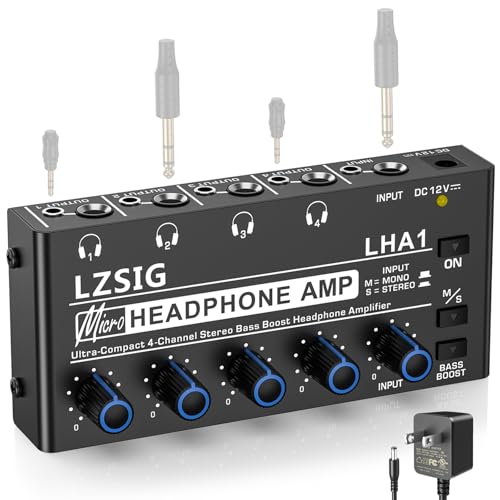
LZSIG 4 Channel Headphone Amplifier with Bass Boost
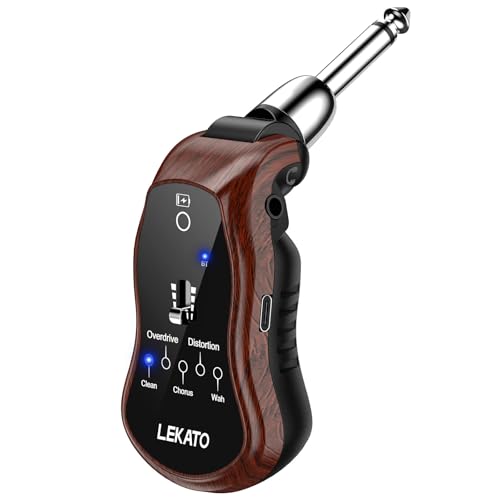
LEKATO Micro Electric Guitar Headphone Amp

TNP Portable 3.5mm Headphone Amplifier with RCA Input

Vox amPlug 3 Bass Headphone Amplifier

Vox amPlug 3 AC30 Headphone Guitar Amplifier

Zendstanding HA400 4 Channel Headphone Amplifier

Douk Audio U3 PRO Mini Class A Headphone Amplifier
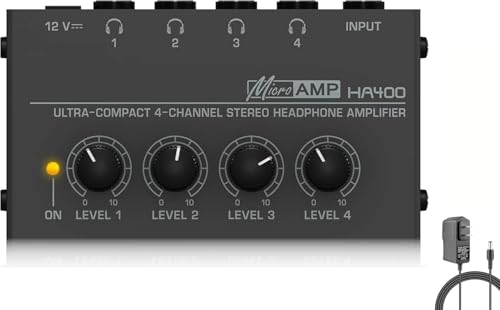
HSCLPM HA400d1 4-Channel Headphone Amplifier

ELZONYX 4 Channel Headphone Amplifier
A Deeper Look At The Lineup
This little unit plugs straight into your guitar’s output jack, so there are no cables to route and no pedalboard to build. It runs an analog circuit designed to mimic a classic rock amp response, which matters because analog voicing tends to feel more natural under your fingers than harsh digital modeling.
The rechargeable lithium battery is rated for up to 15 hours of play, enough to cover a week of evening practice between charges. An AUX input lets you stream backing tracks from a phone while you play along, all privately through your headphones.
Advantages To Know
- True analog circuit design gives a warmer, more amp-like response than many digital micro amps
- Up to 15 hours per charge means fewer interruptions during long practice stretches
- AUX-in jack lets you jam along with songs from a phone or MP3 player
- No setup required: plug it in, put headphones on, play
Small Caveats
- Single-tone focus means no effects presets, so variety seekers may want more
- Charging port placement can be awkward while playing, according to some owners
Who It Suits Best
First-time electric guitarists who want honest rock tone through headphones without learning menus or spending much.
A Better Fit Elsewhere
Players who want built-in effects and Bluetooth should look at the LEKATO Micro Electric Guitar Headphone Amp instead.
Where the Donner serves one guitarist, this box serves four listeners at once. One stereo feed goes in, four amplified headphone outputs come out, each with its own level knob so nobody argues over volume. It accepts both 3.5mm and 6.35mm connections without adapter dongles, which saves desk clutter.
LZSIG rates it for headphones in the 32 to 100 ohm range with 50mm drivers, which covers most consumer and mid-tier studio models. A dedicated bass boost control lets each user fatten up thin-sounding mixes, handy for late-night movie watching as much as music.
Everyday Wins
- Independent volume per channel keeps group sessions peaceful
- Ultra-low-noise output stages preserve detail in quiet passages
- Dual 3.5mm and 6.35mm jacks mean no converter adapters to lose
- Bass boost adds low-end weight to smaller headphones
Things To Weigh Up
- High-impedance audiophile headphones fall outside its comfortable driving range
- Wall power means one more adapter occupying an outlet strip
Key Specs
Made For
Podcast groups, study partners, and families who share one computer or receiver but refuse to share one volume setting.
Reach For A Different Pick When
Solo listeners chasing high-end cans will get far more headroom from the Douk Audio U3 PRO further down this list.
Compared to the single-flavor Donner, this pocket-sized unit ships with five onboard voices: clean, chorus, overdrive, distortion, and wah. That spread covers everything from arpeggiated cleans to saturated riffing, all adjustable through a simple volume switch on the body.
The built-in Bluetooth receiver is the feature that changes daily habits. You pair a phone, stream a backing track, and play over it through the same headphones, no AUX cable trailing across your lap. Apartment dwellers and travelers get silent practice anywhere a guitar fits.
What Earns Its Place
- Five distinct effects give tonal variety most micro amps lack entirely
- Bluetooth streaming eliminates cables during play-along sessions
- Rechargeable design suits bag-and-go practice routines
- Works with both electric guitar and bass
Points To Note
- Effect editing stays basic, so tone tweakers may feel limited
- Bluetooth audio latency varies by phone, which some players notice when locking to a click
The Right Fit
Intermediate players in shared living spaces who want several tones and wireless backing tracks in a jacket-pocket package.
Swap It Out When
Pure analog tone purists who never touch effects will prefer the simpler Donner Classic Rock Mini covered above.
Plenty of PCs and AV receivers ship with headphone jacks that simply run out of steam on demanding headphones. This inline amplifier sits between your source and your cans, adding gain where the source falls short. An RCA input opens the door to older hi-fi gear, a connection type most modern budget amps skip.
Output flexibility is the other selling point: both 3.5mm and 6.35mm headphone sockets are present, and a physical analog knob handles volume. The whole thing runs from a small 5V supply, so it tucks behind a monitor or receiver without fuss.
Well-Handled Touches
- RCA input connects legacy stereos and DACs directly
- Dual output sizes cover everyday earbuds and studio headphones alike
- Analog volume knob feels immediate and precise compared to buttons
- Compact inline shape hides easily in a desk setup
Honest Caveats
- No battery option, so portable use still needs wall power
- Single-channel design serves one listener at a time
- Cable management takes some thought since inputs sit on opposite sides for some setups
Who Should Grab It
Desk-bound listeners whose computer or receiver output sounds thin and quiet on their current headphones.
Another Choice May Suit
Anyone needing four simultaneous listeners should step up to the LZSIG 4 Channel unit reviewed earlier.
Vox’s third-generation amPlug line refines what was already the default choice for silent bass practice. This bass-specific model voices itself after classic bass amplifiers, with three selectable modes covering vintage warmth, smooth modern rounds, and punchy funk character. An integrated compressor keeps note levels even, which makes fingerstyle practice sound noticeably more polished.
Nine built-in rhythm patterns spanning rock, funk, and blues turn solo practice into something closer to playing with a drummer. That alone can rescue motivation on nights when backing tracks feel like too much effort.
Notable Upsides
- Three amp modes span classic, smooth, and funk voicings
- Built-in compressor evens out dynamics automatically
- Nine rhythm tracks make solitary practice genuinely engaging
- Speaker emulation keeps headphone tone convincing
Worth Bearing In Mind
- Plugs directly into the instrument, so angled output jacks on some basses cause clearance issues
- Rhythm tempo is fixed per pattern rather than freely adjustable
Feature Snapshot
Best Suited To
Bassists in apartments or dorms who want structured, groove-based practice instead of raw noodling.
Look Elsewhere When
Guitarists wanting stereo modulation effects will find far more depth in the Vox amPlug 3 AC30 next up.
The AC30 flavor of the amPlug 3 family chases Vox’s most famous tube combo, known for chiming cleans and gritty Top Boost drive. Two channels, Normal and Top Boost, let you flip between those personalities mid-session, which is more tonal ground than the bass version or the Donner covers.
Effects arrive in stereo: reverb, delay, chorus, flanger, and tremolo all render with width in compatible headphones, giving practice a sense of space a mono plug-in can’t fake. Nine rhythm patterns across rock, pop, jazz, and Latin styles round out the play-along toolkit, and an AUX input handles external sources.
Points In Its Favor
- Dual Normal and Top Boost channels mirror the classic AC30 layout
- Stereo effects create a wider, more immersive practice experience
- Nine genre-spanning rhythms keep sessions fresh
- AUX input supports phones and media players
Less Ideal Details
- More controls on a tiny body means a brief learning curve
- Owners commonly report the plastic housing needs care around pedalboards and gig bags
Who Will Love This
Home players chasing British-voiced cleans and drives who also want built-in effects and rhythms in one plug.
Not Your Match When
Bass players should stay with the Vox amPlug 3 Bass, whose voicing and compression suit low strings properly.
This is the familiar HA400 formula: one 1/4-inch TRS input feeding four independently volume-controlled headphone outputs, wrapped in a metal case that shrugs off studio knocks. The internal low-noise JRC4580 op-amp chip, a part long favored in budget audio for its clean gain, does the amplifying here.
Like the LZSIG earlier, it targets headphones between 32 and 100 ohms with 50mm drivers, and the manufacturer lists roughly 40mA maximum output into 100 ohms. In plain terms, that’s comfortable territory for monitoring headphones, not for planar-magnetic flagships.
Real-World Strengths
- Metal chassis survives being shuffled around desks and racks
- Low-noise op-amp chip keeps quiet passages free of hiss
- Four separate volume knobs end group volume negotiations
- Standard TRS connectors integrate cleanly with mixers and interfaces
A Few Limitations
- Needs a TRS source connection, so some laptops require a cable swap
- Output ceiling limits very high-impedance headphones
The Numbers That Matter
Whose Shelf It Belongs On
Home studio owners who need dependable four-way monitoring at the lowest sensible spend.
Consider Something Else When
Traveling engineers prioritizing size over channel count may favor the compact HSCLPM HA400d1 coming up.
Everything before this point targets casual listening or practice. The U3 PRO plays a different game: it’s a Class A desktop amplifier (a design that keeps output transistors always active, trading efficiency for smoother sound) rated to drive headphones from 18 all the way to 600 ohms, delivering up to 1500mW at 32 ohms.
The trick is an internal voltage boost circuit that lifts a humble 5V USB supply to roughly ±14V internally, keeping distortion low and lending the signature warm Class A character. Both 3.5mm and 6.35mm jacks are fitted. Compared to the TNP inline unit, this is the step that makes hard-to-drive open-back headphones finally sing.
Where It Delivers
- 1500mW output powers demanding high-impedance headphones properly
- 18 to 600 ohm compatibility covers nearly every headphone made
- Voltage boost circuit achieves low distortion from a simple 5V input
- Class A topology brings a warm, refined presentation
Trade-Offs To Consider
- Class A operation generates noticeable heat during long sessions
- Single listener only, unlike the multi-output units in this list
Core Details
Right Fit For
Headphone enthusiasts with 250 ohm or higher impedance cans who want serious drive without leaving budget territory.
Skip It When
Group listening calls for multiple outputs, a job better handled by the ELZONYX 4 Channel amplifier below.
Size is this unit’s argument. At roughly 4.07 by 1.18 by 2.24 inches, it slips into a laptop bag beside an interface, which matters for engineers hopping between rehearsal rooms and home setups. Four high-power stereo amplifier stages distribute one input to four headphones, each with its own level knob.
The included 12V adapter keeps it powered wherever there’s a socket, and the metal housing holds up to being packed repeatedly. Functionally it overlaps heavily with the Zendstanding HA400, so the decision mostly comes down to which footprint and bundle suits your rig.
The Practical Payoff
- Palm-sized body travels inside existing gear bags
- Four independent volume controls serve band cue mixes
- Metal construction tolerates regular transport
- Adapter included, so it works out of the box
Details To Watch
- Knob spacing is tight given the small panel, so quick adjustments need care
- Wall adapter dependency limits truly mobile use
Built With In Mind
Gigging musicians and mobile recordists who need four-way monitoring that disappears into a carry bag.
Where A Sibling Pick Shines
Permanent studio desks benefit from the roomier layout and proven chip set of the Zendstanding HA400.
Closing the list is another take on the four-way splitter, this time leaning hard into clean signal distribution. A single 1/4-inch TRS input feeds four TRS outputs, each carrying its own volume knob, and the manufacturer specifies the same low-noise JRC4580 op-amp found in the Zendstanding unit for clear, stable gain.
It’s rated for headphones between 32 and 100 ohms, matching typical studio monitoring pairs, and the mini metal enclosure slots beside a mixer or interface without hogging rack space. Podcast crews tracking multiple voices and teachers running group listening both fit its strengths well.
What Pays Off
- JRC4580 chip delivers high-gain, low-noise stereo output
- Per-channel volume keeps every listener comfortable
- All-TRS connectivity pairs naturally with mixers and audio interfaces
- Stable signal distribution suits recording and monitoring work
Small Limitations
- Impedance ceiling excludes most high-end audiophile headphones
- Requires the bundled 12V adapter, adding one more wall wart to manage
Quick Facts
Who Should Grab It
Podcast producers and small project studios needing reliable multi-headphone monitoring on a tight budget.
Another Choice May Suit
Solo critical listening deserves the Douk Audio U3 PRO, whose power output dwarfs any splitter here.
What To Check Before You Commit
Match The Amp To Your Headphones
Impedance, measured in ohms, describes how much resistance a headphone presents to an amplifier. Most consumer cans sit between 16 and 100 ohms and run happily from any splitter here, while 250 ohm studio classics demand the voltage headroom only the Douk Audio U3 PRO provides among these picks. Buying the wrong pairing leaves you with volume but no dynamics.
Count Your Listeners First
The biggest fork in this list is one output versus four. Solo guitarists and single-listener hi-fi fans waste money on multi-channel boxes, while bands, podcast teams, and classrooms genuinely need independent volume per person. Settle that question before comparing anything else, because it halves the field immediately.
Think About Power And Placement
Every desktop unit here except the rechargeable guitar plugs requires wall power, so check your outlet situation near the desk or mixer first. The plug-in guitar amps trade outlets for batteries, which suits couch practice but means charging becomes part of your routine.
Weigh Features Against Simplicity
Effects, Bluetooth, and rhythm tracks add fun but also menus and failure points. Players who just want tone often stay happier with a two-knob unit they never think about.
Key Considerations Across These Picks
Traps First Timers Fall Into
The most common mistake is pairing a 250 ohm headphone with a splitter rated for 32 to 100 ohms, then blaming the amp for weak bass. The second is buying a four-channel box for solo use and never touching three of the knobs. Check the impedance spec on your headphones before anything else.
What Separates Premium From Basic
Higher-tier units like the Douk Audio U3 PRO spend their cost on internal voltage boosting and Class A circuitry, which translate into lower distortion and the ability to drive difficult headphones. Basic splitters buy you channels, not refinement. Paying more pays off only once your headphones actually demand it.
Frequently Asked Questions
Do cheap headphone amps really improve sound quality?
They improve loudness and control first, especially on harder-to-drive headphones. Sound quality gains depend on how underpowered your current source is.
Can I use a guitar headphone amp with a bass?
Some, like the LEKATO and Donner picks, list bass compatibility explicitly. Dedicated bass voicings, such as the Vox amPlug 3 Bass, generally track low strings more convincingly.
Will a 4-channel amp let everyone hear different songs?
No, these units distribute one shared input to multiple headphones. Each listener adjusts their own volume, not the program material.
Do I need special cables for these amplifiers?
Most desktop units use standard 1/4-inch TRS or 3.5mm connections already common in studios. A few laptop setups need a simple 3.5mm-to-dual-cable or adapter swap.
How long do rechargeable guitar headphone amps last per charge?
The Donner is rated for up to 15 hours of continuous play. Real-world figures vary with volume level and headphone efficiency.
Bottom Line
Ten picks, two clear paths. Guitarists should start with the Donner for simplicity, the LEKATO for effects and Bluetooth, or the Vox amPlug 3 models for refined voicing and built-in rhythms. Listeners and studios match the LZSIG, Zendstanding, HSCLPM, or ELZONYX splitters to group sessions, and reserve the Douk Audio U3 PRO for demanding headphones. Match the tool to your actual routine and any of these will earn its place on the desk.
