


School calls, car rides, tablet time at home. Kids headphones get handled hard, tossed in backpacks, and shared between siblings, so the right pair needs a volume limiter, tough joints, and a fit that survives small heads. This shortlist covers wired workhorses, multipacks for classrooms, one accessory worth adding, and a wireless noise-cancelling option for older kids.
The Shortlist At A Glance

L LTGEM Kids Headphones Case (Blue)

iClever HS19 Kids Headphones for School

iClever HS19S Kids Headphones for School

Acer HK03 Kids Headphones for School, w/Mic

iClever C371 Kids Headphones with Cord

iClever Kids Headphones with Cord, Over Ear
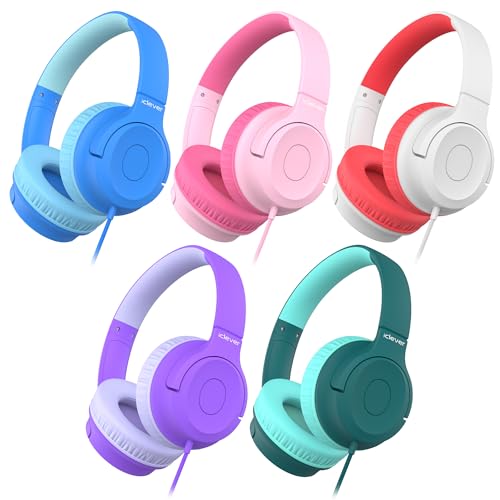
iClever HS27 5 Pack Kids Headphones

New Bee 2 Pack Kids Headphones with Microphone

New bee KH20 Kids Headphones (Purple)

JBL Junior 470NC Kids Headphones – White
Why These Options Stand Out
Headphones die in backpacks more often than they wear out, and this case exists to stop that. Its interior measures about 6.1 by 5.9 inches with 1.5 inches of depth, sized for folding on-ear models rather than bulky over-ear designs.
The shell is EVA, a semi-rigid foam material that absorbs knocks without adding much weight. Owners commonly report it pairs well with popular folding brands like iClever, noot products, ELECDER, and EarFun, which makes it an easy add-on when you’re already ordering a headset from this list.
What Pays Off
- Hard EVA shell shields folding hinges from drops inside crowded bags
- Fits most compact folding kids headphones from major budget brands
- Keeps cables coiled and untangled between school days
- Low-profile shape slides into a side pocket without hogging space
Things To Consider
- This listing is the case only, so it won’t rescue oversized over-ear cups
- Measure your current headphones first; deep ear cups may sit proud of the lid
Who It Suits Best
Families whose kids haul wired headphones to school daily and want the hinges to survive the semester.
Where A Sibling Pick Shines
The iClever HS19 below folds flat enough to slot straight into this case, making the two a natural bundle.
The HS19 is the pick that covers the widest range of school scenarios. An inline microphone sits on the cable for voice calls and online lessons, and the 3.5mm plug works with Chromebooks, tablets, laptops, and game consoles alike.
Volume limiting caps output at either 74 or 85 dBA, two levels you can choose based on how noisy the room gets. In our view, that flexibility is what separates it from single-setting rivals like the Acer HK03 further down.
A Few Highlights
- Inline mic handles video calls without fumbling for a separate headset
- Tiered 74/85dBA cap suits both quiet reading rooms and louder homes
- Over-ear cups cushion small ears during long lessons
- Standard 3.5mm jack means no dongles or charging routines
Worth Noting
- Wired only, so restless listeners can yank the cable free if it snags
- Ear pads collect grime over a school year; wipe them down monthly
Key Specs
Made For
Elementary students who split their week between classroom Chromebooks and video calls at home.
Swap It Out When
You want richer stereo sound for music rather than call duty; the HS19S next up uses larger 40mm drivers.
Siblings of the HS19 above share the same school-first DNA, but the HS19S leans into sound quality. Its 40mm drivers push fuller, balanced stereo than the smaller drivers typical of budget kids cans, which matters once your child starts using them for music instead of just lessons.
The 85dBA ceiling stays fixed here rather than adjustable, a simpler setup that some parents actually prefer because curious fingers can’t change it.
Useful Highlights
- 40mm drivers deliver noticeably fuller audio for audiobooks and music
- Fixed 85dBA limiter removes any temptation to crank levels up
- Over-ear padding keeps long study sessions comfortable
Trade Offs
- No microphone mentioned for this variant, so voice-call classes need another option
- Single volume setting offers less flexibility than the HS19’s two tiers
Right Fit For
Kids aged six and up who listen to music and stories as much as they attend virtual lessons.
Reach For A Different Pick When
Online classes are the main use case; the mic-equipped iClever HS19 handles those better.
Acer’s entry into kids audio keeps things refreshingly simple. You get a 3.5mm connection, a built-in microphone, and a dual safety switch that flips between an 85dB learning mode and a 94dB mode for noisier surroundings.
On-ear cups sit lighter on the head than full over-ear designs, which younger children often tolerate better during warm afternoons. The honest read is that this is a straightforward tool, not a luxury item, and its price reflects that.
Notable Gains
- Two-stage limiter adapts from silent classrooms to busy streets
- Microphone supports speaking exercises and virtual lessons
- Universal 3.5mm plug skips adapters entirely
- On-ear profile feels less sweaty in warm weather
Minor Gripes
- 94dB mode exceeds the stricter 85dBA guidance some parents prefer
- Basic padding tends to flatten faster under heavy daily use
Who Will Love This
Teachers stocking a listening station or parents buying a spare pair that won’t hurt to replace.
Look Elsewhere When
Comfort ranks above price; the iClever C371’s plush over-ear cups pamper small ears more.
Where the HS19S plays it plain, the C371 leans into charm. Sparkling bow-tie ear cups and a butterfly-print headband make it the pair a five-year-old will actually ask to wear, which solves half the battle right there.
Underneath the styling sits the same responsible engineering: an 85dBA limiter aligned with WHO guidance, plus BPA-free, CPSIA-certified materials chosen for sensitive skin. That certification language refers to US toy-safety standards, and it signals the plastics were vetted for children’s products.
What Works In Its Favor
- Bow-tie cups and butterfly print win over dress-up-loving kids instantly
- CPSIA-certified, BPA-free construction suits sensitive skin
- 85dBA cap follows widely cited hearing-safety guidance
- Giftable presentation saves wrapping-paper stress at birthdays
Small Caveats
- The decorative styling skews young; tweens will likely pass
- Sparkle surfaces show scuffs after months in a backpack
Quick Facts
Perfect Match For
Preschoolers and early elementary kids getting their very first pair, especially as a present.
Another Choice May Suit
Older children wanting a grown-up look will connect more with the New bee KH20 in purple.
This is iClever’s refined take on the everyday school headphone, running second-generation 85dBA limiting that the company aligns with CDC recommendations. The practical meaning: a child can listen for hours across a school day without the cumulative noise load climbing past recommended daily exposure.
Compared with the fixed-limit HS19S, this model emphasizes all-day comfort and high-definition acoustics for homework marathons. It’s the unglamorous choice that quietly does its job every weekday.
Key Advantages
- Second-gen limiter supports long listening within daily noise guidance
- Over-ear cushions spread pressure evenly across longer sessions
- Clear acoustics keep spoken instruction easy to follow
- Corded design means zero charging before the school run
Points To Note
- Cable length can tangle around desk legs; teach the over-under wrap early
- Design is functional rather than exciting for style-conscious kids
The Right Fit
Students wearing headphones one to three hours daily who need dependable comfort over flash.
Not Your Match When
Travel dominates your calendar; the New Bee 2 Pack adds a higher 94dB mode for engine noise.
Buying headphones one at a time gets expensive fast in a household with three kids, and the HS27 answers that with five reinforced sets in one box. iClever upgraded the ABS plastic, a rigid impact-resistant polymer, to a version claimed roughly 1.5 times stronger than standard formulations, then subjected the frames to drop, twist, and temperature stress checks.
Bright colorways help each child claim a set, which cuts down on the borrowing wars considerably.
Where It Excels
- Five sets cover siblings, cousins, or a classroom rotation
- Reinforced 1.5x-strength ABS shrugs off drops and twisting
- Eye-catching colors end arguments over whose pair is whose
- Per-set cost lands well below buying singles separately
Honest Caveats
- Shared-classroom use means ear pads need regular sanitizing between users
- More sets mean more cables to wind and store properly
Core Details
Who Should Grab It
Teachers, homeschool co-ops, and parents of three or more children who burn through single pairs.
Skip It When
Only one child needs headphones; the single iClever HS19 avoids leftover clutter.
Road trips change the math on volume limits. Cabin roar and highway hum tempt kids to crank whatever they’re wearing, so New Bee builds in a physical toggle: 85dB for quiet settings, 94dB to punch through engine noise without losing clarity.
Two sets arrive in green and pink, one per child, both folding flat for seat pockets. An upgraded HD microphone handles calls and game chat from the back seat.
Noteworthy Benefits
- Switchable 85/94dB modes match library days and flight days
- Two colorways settle sibling ownership disputes immediately
- Foldable frame packs flat into carry-ons and seat-back pockets
- HD microphone keeps backseat calls intelligible
Areas To Watch
- The 94dB setting needs parental judgment; leave it off for daily school use
- Toggle switches are small fingers’ favorite fidget, so expect occasional mode changes
Feature Snapshot
Built With In Mind
Families logging serious road-trip and flight miles who want one pair per kid ready to go.
Consider Something Else When
Your trips are rare and school comes first; the everyday-focused iClever corded model fits better.
The KH20 takes the same travel-friendly formula as the New Bee duo pack and trims it to a single purple set aimed at a wide age band, roughly four through sixteen. That stretch works because lightweight on-ear cups and an adjustable headband scale with growing heads better than fixed-size designs.
An HD microphone and dual 85/94dB limiting round out the package, giving it near-parity with the pricier sibling above minus the second unit.
Practical Pluses
- Adjustable sizing spans ages four to sixteen comfortably
- HD microphone delivers clear communication for lessons and chats
- Lightweight build reduces neck fatigue during long wear
- Folds down small enough for jacket pockets
Softer Spots
- On-ear pads press directly on the ear; some kids prefer over-ear coverage
- Single colorway leaves no backup when one set goes missing
Product Snapshot
Whose Shelf It Belongs On
Tweens and teens who reject childish styling but still need capped volume and a working mic.
A Better Fit Elsewhere
Very young children respond better to the playful iClever C371 and its bow-tie styling.
Everything before this point has been wired and simple. The JBL Junior 470NC plays a different game entirely: wireless Bluetooth listening with active noise cancellation, the technology that samples outside sound and generates an opposing signal to mute it.
Output never climbs past 85dB, and because cancelling engine drone removes the urge to crank volume, planes become far calmer. Parents adjust the maximum level themselves through the JBL Headphones app, which is the kind of control the budget picks simply don’t offer. White styling reads mature enough for middle schoolers.
Good Reasons To Consider
- Active noise cancellation quiets planes and busy households
- App-adjustable maximum volume gives parents real control
- Hard 85dB ceiling protects hearing even at full settings
- JBL tuning delivers the brand’s signature balanced sound
- Cord-free design survives kids who destroy cables
The Fine Print
- Battery needs charging, unlike every wired pick on this list
- Higher cost stings when the inevitable loss happens
The Main Details
Right Fit For
Frequent-flying families and tweens ready for wireless convenience with parent-controlled limits.
Another Choice May Suit
Younger kids on tighter budgets do just fine with the durable iClever HS27 multipack instead.
What Matters Most Before Choosing
Start With The Volume Ceiling
The single most important spec is the decibel limit. Anything capped at 85dBA follows widely cited hearing-safety guidance for children; models offering 94dB modes trade some protection for clarity in loud places. Decide where your child listens most before picking a number.
Match The Connection To Their Devices
Wired 3.5mm models work instantly with school Chromebooks, tablets, and consoles, and they never run out of battery mid-lesson. Wireless options like the JBL Junior 470NC suit older kids with phones, but add charging to your routine.
Judge Build Quality By The Hinge
Folding points and headband sliders fail first. Reinforced ABS frames, like the HS27’s 1.5x-strength polymer, hold up to backpack life far better than thin plastic, and a hard case extends any pair’s lifespan.
Comfort Decides Whether They Get Worn
Over-ear cups spread pressure around the ear; on-ear styles sit lighter but press directly on cartilage. Younger children often tolerate on-ear better in heat, while students in multi-hour sessions benefit from over-ear cushioning.
Key Considerations Across These Picks
Traps First Timers Fall Into
Skipping the volume spec entirely is mistake number one; plenty of cheap adult-style headphones hit unsafe levels. Number two is ignoring fit claims, since toddler-sized bands won’t stretch to tween heads. Measure your child’s current pair before ordering.
What Separates Premium From Basic
Money buys three things: active noise cancellation, app-level parental controls, and wireless freedom. Those matter on flights and for teens. For a seven-year-old doing spelling apps, a basic wired pair delivers nearly identical value.
Frequently Asked Questions
What volume limit is safest for children?
Most hearing-health guidance points to 85dBA as the ceiling for extended listening. Models with fixed 85dBA caps remove guesswork entirely.
Are wired kids headphones better than wireless?
For school devices, yes, since 3.5mm plugs work everywhere and never need charging. Wireless wins for travel and cable-destructive kids.
How long do kids headphones typically last?
With gentle storage, a quality pair often survives a school year or two. Reinforced builds and hard cases stretch that considerably.
Can my child use these for online classes?
Any pick with a built-in microphone, such as the iClever HS19 or New bee KH20, handles video calls and voice input well.
Do volume-limited headphones really protect hearing?
They cap maximum output, which prevents accidental cranking past recommended levels. Consistent daily habits still matter alongside the hardware.
Closing Thoughts
Choosing kids headphones comes down to honesty about your child’s day. Classroom learners thrive on wired, mic-equipped pairs like the iClever HS19; big families save money with the HS27 pack; frequent flyers justify the JBL Junior 470NC’s premium features. Add the L LTGEM case to whichever you choose, and the pair should outlast the school year.
