


Anyone who has flown with a toddler knows the drill: one hour of calm, then a meltdown because the tablet died or the headphones pinched. The right pair of kids headphones solves most of that before it starts. This roundup covers wireless over-ear options with long batteries, wired backups for seat-back screens, an open-ear design for kids who hate anything on their ears, plus two protective cases to keep it all intact in a carry-on.
A Closer Look At The Lineup

iClever BTH22 Kids Bluetooth Headphones for Toddler Travel

iClever BTH22 Kids Bluetooth Headphones (Bright Pink)
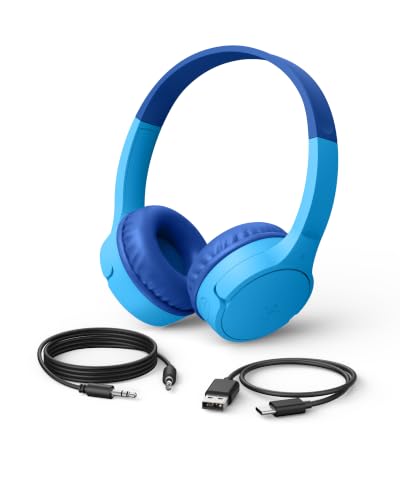
Belkin SoundForm Mini Bluetooth Kids Headphones, On Ear

Belkin SoundForm Mini 2 Bluetooth Kids Headphones, On Ear

Belkin SoundForm Mini 2 Bluetooth Kids Headphones, On Ear

iClever OWS01 Kids Bluetooth Open Ear Headphones

L LTGEM Kids Headphones Case, Purple

L LTGEM Kids Headphones Case, Black

Acer HK03 Kids Headphones for School with Mic

EarFun K1 Wired Kids Headphones with Mic
What Each Pick Brings To The Table
Battery anxiety is the silent killer of any flight with a small child, and the BTH22 attacks that problem head-on with roughly 60 hours of play time per charge. That’s enough to cover a round trip, a hotel week, and the drive home without hunting for a cable.
iClever builds its volume protection around two layers: an 85 dBA ceiling and sound tuning that trims the high-frequency range where hearing strain tends to start. For toddlers, whose ears are more sensitive than yours, that dual approach matters more than raw audio quality ever will.
Where It Delivers
- About 60 hours of playback means one charge covers most vacations outright.
- The 85 dBA cap keeps loud cabin noise from tempting kids to crank the volume.
- Over-ear cups cushion little ears better than on-ear designs during naps against a window.
- Wireless freedom removes the cord-tugging battles that plague airplane armrests.
Things To Consider
- Earcup covers ship in different variants, so the exact finish you receive may vary by order.
- Bluetooth-only listening won’t connect to older in-flight entertainment jacks without an adapter.
Made For
Parents of toddlers who want one charge to survive an entire trip without a single recharge stop.
Where A Sibling Pick Shines
Families needing a wired fallback for seat-back screens should look at the Acer HK03 instead, which plugs straight into a 3.5mm jack.
This is the same BTH22 platform as the first pick, dressed in bright pink and loaded with the fuller spec sheet. Where the toddler-focused version leans on battery life alone, this one adds Bluetooth 5.4 pairing, USB-C charging, and a switchable 74/85 dBA limiter, which is the quieter setting you’d choose for a sensitive younger child.
An AUX cord and built-in mic round out the kit, so the same pair moves from tablet cartoons on Saturday to school video calls on Monday. Owners commonly note the ABS shell shrugs off drops better than cheaper plastics, which is exactly what you want rattling around a backpack.
A Few Highlights
- Two-stage volume limiting lets you drop to 74 dBA for preschoolers and relax at 85 dBA for older kids.
- Bluetooth 5.4 holds a steadier connection through crowded airports than older chipsets tend to.
- USB-C charging shares cables with modern tablets, so you pack one less cord.
- Included AUX cable keeps it useful on planes and with non-Bluetooth devices.
- Roughly 60 hours of runtime per charge outlasts most family trips entirely.
Small Caveats
- On-ear pressure points can bother some kids during long naps, depending on head shape.
- The bright colorway shows scuffs faster than darker finishes.
Quick Facts
Right Fit For
Kids aged four and up who split time between travel, school calls, and home tablets, and who care about color.
Consider Something Else When
Younger toddlers who nap in their headphones may suit the open-ear iClever OWS01 better, since nothing presses on the ears at all.
Belkin has been making phone accessories since long before most kids-headphone brands existed, and that experience shows in how uneventful this pair is to live with. Pairing works quickly with iPhones, iPads, Galaxy devices, and laptops, which means less fiddling at gate B12 while boarding starts.
The trade-off against the newer Mini 2 later in this list is stamina: about 30 hours per charge versus 55. For a household where the headphones mostly live between home and school, that gap rarely matters. A built-in mic handles video calls, and the audio is tuned deliberately rather than just loudened, so dialogue in cartoons stays clear at safe levels.
What It Does Well
- Pairs reliably across iPhone, iPad, Galaxy, and laptop platforms without fuss.
- 30-hour battery covers a full week of typical after-school use.
- Built-in microphone supports calls and classroom video sessions.
- On-ear fit stays lighter on the head than bulkier over-ear shells.
Honest Caveats
- Half the battery of the Mini 2 means more frequent charging on extended trips.
- The design doesn’t fold as compactly as newer versions, so it takes slightly more bag space.
Who Should Grab It
Families wanting a no-drama everyday pair for school runs and weekend tablet time, where weekly charging is already routine.
Swap It Out When
Long-haul travelers get meaningfully more endurance from the Belkin SoundForm Mini 2, which doubles the playtime and adds folding hinges.
Two features separate this from the original SoundForm Mini reviewed above, and both matter on the road. First, the frame folds flat, shrinking into a shape that actually fits a kid’s backpack side pocket. Second, RockStar Mode lets a second listener plug in with a cable and share the movie, which ends sibling squabbles over one device faster than any negotiation you could attempt.
Playtime climbs to roughly 55 hours, enough that Belkin suggests a single weekly charge covers seven to eight hours of daily listening. Volume caps at 85 dB in wireless mode, and the 3.5mm jack still accepts a plain wired connection when the battery inevitably gets forgotten.
What Works In Its Favor
- Folding hinges make it genuinely packable for carry-ons and school bags.
- RockStar Mode shares audio with a second kid, wired or wirelessly.
- About 55 hours of playtime means charging roughly once a week.
- Bluetooth 5.4 pairs easily with iPads, Kindles, Galaxies, Pixels, and laptops.
- USB-C port keeps charging simple alongside other modern gear.
Points To Note
- The 85 dB cap applies in Bluetooth mode only, so wired sources bypass that limit.
- Foldable joints are a known wear point if kids snap them open roughly.
At A Glance
Who Will Love This
Families with two kids close in age who share one tablet on flights and road trips.
Not Your Match When
Solo listeners who never leave home for more than a day can save money with the original Belkin SoundForm Mini and its simpler build.
Functionally identical to pick four, this listing earns its own slot for one reason: choice. It ships in a wide range of colors, which sounds trivial until you’ve watched two siblings refuse to share because theirs look the same. Distinct colorways end that argument at checkout.
You get the same foldable frame, 55-hour battery, RockStar Mode audio sharing, and 85 dB wireless volume cap as the earlier Mini 2 entry. Controls sit where small hands can find them without pulling the cups off, and the on-ear padding suits shorter sessions better than marathon ones. In practice, households running mixed devices like an iPad for one child and a Pixel for another report smooth pairing on both.
Why It Works Well
- Multiple color options make ownership obvious among siblings.
- 55-hour battery minimizes charging chores during busy weeks.
- Works wirelessly or via the 3.5mm jack with older devices.
- Foldable design tucks neatly into crowded carry-ons.
Where It May Fall Short
- Identical hardware to the other Mini 2 listing, so compare availability before deciding.
- On-ear cushions collect grime over months and need occasional gentle cleaning.
Built With In Mind
Parents buying two pairs at once who want each child to have an unmistakably distinct set.
Reach For A Different Pick When
Over-ear comfort for napping matters more than color variety, in which case the iClever BTH22 is the stronger match.
Some kids simply will not tolerate anything clamped over or pressed onto their ears. Air conduction, the technology here, sits speakers near the ear without sealing it, sending sound inward while leaving the canal open. The result feels closer to someone playing music beside your child than inside their head.
That openness cuts both ways. Awareness of announcements and surroundings improves, ear hygiene benefits since nothing blocks the canal, and soft TPE material rests gently against skin. But ambient noise leaks in too, so a roaring plane cabin will compete with the audio more than it would with sealed cups. Volume limiting at 74 or 85 dBA carries over from iClever’s over-ear line.
Strengths Worth Knowing
- Open design keeps kids aware of announcements and nearby conversation.
- Nothing presses on the ears, which suits sensory-sensitive children.
- Soft TPE construction flexes rather than cracks under rough handling.
- Selectable 74/85 dBA limits mirror the safer settings of sealed models.
Trade Offs
- No seal means engine noise competes with audio on loud flights.
- Fit depends on head size, and very small children may find the band loose.
Core Details
The Right Fit
Sensory-sensitive kids and toddlers who pull off conventional headphones within minutes of putting them on.
Another Choice May Suit
For noisy flights where isolation counts, the sealed iClever BTH22 in Bright Pink blocks far more cabin drone.
Headphones don’t break at home; they break in bags, crushed under water bottles and wedged between textbooks. This hard case exists to prevent exactly that. An EVA shell, the same semi-rigid foam material used in camera cases, absorbs the bumps a folded pair of headphones takes daily.
Inside dimensions run about 6.1 by 5.9 inches with 1.5 inches of depth, sized for most folding kids headphones including popular iClever, EarFun, and Elecom-era brands. A mesh pocket swallows the charging cable and AUX cord, and a hand strap makes it easy for a child to clip along or carry. Note that this listing is the case only, sold in purple, with no headphones included.
What Helps Most
- EVA hard shell protects against drops and bag-crush damage.
- Interior mesh pocket stores cables, adapters, and spare cards.
- Hand strap and light weight suit small shoulders and packed suitcases.
- Fits most folding kids headphone models from major brands.
Points To Keep In Mind
- Oversized over-ear models may not fit the fixed interior dimensions, so measure first.
- Zippers are the usual failure point over years of kid-level force.
Whose Shelf It Belongs On
Families whose folding headphones already survived one trip but won’t survive a second loose in a backpack.
Look Elsewhere When
Prefer a low-profile look for school? The black version of this same L LTGEM case hides wear better.
This is the black twin of the purple case above, identical in every dimension that matters: roughly 6.1 by 5.9 by 1.5 inches inside, EVA hard shell, mesh accessory pocket, 360-degree zipper, and a sturdy hand strap. The only real decision is aesthetic, and black wins on one practical front. Scuffs, marker smudges, and playground grime simply disappear into it.
Compatibility covers most folding wired and wireless kids headphones from common brands like iClever, EarFun, MIDOLA, and Elecom-era names. Because it’s case only, budget accordingly, though pairing it with the budget Acer HK03 wired headphones still lands well below what premium wireless sets cost alone.
Everyday Perks
- Black finish hides the wear kids inflict on gear.
- Hard shell guards folding hinges, the most fragile part of any headset.
- Mesh pocket keeps chargers and adapters in one place.
- Slim profile slides into backpack pockets without bulging.
Details To Watch
- Fixed interior size excludes bulky non-folding headphone designs.
- Like the purple version, the zipper track deserves gentle handling over time.
Best Suited To
Older kids and tweens who want protection without a colorful, toy-like case drawing attention.
Skip It When
Your headphones lack a folding hinge, since the shallow 1.5-inch depth fits flat-folding designs best.
Every travel kit needs a wired backup, because seat-back entertainment systems and older tablets speak 3.5mm, not Bluetooth. The HK03 fills that role for very little money, and it never needs charging, which eliminates one entire category of travel-day failure.
Volume limiting offers two stages, 85 dB for stricter protection and 94 dB for noisier environments, selected with a switch rather than buried in software. A built-in mic supports calls and classroom use. Compared with the wireless iClever picks earlier, you give up battery-free convenience’s opposite, namely the tether, but gain simplicity that some parents actively prefer for young children.
The Upside
- Plug-and-play 3.5mm connection works with airplane seats and old devices instantly.
- Dual 85/94 dB limiter adapts to quiet cabins and louder spaces.
- No battery means nothing to charge, forget, or die mid-movie.
- Low cost makes losing a pair annoying rather than painful.
Less Ideal Details
- Cables snag on armrests and tray tables more than wireless setups.
- Wired cords are a chew hazard for the youngest toddlers, per common parent reports.
Key Specs
Perfect Match For
Backup-seekers and budget-conscious families equipping multiple kids at once.
Where Another Pick Suits Better
Cable-free listening fans should step up to the iClever BTH22, whose 60-hour battery removes the wire entirely.
EarFun approaches the wired category with more material rigor than most rivals. The K1 uses recycled, sustainable materials and meets CPC and CPSIA standards, the US consumer-safety rules covering children’s products. That paperwork doesn’t change how the headphones sound, but it does tell you something about how seriously the brand treats products that sit on a six-year-old’s head for hours.
Volume limiting switches between 85 and 94 dB, matching the Acer HK03’s dual-mode setup, and a built-in mic covers remote learning and calls. Against the Acer, the K1 trades a slightly higher commitment for a sustainability story and EarFun’s generally well-regarded build quality in the audio space.
The Good Stuff
- Meets CPC and CPSIA children’s product safety standards.
- Recycled materials reduce the footprint of a frequently replaced item.
- Dual 85/94 dB volume caps suit both quiet cars and louder rooms.
- Integrated mic keeps the pair useful beyond entertainment.
Small Limitations
- Still wired, so it can’t serve Bluetooth-only tablets without an adapter.
- Cushions, like all on-ear pads, flatten gradually with heavy daily use.
Feature Snapshot
Who It Suits Best
Eco-minded parents who want verified material safety behind a simple wired pair for school and car rides.
A Better Fit Elsewhere
Travelers prioritizing the lowest-cost wired backup will find the Acer HK03 delivers similar function for less.
Choosing Between These Kids Headphones For Travel
Fit Comes Before Features
A headphone your child refuses to wear is worthless regardless of specs. Toddlers generally do better with lightweight over-ear cups that cushion rather than clamp, while sensory-sensitive kids often reject any sealed design outright, making open-ear styles worth considering. Try the fit at home before trip day so surprises happen in your living room, not at the gate.
Battery Math For Real Trips
Add up actual screen hours, not marketing hours. A five-hour flight each way plus airport layovers rarely exceeds ten hours of listening, so even a 30-hour battery covers most trips. Longer vacations favor the 55-to-60-hour models, since charging once a week beats hunting for outlets in unfamiliar hotels.
Wired Backup Or Wireless Freedom
Seat-back screens and older devices still rely on 3.5mm jacks, the round analog port found on nearly every in-flight system. Wireless pairs handle tablets beautifully but go silent on those screens unless you buy an adapter separately. Many experienced traveling families carry one wireless pair and one cheap wired pair, covering both worlds for modest total spend.
Protection Levels Worth Understanding
Volume limiting caps output in decibels, and lower is gentler. An 85 dB ceiling suits most situations, while 74 dB settings exist for the youngest ears. Dual-mode switches add flexibility as kids grow, letting one pair adapt across several years of use.
Key Considerations Across These Picks
Traps First Timers Fall Into
The most common mistake is buying purely on battery claims without checking whether the pair folds or fits a carry-on. Another frequent misstep: skipping the wired option entirely, then discovering mid-flight that the seat-back screen rejects Bluetooth. Measure headphone dimensions against any case before ordering one.
What Separates Premium From Basic
Higher-priced models justify themselves through newer Bluetooth chipsets, USB-C charging, sharing modes, and sturdier hinge engineering. Those upgrades pay off for frequent flyers and multi-child households. Occasional travelers get nearly everything they need from budget wired pairs.
Frequently Asked Questions
Are wireless kids headphones allowed on airplanes?
Yes, Bluetooth headphones are permitted once the crew allows electronic device use. Keep a wired pair handy for seat-back entertainment systems, which usually require a physical 3.5mm connection.
What volume limit is safest for young children?
Most hearing experts point to 85 dB as a reasonable ceiling for extended listening. Models offering a 74 dB mode give extra margin for toddlers and sensitive listeners.
Do kids headphones fit adults?
Usually not comfortably. Child-sized bands and cups are scaled down, so adults testing them will find the fit cramped within minutes.
How do I clean kids headphone cushions?
Wipe ear pads gently with a lightly damp cloth and mild soap, then air dry fully. Avoid soaking the pads, since moisture degrades the foam underneath.
Are wired headphones better for travel?
They complement wireless rather than replace it. Wired pairs never need charging and work with airplane seats, while wireless pairs offer freedom with tablets.
Closing Thoughts
Matching the pair to your child matters more than chasing the longest spec sheet. Frequent flyers should lean toward the 55-hour Belkin Mini 2 or the 60-hour iClever BTH22, while budget planners can cover a whole family with wired Acer or EarFun sets. Add a hard case either way, because protection costs little and saves trips. Whichever route you take, test everything at home first, and the journey itself gets noticeably easier.
