Good monitoring headphones do one job: they tell you the truth about your mix, your vocals, or your track before anyone else hears it. The problem is that the market is flooded with models that color sound in flattering ways, which is great for casual listening and terrible when you’re trying to catch a harsh sibilance or a muddy low end. This roundup covers ten options that lean toward accuracy, from budget wired workhorses to wireless hybrids and stage-ready in-ear monitors. Whether you’re recording vocals in a bedroom studio, mixing on a commute, or tracking live on stage, there’s a fit here for your setup and your ears.
The Lineup, Simplified
PickWhy We Picked ItBest ForAction
Beginner Friendly
FIFINE HD8W Studio Monitor Headphone with 50mm Drivers
Big drivers, gentle price
First-time home recordists

Refined Pick
Sony MDR-M1 Professional Reference Closed Monitor Headphones
Ultra-wideband reference tuning
Serious producers and engineers

Value Pick
Audio-Technica ATH-M20x Studio Monitor Headphones, Black
Tuned low end, isolation
Budget tracking sessions

Smart Upgrade
Audio-Technica ATH-M20xBTWH Wireless Over-Ear Headphones, White
60-hour battery freedom
Commuters who also mix

Professional Pick
Audio-Technica ATH-M50X Professional Studio Monitor Headphones, Black
Detachable cable, proven tuning
Daily studio and field use
Design Standout
Audio-Technica ATH-M50XGM Monitor Headphones, Gun Metal
Same audio, sharper finish
Style-conscious creators

Comfort Choice
Audio-Technica ATH-M50X Headphones, White
Bright look, long sessions
Podcasters and streamers

Dependable Option
Sony MDR7506 Professional Large Diaphragm Headphone
Industry-standard reference sound
Broadcast and editing rooms

Travel Ready
CCZ Yinyoo Melody In Ear Monitors, Clear Black
Hybrid driver stage clarity
Singers and live performers

Budget Friendly
OneOdio Wired DJ Hi-Res Over-Ear Headphones, Black
Dual jacks for DJing
Bedroom DJs and guitarists
The Picks, Examined More Closely
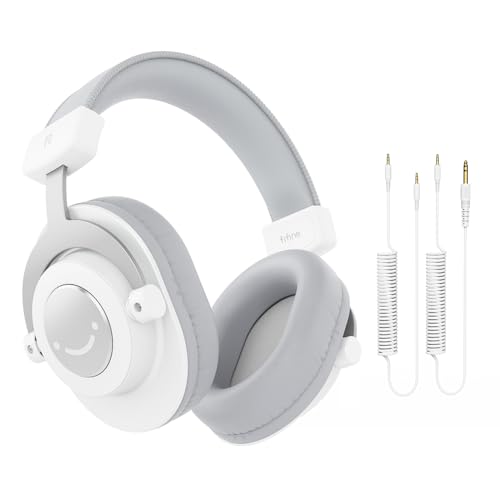
Starting a home vocal chain usually means spending most of the budget on the microphone, so headphones often get whatever’s left. The HD8W aims at exactly that situation, pairing large 50mm drivers with a white over-ear design that looks more consumer than lab gear. For most first setups, that’s a reasonable trade.
The soft leather ear cups are built around longer wearing stretches, which matters during comping takes or late-night editing. You may find the presentation leans musical rather than clinically flat, so treat it as a tracking companion more than a final mixing referee.
Features That Help
- ✓Oversized 50mm drivers give vocals and instruments enough dynamic range to hear detail while you record
- ✓Soft leather ear cushions stay comfortable through multi-take sessions
- ✓Closed over-ear shape helps you focus on the take instead of the room
- ✓White finish reads clean on camera, handy for streaming setups
Things To Consider
- •Tuning favors an engaging listen, so critical mix decisions deserve a second reference
- •Leather-style pads can warm up over time and benefit from occasional wiping to keep them fresh
Who Should Grab It
Newcomers building their first bedroom recording rig who need reliable vocal monitoring without stretching the budget thin.
A Better Fit Elsewhere
Mix-focused users should step up to the Audio-Technica ATH-M20x, whose tuning is aimed squarely at tracking and mixing rather than general listening.
View Latest Price
Where the FIFINE plays it friendly, Sony’s MDR-M1 goes the other way: it’s engineered for people whose decisions depend on what they hear. The headline figure is a frequency response reaching from 5Hz up to 80kHz, an ultra-wideband range that captures content well beyond ordinary hearing. That headroom translates into airier highs and cleaner transient detail on modern high-resolution sources.
A closed acoustic structure keeps outside noise out and your session from leaking in, which is exactly what you want tracking vocals in a shared space. In our view, this is the pick for producers who want one serious pair that handles both creation and checking.
What It Does Well
- ✓Ultra-wideband playback resolves fine detail across many source types
- ✓High-resolution capability suits modern lossless and hi-res workflows
- ✓Closed design isolates well enough for untreated rooms and open offices
- ✓Balanced signature keeps low, mid, and high ranges honest against each other
Small Caveats
- •Reference tuning can feel dry next to bass-forward consumer cans
- •Earpads on closed monitors collect wear over months of daily use, so factor replacement into long-term ownership
At A Glance
| | Feature | Specification | Why It Matters |
|---|
| Frequency response | 5Hz to 80kHz | Captures extended highs and lows for detailed monitoring |
| Acoustic design | Closed back | Blocks room noise and prevents bleed into mics |
| Sound capability | High-resolution playback | Reveals nuance in hi-res recordings |
Made For
Working producers and mixing engineers who need accurate, isolated monitoring in spaces without acoustic treatment.
Swap It Out When
Stage performers will get more practical value from the CCZ Yinyoo Melody in-ear monitors, which offer far better portability under headphones.
Check Latest Price
This is the pair countless home studios start with, and the reasons haven’t changed much. Inside sit 40mm drivers using rare earth magnets and copper-clad aluminum wire voice coils, hardware choices that keep distortion low and response consistent. Audio-Technica tuned the low frequencies for extra presence, useful when you’re laying down tracks and want to feel the kick drum.
The circumaural ear cups fully surround your ears, sealing out noise in loud rooms, and the single-side cable exit keeps the cord out of your way at a desk. Compared with the pricier M50X later in this list, you give up the detachable cable, not the fundamentals.
Benefits That Matter
- ✓Rare earth magnet drivers deliver consistent, low-distortion monitoring
- ✓Enhanced low-frequency tuning helps you lock into rhythm parts while tracking
- ✓Circumaural fit isolates well in noisy bedrooms and shared apartments
- ✓Single-side exit means no cable draping across your keyboard or laptop
Points To Note
- •The fixed cable can’t be swapped if it ever fails, unlike the M50X’s detachable design
- •Clamping force feels firm at first and loosens after regular wear
The Right Fit
Students and hobbyist recordists who want genuine studio behavior from an entry-level spend.
Reach For A Different Pick When
Anyone who records away from a desk should consider the wireless ATH-M20xBTWH instead, since it removes the tether entirely.
View on Amazon
Think of this as the ATH-M20x above, cut loose from its cable. It carries the same 40mm driver approach with boosted bass response, then adds Bluetooth, a built-in mic, multipoint pairing, and a battery rated for roughly 60 hours. Multipoint simply means the headphones stay connected to two devices at once, so your laptop and phone both stay reachable.
In practice, that combination suits people whose day blends editing sessions with calls and commutes. One honest trade-off: Bluetooth introduces latency, so wired mode remains the safer route for timing-critical recording.
A Few Strong Suits
- ✓About 60 hours of battery covers weeks of typical commuting between charges
- ✓Multipoint pairing lets a laptop and phone share the headphones seamlessly
- ✓Built-in mic handles calls without swapping gear
- ✓Lightweight frame keeps long listening blocks comfortable
- ✓Enhanced bass tuning gives casual music its weight back
Honest Caveats
- •Wireless latency makes it a poor choice for real-time tracking
- •White earcups show grime faster than black finishes and need gentler cleaning
Quick Facts
| | Feature | Specification | Why It Matters |
|---|
| Battery life | Up to 60 hours | Fewer charge interruptions during busy weeks |
| Drivers | 40mm, enhanced bass | Full-range sound with added low-end energy |
| Connectivity | Bluetooth, multipoint, built-in mic | Juggles work and personal devices at once |
Best Suited To
Commuters and hybrid workers who want studio-inspired sound on the move plus dependable call quality.
Where A Sibling Pick Shines
Desk-bound mixers should stick with the wired ATH-M20x, whose zero-latency connection suits recording better.
Check on Amazon
Few studio headphones have been recommended as often as the M50X. Large-aperture drivers produce the punchy yet controlled sound that made the original M50 a fixture in project studios, and the X revision adds the feature owners asked for most: a detachable cable. Sound-isolating earcups round out a package built for daily professional use.
That swappable cable is quietly the biggest ownership win here. A damaged lead becomes a five-second fix instead of a dead pair, which is why touring engineers tend to favor this model over the fixed-cable M20x.
What Helps Most
- ✓Large-aperture drivers balance punch and clarity across genres
- ✓Detachable cables protect your investment from the most common failure point
- ✓Isolating earcups keep mixes intact in loud environments
- ✓Sturdy construction stands up to being packed and unpacked constantly
- ✓Collapsible frame travels easily in a bag
Trade Offs
- •Stock pads flatten over heavy use; replacements restore comfort cheaply
- •Bass emphasis runs slightly warmer than strictly neutral references
Feature Rundown
| | Feature | Specification | Why It Matters |
|---|
| Drivers | Large aperture | Delivers detailed, dynamic full-range sound |
| Cable | Detachable | Easy replacement extends usable life |
| Earcups | Sound isolating | Reliable monitoring in noisy rooms |
Who Will Love This
Engineers and gigging musicians who want one rugged pair that survives travel and daily sessions alike.
Consider Something Else When
Tight budgets are better served by the ATH-M20x, which shares the family DNA at a lower entry cost.
Check Latest Price
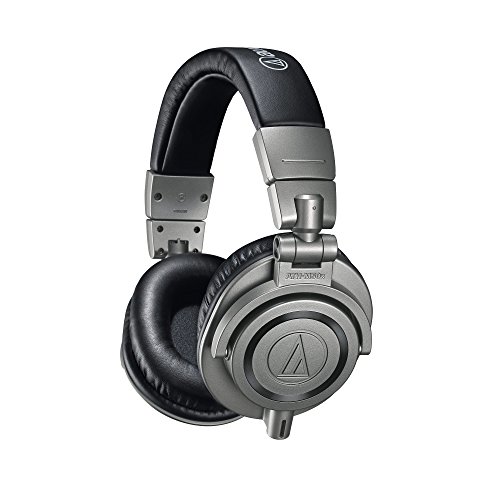
Everything said about the black M50X applies here, because the gun metal version is the same headphone wearing different clothes. You still get large-aperture drivers, isolating earcups, sturdy construction, and that all-important detachable cable. What changes is the finish: a darker, metallic gray that photographs beautifully and hides scuffs better than glossy black.
You may find the color worth choosing purely for visibility, too. In a shared studio where everyone owns black cans, a distinct finish saves awkward mix-ups. Sonically nothing shifts, so let appearance and availability decide this one.
Practical Advantages
- ✓Identical large-aperture driver performance to the standard M50X
- ✓Gun metal finish resists showing everyday scuffs and fingerprints
- ✓Detachable cable remains the key durability advantage
- ✓Distinctive look stands apart in shared studios
Softer Spots
- •Colorway availability can be less consistent than the standard black version
- •Same slightly warm bass tilt as its sibling, worth knowing for strict neutrality fans
Right Fit For
Creators who want proven studio performance with a finish that looks intentional on camera and off.
Not Your Match When
Listeners wanting maximum brightness in their setup should compare the white ATH-M50X, which delivers the identical sound in a lighter shell.
View Latest Price
The white M50X completes the trio, and it’s the version you’ll spot most on streaming and podcast setups. Underneath the bright shell sits the familiar recipe: big drivers with the M-Series sonic signature, isolating earcups, tough build, and a detachable cable. Nothing about the sound moves from the black or gun metal editions reviewed earlier.
One thing worth considering is upkeep. Light-colored pads and headbands show makeup, dye transfer, and dust sooner, so a soft cloth routine keeps them looking new. For on-camera hosts, that small maintenance habit buys a headset that frames a desk nicely.
The Helpful Details
- ✓Same coveted M-Series sound as every other M50X variant
- ✓Detachable cable keeps long-term ownership simple
- ✓White finish pops on video calls and streams
- ✓Isolating cups suit voice recording in untreated rooms
Less Ideal Details
- •Pale surfaces demand more frequent cleaning than dark versions
- •Identical warm-leaning tuning won’t satisfy strict flat-response purists
Built With In Mind
Streamers, podcasters, and content creators who record on camera and want studio credibility in a brighter aesthetic.
Another Choice May Suit
Gigging musicians should weigh the CCZ Yinyoo Melody IEMs instead, whose compact form fits stage pockets far better.
View on Amazon
Walk into any broadcast facility and odds are good you’ll see these hanging on a console wall. The MDR7506 has earned that permanence with neodymium magnets driving 40mm diaphragms, a combination that produces detailed, revealing sound with the kind of midrange clarity editors rely on to catch mouth clicks and level dips.
The closed ear design hushes external noise comfortably, and a generous 9.8-foot coiled-friendly cord ends in a gold-plated plug with a quarter-inch adapter included. Unlike the M50X, the cable isn’t detachable, though the folding frame tucks into the supplied pouch for storage or travel.
Well-Handled Touches
- ✓Neodymium-magnet drivers reveal fine detail in dialogue and vocals
- ✓Nearly 10 feet of cord gives you real movement range at a desk
- ✓Gold-plated plug and quarter-inch adapter connect to pro gear directly
- ✓Folding design packs down for location work
Points To Keep In Mind
- •Non-detachable cable is the main long-term vulnerability
- •Ear pads are a known wear item on older units; spares are widely available
The Numbers That Matter
| | Feature | Specification | Why It Matters |
|---|
| Drivers | 40mm with neodymium magnets | Powerful, detailed reproduction |
| Cord length | 9.8 feet, gold-plated plug | Freedom of movement at a workstation |
| Adapter | Quarter-inch included | Plugs straight into interfaces and consoles |
| Storage | Folds with supplied pouch | Protected transport between locations |
Who It Suits Best
Editors, broadcasters, and voice professionals who value revealing midrange detail over bass theatrics.
Look Elsewhere When
Users prioritizing replaceable cables will prefer the Audio-Technica ATH-M50X with its modular lead design.
View Latest Price
Every other item here sits over your ears; these sit inside them. In-ear monitors, or IEMs, seal directly in the ear canal, which is why singers and drummers use them on stage: they block crowd noise naturally and disappear into a pocket. The Melody uses a hybrid arrangement, one dynamic driver for bass alongside one balanced armature for detail, fed by an oxygen-free copper cable.
Soft TPE ear fins hook over the ear to hold the buds steady during movement, and short sound guide tubes aim to reduce signal loss. There’s no inline mic, a deliberate omission for stage use. Fit takes patience at first; tip selection makes or breaks the seal.
Strong Points
- ✓Hybrid dynamic-plus-armature layout splits bass and detail duties cleanly
- ✓Ear fins keep the buds anchored through active stage movement
- ✓Passive canal seal offers strong isolation without bulk
- ✓Oxygen-free copper cable supports clean signal transfer
Things To Weigh Up
- •No microphone limits use for calls or content creation
- •Deep insertion style isn’t comfortable for everyone; tip experimentation helps
Whose Shelf It Belongs On
Vocalists and instrumentalists needing discreet, secure monitoring on stage or in rehearsal rooms.
Where Another Pick Suits Better
Home listeners wanting over-ear comfort should look at the Sony MDR7506, which trades pocketability for cushioned coverage.
Check Latest Price
DJs have a specific problem: cueing one channel in the cans while the other plays through speakers. OneOdio addresses it with dual input jacks, letting you plug into a mixer and another source at once, and the earcup rotates for one-ear monitoring. Inside are 50mm drivers with neodymium magnets pushing strong bass alongside clear vocals and crisp highs.
Padded cushions provide passive isolation and hold up through long sets, and the adjustable band stretches to fit various heads. Against the FIFINE earlier in the list, this one trades some studio neutrality for DJ-oriented features at a similar accessible tier.
The Value In It
- ✓Large 50mm drivers with neodymium magnets deliver weighty, balanced stereo sound
- ✓Dual jacks allow simultaneous mixer and device connections
- ✓Rotating earcup enables classic single-side DJ cueing
- ✓Padded cushions isolate noise and stay comfortable across long sessions
Details To Watch
- •Bass-forward character colors mixes, so critical mastering deserves a flatter reference
- •Wired-only operation ties you to the deck or computer
Core Details
| | Feature | Specification | Why It Matters |
|---|
| Drivers | 50mm with neodymium magnets | Powerful bass with clear vocals and highs |
| Connections | Dual input jacks | Cue and monitor from two sources at once |
| Comfort | Padded cushions, adjustable band | Lasts through extended DJ sets |
Perfect Match For
Bedroom DJs, guitarists practicing silently, and PC gamers who want bass-rich sound on a tight budget.
Skip It When
Accuracy-first mixers belong with the Sony MDR-M1, whose reference tuning serves critical listening far better.
View on Amazon
What Matters Most Before Choosing Monitor Headphones
Tuning Comes Before Everything
A monitor’s job is honesty, not flattery. Flat-ish tuning reveals flaws in a mix; bass-heavy tuning hides them while making playlists fun. Decide honestly which camp your work falls into, because a warm pair like the M50X and a drier broadcast classic like the MDR7506 serve genuinely different days.
Open Versus Closed Backs
Closed-back designs seal sound in and noise out, making them the default for recording near microphones and working in shared spaces. Open designs breathe more naturally but leak audio badly. Most people reading this want closed backs, and every over-ear option above happens to be one.
Comfort Is A Spec Too
Three-hour sessions turn marginal padding into a genuine problem. Look for circumaural cups that surround the ear rather than press on it, and remember pads are consumables: replacing worn cushions costs little and restores both comfort and isolation.
Cables And Connectivity Realities
Detachable leads, like those on the ATH-M50X line, survive accidents that kill fixed-cable rivals. Wireless adds freedom but introduces latency, which rules it out for real-time tracking. Match the connection type to the actual task, not the spec sheet highlight.
Key Considerations Across These Picks
Traps First Timers Fall Into
The commonest slip is buying for hype instead of purpose: a gaming-flavored or consumer-branded pair rarely tells the truth about a mix. Second is ignoring pad wear, then blaming the headphones for fatigue. Third is skipping the impedance check; some interfaces drive certain models better than others.
When Paying More Pays Off
Higher tiers buy driver refinement, wider frequency response like the MDR-M1’s ultra-wideband range, and durable touches such as detachable cables. Casual listeners rarely notice the difference. Anyone mixing or mastering professionally hears it immediately, and that alone justifies the stretch.
Frequently Asked Questions
QCan monitor headphones double as everyday music headphones?
Absolutely, though the experience differs. Accurate tuning exposes poor-quality streams, so lossless sources shine while heavily compressed files disappoint.
QDo I need an amplifier for studio headphones?
Most modern models run happily from a laptop or interface output. Higher-impedance designs occasionally benefit from dedicated amplification, but none of the picks here demands it.
QAre wireless headphones suitable for recording?
For playback and rough checks, yes. Latency makes real-time tracking unreliable, so wired remains the standard for overdubs.
QHow often should ear pads be replaced?
Heavy daily users typically refresh pads every year or two. Flattened foam reduces both comfort and isolation noticeably.
QWhat’s the difference between studio monitors and DJ headphones?
Studio models prioritize neutral accuracy for decision-making. DJ pairs emphasize bass impact and features like swiveling earcups for cueing.
Wrap Up
Your best match depends less on rankings and more on the work in front of you. Bedroom recordists can start confidently with the FIFINE HD8W or ATH-M20x, commuters gain real freedom from the ATH-M20xBTWH, and professionals have the M50X family plus the Sony references waiting. Check current details on the product pages before committing, since listings change. Whichever direction you go, a pair that tells the truth will make everything you create sound better.



