


Anyone who has tried mixing a track on cheap earbuds knows the frustration: bass that lies, vocals that vanish, and a final bounce that sounds nothing like it did at your desk. Music producing headphones fix that by giving you an honest picture of your sound, whether you’re tracking vocals in a closet booth or balancing a beat late at night while the house sleeps. This roundup covers ten wired options across open-back reference models, closed monitoring cans, and budget-friendly workhorses. Somewhere in this list is the pair that matches your room, your interface, and your ears.
A Quick View Of The Lineup
Sennheiser HD 660S2 Audiophile Open-Back Headphones

MAONO MH700 Wired Studio Headphone

beyerdynamic DT 990 Pro X 48 Ohm Studio Monitor

OneOdio A71D Wired Over-Ear DJ Studio Headphones

Sennheiser HD 490 PRO Open-Back Professional Headphone

syndesmos Wired Over-Ear Studio Monitor & Mixing DJ Headphones

syndesmos Wired Over-Ear Studio Monitor & Mixing DJ Headphones
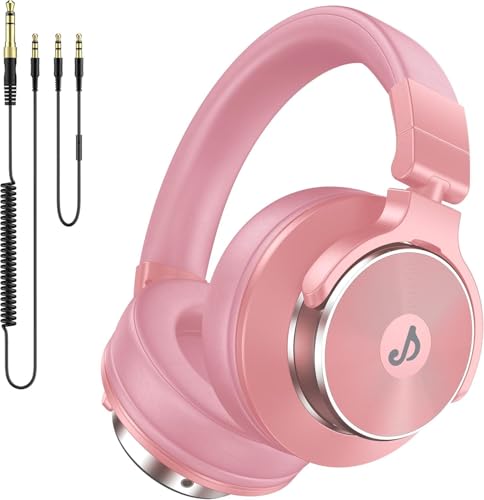
syndesmos Wired Over-Ear Studio Monitor & Mixing DJ Headphones

Sony MDR-M1 Closed Reference Monitor Headphones

Sony MDR-7506 Professional Headphones
Why These Options Stand Out
The HD 660S2 sits at the listening end of music production rather than the tracking end. Its open-back design lets air move through the ear cups, which is why the soundstage feels wider than any closed can on this list. An ultra-light aluminum voice coil paired with 42mm transducers keeps transient detail intact, so reverb tails and cymbal decay read honestly.
In practice, that makes it a strong companion for final mix checks and long mastering sessions where fatigue matters. You’ll want a quiet room though, since open backs leak sound both ways.
Why It Works Well
- Sub-bass extension reaches lower than most open-back designs, so you hear what the low end is actually doing
- Light voice coil responds quickly, keeping fast passages from smearing together
- Comfortable enough for multi-hour listening without pressure points
- Works well straight from a headphone output, no amp required for reasonable levels
Things To Consider
- Open backs leak audio noticeably, which rules out shared rooms and late-night tracking
- Pads and cables are consumables on any premium headphone, so budget for eventual replacement
Key Specs
Who It Suits Best
Producers who spend most of their time mixing and refining finished tracks in a private, treated space.
Where Another Pick Suits Better
Vocalists recording in untreated apartments will get better isolation from the Sony MDR-M1 instead.
Where the Sennheiser above targets refinement, the MH700 targets accessibility. MAONO built it around large 50mm dynamic drivers with a full 20Hz to 20kHz range, and the closed-back shell keeps your takes clean while you monitor. The included 3.5mm to 6.35mm adapter means it plugs into everything from a laptop to a guitar amp without extra shopping.
For someone assembling a first podcast kit or bedroom setup, that plug-and-play flexibility removes a real barrier. The honest caveat is that big drivers at this tier favor punch over forensic accuracy, so treat it as a capable tracker rather than a final-word mixer.
What Stands Out
- 50mm drivers deliver rich stereo detail across highs, mids, and lows with minimal distortion
- Dual jack compatibility covers computers, keyboards, amps, and interfaces out of the box
- Closed-back isolation helps you hear playback over room noise during recording
- Wide frequency span captures more of what your source material contains
Worth Noting
- Earcup padding on budget studio cans tends to compress over years of daily use, so gentle storage extends their life
- Tuning leans engaging rather than strictly neutral, which you may notice when comparing mixes against references
Made For
New podcasters and home recordists who want one dependable pair covering tracking, editing, and casual listening.
A Better Fit Elsewhere
Engineers chasing reference-level neutrality for final mixes should look at the Sony MDR-M1 further down this list.
beyerdynamic builds the DT 990 Pro X in Germany, and the 48-ohm impedance reflects a deliberate choice: it runs comfortably from interfaces and laptops without sacrificing headroom. This is a headphone that tells on your mix. Clipping, digital artifacts, and buried noise become obvious within seconds of putting it on.
That honesty cuts both ways. Poorly encoded MP3s and rough demos sound rough, which is precisely the point during editing and quality control. Compared to the HD 660S2’s warmer presentation, this one leans analytical, with bright high frequencies that expose sibilance you’d otherwise miss.
Advantages To Know
- Precise spatial imaging makes panning decisions faster and more confident
- 48-ohm design pairs easily with common audio interfaces and computer outputs
- Open-back architecture keeps you loosely aware of the room, useful for judging how a mix translates
- German manufacturing shows in the fit and finish of the frame and headband
Minor Gripes
- Emphasized treble can grow tiring across very long sessions for treble-sensitive listeners
- Velour-style pads attract lint and dust, so occasional cleaning keeps them fresh
At A Glance
Right Fit For
Mixing engineers and editors who prioritize flaw detection over pleasant everyday listening.
Consider Something Else When
Bedroom producers needing isolation while recording should reach for the closed Sony MDR-7506 instead.
The A71D earns its place through one feature working DJs genuinely use: ear cups that swivel 90 degrees for single-ear monitoring. Beatmatching with one cup off your ear and one on is still standard practice in booths, and most studio headphones force awkward contortions to manage it. OneOdio solved that directly.
Around that core trick sit 40mm drivers tuned with elevated bass, padded muffs, an adjustable band, and a foldable frame that packs down into a gig bag. In our view, it’s best understood as a mobile tool rather than a reference monitor, and priced accordingly.
The Helpful Details
- 90-degree swivel enables true single-sided cueing without removing the headset
- Folding hinges make it easy to toss into a backpack between gigs
- Plush padding reduces hot spots during extended sets
- Bass-forward tuning suits electronic genres played loud
Small Caveats
- Hi-res claims aside, the tuning flatters bass more than it reveals midrange flaws
- Hinges are moving parts on a budget build, so avoid forcing the fold when packed tight
Quick Facts
Who Will Love This
Mobile DJs and hobbyist producers who carry gear often and cue tracks live.
Not Your Match When
Home studio owners focused purely on mixing accuracy will prefer the syndesmos pair reviewed next.
Sennheiser designed the HD 490 PRO specifically around modern production workflows, and it shows in the intent behind every choice. The handcrafted open-back construction produces an unusually wide, dimensional stage, letting you place reverbs, delays, and stereo width with precision that smaller stages simply don’t allow.
Think of it as the tool-oriented sibling of the HD 660S2 from earlier in this list: less about luxurious listening, more about making confident calls under deadline. Owners commonly report the comfort holds up across full workdays, which matters when sessions stretch past midnight before a release.
A Few Strong Suits
- Ultra-precise reproduction supports confident EQ and level decisions
- Expansive staging reveals spatial effects that collapse on narrower headphones
- Built for daily professional use rather than occasional enjoyment
- Clarity stays consistent at moderate volumes, protecting your ears over long shifts
Points To Note
- Open-back leakage means it’s a poor choice for recording near live microphones
- Replacement pads are part of long-term ownership on pro-tier cans, worth planning ahead
Feature Rundown
Best Suited To
Working producers and mixing engineers whose headphones are their primary monitoring tool every day.
Look Elsewhere When
Occasional creators wanting a similar signature at a gentler commitment level may find the HD 660S2 more sensible.
This first syndesmos entry covers the fundamentals without ceremony: 50mm drivers spanning 20Hz to 20kHz, dynamic bass, clear vocals, and a lightweight frame built around comfort. Nothing here reinvents the category, and that’s fine, because its job is to be the dependable starter pair you stop thinking about.
Against the OneOdio above, this one trades the swiveling cup for a lighter overall feel, which suits desk-bound mixing better than booth work. Students and first-time producers get a complete monitoring experience without stretching a budget that also needs an interface and a microphone.
Positive Takeaways
- Large 50mm units produce powerful bass alongside balanced mids and precise treble
- Lightweight construction keeps long study or session blocks comfortable
- Full 20Hz to 20kHz coverage captures the audible spectrum for monitoring tasks
- Immersive stereo presentation works equally well for practice and playback
Honest Caveats
- Long-term durability reports on value-tier headphones vary, so handling the cable gently pays off
- Isolation and imaging fall short of the pricier picks here for demanding mix work
Built With In Mind
Students and beginners furnishing a first bedroom studio on a tight budget.
Skip It When
You need broadcast-grade reliability, in which case the Sony MDR-7506 closing this list is the safer investment.
The second syndesmos variant shares the same driver platform as item six but lands in the DJ category, and that framing changes how you use it. The 50mm units push energetic bass and immersive stereo image that hold up in louder environments, from a friend’s house party to a small venue booth.
For producers who also spin occasionally, one pair covering both roles beats owning two. The trade-off mirrors its sibling: strong engagement, modest analytical depth. Compare it against the beyerdynamic earlier in the article and the difference in scrutiny becomes obvious within a single track.
Real Benefits
- Dynamic bass response suits electronic music and live cueing alike
- Clear vocal reproduction helps with acapella blends and karaoke-style setups
- Over-ear coverage provides passive isolation in moderately noisy rooms
- One headset serves producing, mixing, and DJ duty without swapping gear
A Few Limitations
- Bass emphasis can mask low-mid buildup, so cross-check mixes on another system
- Ear pad surfaces accumulate oils over months of regular wear and benefit from periodic wiping
The Right Fit
Producer-DJs and content creators who split time between the desk and the decks.
Another Choice May Suit
Purely studio-bound listeners get tighter accuracy from the Sennheiser HD 490 PRO reviewed above.
The third syndesmos listing rounds out the trio with the same core recipe: 50mm drivers, a 20Hz to 20kHz window, and an emphasis on keeping weight low. Where it distinguishes itself is balance. Vocals sit forward and clear, which makes it the most practical of the three for podcast editing and vocal-heavy production.
Between items six and seven, think of this one as the middle path: more composed than the DJ variant, slightly warmer than the studio variant. For a shared household where one pair serves homework, gaming, and weekend beat-making, that flexibility is the whole argument.
What Makes Sense
- Balanced midrange keeps vocals intelligible during editing passes
- Large drivers deliver satisfying low-end without drowning the rest
- Lightweight design suits shared-family use across different head sizes
- Wired connection means no charging routine ever interrupts a session
Details To Watch
- Headband padding on this tier can flatten after heavy daily use, so store it hanging rather than compressed
- Advanced spatial work demands more than this tuning offers
Perfect Match For
Households and hobbyists wanting one versatile wired pair for mixing, listening, and light DJ use.
Swap It Out When
Tracking vocals in untreated rooms calls for the stronger isolation of the MAONO MH700 from earlier.
Sony built the MDR-M1 for creators who need closed-back isolation without giving up reference accuracy, a combination that usually forces compromise. A 5Hz to 80kHz frequency response means the drivers reproduce far beyond audibility, and the practical payoff is cleaner, more coherent sound inside the range you actually hear.
The closed acoustic structure blocks outside noise while keeping bleed low enough for vocal tracking. Set beside the open-back Sennheisers earlier in this lineup, the MDR-M1 trades some spaciousness for versatility across untreated rooms, cafes, and travel days. That flexibility is why it appeals to producers who don’t always work in one place.
Useful Touches
- Ultra-wideband playback preserves fine detail across varied source material
- Accurate isolation lets you track vocals in ordinary rooms confidently
- High-resolution capability keeps dense modern mixes from turning muddy
- Well-balanced tuning translates consistently between systems
What To Weigh
- Closed designs generate slight internal pressure sensations for some wearers over hours
- Pad seals matter enormously for isolation, so check them periodically for wear
Feature Snapshot
Who Should Grab It
Producers and vocalists who record in untreated or shared spaces yet demand reference-grade sound.
Reach For A Different Pick When
Your room is quiet and treated, and the open soundstage of the beyerdynamic DT 990 Pro X would serve mixing better.
Few headphones have hung around broadcast trucks and studio racks as long as the MDR-7506. Neodymium magnets driving 40mm diaphragms produce the clean, slightly forward sound that generations of engineers learned to trust, and the foldable frame survives being stuffed into bags year after year.
Its closed-ear design isolates effectively, which explains the enduring popularity for location recording and live broadcast work. Compared to the newer MDR-M1 above, this veteran sounds leaner and more aggressive in the upper mids, revealing harshness plainly. Some find that fatiguing; professionals call it honest. Replacement pads and cables remain widely available, which is half the reason these refuse to retire.
Bright Spots
- Rugged folding construction shrugs off years of travel and daily handling
- Neodymium-driven 40mm drivers deliver detailed, articulate sound
- Effective closed-ear isolation suits noisy locations and live environments
- Consumable parts stay easy to source, extending usable life considerably
- Trusted voicing means your mixes translate predictably
Trade Offs
- Stock ear pads commonly flake with age, a known quirk most owners replace early
- Bright upper mids can tire sensitive ears across marathon sessions
Core Details
Whose Shelf It Belongs On
Field recordists, broadcast professionals, and studio engineers who value proven reliability over novelty.
Where A Sibling Pick Shines
Listeners wanting Sony’s modern take with wider bandwidth should compare the MDR-M1 directly before deciding.
What Matters Most Before Choosing Music Producing Headphones
Open Back Versus Closed Back
Open-back cups vent air outward, creating the wide, natural staging that makes mixing spatial effects easier. The cost is leakage: anyone nearby hears your session, and microphones pick up your click track. Closed backs seal sound in both directions, trading some spaciousness for the ability to record vocals anywhere.
Match the design to your room first, then your taste. Treated spare bedroom? Go open. Kitchen-table studio? Closed wins.
Impedance And What Drives Them
Impedance measures how much electrical resistance a headphone presents to your source. Low-impedance models around 32 to 80 ohms run happily from laptops and entry interfaces, while higher values often want dedicated amplification. Every pick in this guide drives reasonably from common gear, but checking your interface’s output spec prevents disappointment.
Comfort Is A Production Tool
A four-hour mix session punishes heavy clamps and stiff pads faster than bad tuning does. Look for replaceable pads, adjustable bands, and weights under roughly 300 grams. Your future self, deep in revision twelve of a chorus, will thank you.
Key Considerations Across These Picks
Pitfalls Shoppers Hit
The classic mistake is buying consumer bass cannons and calling them monitors, then wondering why every mix sounds thin elsewhere. The second trap is ignoring your room: open backs in a noisy apartment solve nothing. Check impedance against your actual interface before checkout, not after.
Why Top Tier Costs More
Premium models like the HD 490 PRO spend money on driver consistency, handcrafted assembly, and durable consumables. That translates to mixes that translate, fewer surprises, and parts available years later. Casual users rarely need it; daily professionals almost always come around.
Frequently Asked Questions
Are open-back headphones necessary for mixing?
No, they’re preferred but not required. Closed monitors like the Sony MDR-M1 handle mixing capably while adding isolation.
Can I use these headphones for casual listening too?
Yes, most of these double as everyday headphones. Bass-forward DJ models suit playlists, while reference models reveal flaws in compressed streams.
Do I need a headphone amplifier?
Every model listed runs acceptably from typical interfaces and computers. Higher-end open backs benefit from amplification but don’t demand it.
How long do studio headphones typically last?
Well-built pairs routinely serve five to ten years with pad replacements. Treat cables gently and they’ll outlast several gadget cycles.
Wired or wireless for music production?
Wired remains the studio standard because latency and compression never interfere with judgment. Bluetooth adds convenience for listening but compromises monitoring.
Bottom Line
Your room and workflow should drive this decision more than any spec sheet. Tracking in shared spaces points toward the Sony MDR-M1 or MDR-7506, mixing in quiet rooms rewards the beyerdynamic or either Sennheiser, and tight budgets are well served by the MAONO or syndesmos options. Start where your sessions actually happen, and the right pair will feel obvious once it’s on your head.
