


Open-back headphones let air and sound pass through the ear cups, which gives music and game audio a wide, speaker-like feel instead of a boxed-in one. The catch is they leak sound and block almost no outside noise, so they shine at a desk, in a studio corner, or during late-night solo sessions rather than on a noisy bus. This list covers ten options under $200 that handle that trade-off well, from gaming headsets with boom mics to reference-style cans built for mixing. Whether you’re upgrading from closed-back earbuds or replacing a tired old pair, there’s a sensible match here for your setup and budget.
A Side-By-Side Look

EPOS H6Pro Open Acoustic Gaming Headset (White)

EPOS H6Pro Open Acoustic Gaming Headset (Black)

Audio-Technica ATH-R50X Open-Back Headphones
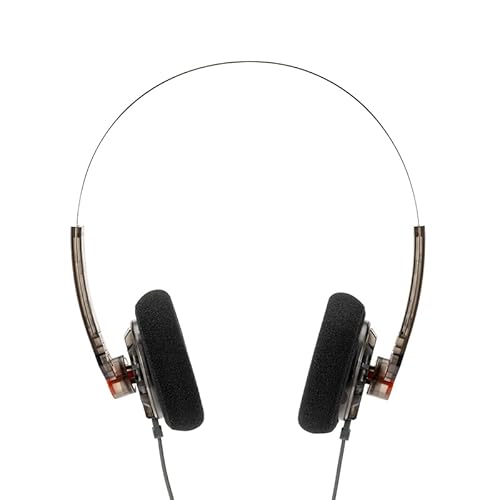
Moondrop Old Fashioned 40mm On-Ear Headphone

Audio-Technica ATH-R30X Open-Back Headphones

DROP + Grell OAE1 Wired Open-Back Headphones (Black)

FiiO JT3 Over-Ear Open-Back Headphones (Black)

FIFINE H18V Lite Wired Open Back Gaming Headset

FiiO JT3 Over-Ear Open-Back Headphones (Silver)
2026 Upgraded Open Ear Earbuds Wireless Bluetooth with AI Translation
A Closer Look At Each Pick
The white H6Pro is built around an open acoustic chamber, meaning the cups vent outward so footsteps and gunfire arrive with real spatial width instead of feeling trapped inside your skull. EPOS also redesigned the boom arm on this generation, which gives you more mic placement freedom and a cleaner look on stream.
For players who sit down for four-hour raids, the lightweight headband matters more than any spec sheet line. Owners commonly report the headset stays comfortable deep into long sessions, and the durable construction holds up to being pulled off a hook daily.
What Stands Out
- Open acoustic tuning delivers realistic positional cues in competitive shooters.
- Lightweight headband reduces neck fatigue during marathon play.
- Redesigned boom arm offers flexible placement without blocking your view.
- Durable build survives daily desk-to-hook handling.
Things To Consider
- Open cups leak game audio, so roommates will hear every reload.
- The white finish tends to show grime faster than darker shells, so occasional wiping keeps it fresh.
Key Specs
Who It Suits Best
Console and PC gamers who want immersive directional audio and can tolerate some sound leakage in a private space.
Where A Sibling Pick Shines
Players who prefer a stealthier look should reach for the black EPOS H6Pro variant instead, since it hides wear better while offering the same core design.
This is the sebring-black twin of the white H6Pro above, and functionally nothing important changes: you get the same vented open acoustic design, the same flexible boom arm, and the same cross-platform support for Xbox, PlayStation consoles, and Windows PCs. The dark shell simply ages better on a shared desk.
In our view this is the smarter color for anyone who eats snacks mid-match or shares a streaming setup, because fingerprints and dust disappear against the black finish. Comfort remains the headline, with a light headband that doesn’t clamp hard over glasses.
Reasons It Performs
- Open acoustic chambers create spacious, accurate game positioning.
- Lightweight frame keeps pressure off the top of your head.
- Adjustable boom mic sits clear of your mouth for cleaner comms.
- Works across Xbox, PS4/PS5, and PC without adapters.
Worth Noting
- Like all open designs here, it blocks little ambient noise, so loud households will bleed into your matches.
- Being wired, the cable needs gentle coiling at the desk to avoid kinks over time.
Right Fit For
Gamers who log long nightly sessions and want one wired headset that moves between console and PC setups cleanly.
Swap It Out When
Competitive players on tight budgets may find the FIFINE H18V Lite below delivers similar positional awareness for less money.
Audio-Technica built the R50X as a reference headphone, which is studio shorthand for “what you hear is what’s actually in the recording.” The drivers are modeled on those in the respected ATH-R70x, reworked to push out bass that’s unusually confident for an open-back design alongside an accurate upper range.
In practice, that makes this the pick for mixing, mastering, and long analytical listening where a colored, bass-heavy consumer sound would mislead you. The expansive soundstage helps you place instruments precisely, something closed-back cans struggle to do at this level.
Standout Benefits
- R70x-derived drivers deliver detailed, honest reproduction for critical listening.
- Surprisingly powerful low end for an open-back model.
- Wide stage makes instrument separation easy during editing sessions.
- Accurate treble reveals mixing mistakes before your audience does.
Trade Offs
- No inline microphone, so calls require a separate solution.
- Reference tuning sounds lean next to bass-forward consumer headphones, which takes adjustment for casual listeners.
At A Glance
Made For
Home studio producers and serious listeners who prioritize accuracy over bass theatrics in a quiet room.
Another Choice May Suit
Casual music fans wanting punchier fun sound will likely prefer the FiiO JT3, whose 50mm drivers lean warmer and more energetic.
Most headphones on this list chase modern minimalism; the Moondrop Old Fashioned leans the other way with a retro silhouette that looks lifted from a vintage catalog. Underneath the styling sits a 40mm dynamic driver with a high-damping diaphragm tuned specifically for open-back staging.
The modular approach is the real story here. Both the earcups and headband detach, and the cable uses a standard 0.78mm 2-pin connector, so a frayed cord becomes a five-dollar fix instead of a dead headphone. That’s rare at any price, let alone under $200.
Useful Touches
- Detachable 2-pin cable means cheap, easy replacements when cords wear out.
- Telescopic headband adjusts smoothly across head sizes.
- Multi-axis swivel hinges help the on-ear pads find a comfortable angle.
- Distinctive retro look doubles as a desk conversation piece.
Minor Gripes
- On-ear pads press directly on the outer ear, which some people find tiring over hours.
- The vintage aesthetic won’t suit everyone’s workspace.
Quick Facts
Who Should Grab It
Style-conscious listeners who value repairable, modular hardware and mostly listen at a desk in shorter stretches.
Look Elsewhere When
Over-ear comfort seekers should consider the Audio-Technica ATH-R30X, whose full-size cups surround the ear instead of resting on it.
Think of the R30X as the friendly gateway into Audio-Technica’s open-back family, sitting below the R50X we covered earlier. It aims for the same natural, speaker-like presentation that makes open designs appealing, just with simpler internals and a gentler learning curve for first-time buyers of reference gear.
For someone assembling a first home studio, this covers mixing and creating in a private space without demanding amplifier knowledge or a big budget. You plug into a laptop or interface and start hearing your tracks with far more space than any sealed earbud provides.
Features That Help
- Open-back design produces a natural, spacious sound similar to monitor speakers.
- Versatile enough for mixing, mastering, and general creation work.
- Simpler, more affordable entry into reference listening than the R50X.
Small Caveats
- Entry-tier drivers resolve less fine detail than the R50X during dense mixes.
- Wired-only operation limits where you can wander while working.
- Ear pads are a consumable part, so budget for eventual replacement to keep the seal consistent.
Who Will Love This
First-time studio builders and students who want honest sound for production basics without overspending.
Not Your Match When
Experienced engineers chasing maximum detail should step up to the ATH-R50X, which refines everything the R30X starts.
The OAE1, a collaboration between enthusiast retailer DROP and designer Grell, takes an unusual swing: its drivers fire forward toward your ears rather than straight into them. The idea is to mimic how you hear live sound coming from speakers in front of you, placing instruments out in the room instead of inside your head.
That geometry works with the natural shape of your outer ear, and the payoff is one of the most convincing speaker-like presentations available near this price. It’s a genuinely different flavor of open-back, closer to sitting in a good listening room than wearing conventional cans like the ATH-R50X.
Key Advantages
- Front-firing driver layout creates realistic, out-of-head imaging.
- Design cooperates with your ear anatomy for a natural presentation.
- Wired simplicity means no batteries, pairing, or latency concerns.
Points To Note
- The unconventional tuning divides opinion; some listeners prefer traditional driver angles.
- Fit preferences vary with ear shape, so results depend somewhat on your anatomy.
The Right Fit
Audiophiles who already own a standard open-back pair and want a genuinely different, more speaker-like perspective.
Reach For A Different Pick When
Listeners wanting a safe, proven reference sound should stick with the Audio-Technica ATH-R50X rather than experimenting here.
FiiO packed genuinely ambitious hardware into the JT3. A large 50mm dynamic driver, the biggest on this list alongside its silver sibling, drives a hybrid PEK+PU diaphragm that blends stiffness with flexibility for a balanced tone, while a lightweight CCAW voice coil and N52 magnet keep sensitivity high.
Translated into everyday terms: strong bass, a wide stage, and mids that don’t get buried, straight from a phone or laptop. The included detachable 3.5mm cable even carries an inline mic, so the same pair handles Spotify in the morning and Discord at night.
Useful Strengths
- 50mm drivers deliver wide staging and impactful low end.
- Composite diaphragm balances detail with musical warmth.
- Inline mic and controls make it a true two-in-one for music and calls.
- High sensitivity plays well from phones without extra amplification.
Softer Spots
- Warm, energetic tuning sacrifices some neutrality for analytical work compared to the ATH-R50X.
- Larger cups can run warm around the ears in summer months.
Feature Snapshot
Who It Suits Best
Students and desk workers who want one affordable pair covering music, movies, and voice chat without an amp.
Consider Something Else When
Purists seeking flat, mix-ready accuracy will be happier with the Audio-Technica ATH-R50X despite its higher cost.
Not everyone wants to spend triple digits on their first open-back gaming headset, and that’s exactly the gap the H18V Lite fills. FIFINE tuned it for a wide, transparent presentation where weapon sounds, movement, and environmental cues land with believable direction, round after round.
You give up some polish compared to the EPOS H6Pro, naturally, in materials and mic refinement. What you keep is the core benefit of an open acoustic design, positional awareness that closed headsets at this price simply can’t match, across PC, Xbox, and PlayStation consoles.
Real Benefits
- Open-back tuning provides accurate positional audio for competitive play.
- Spacious sound makes games feel truer to how developers mixed them.
- Low cost lowers the risk of trying open-back for the first time.
A Few Limitations
- “Lite” branding shows in lighter-weight materials, so treat the headset gently when packing it away.
- Sound quality trails pricier picks like the EPOS H6Pro in refinement and clarity.
Best Suited To
Teenage players, dorm gamers, and anyone testing whether open-back suits them before committing real money.
Where Another Pick Suits Better
Streamers who need broadcast-quality voice capture should choose the EPOS H6Pro, whose redesigned boom arm offers finer mic control.
Same headphone as number seven, different wardrobe. The silver JT3 carries the identical 50mm dynamic driver and PEK+PU composite diaphragm, delivering that expansive stage, punchy bass, and clean treble FiiO promises, wrapped in a lighter-toned shell that suits bright desk setups better than the black version.
Its dual 3.5mm detachable cable includes an inline mic and controls, which turns it into a genuine all-day companion: podcasts over coffee, meetings at noon, games after dinner. For most home offices, that flexibility alone justifies the spot on this list.
Strong Points
- Large 50mm drivers produce immersive dynamics and rich musical detail.
- Detachable dual-plug cable with mic and controls covers calls and gaming.
- Silver finish pairs well with light-colored desks and accessories.
Honest Caveats
- Open cups leak both ways, so shared offices will hear your playlists.
- Owners commonly note the stock pads flatten over years of heavy use; replacements restore the original feel.
The Details
Whose Shelf It Belongs On
Remote workers and students who want one attractive, comfortable pair handling music, calls, and casual gaming all day.
Skip It When
Anyone needing privacy in shared spaces should look at closed-back options, since no open-back pick here contains sound well.
This last entry bends the list’s format in a useful way. Instead of over-ear open-back cans, these clip-on earbuds use open wearable stereo air conduction, leaving your ear canal completely unblocked so music plays beside your ear while traffic, doorbells, and conversations stay audible.
At roughly five grams per bud, they nearly vanish during runs and commutes, and the advertised battery life stretches to 50 hours with the case. Real-time AI translation rounds out a feature set aimed squarely at travelers. Sound quality won’t rival the FiiO JT3, but awareness-focused listening was never the goal here.
What It Does Well
- Clip-on design leaves ears open to ambient sounds for safer outdoor use.
- Featherweight build stays comfortable through workouts and long travel days.
- AI translation adds genuine utility for international trips.
Points To Keep In Mind
- Open-air conduction sacrifices bass depth and isolation versus over-ear models.
- Wireless buds are small and easy to misplace, so a consistent storage routine saves headaches.
Perfect Match For
Joggers, cyclists, and frequent travelers who value situational awareness over audiophile fidelity.
A Better Fit Elsewhere
Desk-based listeners chasing rich, roomy sound will enjoy the DROP + Grell OAE1 far more than any clip-on bud.
Choosing Wisely In The Open-Back Category
Match The Design To Your Room
Open-back headphones breathe in both directions. They reward quiet bedrooms, home offices, and studios with spacious, natural sound, but leak audio noticeably to anyone nearby. Closed-back designs remain the right call for shared apartments, offices, or public transit.
Before committing, picture your actual listening spot honestly. A $60 closed pair in a noisy environment beats a $200 open pair fighting background noise.
Know Your Source Gear
Some open-back models, particularly high-sensitivity sets like the FiiO JT3, play happily straight from a phone. More demanding reference cans can benefit from a dedicated amp or audio interface. Checking sensitivity and impedance against your existing gear prevents disappointment.
Decide Between Music And Gaming First
Gaming headsets bundle a boom mic and platform-specific compatibility, trading some sonic refinement for convenience. Pure headphones like the Audio-Technica models sound better for music but need a separate microphone for calls. Choosing your primary use first narrows this list fast.
Key Considerations Across These Picks
Traps First Timers Fall Into
The most common mistake is buying open-back headphones expecting isolation. These designs intentionally leak sound, so commuters and shared-space workers end up disappointed and return perfectly good gear. Another slip is ignoring pad wear; ear cushions compress over time and quietly change both comfort and sound, so plan on eventual replacement.
The Case For Spending Up
Higher-tier models earn their price through driver quality, tuning refinement, and durability. The jump from a budget set like the FIFINE H18V Lite to the ATH-R50X buys tighter tolerances, better materials, and detail retrieval that reveals layers cheaper drivers blur. Casual listeners rarely notice; dedicated listeners hear it immediately.
Frequently Asked Questions
Do open-back headphones really sound better?
They produce a wider, more natural soundstage because air moves freely through the cups, resembling speakers more than sealed earbuds. Better depends on taste and environment, not the design itself.
Can other people hear my open-back headphones?
Yes, sound leaks outward noticeably at moderate volumes, especially in quiet rooms. Anyone sharing your space will hear what you’re playing.
Are open-back headphones good for gaming?
Excellent, provided you play somewhere quiet. The wide soundstage improves positional awareness, which is why several gaming headsets appear on this list.
Do I need an amplifier for these headphones?
Not always. High-sensitivity models like the FiiO JT3 run fine from phones, while lower-sensitivity reference headphones benefit from added power.
Can I use open-back headphones outside?
It’s possible but unwise in busy areas, since they block almost no external noise. Clip-on open-ear designs like the final pick serve outdoor use far better.
Bottom Line
Every option here trades isolation for openness, and that trade is worth making once you’ve got a quiet corner to call your own. Gamers should shortlist the EPOS H6Pro or the budget-minded FIFINE, while music lovers have a clear ladder from the ATH-R30X up through the R50X and the unconventional DROP + Grell OAE1. Start with how you’ll actually use them, then let the details fall into place.
