


Open headphones solve a problem sealed earbuds never will: hearing your music while still catching traffic, coworkers, and doorbells. Some sit outside your ears on hooks or bands, others send sound through your cheekbones using bone conduction, and a few are traditional over-ears with an open-back design that trades isolation for a wider, airier soundstage. This list covers all three styles so you can match one to your actual day, whether that means trail runs, desk work, or long commutes where awareness matters more than silence.
A Side-By-Side Look

Audio-Technica ATH-R50X Open-Back Headphones

TRAUSI Wireless Earbuds Bluetooth 5.4 Open Ear Buds (Black)
PSIER Bone Conduction Headphones Bluetooth 6.0 (Green)

PSIER Bone Conduction Ear Buds Bluetooth 6.0
Gelecek Waterproof Bone Conduction Headphones Bluetooth 6.0
Gelecek Bone Conduction Open-Ear Headphones IPX5
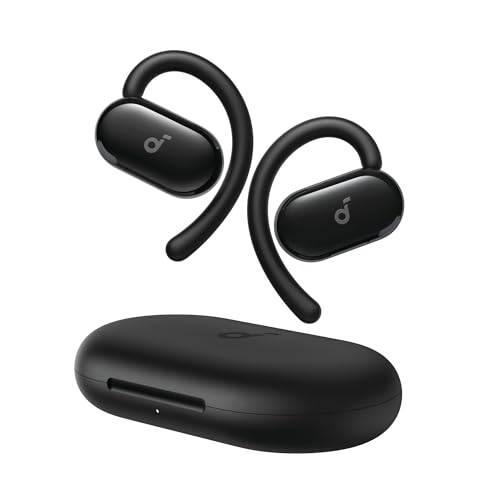
Soundcore V20i by Anker Open Ear Earbuds (Renewed)

nwm ONE Wireless Open-Ear Headphones Light Gray

nwm ONE Wireless Open-Ear Headphones Dark Gray
A Closer Look At Each Pick
The ATH-R50x sits in a different corner of this list than everything below it. Instead of hooks and cheekbone vibration, you get classic open-back over-ears, which means the drivers breathe through vented housings rather than sealing against your head.
That construction pays off in one specific way: space. Instruments feel placed around you instead of stacked inside your skull, which matters for mixing, mastering, or simply hearing what a well-recorded album can do. Audio-Technica draws its driver design from the respected ATH-R70x lineage, and owners commonly report bass that holds firmer than most open-back models manage. Desk listening is where these earn their keep; they’re a poor companion on a bus, since everyone nearby hears your playlist too.
What Stands Out
- Expansive soundstage makes long studio or hi-fi sessions far less fatiguing than closed cans
- Vented housings mean zero heat buildup around your ears during multi-hour editing days
- R70x-derived driver tuning delivers unusually present low-end for an open-back design
- No batteries, pairing, or firmware, just plug in and listen
- Wired reliability suits home studios where latency-free monitoring matters
Things To Consider
- Zero noise isolation, so loud rooms leak both ways
- The cable ties you to your desk or amp, unlike every wireless pick here
Who It Suits Best
Home-studio producers, audiophiles, and anyone doing critical listening in a quiet room they control.
Where Another Pick Suits Better
Commuters and runners should look at the TRAUSI open-ear buds, whose wireless, hook-based design handles movement and street noise far better.
Where the Audio-Technica demands a quiet room, the TRAUSI buds are built for the opposite: rain, sweat, and motion. They rest just outside your ear canal on ergonomic hooks, so nothing presses inward during a hard interval session.
The standout number here is the IPX7 rating, meaning the buds survive full submersion, not just light splashes. Sweaty spin classes and surprise downpours stop being a worry. Bluetooth 5.4 keeps the connection steady, and the mic carries noise cancellation to help calls stay intelligible mid-walk. One honest note: because nothing seals your ear canal, wind and traffic will compete with your podcast on windy days more than with sealed earbuds.
Positive Takeaways
- IPX7 waterproofing shrugs off heavy sweat and rain, rare at this style’s typical price point
- Hook design stays planted through running, cycling, and burpees alike
- You stay aware of cars, announcements, and conversation without pausing anything
- No-canal fit avoids the soreness some people get after an hour of sealed buds
Worth Noting
- Open designs let ambient noise in, so bass feels lighter than in-ear alternatives
- Hooks add bulk inside helmet straps or tight hoods
- Ear-hook contact points collect sweat and need regular wiping to stay fresh
At A Glance
Made For
Frequent runners, cyclists, and gym-goers who train outdoors in unpredictable weather.
Not Your Match When
Quiet-home listeners chasing maximum fidelity will get more from the nwm ONE’s dual-driver setup below.
Bone conduction works by vibrating your cheekbones to carry sound, leaving your ear canals completely untouched. The PSIER leans into that idea with a 23-gram frame, roughly the weight of a few coins resting behind your head.
Battery life is the headline act. Nine hours per charge sounds respectable, but the 2000mAh case refills the band sixteen times, stacking up to 153 hours of total playback. A percentage-based LED display tells you exactly how much charge remains, down to single digits. For a week-long trip with no outlet access, that’s genuinely useful. IPX5 sweat resistance covers workouts, though it stops short of the TRAUSI’s swim-grade rating.
Practical Pluses
- Up to 153 hours of combined playback means weeks of commutes between wall outlets
- LED readout shows remaining battery as a clear percentage, ending guesswork
- 23g frame disappears on your head during long runs
- Bluetooth 6.0 supports modern phones with a stable link
- IPX5 rating handles sweat and light rain without drama
Trade-Offs To Consider
- Bone conduction bass is inherently lighter than driver-based buds, especially at volume
- The large-capacity case adds noticeable pocket weight compared with slim cases
Quick Facts
Right Fit For
Travelers, festival campers, and shift workers who go days between convenient charging opportunities.
A Better Fit Elsewhere
Listeners who prioritize fuller bass over runtime may prefer the Gelecek bone conduction model, which focuses on sound quality and leakage reduction instead.
This is the simpler sibling of the PSIER above, and that simplicity is the point. There’s no big battery case to track, no LED panel to learn. You get the same core idea: audio delivered through your bone structure while your ears stay fully open.
Ten hours of playtime per charge covers a solid week of short commutes or several long runs. Pairing runs over Bluetooth 6.0, so it plays nicely with current phones. In our view, this is the least intimidating way to find out whether bone conduction suits your ears at all before committing to a bigger spend. People with sensitive ear canals often report this style being the first headphone type they can wear comfortably for hours.
A Favorable Mix
- Full ear-canal openness makes it comfortable for people who dislike in-ear pressure
- Ten-hour single charge handles most weekly listening routines
- Simple operation suits anyone who finds feature-heavy earbuds fussy
Points To Note
- No charging case included, so a dead battery means waiting at a wall outlet
- Sound leakage rises at higher volumes, audible to seatmates on quiet trains
- Single-band design offers fewer size adjustments than hook-style buds
Who Will Love This
First-time open-ear shoppers and anyone testing whether bone conduction fits their daily routine.
Look Elsewhere When
Marathon travelers needing days of untethered playback should step up to the PSIER model with the 153-hour charging case.
Hikers have a specific complaint about headphones: sealed buds block the soundscape they went outside to enjoy. The Gelecek flips that, piping audio through your cheekbones while birdsong, footsteps, and approaching bikes all come through clearly.
The ultra-light frame earns its billing on long climbs, where heavier bands start tugging after a couple of hours. Ten hours of battery comfortably covers a full day on the trail, and Bluetooth 6.0 maintains a stable link even with your phone buried in a pack. Because there’s no ear canal seal, wind noise is the main rival on exposed ridgelines, something worth weighing against the awareness benefit.
Useful Highlights
- Ultra-light build keeps long hikes free of neck strain
- Ten-hour battery spans dawn-to-dusk outings without a top-up
- Ambient sounds like horns and voices stay fully audible for safety
- No insertion into the ear canal, a relief for sensitive ears on dusty trails
Small Caveats
- Strong headwind can mask quieter tracks on open terrain
- Wiping sweat from the transducer pads after each outing keeps them hygienic
Feature Snapshot
The Right Fit
Trail runners, hikers, and cyclists who treat situational awareness as non-negotiable.
Skip It When
Office workers wanting richer indoor sound will find the nwm ONE’s two-way drivers more satisfying at a desk.
The second Gelecek on this list trims a little battery life in exchange for a friendlier entry cost. Compared with the outdoor-focused model above, it targets the same activities with a tighter budget in mind.
Two details set it apart. First, a fully enclosed cavity design reduces sound leakage noticeably, so gym neighbors hear less of your playlist. Second, Type-C fast charging tops the battery back up quickly between sessions, and the built-in cell stretches to roughly ten hours according to the manufacturer. IPX5 sweat resistance makes it a sensible gym-bag resident. The honest trade-off is refinement: bass depth and finish don’t match pricier picks, but for casual daily listening that’s rarely a dealbreaker.
Notable Upsides
- Enclosed cavity cuts sound leakage, keeping your audio mostly private
- Type-C fast charging slots neatly into short breaks between workouts
- IPX5 rating stands up to sweaty sessions and rainy jogs
Honest Caveats
- Playback sits slightly below the longest-running picks on this list
- Low-end response is modest, as is typical for affordable bone conduction
- Plastic band construction needs gentle handling in packed bags
Key Specs
Best Suited To
Cost-conscious commuters and casual gym-goers trying open-ear listening without a big commitment.
Reach For A Different Pick When
Heavy sweaters and outdoor athletes should favor the TRAUSI buds, whose IPX7 rating tolerates far wetter conditions.
Anker’s Soundcore line has a reputation for sensible engineering at fair prices, and the V20i carries that DNA into the open-ear category. This particular listing is a renewed unit, professionally restored rather than brand new, which is where the value comes from.
The clever bit is the rotating ear hook. Four adjustable positions let you dial in the angle until the bud sits snugly without pinching, a level of fit customization the fixed PSIER band can’t offer. Sound stays outside your canal, so city walks and office days both remain fully audible around you. Renewed units carry some inherent uncertainty, so checking the seller’s restoration terms before ordering is a smart move.
What Earns Its Place
- Four-position rotating hook adapts to different ear shapes better than fixed bands
- Non-intrusive open fit works for all-day wear without canal pressure
- Renewed pricing puts a known brand within easier reach
- Strong situational awareness suits busy sidewalks and shared offices
Potential Drawbacks
- Renewed condition means cosmetic wear is possible on the housing
- Battery health on pre-owned units varies from unit to unit
Core Details
Whose Shelf It Belongs On
Budget-aware shoppers comfortable with renewed electronics who want a trusted brand name in open-ear form.
Another Choice May Suit
Shoppers wanting factory-new hardware should pick the Gelecek IPX5 model instead, at a similar accessible tier.
Most open-ear buds chase athletes. The nwm ONE chases listeners, using a two-way driver arrangement, separate components handling different frequency ranges, to deliver a wider bandwidth than typical single-driver open buds manage.
The result, based on the design approach and owner feedback, is sound with genuine spatial breadth: recordings feel layered and roomy rather than compressed next to your ear. Ambient sound passes through freely, yet the directional aim keeps your audio reasonably private, which is a tricky balance in this category. The pale gray finish looks understated enough for client meetings. Expect less punch in the low end than sealed buds provide, since physics limits any truly open design.
Strengths Worth Knowing
- Two-way drivers span a broad frequency range for clearer detail
- Spatial presentation gives music a roomy, speaker-like character
- Directional output keeps playback fairly private despite open ears
- Featherweight fit pairs well with glasses and long desk days
- Muted light-gray styling blends into professional settings
Room For Improvement
- Deep bass remains limited, an unavoidable trait of open-ear acoustics
- Very noisy environments, like subway platforms, can overwhelm quiet passages
Perfect Match For
Remote workers, open-plan office dwellers, and music lovers who refuse to give up spatial detail for awareness.
Swap It Out When
Sweat-heavy training sessions call for the TRAUSI buds, whose IPX7 rating and secure hooks are purpose-built for sport.
Identical hardware to the light-gray nwm ONE above, wrapped in a darker shell. Same two-way drivers, same airy spatial signature, same featherlight fit that leaves your ear canals completely unobstructed.
The choice between them comes down purely to taste and wardrobe. Dark gray hides scuffs and smudges better over months of daily handling, which matters if the buds live loose in a bag between meetings. Everything else carries over: broad frequency response from the dual drivers, ambient awareness for shared spaces, and playback that stays private thanks to directional output. Glasses wearers tend to appreciate how little contact this style makes around the ear.
Standout Benefits
- Two-way driver design reproduces wide frequency detail cleanly
- Near-weightless fit stays comfortable through full workdays
- Dark finish conceals everyday wear better than lighter shells
Minor Gripes
- Open design lets loud surroundings bleed into quiet recordings
- Storage pouch care helps protect the drivers during transit
Who Should Grab It
Professionals and students who want premium open-ear sound in a color that survives daily commutes gracefully.
Consider Something Else When
Trail and road cyclists get better weather protection from the Gelecek waterproof bone conduction model.
Choosing Between These Open Headphones
Match The Style To Your Day
Start with where you’ll actually wear them. Open-back over-ears like the Audio-Technica belong at a desk or listening chair, wired and stationary. Hook-style wireless buds such as the TRAUSI handle motion and weather. Bone conduction bands suit anyone with sensitive ear canals or a job requiring constant conversation.
Look Past The Battery Number
Manufacturers quote best-case runtime at moderate volume. Real-world figures run shorter, especially at higher listening levels or in cold weather. The PSIER’s 153-hour system total matters most for travel; for daily home use, even eight hours per charge rarely inconveniences anyone with a nightly charging habit.
Understand Water Ratings Before You Sweat
An IPX5 rating handles sweat and rain, while IPX7 survives accidental dunking. Runners caught in storms benefit from the higher number. Gym-only users can save money with the lower tier and never notice the difference.
Weigh Awareness Against Audio Depth
Every pick here sacrifices some bass and isolation for openness. Decide honestly whether fuller sound or environmental awareness matters more in your routine, then choose accordingly.
Key Considerations Across These Picks
Traps First Timers Fall Into
The most common misstep is buying an open design expecting sealed-bud bass, then feeling disappointed. Set expectations early: openness trades low-end weight for awareness and comfort. Another frequent slip is ignoring water ratings entirely, then discovering sweat killed a non-rated pair within months.
The Case For Spending Up
Higher-tier models generally buy better drivers, refined leakage control, and sturdier materials. The nwm ONE’s dual-driver setup and the TRAUSI’s IPX7 rating illustrate the pattern. Casual listeners gain little from upgrading; daily users who depend on their headphones usually find the extra cost repaid in durability and sound.
Frequently Asked Questions
Are open headphones safe for running near traffic?
They leave your ears open, so horns, voices, and approaching vehicles remain audible throughout your run. That awareness advantage is exactly why many road runners prefer them over sealed earbuds.
Do bone conduction headphones damage hearing?
Bone conduction bypasses the eardrum by transmitting vibrations through the skull bones directly to the inner ear. Volume discipline still matters, but the mechanism itself avoids canal pressure and eardrum contact entirely.
Can other people hear my music leaking out?
Some leakage is unavoidable with any open design, particularly at high volumes. Models like the Gelecek with enclosed cavity construction reduce it considerably, and directional designs such as the nwm ONE aim sound toward your ear.
Will open-ear buds stay put during intense workouts?
Hook-based designs like the TRAUSI anchor firmly around the outer ear during vigorous movement. Band-style bone conduction units also hold well, though very small heads may find some bands looser than ideal.
How long do these typically last?
Battery cells degrade gradually over years of charge cycles regardless of brand. Treating the bands gently, wiping sweat off after workouts, and storing them away from heat all extend usable life noticeably.
Bottom Line
Picking from this list starts with one question: where will these live? Quiet rooms reward the Audio-Technica’s open-back spaciousness, wet workouts point straight at the TRAUSI, and marathon trips favor the PSIER’s enormous case-backed runtime. Everyone else lands somewhere among the Gelecek, Soundcore, and nwm options depending on budget and setting. Match the tool to the routine and you’ll wonder why you ever tolerated sealed ears.
