


Good sound shouldn’t cost a paycheck, and blocking out a noisy bus or open-plan office doesn’t require flagship pricing. This roundup gathers ten over ear noise cancelling headphones under 100 that cover different priorities: marathon battery life, call quality, color choices, and foldable travel designs. Whether you commute daily, study in shared spaces, or just want to hear your podcast instead of the HVAC system, there’s a fit here for your ears and your budget.
A Quick View Of The Lineup

TALIX H30 Hybrid ANC Over Ear Headphones (Off-White)

TECKNET Hybrid ANC Bluetooth Headphones with ENC Mic (Black)

TANKASE ANC Over-Ear Headphones (Black)

havit Space S1 Adaptive ANC Headphones

TALIX H30 Hybrid ANC Over Ear Headphones (Black)

TALIX H30 Hybrid ANC Over Ear Headphones (Blue)

TALIX H30 Hybrid ANC Over Ear Headphones (Purple)
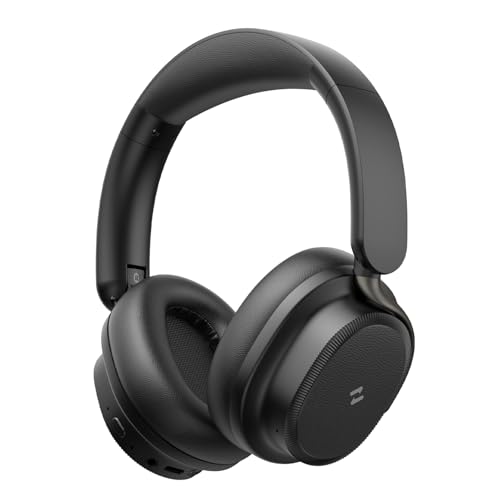
havit Foldable ANC Headphones 132H Playtime
TANKASE ANC Over-Ear Headphones (Dark Black)
TANKASE ANC Over-Ear Headphones (Pink)
A Breakdown Of The Leading Choices
Battery life is where the off-white H30 makes its case. TALIX rates it at up to 110 hours per charge with cancellation switched off, around 65 with ANC running, and a five-minute top-up returns roughly four hours of playback. For anyone whose charger lives in a drawer, that’s the whole argument.
The 40mm dynamic drivers carry Hi-Res certification, which signals the hardware can reproduce detail beyond standard CD-quality audio when the source supports it. A bass boost mode leans the tuning warmer, and Bluetooth 6.0 keeps the wireless link current. USB audio gives you a wired escape hatch too.
Useful Highlights
- Roughly a week of typical commuting between charges, even with ANC on most days.
- Five-minute fast charge covers an unexpected trip out the door.
- Hi-Res certified 40mm drivers keep vocals clear at moderate volumes.
- USB audio mode works when the battery dies mid-flight.
- The light off-white finish stands apart from the usual sea of black cans.
Things To Consider
- Light-colored earcups tend to show grime faster, so plan on occasional wiping of the pads.
- No app-based EQ is mentioned, so tuning stays fixed to the built-in presets.
Who It Suits Best
Commuters and students who charge devices rarely and want certified sound without crossing into premium territory.
Where A Sibling Pick Shines
Listeners who take lots of calls will get more from the TECKNET’s four-mic ENC array than from this music-first tuning.
Calls are the headline here. Four microphones with environmental noise cancellation work to isolate your voice from street or office chatter, which matters more than raw sound quality once you’re on your fifth video meeting of the week. Hybrid ANC targets low-frequency rumble like engines down to a stated 35dB to 38dB depth.
Where the TALIX H30 chases battery records, this TECKNET trades some runtime, about 70 hours, for flexibility: six EQ modes let you shift the signature between bass-heavy playlists and clearer podcast listening without touching an app. In our view that swap suits hybrid workers better than pure travelers.
What Works In Its Favor
- Four-mic ENC setup keeps your voice intelligible on windy platforms and busy kitchens alike.
- Six EQ modes mean you can retune for podcasts, classical, or hip-hop on the fly.
- 70-hour rating still outlasts most workweeks without a charger nearby.
- Hybrid ANC specifically dampens engine drone, the hardest noise to ignore on transit.
Worth Noting
- Runtime trails the havit and TALIX options by a wide margin, so frequent flyers may notice.
- Owners commonly report folding hinges as the first wear point on budget headphones generally, so store these padded rather than crushed in a bag.
At A Glance
Made For
Hybrid workers splitting days between calls, focus sessions, and a noisy commute home.
Consider Something Else When
Long-haul travelers who hate charging should reach for the havit Space S1 instead, since its adaptive ANC and longer runtime suit multi-day trips better.
This black TANKASE sits at the entry point of the list, and its spec sheet reads accordingly: active cancellation rated around -20dB depth, aimed at steady background hum rather than sharp transient sounds. Compared with the TECKNET’s deeper 35dB-plus figure, expect gentler quieting, enough to soften an office HVAC loop or a train’s constant drone.
The honest read is that you’re trading refinement for accessibility. There’s no mention of Hi-Res certification, multipoint pairing, or app control here, just straightforward wireless listening with cancellation that takes the edge off. One practical note from the listing itself: ANC doesn’t operate while you’re using a wired AUX connection, so pick one mode per session.
A Strong Showing
- Puts genuine ANC within reach of the tightest budgets on this list.
- Over-ear isolation plus cancellation handles droning office and cabin noise reasonably well for the tier.
- Simple operation suits anyone who finds feature-heavy headphones fussy.
Minor Gripes
- Cancellation depth is shallower than every pricier sibling here, so loud commutes stay partly audible.
- ANC cuts out over AUX, a quirk worth remembering before boarding a plane with a seatback jack.
- Earcup padding on entry-level models tends to compress over time; rotating storage position helps the foam recover.
Right Fit For
First-time ANC shoppers testing whether cancellation fits their routine before spending more.
Not Your Match When
Anyone flying regularly will find the havit Space S1’s -45dB adaptive system far better matched to engine roar.
Adaptive cancellation is the differentiator. Unlike fixed systems such as the TANKASE’s, the Space S1 measures ambient noise continuously and adjusts its output up to a stated -45dB, the deepest figure in this lineup. Cabin pressure changes and shifting subway noise get handled automatically rather than through manual modes.
LHDC support matters too: it’s a high-bitrate Bluetooth codec that preserves more detail than standard SBC or AAC when your phone supports it. Pair that with 100 hours of playback (72 with ANC active), dual-device connection for juggling a laptop and phone, and an app-based EQ, and you have the most technically complete package under 100 here. The trade-off is a busier feature set that some people simply won’t touch.
A Few Highlights
- -45dB adaptive ANC quiets airplane cabins more convincingly than any fixed-mode rival above.
- LHDC hi-res codec keeps streaming audio detailed on compatible phones.
- Dual-device pairing lets a work laptop and personal phone stay connected simultaneously.
- App EQ lets you shape bass and treble instead of accepting factory tuning.
- 100-hour rating means charging roughly twice a month for average users.
Small Caveats
- ANC-on runtime drops to 72 hours, still generous but worth planning around for long trips.
- Feature density can feel like overkill for listeners who just press play and go.
Quick Facts
Best Suited To
Frequent flyers and rail commuters who want maximum quieting and don’t mind exploring an app menu.
Swap It Out When
Call-heavy users should weigh the TECKNET’s dedicated four-mic ENC array, which prioritizes being heard over hearing less.
Same headphone as our opening pick, dressed in black. Everything that earns the H30 its place holds: up to 110 hours per charge, roughly 65 with cancellation engaged, five-minute quick charging, and Hi-Res certified 40mm drivers with a bass boost mode for low-end lovers. The black shell is simply the safer aesthetic for office settings and hides wear better than the off-white version.
For most desks and dorm rooms, this is the default recommendation from the H30 family. You lose none of the function by choosing the darker finish, and you gain a look that blends into professional spaces. USB audio keeps it usable as a wired headset when the charge finally runs dry.
A Few Strong Suits
- Class-leading runtime means monthly charging becomes the norm, not weekly plugging in.
- Fast charge rescues forgotten-charger mornings with hours of playback in minutes.
- Black finish suits offices and hides scuffs better than lighter colors.
- Wired USB mode doubles as a backup for dead-battery situations.
Points To Note
- Ear pads collect skin oils over months of daily wear; a soft damp cloth keeps them fresh.
- Bass boost skews the tuning warm, which some acoustic and jazz fans may find heavy-handed.
Who Will Love This
Office workers and commuters wanting one dependable pair for music, podcasts, and the occasional flight.
Reach For A Different Pick When
Listeners craving adjustable sound should consider the havit Space S1, whose companion app EQ offers control the H30 doesn’t.
Color is the only variable across the H30 family, yet it matters more than spec sheets admit. The blue variant carries the identical platform: 110-hour battery ceiling, 65 hours with ANC, Hi-Res certified 40mm drivers, Bluetooth 6.0, and USB audio fallback. Nothing functional separates it from the black and off-white editions reviewed earlier.
You may find the blue shade easier to spot in a crowded backpack or shared apartment, which sounds trivial until you’ve dug through a gym bag three mornings running. Students sharing study rooms and siblings sharing households tend to appreciate that small practical win alongside the long battery life.
Where It Delivers
- Identical endurance to its siblings: weeks of listening per charge.
- Distinctive color makes the pair easy to identify in shared spaces.
- Hi-Res drivers and bass boost handle both detail-focused and punchy playlists.
- USB audio keeps it working through dead-battery emergencies.
Room For Improvement
- Colored coatings can show scuffs more visibly than matte black over time.
- No carrying case details are listed, so a separate pouch is worth budgeting for bag storage.
The Right Fit
Students and younger listeners who want dependable ANC with personality beyond basic black.
Another Choice May Suit
Minimalists who dislike standing out will prefer the understated dark TANKASE at a friendlier entry point.
The purple edition closes out the H30 trio, and it’s arguably the boldest of the three finishes. Underneath the color sits the same hardware we’ve covered twice already: 110 hours of playback (65 with cancellation), a five-minute charge yielding about four hours, Hi-Res certified 40mm drivers, and Bluetooth 6.0 connectivity with USB audio as backup.
Honest framing: you’re choosing between identical performance tiers, so the decision comes down entirely to taste and availability. Purple pairs well with matching desk accessories and tends to photograph well for creators filming setups. Functionally, nothing is sacrificed by picking it over the black model reviewed earlier.
Points In Its Favor
- Same marathon battery life as the rest of the H30 line.
- Standout purple finish doubles as a desk-accessory match for styled workspaces.
- Hi-Res drivers deliver clean mids and a switchable bass boost for heavier genres.
- USB audio mode provides wired reliability whenever needed.
Honest Caveats
- Vibrant finishes may clash with formal office dress codes, depending on your workplace culture.
- Like all H30 variants, there’s no app EQ, so the sound signature stays as shipped.
Whose Shelf It Belongs On
Creators and style-forward listeners building a coordinated workspace who refuse to compromise on runtime.
Look Elsewhere When
Shoppers prioritizing call quality over looks will serve their meetings better with the TECKNET’s ENC microphone array.
One hundred thirty-two hours. That single number defines this havit, and it edges past even the TALIX H30’s 110-hour claim to post the longest stated runtime in this entire roundup. A five-minute charge buys roughly five hours, slightly ahead of the H30’s quick-charge return too.
Travel practicality rounds out the pitch: the frame folds flat for packing, hybrid ANC softens cabin and traffic noise, dual-device connection handles a phone-and-laptop juggle, and a built-in mic covers calls. Where the Space S1 (also from havit) emphasizes adaptive sophistication, this sibling keeps things simpler and stretches battery further, a trade many long-haul travelers happily make.
Where It Helps
- 132-hour rating covers round-trip international flights plus weeks of daily listening afterward.
- Foldable hinge packs down smaller than fixed-frame rivals like the TALIX H30.
- Dual-device pairing switches between entertainment and work without re-pairing.
- Five-minute charge yields about five hours, ideal for gate-side top-ups.
Trade Offs
- Folding mechanisms add a moving part; owners commonly report hinges as a long-term wear point, so avoid forcing them closed.
- No hi-res codec or adaptive cancellation is specified, placing it a step below the Space S1 sonically.
Feature Snapshot
Built With In Mind
Travelers who measure journeys in layovers and dread hunting for outlet access abroad.
Skip It When
Audiophiles chasing maximum fidelity will extract more detail from the LHDC-equipped havit Space S1.
This dark black TANKASE mirrors the earlier black model’s core platform: cancellation around -20dB depth, tuned toward constant background noise rather than sudden bursts. The darker finish is the draw here, reading more discreet in meetings and blending with nearly any outfit or desk setup.
Set expectations honestly and this pair delivers. It won’t match the havit Space S1’s -45dB adaptive depth or the TECKNET’s call hardware, and ANC still disengages over AUX cables per the brand’s own note. What remains is a low-commitment way to experience quieter offices and calmer commutes, which is exactly what a value pick should be.
What It Does Well
- Softens steady hum from fans, trains, and air handlers at a modest cost.
- Discreet dark styling suits professional environments without drawing attention.
- Simple controls keep the learning curve near zero for first-time ANC users.
Things To Weigh Up
- Cancellation strength trails every mid-list pick, so loud environments stay partly present.
- Padding care matters at this tier; letting ear cushions breathe between uses extends their life.
- ANC unavailable while wired via AUX limits flexibility during long flights.
Who Should Grab It
Casual home listeners and light commuters who want quieter days without investing heavily upfront.
A Better Fit Elsewhere
Heavy commuters gain far more silence from the havit Space S1’s adaptive deep-cancellation system.
The pink TANKASE wraps the same accessible platform in the friendliest colorway on this list: roughly -20dB cancellation depth, over-ear isolation, and simple wireless operation. Like its siblings, it focuses on steady background noise rather than sharp sounds, and the AUX-without-ANC limitation carries over unchanged.
As a gift or a personal treat, it lands well. Teenagers setting up study corners, partners tired of borrowing your black pair, or anyone decorating a pastel-toned room will find few alternatives at this level. The performance ceiling is modest, but the entry barrier is lower still, and that balance is precisely its appeal.
Useful Touches
- Pastel pink finish stands out among an overwhelmingly monochrome market.
- Entry-level positioning makes it an easy gifting decision.
- Over-ear cups plus basic ANC tame household appliance hum adequately.
- Simple button layout suits younger or less tech-comfortable users.
Potential Drawbacks
- Lighter pink surfaces may discolor with handling oils over extended use; periodic gentle cleaning helps.
- Cancellation depth won’t satisfy frequent flyers facing sustained engine roar.
Perfect Match For
Gift-givers and students wanting cheerful, functional quiet for study sessions and casual listening.
Where Another Pick Suits Better
Music-focused listeners should step up to the TALIX H30, whose Hi-Res certified drivers offer noticeably richer playback.
Factors To Weigh With Over Ear Noise Cancelling Headphones Under 100
Cancellation Depth And Adaptivity
Noise reduction figures tell you how much sound pressure a headphone counteracts. Entry models around -20dB mute steady hum; adaptive systems reaching -45dB adjust continuously to changing environments like cabins and subway cars. Match the number to your noisiest regular environment rather than paying for depth you’ll rarely use.
Battery Life Versus Charging Habits
Ratings here range from 70 to 132 hours, and the gap matters based on routine. Daily commuters charging weekly can accept shorter runtimes, while travelers away from outlets benefit enormously from triple-digit claims. Check whether the figure assumes ANC on or off, since cancellation typically costs 20 to 35 percent of total playtime.
Call Hardware And Codecs
Microphone arrays with ENC (environmental noise cancellation) filter background sound from your voice, a priority for remote workers. On the listening side, codecs like LHDC preserve more audio detail than baseline Bluetooth, though both your source device and the headphones must support the same codec for any benefit.
Wired Fallbacks And Fit
USB or AUX modes keep headphones usable after the battery dies, valuable on long flights. Over-ear cushion material determines comfort across multi-hour sessions, and foldable designs save bag space, though hinges introduce a potential wear point over years of use.
Key Considerations Across These Picks
Traps First Timers Fall Into
Chasing the biggest ANC number while ignoring battery behavior with cancellation enabled is the classic error, since real-world runtime often lands well below headline figures. Shoppers also overlook the AUX limitation some budget models carry, discovering it only mid-flight. Confirm your intended listening mode before committing.
The Case For Spending Up
Higher-tier picks in this list justify their cost through adaptive cancellation, hi-res codec support, app customization, and stronger microphone arrays. Casual listeners rarely feel those gaps, but frequent flyers and call-heavy professionals recoup the difference quickly in comfort and clarity.
Frequently Asked Questions
Do budget ANC headphones really block airplane noise?
They reduce low-frequency engine drone noticeably, though high-frequency cabin chatter passes through more easily. Deeper-rated adaptive systems handle aircraft conditions best.
Does using ANC drain the battery faster?
Yes, cancellation requires continuous processing power. Expect roughly 25 to 40 percent shorter runtime with ANC active compared with standard playback.
Can I use these headphones wired?
Most models here support either USB or AUX connections, though some disable noise cancellation while wired. Verify the specific mode behavior before relying on it for travel.
Are colored versions worse than black ones?
Functionally they’re identical within the same product family. Colored finishes may show scuffs and oils sooner, so cleaning habits matter more.
Is Bluetooth 6.0 important at this price?
It improves connection stability and efficiency over older versions. Any current-phone user benefits modestly, though codec support influences sound quality more directly.
Closing Thoughts
Every pair here proves that meaningful quiet doesn’t demand flagship money. Frequent flyers lean toward the havit Space S1, call-centric workers toward the TECKNET, and battery-maximalists toward the TALIX H30 family or the 132-hour havit. Start from your noisiest regular moment, match the cancellation depth and battery rating to it, and the right choice usually announces itself.
