


Streaming, gaming, and long listening sessions all punish bad audio the same way: muddy vocals, harsh treble, and ears that ache by hour two. This shortlist covers wired in-ear monitors and over-ear studio sets that keep sound honest without draining your wallet, whether you’re chatting on camera, mixing a track, or bingeing late into the night.
How The Shortlist Stacks Up

KZ ZS10 PRO Hybrid Driver IEMs (Blue)

KZ ZS10 PRO Hybrid Driver IEMs (Matte Black)
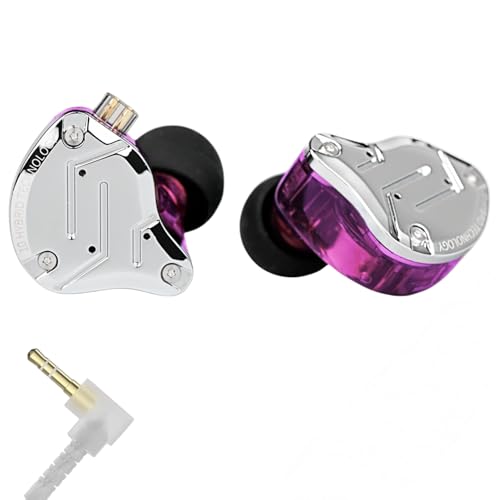
KZ ZS10 PRO Hybrid Driver IEMs (Purple)

KZ ZS12 PRO 6-Driver IEMs (Silver)

Poly Blackwire 5220 Wired Headset

MAONO MH700 Studio Headphone

OneOdio A71D DJ Studio Headphones

FiiO JadeAudio JT1 Studio Headset

Syndesmos Over-Ear Monitor Headphones

Syndesmos Over-Ear DJ Headphones
A Closer Look At Each Pick
Hybrid means each earbud combines balanced armature drivers, which handle fine detail, with a dynamic driver for bass weight. The ZS10 PRO packs four armatures plus one dynamic unit into an alloy-and-resin shell that sits flush in the ear, which matters when you’re streaming for hours and don’t want pressure points.
For live streamers and gamers, the sealed fit keeps game audio locked in while chat stays intelligible. The blue translucent finish also reads well on camera.
Real-World Strengths
- Five-driver layout separates footsteps, vocals, and bass instead of smearing them together
- Alloy faceplate plus resin body keeps the buds light enough for all-night sessions
- Wired connection means zero latency, a real advantage over Bluetooth during fast gameplay
- In-ear seal passively blocks keyboard clatter and room noise
Things To Consider
- No inline microphone in this version, so voice chat needs a separate mic
- The cable is user-replaceable but ear tips collect wax and need regular cleaning
Key Specs
Who It Suits Best
Streamers and competitive players who want detailed, lag-free sound on a modest budget.
Where A Sibling Pick Shines
Listeners who want even finer treble separation should step up to the KZ ZS12 PRO below.
This is the same five-driver ZS10 PRO platform as the blue version above, tuned identically, just dressed in a matte black shell. That understated finish is the whole point: nothing flashy on your desk, nothing distracting on a video call.
You still get the alloy-and-resin build, the immersive low end, and the crisp vocal presence that made this model a staple among budget audiophiles. In our view, black is the smartest colorway for anyone wearing these outside a studio.
What Helps Most
- Identical hybrid tuning to the brighter colorways at the same accessible tier
- Matte surface hides fingerprints and scuffs better than gloss finishes
- Detachable-style cable design keeps replacements cheap over years of ownership
Small Caveats
- Microphone-free variant, so pairing with a desk mic is part of the plan
- Deep insertion fit bothers some wearers until they swap to softer tips
Right Fit For
Minimalists and office listeners who want hi-fi detail without calling attention to their gear.
A Better Fit Elsewhere
Anyone who wants a built-in boom mic for calls should look at the Poly Blackwire 5220 later in this list.
Third time’s the charm for this chassis: the purple edition carries the same four-armature-plus-dynamic arrangement, wrapped in a two-tone shell that catches light nicely on a streaming cam. Functionally, you’re choosing between these three purely on looks and availability.
Owners commonly report the purple housing wears well day to day, and the resin body resists the small dings that plague all-metal buds in bags and pockets.
The Practical Payoff
- Same HiFi tuning with clear mids, so vocals in streams and music stay forward
- Distinctive finish makes these easy to spot in a crowded desk drawer
- Wired reliability suits long recording or viewing blocks with no charge breaks
Points To Note
- Like its siblings, there’s no mic on this cable
- Ear tips compress over months and benefit from an inexpensive replacement set
Whose Shelf It Belongs On
Commuters and students who want personality plus proven hybrid-driver sound for everyday playlists.
Swap It Out When
Prefer something quieter to look at? The matte black ZS10 PRO above covers the identical performance.
Where the ZS10 PRO uses five drivers per side, the ZS12 PRO adds a sixth, splitting high-frequency duty across multiple ultra-high armatures while a dynamic driver anchors the lows. Translation for your ears: cymbals shimmer without bite, and voices sit naturally in the mix rather than shouting over everything.
For streamers who listen critically to their own playback, that extra layer of separation is easy to hear. You may find the upgrade most noticeable on acoustic and vocal-heavy content.
What Pays Off
- Six-driver array delivers cleaner frequency separation than the 5-driver ZS10 family
- Dedicated mid-high armature keeps podcast dialogue smooth at higher volumes
- Dynamic driver supplies bass depth that pure-armature sets often lack
- Silver finish photographs cleanly against bright studio backdrops
Trade-Offs To Consider
- No microphone included, so calls require separate equipment
- Larger driver count can make the nozzle slightly bulkier in smaller ears
Core Details
Made For
Critical listeners and audiophile streamers ready to spend a little more for noticeably finer detail.
Consider Something Else When
First-timers on a tight budget will be happier with the standard KZ ZS10 PRO from earlier in the list.
Everything before this point was built for listening. The Blackwire 5220 is built for talking, with a flexible noise-canceling boom mic that positions close to your mouth so callers hear you, not your ceiling fan. Poly, formerly Plantronics, has decades of call-center pedigree behind this design.
Connectivity is refreshingly flexible: USB-C, USB-A, or plain 3.5mm, so one headset moves between a laptop, a desktop dock, and a phone. Compatibility with Microsoft Teams and Zoom makes it a natural pick for anyone whose streaming involves co-hosting or interviews.
The Upside
- Boom mic cancels background noise so your voice cuts through on calls
- Three connection options mean it works with nearly any device you own
- Ergonomic over-ear padding holds up through back-to-back meetings
Less Ideal Details
- Music fidelity takes a back seat to voice clarity compared with the FiiO JT1
- The boom arm needs gentle handling when stowing the headset in a bag
Quick Facts
Who Will Love This
Remote workers and interview-style streamers who spend more hours talking than listening.
Reach For A Different Pick When
Podcast producers chasing richer music monitoring should check the MAONO MH700 next.
MAONO built its name on budget podcast gear, and the MH700 follows that playbook: big 50mm dynamic drivers in a closed-back shell, tuned flat enough to trust while editing. Closed-back means the cups seal around your ears, keeping what you hear in and what your microphone picks up out.
The included 3.5mm-to-6.35mm adapter is the quiet hero here, letting you plug straight into audio interfaces, guitar amps, keyboards, or a mixer without hunting for extras.
Useful Touches
- 50mm drivers reproduce a full 20Hz to 20kHz range with low distortion
- Closed-back isolation protects recordings from headphone bleed
- Dual-jack compatibility covers computers and pro audio gear alike
- Balanced highs, mids, and lows make editing decisions easier
Honest Caveats
- Studio-flat tuning can feel dry next to bass-forward consumer headphones
- Pleather ear pads warm up during summer recording sessions
Essential Details
Built With In Mind
Podcasters and home-recording artists who need accurate monitoring without studio-budget prices.
Another Choice May Suit
DJs who flip one cup off their ear between tracks will prefer the swiveling OneOdio A71D coming up.
The A71D earns its spot with one clever mechanical trick: ear cups that swivel 90 degrees so you can lift one side off your ear and cue the next track while the other keeps playing. Anyone who has mixed live knows how much that single feature matters.
Its 40mm drivers lean toward deep bass and crisp highs, which flatters electronic music, and the foldable frame plus padded headband make it easy to toss in a gig bag. Compared with the MAONO MH700, this is the more portable, performance-oriented option.
Reasons It Performs
- 90-degree rotating cups enable true single-sided monitoring
- Foldable design packs down small for travel between venues
- Ultra-soft ear cushions reduce fatigue across long sets
Things That May Matter
- 40mm drivers reach slightly less low-end authority than 50mm rivals here
- The headband hinge points deserve careful handling over years of folding
Best Suited To
Mobile DJs and beat-matching hobbyists who need one-ear cueing and a bag-friendly fold.
Not Your Match When
Desk-bound editors wanting maximum bass extension may favor the syndesmos monitor pair further down.
FiiO is an audiophile brand first, and the JadeAudio JT1 brings that DNA downmarket. Its 50mm driver uses a layered composite diaphragm, PEK, PU, and aluminum foil bonded together, a material stack chosen to cut distortion and keep high frequencies accurate under pressure.
The result is a wide, well-placed soundstage with low-end weight that suits pop, vocals, and folk, and doubles comfortably as a gaming headset thanks to the included microphone. Among the over-ear options in this roundup, it’s the one we’d hand to someone who cares about sound quality above all else.
Positive Takeaways
- Composite diaphragm keeps distortion low even at demanding volumes
- Accurate imaging helps you place sounds in games and mixes alike
- Built-in mic covers voice chat without extra purchases
- Hi-Res-oriented tuning flatters acoustic and vocal material
What To Weigh
- Open, spacious presentation leaks some sound in loud shared rooms
- Needs a source with reasonable output to shine from phones alone
The Numbers That Matter
Perfect Match For
Audiophile-leaning gamers and home recordists who want reference-grade sound plus a mic.
Look Elsewhere When
Call-heavy professionals should stay with the Poly Blackwire 5220 for its superior boom mic.
Syndesmos keeps things simple: large 50mm drivers, a 20Hz to 20kHz range, and a lightweight over-ear frame designed around staying comfortable past the three-hour mark. For students, writers, and anyone streaming lectures or lo-fi playlists all afternoon, comfort is the spec that actually gets used.
Vocals come through clear and the bass has genuine punch without drowning the mids, which makes these pleasant across podcasts, films, and music in roughly equal measure. The honest read is that they prioritize easy listening over surgical studio accuracy.
What Stands Out
- Lightweight build reduces neck strain during marathon sessions
- Full 20Hz to 20kHz response captures both sub-bass and airy treble
- Clear vocal presence suits spoken-word content especially well
Room For Improvement
- Tuning favors enjoyment over critical mixing precision
- Earpad foam flattens over time and benefits from eventual replacement
Who Should Grab It
Students and remote workers logging long listening hours at a desk.
Skip It When
Mixing engineers needing tighter accuracy should pick the MAONO MH700 instead.
This sibling to the previous syndesmos pair shares the 50mm drivers and 20Hz to 20kHz range but lands in the DJ category, where durability and punch matter more than delicacy. Dynamic bass response gives kick drums real presence, handy for beatmatching and equally fun for hip-hop playlists at home.
Depending on how hard you drive them, you may find the low end slightly warmer than the studio-flavored models earlier in this list. That warmth is a feature for performers, less so for mastering work.
What Works In Its Favor
- Powerful bass output suits electronic and urban genres
- Over-ear cups provide passive isolation in noisy rooms
- Balanced mids keep vocals audible over heavy low end
- Wired setup means dependable performance with any mixer or controller
Details To Watch
- Warm tuning masks subtle flaws, so verify final mixes on flatter cans
- Cable routing should be checked periodically for wear near the jack
Feature Breakdown
The Right Fit
Bedroom DJs and genre-focused listeners who want energetic bass in a durable wired package.
Where Another Pick Suits Better
Listeners prioritizing neutral accuracy over bass warmth will get more from the FiiO JT1.
Factors Worth Weighing Before Choosing Streaming Headphones
Match The Format To Your Routine
In-ear monitors like the KZ pairs disappear under a hood and travel easily, making them ideal for mobile streaming and gaming on the go. Over-ear models deliver a wider stage and longer-wear comfort but stay desk-bound for most people. Decide where you’ll actually wear them before comparing anything else.
Driver Size Isn’t Everything
Bigger drivers, such as the 50mm units on the MAONO and syndesmos sets, generally move more air and produce fuller bass. Yet driver count and tuning quality matter just as much, which is why the six-driver KZ ZS12 PRO competes well against much larger headphones. Read tuning descriptions, not just millimeters.
Wired Means Zero Lag
Every option in this list connects by cable, and that’s deliberate for streaming. Wired audio removes Bluetooth latency, so lip-sync on video and reaction timing in games stay exact. The trade-off is a cable to manage, worth accepting for anything latency-sensitive.
Think About Your Microphone Needs
Most in-ear picks here omit a mic by design, while the Poly Blackwire and FiiO JT1 include one. Streaming voice chat demands a dedicated solution either way, so factor a desk mic into your total setup cost if your pick lacks one.
Key Considerations Across These Picks
Traps First Timers Fall Into
The most common mistake is buying for bass alone, then wondering why podcasts sound boomy. A second trap is ignoring microphone presence entirely, then scrambling for a workaround before a scheduled stream. Match the tuning profile to what you actually consume daily.
The Case For Spending Up
Higher-tier models buy you better driver materials and more careful frequency division. Moving from a basic set to something like the FiiO JT1’s composite diaphragm yields lower distortion at volume and clearer detail in busy tracks. The upgrade pays off fastest for people who listen several hours every day.
Frequently Asked Questions
Are wired headphones better for streaming than wireless?
Yes, mainly because wired connections eliminate Bluetooth lag, keeping video and game audio perfectly synced. They also never run out of battery mid-broadcast.
Do in-ear monitors block enough background noise?
A good sealed fit passively reduces a surprising amount of room noise, including keyboard clicks and fan hum. Foam or silicone tip choice affects the seal significantly.
Can I use studio headphones for regular music listening?
Absolutely, though flat studio tuning sounds less bass-heavy than consumer headphones. Many people grow to prefer that honesty after a week of adjustment.
What does a hybrid driver configuration mean?
It combines balanced armature drivers for treble detail with a dynamic driver for bass depth. Each type handles the frequencies it does best.
How often should I replace ear pads or tips?
Silicone tips last many months with regular cleaning, while foam pads typically compress within a year of daily use. Replacements are inexpensive and restore both comfort and sound.
Bottom Line
Your best choice comes down to how you stream. Gamers and mobile listeners get tremendous value from the KZ hybrid-driver IEMs, call-heavy professionals belong in the Poly Blackwire 5220, and creators chasing sound quality should shortlist the FiiO JT1 or MAONO MH700. Whichever direction you lean, going wired keeps your audio honest and always ready when you hit record.
