


Anyone who has run a recording session knows the chaos of five musicians crowding around one headphone jack. A dedicated multi-channel headphone amp fixes that: every player gets their own output, their own volume knob, and a clean signal that doesn’t degrade as more headphones plug in. This guide walks through ten options spanning compact desktop units to rackmount workhorses, so you can match one to your studio, rehearsal space, or live rig without guesswork.
The Main Contenders
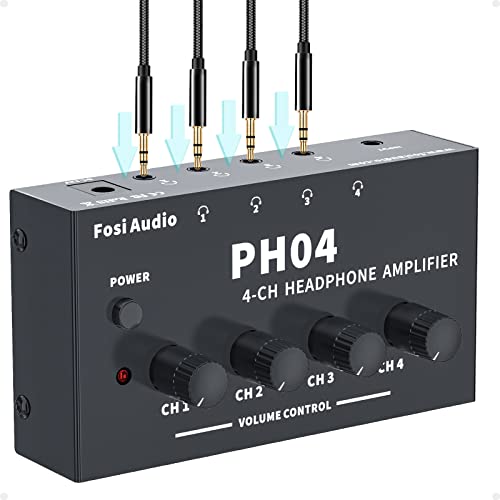
Fosi Audio PH04 4 Channel Headphone Amplifier

Behringer HA8000 V2 8-Channel Headphone Amplifier

socodox 8 Channel Headphone Amplifier, 16 Outputs

STABCL 8 Channel Stereo Headphone Amp with 9 Jacks
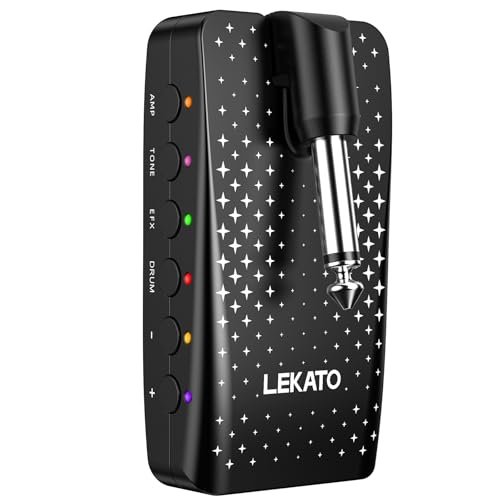
LEKATO EP-01 Electric Guitar Headphone Amp

Behringer POWERPLAY HA8000 8 Channel Headphone Amplifier

Bolanle PH400 8-Channel Headphone Amplifier 16-Output

LZSIG Headphone Amplifier with Bass Boost, 8 Channel

TONALUXE 8-Channel Headphone Mixing Distribution Amplifier

Mackie HM-800 8-channel Headphone Amplifier
The Details Behind The Selections
The PH04 sits at four channels rather than eight, which makes it the smallest commitment on this list. Each channel runs its own independent stereo amplifier section with an individual level control, so two people tracking vocals can set wildly different listening levels without argument.
The upgraded version adds a proper power switch and a 3.5mm output, small touches you’ll appreciate during late-night sessions. It runs off a 12V DC adapter, keeping desk clutter minimal.
A Favorable Mix
- Four independent high-power stereo sections hold clarity even at maximum volume
- Ultra-low-noise op amps of the type found in full-size audio gear keep hiss out of quiet passages
- Per-channel volume knobs mean no more reaching over to adjust someone else’s mix
- Works with 3.5mm headphones directly; 6.35mm cans need a simple adapter plug
Things To Consider
- Four channels cap your session size, so growing bands will outgrow it
- The wall-wart power supply adds one more brick under a crowded desk
Who It Suits Best
Duet podcasters, vocal-and-guitar tracking pairs, and anyone whose sessions never exceed four sets of ears.
Where A Sibling Pick Shines
Larger bands should look at the socodox 8 Channel unit instead, since its sixteen outputs cover twice the heads at similar complexity.
Where the Fosi PH04 keeps things desktop-sized, the HA8000 V2 is built to bolt into a rack and stay there. Eight independent high-power amplifier sections share a single rack space, and the design targets professional stage and studio duty where reliability matters more than portability.
In a busy tracking room, that means eight musicians each get a strong, clean feed even with demanding headphones. Owners commonly report it holds up well to daily session use, though like any rack unit it deserves a ventilated spot in the case.
Features That Help
- Eight separate stereo amp sections drive virtually all headphone types at full volume
- Single rack-space format slots neatly into existing studio or PA racks
- Mixing and distribution architecture supports both shared and individual feeds
- High output headroom suits bass-heavy monitoring without strain
Points To Note
- Rackmount form factor is overkill for a bedroom producer working solo
- You’ll want to plan cable routing carefully, since eight channels generate clutter fast
At A Glance
Made For
Project studios and live engineers who need dependable eight-way monitoring in a permanent rack install.
Consider Something Else When
Desktop users with limited space may prefer the LZSIG bass boost model, which offers a smaller footprint for home setups.
This socodox box doubles up on outputs: sixteen headphone jacks across eight channels, split between 1/4-inch and 1/8-inch sizes. Nobody hunts for an adapter mid-session, which sounds trivial until six people are waiting to plug in.
Input flexibility is the other headline. TRS and RCA inputs accept mixers, instruments, and playback devices, and a front-panel switch toggles between stereo and mono depending on whether you’re mixing or running a click track. The metal housing and rubber feet keep it planted on a rehearsal-room floor.
A Few Strong Suits
- Sixteen outputs across mixed jack sizes eliminate adapter juggling entirely
- Stereo/mono switching adapts one box to mixing, tracking, and playback roles
- Premium dual op-amp design aims for clear stereo imaging across all channels
- Sturdy metal chassis survives being moved between practice spaces
Softer Spots
- With sixteen jacks sharing eight channels, paired listeners hear identical mixes
- Lesser-known brand support may be thinner than established names offer
Right Fit For
Band rehearsals, podcast panels, and classroom settings where many listeners share few distinct mixes.
Not Your Match When
Engineers needing fully independent per-headphone mixes will find the Mackie HM-800’s aux-per-channel design a better fit.
The STABCL earns its place through sheer practicality: nine 6.35mm-to-3.5mm adapters ship in the box, so mixed headphone collections work from day one. Unlike the socodox’s fixed dual jack sizes, this one leans on included converters instead.
Each of the eight channels carries its own volume control and accepts both TS and TRS plugs, covering instrument cables and stereo headphones alike. An intelligent noise-reduction chip targets the hiss that plagues cheaper splitters at high volume.
Real Benefits
- Nine included adapters mean every headphone in the drawer plugs in immediately
- Per-channel volume lets a drummer and a vocalist coexist at comfortable levels
- Noise-reduction circuitry keeps quiet mixes clean even near maximum gain
- Metal portable build travels between studio and stage without fuss
Small Caveats
- Adapter-based compatibility adds tiny connection points that can loosen over time
- Keep track of those nine adapters, since replacements are easy to misplace
Quick Facts
Who Will Love This
Budget-conscious home studios outfitting a full band with mixed headphone brands.
Look Elsewhere When
Guitarists wanting built-in tones rather than pure amplification belong with the LEKATO EP-01 instead.
Everything before this point distributes one signal to many people. The EP-01 flips the brief: it’s a personal amp that plugs straight into your guitar, giving one player a complete silent-practice rig. Apartment dwellers and night owls are the obvious audience.
Inside sit fourteen classic amp models and fourteen effects spanning clean to metal territory. Adjustable parameters plus five brightness levels let you shape and save custom tones, and twenty-eight drum patterns across seven styles make practice feel less like a metronome chore.
Where It Helps
- Fourteen amp models cover everything from sparkling cleans to heavy rhythm tones
- Adjustable parameters and savable presets replace flat, one-note pocket amps
- Twenty-eight drum grooves with tempo control sharpen timing without a backing track app
- Plugs directly into the guitar, so practice happens anywhere with headphones
Trade Offs
- Single-player design shares nothing, unlike the multi-channel units elsewhere here
- Deep tone editing on a small device takes patience compared to software plugins
The Right Fit
Beginner and intermediate guitarists who need silent, expressive practice in shared living spaces.
Swap It Out When
Anyone distributing audio to a group should reach for the STABCL 8-channel amp, which handles multiple listeners properly.
The original POWERPLAY HA8000 predates the V2 reviewed earlier, and its longevity in rental fleets and church installs says plenty. The core architecture matches its sibling: eight independent high-power stereo sections in one rack space, built for punishing stage schedules.
What distinguishes it is input routing depth. Two stereo main inputs serve two independent mixes accessible from all eight channels, while eight direct inputs allow up to eight completely individual stereo mixes. That’s genuine cue-mix territory, not just volume splitting.
Practical Advantages
- Two main inputs plus eight direct inputs enable truly individual monitor mixes
- Eight independent amp sections deliver strong output to nearly any headphone
- Long production history means replacement units and community knowledge are easy to find
- Compact rack format consolidates a whole band’s monitoring into one unit
Details To Watch
- Older circuit revision lacks refinements introduced in the V2 hardware
- Front-panel density takes a session or two to learn by touch
Core Details
Whose Shelf It Belongs On
Venue techs and worship teams running recurring multi-musician monitoring week after week.
Another Choice May Suit
Those wanting the newest hardware revision should compare the Behringer HA8000 V2 directly before deciding.
High-impedance studio cans are where budget amps quietly give up. Impedance, measured in ohms, describes how much electrical resistance a headphone presents; 250-ohm models like certain Beyerdynamic DT variants need real voltage swing to sing. The Bolanle is specified to drive loads up to 250 ohms, which puts it ahead of most rivals here.
Like the socodox, it carries sixteen outputs, eight on 3.5mm and eight on 6.35mm, arranged as eight channels with zero crosstalk between them. Engineers pairing reference headphones with session headphones will notice the difference immediately.
A Few Highlights
- Rated output handles professional 250-ohm headphones such as ATH-M50x and MDR-7506 class models
- Sixteen outputs across both common jack sizes suit any headphone collection
- Eight isolated channels prevent interference when everyone listens at once
- Strong output power keeps dynamics intact during loud playback checks
Where It May Fall Short
- Overkill power for low-impedance earbuds, which you’ll rarely run past low volumes
- Newer brand with a shorter track record than Behringer or Mackie
Best Suited To
Mixing engineers and mastering hobbyists who monitor on high-impedance reference headphones daily.
Reach For A Different Pick When
Casual listeners using standard consumer headphones get equal results from the more affordable STABCL unit.
The LHA3 carves out a niche with a bass boost function none of the other distribution amps here offer. For hip-hop, electronic, and film-scoring work where low-end translation matters, that single control earns its spot on the panel.
It’s designed around home-studio realities: ultra-low-noise circuitry, independent volume per channel, and native support for both 3.5mm and 6.35mm plugs without adapters. The spec targets 32 to 100 ohm headphones with 50mm drivers, which covers most consumer and prosumer models comfortably.
Why It Works Well
- Bass boost tailors low-end emphasis for genres that demand it
- Ultra-low-noise design keeps quiet mixes free of background hiss
- Dual jack sizes mean no adapter hunting for mixed headphone sets
- Plays nicely with PCs, phones, interfaces, and DJ mixers alike
Worth Bearing In Mind
- Upper impedance limit leaves 250-ohm reference cans underserved
- Bass boost colors the signal, so bypass it for critical mixing decisions
Feature Snapshot
Who Should Grab It
Bedroom producers and beatmakers working on standard-impedance headphones in untreated rooms.
Skip It When
Reference-grade monitoring on 250-ohm headphones calls for the Bolanle PH400’s higher output rating.
LED meters change how you work with a distribution amp. Instead of guessing signal levels by ear, the TONALUXE shows them at a glance, which matters enormously in dark venue booths and fast-paced live setups.
Underneath the lights sit eight high-power amplifiers feeding sixteen headphone outputs, with flexible input routing and mono/stereo modes handled through premium JRC operational amplifiers. Mountable construction lets it live on a wall or rack rather than consuming desk space.
Points In Its Favor
- LED meters give instant visual confirmation of healthy signal levels
- JRC op amps target crystal-clear, noise-free output across all channels
- Mountable design frees up valuable booth and desk real estate
- Dual mono/stereo input modes adapt to live and studio routing needs
Factors To Consider
- More features mean more panel learning time for volunteer operators
- Wall mounting requires planning cable runs and power access beforehand
Perfect Match For
Live sound techs and broadcast volunteers who need visual confidence in dim environments.
Where A Sibling Pick Shines
Studio-only users who never leave the desk may find the simpler LZSIG layout easier to live with.
Mackie built its reputation on mixers that survive abuse, and the HM-800 carries that DNA into monitoring. The 19-inch rackmount chassis houses eight channels capable of up to ten available mixes across sixteen total headphone outputs, aimed squarely at studios, houses of worship, and practice rooms.
The mix architecture is the draw: two discrete main stereo inputs with separate level control, stereo outs, and aux inputs per channel. That per-channel aux path is what separates it from simpler splitters like the STABCL, letting individuals blend a private source into their main mix.
Real-World Strengths
- Up to ten available mixes from sixteen outputs covers large ensembles
- Aux input per channel lets each musician add a private click or backing source
- Two discrete main inputs with independent level control support dual-mix workflows
- Mackie’s build reputation suggests years of road and install service
Things To Weigh Up
- Per-channel aux features go unused in basic split-monitoring scenarios
- Rack depth demands a proper case or shelf, not a desktop corner
Key Specs
Built With In Mind
Worship AV teams and teaching studios that need durable, expandable monitoring year after year.
Another Choice May Suit
Smaller bands wanting raw output count over mix flexibility should compare the Bolanle PH400 first.
What Matters Most Before Choosing 8 Channel Headphone Amps
Match Channels To Your Actual Session Size
Count the people who genuinely listen at once, then add one spare channel. A four-piece band fits comfortably into an eight-channel unit with room for a producer, while a solo podcaster wastes money on capacity they’ll never touch. Remember that some units pair two outputs per channel, so “sixteen outputs” doesn’t always mean sixteen independent mixes.
Check Impedance Against Your Headphones
Impedance, measured in ohms, determines how hard a headphone is to drive. Standard consumer cans under 100 ohms work with nearly anything here, but 250-ohm reference models demand the higher-output designs like the Bolanle. Matching this spec prevents the frustrating “plenty of volume, no punch” problem.
Decide Between Splitting And True Mixing
Basic units send one stereo feed everywhere with per-channel volume. Advanced boxes add mono/stereo switching, aux inputs, or multiple main inputs for genuinely different cue mixes. Live bands and worship teams benefit from the latter; rehearsal rooms rarely do.
Plan Power And Placement Early
Rackmount models need case space and ventilation, while desktop units want outlet access for their adapters. Sorting this before purchase avoids the tangle of extension cords behind your console later.
Key Considerations Across These Picks
Traps First Timers Fall Into
The most common mistake is buying on output count alone. Sixteen jacks sharing eight channels still gives paired listeners identical mixes, which surprises groups expecting individual control. Another frequent slip is ignoring impedance ratings, leaving expensive reference headphones sounding thin. Measure your actual headphone collection against the spec sheet before committing.
What Separates Premium From Basic
Higher-tier units spend money where it counts: stronger amplifier sections, lower noise floors, and richer routing options like aux-per-channel inputs. That extra capability pays off the moment someone needs a private click track or a different balance. Basic models handle shared listening perfectly well, so pay up only when your workflow genuinely needs independence.
Frequently Asked Questions
Can I use both 3.5mm and 6.35mm headphones on these amps?
Most units here accept one size natively and rely on adapters for the other. The socodox and Bolanle include both jack types natively, while the STABCL ships nine conversion adapters in the box.
Do all sixteen outputs mean sixteen separate volume controls?
No, outputs typically pair up per channel. Eight channels with sixteen outputs means two headphones share each channel’s single volume knob.
Will a headphone amp improve my sound quality?
It maintains signal strength and clarity when driving multiple headphones, preventing the volume drop and distortion of passive splitting. It won’t change the character of your source material.
Can I connect instruments directly to these amplifiers?
Units with instrument-friendly inputs, like the socodox’s TRS jacks, accept line-level sources including mixers and instruments. The LEKATO EP-01 is purpose-built for direct guitar connection.
Is a rackmount amp necessary for a home studio?
Only if you own a rack or plan to grow into one. Desktop formats like the Fosi PH04 and LZSIG save space and cost for smaller setups.
Closing Thoughts
Choosing among these ten comes down to honest self-assessment: how many people listen at once, what impedance your headphones present, and whether anyone needs a private mix. The compact options serve small sessions beautifully, while the rackmount units earn their keep in permanent installs. Start with your real session size, buy one channel of headroom beyond it, and your monitoring headaches end there.
