


Power interruptions do not ask whether you are finishing a spreadsheet, in the middle of a remote call, or waiting for a file to save. A solid UPS gives your desktop or network gear a short bridge through outages and a cleaner shutdown path, which matters more than most people realize until a session cuts out. The eight picks below cover slim standby units, line-interactive models with voltage correction, and lithium options for longer service life.
The Shortlist At A Glance

GOLDENMATE 1000VA/600W Lithium UPS Battery Backup, White

CyberPower ST900U Standby UPS Battery Backup
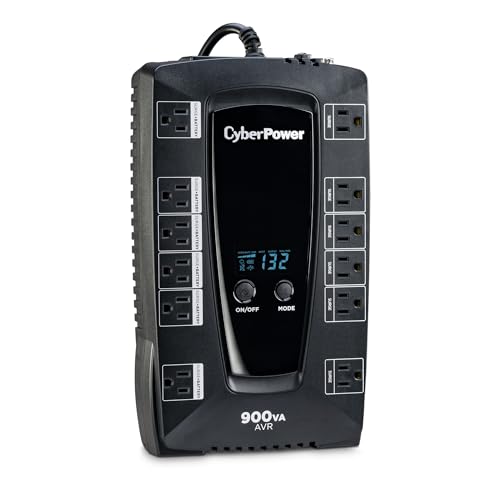
CyberPower AVRG900LCD Intelligent LCD UPS Battery Backup

Staples TECH 650VA UPS Battery Backup, 8 Outlets

CyberPower LE850G UPS Battery Backup

GOLDENMATE 1000VA/800W Lithium UPS Battery Backup, White

CyberPower ST425 Standby UPS Battery Backup

CyberPower CP1500PFCLCD PFC Sinewave UPS Battery Backup
More Details On Our Top Picks
The lithium cell design is the headline here, and that matters for anyone who wants a backup that feels less disposable than the usual lead-acid unit. You get a 1000VA, 600W class UPS, which suits a desktop, monitor, and network gear in a normal home office.
The trade-off is straightforward: lithium units usually ask more up front, even when they make more sense over time. For a workstation that stays plugged in year after year, this GoldenMate model has the cleaner long-range logic, and the white shell keeps it visually quiet beside a desk.
Strong Points
- Lithium chemistry supports a longer service cycle than common sealed-battery designs.
- 600W capacity fits a typical work-from-home desktop setup.
- The white finish blends into lighter office furniture more easily.
- Fewer replacement cycles can mean less maintenance over time.
Things To Consider
- The higher-capacity lithium build makes sense most clearly for frequent use.
- Size and outlet count are not listed here, so placement planning stays conservative.
Who It Suits Best
Remote workers and home-office setups that stay powered for long stretches get the most from this model.
A Better Fit Elsewhere
CyberPower CP1500PFCLCD makes more sense for workstation users who want sine wave output and a larger capacity class.
This standby-style UPS keeps the design simple, which is exactly what many desk setups need. It fits naturally beside a modem, tower, and display without demanding much attention from you.
The bigger appeal is the protection angle, since a standby unit can cover routine outages and common power spikes without dragging the setup into overcomplication. The honest read is that this suits everyday office use more than a dense equipment rack.
Upsides
- Standby topology keeps the design straightforward.
- Works well for a basic home office or study desk.
- Good match for light networking gear and a single computer.
Minor Gripes
- Standby units are less refined than line-interactive models for unstable mains power.
- You may outgrow it faster in a multi-device office.
Made For
Home-office users who want simple backup for one computer and a few essentials will feel well served here.
Another Choice May Suit
CyberPower AVRG900LCD is a better match for desks that need voltage correction and clearer status feedback.
Automatic voltage regulation, or AVR, is the detail that gives this model a real edge in rooms with flickering power. Instead of bouncing straight to battery for every small dip, it corrects minor swings first, which is kinder to the battery and easier on you.
The LCD adds a useful status readout, so a workstation user can see what the UPS is doing without guessing. Compared with the simpler ST900U, this one feels better suited to a main desktop or office corner where power quality is uneven.
Best Bits
- AVR helps manage minor voltage swings without constant battery use.
- LCD feedback makes status checks faster.
- Compact enough for a desk or shelf.
- Well matched to desktops and networking gear.
Points To Note
- Simulated sine wave output is not the same as a true sine wave design.
- The screen adds usefulness, but also one more component to keep clean.
The Right Fit
Desk users who want visible power-status feedback and a little extra voltage control should find this one compelling.
Swap It Out When
CyberPower CP1500PFCLCD is the stronger fit for active PFC systems that call for a sine wave output.
Eight outlets change the conversation here, because you can split battery-backed and surge-only devices without hunting for extra strips. That layout matters in a cluttered home workspace where a computer, modem, and peripherals all share one corner.
The 650VA, 360W class is modest, so this is a sensible fit for essentials rather than a power-hungry rig. It feels like a practical desk anchor, nothing flashy, and that restraint is part of its appeal.
Highlights
- Eight outlets give you more plug flexibility than many compact units.
- Battery-backed and surge-only separation helps organize connected gear.
- The small footprint suits cramped under-desk spaces.
- 650VA, 360W output fits basic office loads.
Small Caveats
- The lower output ceiling narrows the setup it can support well.
- Power users with larger towers will want more headroom.
Best Suited To
Students, home-office users, and light desktop setups will get the most from this compact configuration.
Look Elsewhere When
GoldenMate 1000VA/800W Lithium UPS Battery Backup is the better fit for a busier desk that needs more capacity and a longer-life battery approach.
The LE850G sits in the middle of the pack in a way that makes sense for mixed home and small-office setups. Its 850VA, 460W rating gives you more breathing room than the 650VA class without jumping all the way to the larger tower-style units.
That extra margin matters most when your desk carries a computer plus networking gear or a modest media stack. Compared with the ST425, it offers a more forgiving ceiling, though it still stops short of the heavier sine wave units.
Positives
- 850VA, 460W output leaves more room for a fuller desk setup.
- Line-interactive behavior fits homes with uneven power.
- Good middle-ground choice between compact and high-capacity units.
- Works well for small office workstations and media gear.
Room For Improvement
- It is still a step behind the larger CP1500PFCLCD for demanding workstations.
- The best fit depends on how much connected gear you keep on one circuit.
Whose Shelf It Belongs On
Small-office users who want a practical middle ground for several essentials will appreciate this shape of UPS.
Where A Sibling Pick Shines
CyberPower AVRG900LCD is the smarter move for anyone who values an LCD readout and automatic voltage regulation more than simple output headroom.
Compared with the 600W GoldenMate model, this version raises the output ceiling to 800W, which gives heavier desktop gear more comfortable room. That extra headroom matters in a setup with a tower, display, and active accessories all drawing from the same backup.
The lithium battery angle stays the same story, so you still get the appeal of a longer-lived chemistry rather than a short-cycle replacement model. One thing worth considering is the balance between power and size, because the stronger output only helps when the rest of the desk actually needs it.
Reasons To Buy
- 800W output gives you more margin for a fuller computer setup.
- Lithium construction points toward longer service intervals.
- Well suited to heavier daily desk use.
- White finish keeps the tower look clean and neutral.
Areas To Watch
- The stronger model only pays off when your gear really needs the extra capacity.
- As with the 600W version, the exact outlet layout is not spelled out here.
Perfect Match For
Power users with a fuller desktop setup and a preference for lithium battery backup should focus here first.
Skip It When
Staples TECH 650VA UPS Battery Backup is the simpler choice for lighter desks that do not need the extra output.
The ST425 is the smallest, plainest option in this group, and that is exactly why some desks should start here. It suits a modem, small PC, or a very light work-from-home corner where space matters as much as backup time.
Its standby design keeps the unit easy to place and easy to understand. The limitation shows up fast in larger setups, so this is a tidy fit for modest needs rather than a main machine with several accessories hanging off it.
Best Bits
- Very compact for tight spaces.
- Simple standby design keeps setup easy.
- Good match for small networking equipment and light desktops.
Honest Caveats
- Lower capacity leaves little room for expansion.
- Heavier towers or dual-monitor desks should step up to a larger unit.
Who Should Grab It
Minimalist desk setups, modem corners, and secondary computer stations fit this model well.
Reach For A Different Pick When
CyberPower LE850G makes more sense for a fuller workstation that needs extra output margin.
Active PFC power supplies need cleaner output than many basic standby units can provide, and that is where this model earns its place. The sine wave output and 1500VA class make it a strong fit for a serious desktop, workstation, or mixed media setup.
The color LCD also helps the unit feel more transparent in daily use, especially in a room with several connected devices. Compared with the AVRG900LCD, this one is the more serious upgrade path for systems that need better waveform compatibility rather than just voltage correction.
Standout Traits
- Sine wave output suits active PFC power supplies.
- 1500VA class gives broader headroom than the smaller units here.
- Color LCD makes monitoring easier at a glance.
- Well matched to workstations and higher-demand computer setups.
Points To Note
- The larger tower shape asks for more floor or shelf space.
- The extra capacity is wasted on very light setups.
Built With In Mind
Workstation users and anyone running active PFC hardware will get the clearest benefit from this UPS.
Where A Sibling Pick Shines
CyberPower ST900U is the simpler, smaller option for routine home-office protection without the bigger power envelope.
What Matters Most Before Choosing Battery Backups For Computer
Mistakes Worth Dodging
Many desks get underpowered UPS units, then ask them to support towers, monitors, and routers all at once. Match the VA and watt rating to the gear you actually keep on battery backup, not just the cheapest-looking option.
The Upgrade Payoff
Higher-tier models usually cost more because they add waveform quality, voltage regulation, larger batteries, or lithium chemistry. Those extras matter most for workstations, unstable power, and setups you keep running day after day.
A Quick Reality Check
Common Shopping Slip Ups
Shoppers often confuse surge protection with battery backup, and that leads to the wrong expectations. A UPS with battery outlets serves a different job than a plain strip.
What The Higher Tier Buys
More money usually buys longer runtime, better output compatibility, and clearer status info. In a home office with sensitive hardware, that upgrade can be worth it.
Frequently Asked Questions
What size UPS works for a desktop computer?
A basic desktop and monitor can fit a smaller 650VA to 900VA class unit. Add more capacity for a tower with several peripherals or a workstation that stays active for longer shutdown windows.
Do you need sine wave output for every computer?
No, many standard desktops run fine on standby or simulated sine wave designs. Active PFC power supplies are the main reason to step up to a sine wave model.
Does AVR matter for a home office?
AVR helps in places where the power dips or rises a little without fully failing. It reduces how often the unit has to switch to battery power.
How many outlets should you look for?
Count the computer, monitor, modem, and anything else that truly needs backup. Extra outlets help, but battery-backed ones matter more than surge-only ones for outage protection.
Is lithium worth the higher entry cost?
Lithium makes the most sense for setups that stay in use for years and cycle often. A light, occasional-use desk can still do fine with a conventional battery design.
