


Anyone recording podcasts, mixing tracks, or practicing guitar at home knows the frustration: your headphones sound muddy through a weak source, or your amp can’t drive more than one pair at a time. The right headset-and-amp pairing fixes both problems without draining your budget. This roundup covers ten wired options built for real desk and studio use, from a four-channel amplifier to closed-back monitors that reveal every detail of your mix.
The Leading Options At A Glance
PHILIPS Over Ear Wired Stereo Headphones (Silver)
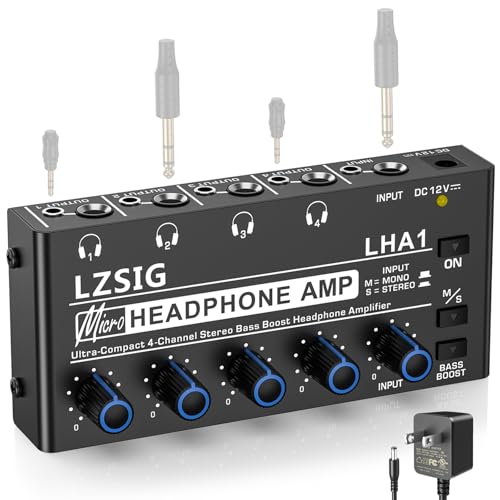
LZSIG Headphone Amplifier with Bass Boost, 4 Channel

JOYO JMH-02 Studio Monitor Headphones
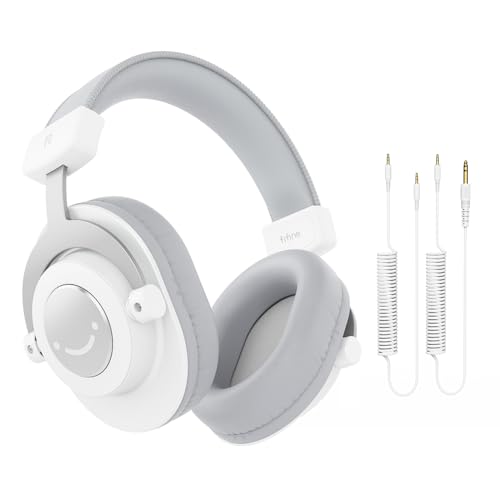
FIFINE HD8W Studio Monitor Headphone

MAONO MH700 Wired Studio Headphone

OneOdio A71D Wired Over-Ear Headphones

OneOdio Wired DJ Hi-Res Over-Ear Headphones (Black)

OneOdio Wired DJ Hi-Res Over-Ear Headphones (Pink)

syndesmos Over Ear Studio Monitor & Mixing DJ Headphones
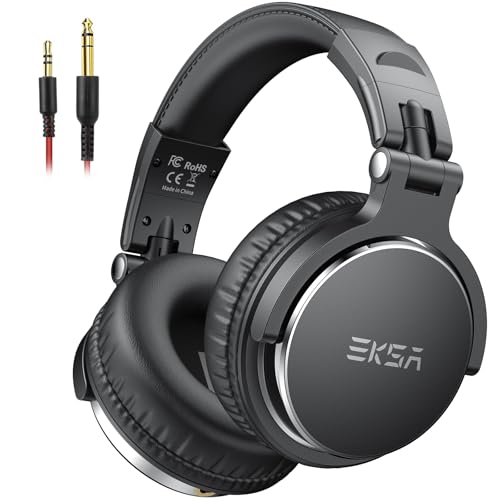
EKSA P100 Wired Over Ear Headphones
Meet The Standout Selections
This is the entry point most people should start with. The fully adjustable headband and ear shells let you dial in a fit that stays put during long podcast edits, and the whole thing stays light enough that you forget you’re wearing it.
The two-meter cable gives you room to lean back from a computer or keyboard without yanking the jack out. An included adapter converts the standard 3.5 mm plug to 6.3 mm, so the same pair works on guitar amps and audio interfaces.
Where It Delivers
- Adjustable headband and shells mean fewer pressure points over multi-hour sessions.
- The bundled 6.3 mm adapter saves you a separate purchase for amp connections.
- A two-meter cable reaches across a typical desk rig comfortably.
- 40 mm neodymium drivers deliver solid bass without harsh treble.
Small Caveats
- Plastic construction feels less premium than pricier picks; handle the headband gently when adjusting.
- Open-ish fit lets in room noise, which matters in shared spaces.
Who Should Grab It
First-time podcasters and students building a starter recording setup on a tight budget.
Another Choice May Suit
The JOYO JMH-02 suits mixing engineers who need flatter, more accurate response than this bass-leaning pair provides.
Most entries here are headphones; this one is the box that feeds them. A headphone amplifier boosts the signal from your interface or mixer so quieter sources can properly drive demanding headphones, and this LZSIG unit splits one input to four outputs.
Each channel gets its own level control, so a drummer and a vocalist can sit at different volumes during a session. It runs on DC 12V power and accepts both 3.5 mm and 6.35 mm plugs directly, no converter dongles needed. Owners commonly report clean output with high-impedance cans, which is exactly what an amp is for.
Practical Pluses
- Four independent outputs let a small band or family monitor simultaneously.
- Per-channel volume dials end arguments about who hears what too loud.
- Dual jack compatibility covers nearly every wired headset you own.
- Ultra-low-noise circuitry keeps hiss out of quiet passages.
- Bass boost adds weight to thin-sounding consumer headphones.
Points To Note
- You’ll need to supply a 12V power source and keep cables tidy around the unit.
- Larger six- and eight-channel versions exist if four outputs fill up fast.
Feature Rundown
Made For
Band rehearsal rooms, teaching studios, and households where two or more people listen at once.
Swap It Out When
Solo listeners who just need one great pair of cans are better served by the MAONO MH700 below.
Where the PHILIPS leans fun, the JOYO plays it straight. Its 50 mm neodymium drivers aim for a flat frequency response across 20 Hz to 20 kHz, meaning no artificial bass lift coloring what you hear. That honesty matters enormously when you’re balancing a mix.
Passive noise isolation, achieved purely by the sealed over-ear cups rather than electronics, helps you focus during tracking. Players using guitar amps report hearing their tone accurately rather than a flattering version of it, which is the whole point of a monitor. Both 3.5 mm and 6.35 mm connections come in the box.
Bright Spots
- Flat tuning reveals mix problems early instead of hiding them behind boosted lows.
- Large 50 mm drivers maintain detail at low listening levels.
- Passive isolation keeps bleed out of vocal takes.
- Dual plug support connects straight to interfaces and amps.
Things That May Matter
- Flat sound can feel dry for casual music enjoyment compared with the OneOdio’s bass emphasis.
- Sealed cups trap heat during summer sessions; short breaks help.
Core Details
Right Fit For
Home engineers mixing and mastering who need truthful playback above all else.
Look Elsewhere When
Casual listeners wanting punchy bass for everyday playlists will enjoy the OneOdio A71D far more.
Voice work means hours in the cans, and comfort becomes the deciding spec. The FIFINE HD8W wraps its 50 mm drivers in soft leatherette ear cushions aimed squarely at fatigue-free wear, wrapped in a clean white finish that looks sharp on camera.
Sound-wise, it targets rich low end and clear, bright treble so you catch breath noises, plosives, and sibilance while recording vocals. In a stream of black studio headphones, the white shell also makes it easy to spot on a cluttered desk. For narrators and voiceover artists logging long sessions, that combination earns its place here.
What Makes Sense
- Soft leatherette pads reduce ear fatigue across marathon narration sessions.
- Large drivers expose vocal details like breaths and mouth clicks.
- The white finish reads well on video calls and streams.
Less Ideal Details
- Light-colored earcups show makeup, dust, and grime faster than dark pairs; wipe them down regularly.
- Leatherette surfaces can warm up after several hours in a hot room.
Who Will Love This
Voiceover artists, audiobook narrators, and on-camera creators who prioritize all-day wearing comfort.
Reach For A Different Pick When
Mixing engineers needing flat accuracy should step up to the JOYO JMH-02 instead.
MAONO built its reputation on podcast gear, and the MH700 continues that thread. This closed-back over-ear model uses 50 mm dynamic drivers spanning 20 Hz to 20 kHz, tuned for balanced highs, mids, and lows with minimal distortion at typical monitoring levels.
The closed-back shell matters most for podcasters: it keeps your mic from picking up headphone bleed while still letting you hear yourself clearly. A 3.5 mm to 6.35 mm connection covers computers, interfaces, keyboards, and guitar amps alike. Compared with the FIFINE HD8W’s comfort-first angle, this one balances comfort with a slightly more analytical presentation, making it a strong do-everything creator pick.
Everyday Wins
- Closed-back design reduces sound leaking into sensitive microphones.
- Wide frequency range captures low-end warmth and airy highs in spoken content.
- Dual jack sizes work across your entire desktop setup without extra purchases.
- Low distortion keeps long listening sessions from turning fatiguing.
- From a brand known for podcasting gear, integration with mic setups tends to be smooth.
What To Weigh
- Sealed cups limit ambient awareness; pause before responding to someone in the room.
- Cable management matters since there’s no wireless fallback.
Product Snapshot
Who It Suits Best
Podcasters and streamers recording voice in untreated rooms who need isolation plus accurate self-monitoring.
Consider Something Else When
DJs who need swiveling single-ear cueing will prefer the OneOdio A71D’s rotating cups.
Gigging DJs live out of a bag, and the A71D is built for that life. The foldable hinge collapses the frame flat, while 90-degree swiveling ear cups flip back for single-ear cueing, the classic move of checking a next track against the one currently playing.
Its 40 mm drivers push deep bass with clear mids and crisp highs, a tuning that suits booth work better than critical mixing. Ultra-soft padded muffs and an adjustable band keep things comfortable through a long set. Unlike the bulkier MAONO MH700, this folds down small enough to tuck beside a controller, which alone justifies its spot for mobile users.
Noteworthy Benefits
- Swiveling cups enable one-ear monitoring without taking the phones off.
- Foldable design slips into gig bags and backpacks easily.
- Bass-forward tuning suits club and party environments.
A Few Limitations
- Smaller 40 mm drivers trade some low-end depth versus 50 mm rivals like the syndesmos below.
- Folding hinges add moving parts worth handling with care.
Built With In Mind
Mobile DJs and event performers who pack light and need quick cueing between decks.
Not Your Match When
Studio engineers chasing reference-flat response will get closer results from the JOYO JMH-02.
This is the pair many people end up keeping on their desk permanently. Big 50 mm drivers paired with neodymium magnets deliver powerful bass, clear vocals, and crisp highs, giving it enough range to cover keyboard practice in the morning and Netflix at night.
The padded cushions seal reasonably well against outside noise, and the adjustable stretchable headband accommodates different head sizes without pinching. Compared with the A71D, this model favors bigger drivers and fuller low end over portability, so it’s the better stay-put choice. Owners commonly praise how well it holds up to daily plugging and unplugging.
Real Benefits
- Neodymium-magnet drivers give music real punch without harshness.
- Stretchable headband fits a wide range of users comfortably.
- Padded cushions double as light noise isolation in busy rooms.
- Handles practice, production, and leisure listening equally well.
Details To Watch
- Bass emphasis can mask subtle mix flaws; verify critical work on flatter cans.
- Non-folding frame takes up more bag space than the A71D.
Key Specs
The Right Fit
Keyboard learners, guitarists, and general listeners wanting one dependable pair for everything.
Where A Sibling Pick Shines
Performers who travel need the folding A71D instead of this fixed-frame model.
Same engineering as the black model reviewed above, dressed in a pink finish that stands out in a sea of matte black gear. Underneath, you get the same large 50 millimeter drivers with neodymium magnets pushing dynamic bass suited to DJing, mixing, and everyday listening.
Soft padded cushions provide the same comfort and isolation story, and the adjustable stretchable headband keeps the fit secure. For content creators whose headphones appear on camera, the colorway doubles as part of the set dressing. The honest read: choose this over item 7 purely on aesthetics, since the acoustic performance matches.
Advantages To Know
- Distinctive colorway personalizes a streaming or studio setup.
- Identical driver hardware delivers the same bass-rich signature as the black version.
- Sealing cushions help keep takes free of headphone bleed.
Practical Considerations
- Lighter finishes may show scuffs over time; store them in a case between sessions.
- Color options sometimes cycle availability, so check stock before committing.
Perfect Match For
Streamers, students, and style-conscious listeners who want performance and personality together.
Another Choice May Suit
Listeners preferring understated gear should stick with the black OneOdio or the EKSA P100.
syndesmos aims down the middle of this list: big 50 mm dynamic drivers covering roughly 20 Hz to 20 kHz, tuned for punchy bass, balanced mids, and precise treble rather than leaning hard toward either the JOYO’s flatness or the OneOdio’s boom.
That middle path suits people who record and track vocals but also just enjoy music afterward. Accurate vocal self-monitoring comes through clearly during sessions, and the lightweight build keeps longer wears manageable. Depending on your head size, the fit runs snug at first and relaxes after some break-in, which is common in this price bracket. As a value proposition bridging monitoring and casual listening, it earns a spot here.
The Upside
- Wide-range drivers handle both tracking sessions and casual listening credibly.
- Lightweight frame reduces neck strain over long editing blocks.
- Clear vocal reproduction aids self-monitoring while recording.
Room For Improvement
- Initial clamp force may feel tight; gentle stretching of the band helps it settle.
- Brand recognition is lower, so long-term parts and support are less proven.
Quick Facts
Whose Shelf It Belongs On
Bedroom producers who split time between mixing projects and ordinary music enjoyment.
Look Elsewhere When
Strictly critical mixing demands the flatter JOYO JMH-02 response.
Rounding out the list is the simplest recommendation to make. The EKSA P100 uses 50 mm drivers with neodymium magnets, delivering the same balanced stereo recipe of powerful bass, clear vocals, and crisp highs found on pricier rivals, minus any confusing extras.
Plug it in and it works: no software, no pairing, no settings menu. Soft padded cushions and an adjustable headband echo the comfort approach of the OneOdio models earlier in this list. For a first pair of studio-style headphones, that lack of friction counts for a lot, and the familiar tuning means nothing about the sound will surprise you.
Notable Upsides
- True plug-and-play operation suits anyone new to wired audio.
- Neodymium-equipped 50 mm drivers produce confident, balanced sound.
- Sealing cushions add passive isolation in noisy households.
- Adjustable headband accommodates growing teens and adults alike.
Trade Offs
- No folding hinges or detachable cable, so storage requires a bit more care.
- Tuning favors enjoyment over strict monitoring accuracy.
Best Suited To
Students and first-time home recordists who want capable sound with zero learning curve.
Where Another Pick Suits Better
Working podcasters needing tighter isolation should consider the MAONO MH700 instead.
What Matters Most Before Choosing Headsets With Amp
Match The Driver Size To Your Work
Driver diameter, measured in millimeters, generally signals how much air a headphone can move. The 40 mm units on the PHILIPS and OneOdio A71D suit casual listening and portable DJing, while the 50 mm drivers on the JOYO, MAONO, and syndesmos deliver deeper low-end authority for mixing. Bigger isn’t automatically better; it’s a matter of whether you need physical impact or analytical clarity.
Decide Between Flat And Fun Tuning
A flat frequency response reproduces every frequency evenly, which reveals flaws in a mix but sounds less exciting for playlists. Bass-forward headphones feel livelier yet can mask problems. Recording engineers should lean flat; everyone else can follow their ears.
Check Jack Compatibility Before Checkout
Guitar amps, audio interfaces, and keyboards often use a larger 6.35 mm jack, while computers use 3.5 mm. Models shipping with both connectors save you an adapter purchase, and the LZSIG amplifier accepts both natively across its channels.
Think About Isolation Style
Closed-back cups passively block room noise and stop sound bleeding into microphones, ideal for podcasting and shared spaces. More open designs breathe better but leak sound. Your room and microphone decide this one.
Key Considerations Across These Picks
Traps First Timers Fall Into
The most common slip is buying a bass-heavy pair for mixing work, then wondering why recordings translate poorly to other speakers. The second is ignoring impedance: high-resistance headphones driven straight from a phone sound quiet and thin, which is precisely the gap an amplifier fills. Measure your desk space too, since non-folding frames eat drawer room.
Where The Extra Money Goes
Higher-tier models spend budget on larger drivers, denser ear cushion materials, and cleaner internal amplification. Those upgrades pay off for anyone logging daily hours in the chair. Weekend hobbyists gain far less, so match spending to session length rather than spec sheets.
Frequently Asked Questions
Do I need an amplifier for regular headphones?
Most consumer headphones run fine from a phone or laptop. You benefit from an amp once impedance climbs or you want multiple listeners sharing one source.
Can one amplifier feed several headphones at once?
Yes, multi-output units like the four-channel LZSIG split a single input to independent volume-controlled jacks. Each listener adjusts their own level.
Are wired headphones better than wireless for recording?
Wired connections avoid latency and battery dropouts during takes. That reliability explains why studios remain almost entirely wired.
What does a flat frequency response actually mean?
It means the headphone reproduces bass, mids, and treble at equal strength without boosting any range. Mixes made on flat headphones tend to sound correct everywhere.
How long do budget studio headphones typically last?
With reasonable care, cushioned wired models commonly serve several years. Ear pads wear first and are usually replaceable, extending usable life considerably.
Closing Remarks
Every pick here solves the same core problem from a different angle: hearing your work honestly, comfortably, and without fighting your gear. Start by naming your main task, whether that’s podcasting, mixing, or practice, then let the driver size and tuning guidance above narrow the field. The right pair is the one you forget you’re wearing while it quietly does its job.
