


Good monitoring doesn’t require a big spend. Whether you’re tracking vocals in a bedroom closet, mixing a podcast at the kitchen table, or practicing guitar through an amp late at night, a wired pair of budget studio headphones will show you your sound honestly without draining your gear fund. This list covers ten affordable options, from classic pro standards to flexible wireless hybrids and even a bulk classroom set.
The Picks In Brief
PHILIPS Over Ear Wired Stereo Headphones with 6.3mm Adapter

JOYO JMH-02 Studio Monitor Headphones 50mm Drivers

VkingMoR USB C Over Ear Headphones for Studio & DJ

Gemini DJX-500 Wired Closed-Back Studio Headphones

Sony MDR7506 Professional Large Diaphragm Headphone

syndesmos Wired Over Ear Headphones for Studio Monitor & DJ

New Bee Wired Over Ear Studio Headphones 50mm Drivers
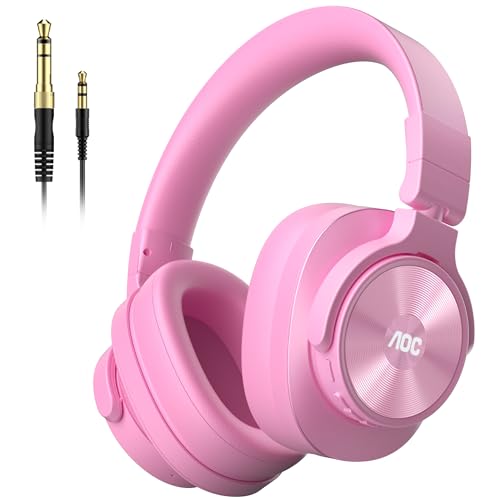
AOC Bluetooth Wireless Studio Headphones 72H Playtime (Pink)

P PUPGSIS Wired DJ Over Ear Studio Headphones

Konohan Classroom Bulk Headphones Set (30 Pack)
More On The Choices That Made The List
This is the entry point most first-time podcasters should start with. The fully adjustable headband and ear shells let you dial in a fit that stays comfortable through a long editing session, and the whole thing stays light enough that you forget you’re wearing it.
The two-meter cable gives you room to lean back from a desk or move around a keyboard, and the included 6.3mm adapter means it plugs straight into audio interfaces, amps, and mixers without extra shopping.
Notable Gains
- Fully adjustable headband and ear cups help you find a secure fit for extended wear
- Two-meter cord frees you to shift positions while recording or practicing
- Both a standard 3.5mm plug and a 6.3mm adapter cover computers, interfaces, and guitar amps
- Over-ear design sits around the ear rather than pressing on it, which matters during multi-hour sessions
Things To Consider
- The long fixed cable needs coiling and storing carefully, since tangles and door snags are the usual way budget cables fail
- Sound tuning leans pleasant rather than strictly neutral, so critical mixing decisions deserve a flatter alternative like the JOYO JMH-02
Who It Suits Best
Absolute beginners setting up a first podcast or keyboard practice corner who want dependable wired sound at the lowest sensible cost.
Another Choice May Suit
Mix engineers chasing flat accuracy should reach for the JOYO JMH-02 instead, whose larger drivers are tuned specifically for honest monitoring.
Flat response is the whole point of a monitor headphone: what you hear matches what was actually recorded, with no flattering bass bump hiding problems. The JMH-02 takes that job seriously with large 50mm neodymium drivers covering the full audible range, so treble detail, midrange, and low end arrive without artificial hype.
Where the PHILIPS above favors easy listening, this one favors truth, and passive noise isolation helps you hear those details in a room that isn’t acoustically treated. Guitarists tracking through an amp and podcast editors cleaning dialogue both get a clearer picture here.
The Case For It
- 50mm neodymium drivers deliver a flat, un-hyped balance suited to judging mixes accurately
- Passive isolation blocks room noise so quiet mix details stay audible untreated spaces
- Dual 3.5mm and 6.35mm connectivity plugs into interfaces, mixers, and amps directly
- Tight, restrained bass keeps kick drums and basslines honest during beatmatching or leveling
Minor Gripes
- A flat tune can feel dry compared to consumer headphones, so casual music enjoyment may disappoint some listeners
- Earpad cushions collect skin oils over months of studio use and benefit from occasional gentle cleaning to stay comfortable
Feature Rundown
Right Fit For
Bedroom producers and podcast editors who need trustworthy monitoring for mixing decisions on a tight budget.
Look Elsewhere When
Listeners wanting fun, bass-forward playback for commuting will prefer the AOC wireless model later in this list.
Single-ear monitoring is the trick every working DJ relies on: one cup on the headphone channel, one ear open to the room. That’s where these cups earn their keep, swiveling 90 degrees and flipping a full 180 degrees so you can switch between two-ear and one-ear listening mid-set.
The 50mm drivers push dynamic bass with clear vocals, which suits loud environments better than a flat tune would. Compared to the JOYO’s purist approach, this is a working tool built around cueing convenience, and USB C connectivity makes it a natural partner for modern laptops and controllers.
The Helpful Details
- Cups rotate 90 degrees and flip 180 degrees for instant monaural cueing
- Large 50mm drivers deliver punchy bass and crisp vocal presence in noisy rooms
- USB C connection suits current laptops and DJ controllers without dongles
- Over-ear padding keeps long booth sessions manageable
Small Caveats
- USB C connectivity limits direct use with older interfaces and guitar amps that expect analog jacks
- The swivel mechanism is a moving part, so treating the cups gently during packing helps them last
- Bass emphasis trades away some of the neutrality mix engineers want
Made For
Mobile DJs and livestreamers who cue on modern USB-equipped gear and need one-ear monitoring constantly.
Swap It Out When
Guitarists plugging straight into an amp should pick the New Bee model instead, which includes both 3.5mm and 6.35mm analog plugs.
Driver size is the headline here. At 57mm, these are the largest diaphragms on the list, wider than the 50mm units in the JOYO and VkingMoR, and they bring an ultra-wide frequency response with genuinely punchy bass and crisp highs. In a loud club booth or a shared apartment, that extra output headroom counts.
Closed-back construction seals each cup so outside sound stays out and your music stays in, which is what lets you cue quietly over a thumping PA. Gemini has built DJ gear for decades, and the DJX-500 reflects that stage-first mindset.
Good Reasons To Consider
- 57mm drivers produce deep, detailed sound with strong output for loud settings
- Closed-back isolation keeps club and booth noise from bleeding into your monitoring
- Wide frequency response handles production, podcasting, and recording duties alike
- Wired connection means no latency between what you play and what you hear
Points To Note
- Sealed cups trap heat, and owners commonly report warm ears during marathon sessions
- The bass-forward character is less revealing than the Sony MDR7506 for fine mixing judgments
Quick Facts
Who Will Love This
DJs working live rooms and loud stages who need isolation and volume headroom more than clinical neutrality.
Not Your Match When
Critical mixing engineers should choose the Sony MDR7506, whose reference-grade tuning reveals subtle level imbalances these don’t.
Walk into almost any professional control room and you’ll find this exact model on the desk, often covered in studio grime from years of daily use. The MDR7506 pairs 40mm drivers with neodymium magnets for detailed, powerful sound, and its closed-ear design reduces outside noise while staying comfortable through long sessions.
The trade-offs are honest ones: the nearly 10-foot cord terminates in a gold-plated plug and does not detach, so a cable failure means service rather than a quick swap. Even so, folding hinges and the included storage pouch make it travel-ready, and the 1/4-inch adapter covers pro inputs.
Reasons It Performs
- Neodymium-magnet 40mm drivers reveal mix detail that cheaper tunings smooth over
- Closed-ear design cuts external noise effectively in untreated rooms
- Nearly 10-foot cord reaches across a desk setup or into a vocal booth
- Folds compactly into the supplied pouch for gig bags and travel
- Gold-plated plug resists corrosion for a reliable connection over years
Honest Caveats
- The non-detachable cable is the known weak point; careful coiling extends its life considerably
- Ear pads wear down with heavy use and are a commonly replaced consumable
Key Product Details
Whose Shelf It Belongs On
Serious home recordists and working engineers who want a proven reference standard and will treat the cable with respect.
Reach For A Different Pick When
Shoppers wanting maximum driver size for loud DJ booths will find the Gemini DJX-500’s 57mm drivers a better match.
Here’s the value play of the list: massive 50mm dynamic drivers and a wide 20Hz to 20kHz range at a price that undercuts nearly everything else here. Frequency response simply means the span of bass and treble the headphones can reproduce, and this one spans the full audible band.
In practice that translates to punchy lows, balanced mids, and precise treble, enough accuracy for hearing your own voice clearly while tracking vocals. Compared to the P PUPGSIS unit coming up, the tuning leans slightly more energetic, which doubles nicely as everyday listening after sessions end.
A Few Highlights
- 50mm drivers cover the full 20Hz to 20kHz range with confident bass weight
- Accurate vocal self-monitoring helps singers stay on pitch while recording
- Over-ear fit suits both studio monitoring and regular music playback
- Lightweight build keeps pressure off the neck during long edits
Softer Spots
- An energetic low end is less neutral than the JOYO JMH-02 for final mixing calls
- Padding and headband are budget-grade materials, so gentle handling protects longevity
The Right Fit
Home creators who want one pair for recording, mixing drafts, and everyday listening without splitting the budget.
Consider Something Else When
Purists who prioritize flat accuracy above all else will be happier with the JOYO JMH-02’s monitoring-focused tuning.
Some people wear many hats: piano student by evening, podcaster on weekends, guitarist through a practice amp at night. The New Bee is built for exactly that spread, shipping with both 6.35mm and 3.5mm jacks so it moves between keyboards, computers, mixers, and amps without adapters.
The 50mm drivers give dynamic bass and clear vocals, and the 90-degree swiveling cups handle single-ear monitoring much like the VkingMoR above, though with traditional analog connections instead of USB C. An adjustable headband keeps the fit friendly for smaller heads too.
What Earns Its Place
- Dual 6.35mm and 3.5mm plugs cover amps, keyboards, mixers, and computers natively
- 90-degree swiveling cups make one-ear monitoring simple during recording
- 50mm drivers deliver immersive stereo with crisp vocal presence
- Adjustable headband accommodates different head sizes comfortably
Worth Noting
- No passive noise isolation is specified, so loud rooms may bleed into your monitoring
- Generalist tuning means specialists may still prefer the flatter JOYO JMH-02
Essential Details
Best Suited To
Multi-instrument hobbyists and beginner podcasters who want one affordable pair that works with every device they own.
Where A Sibling Pick Shines
DJs locked into USB C controllers and laptops will find the VkingMoR’s digital connection more convenient day to day.
Every other pick here is wired-only, and that’s deliberate: wires mean zero delay between your voice and your ears. The AOC gets the best of both worlds, offering Bluetooth for commutes and everyday playback alongside a wired 3.5mm/6.35mm input for zero-latency monitoring when you record, mix, or practice through a guitar amp.
Battery life stretches to a claimed 72 hours of wireless playback, enough for weeks of typical use between charges, and a built-in mic handles calls. Hi-Res support and a deep-bass tilt make it the most fun-sounding pick here, though the pink finish won’t suit every desk.
The Value In It
- Wired jack delivers stable, zero-latency monitoring for recording and cueing
- Bluetooth mode with roughly 72-hour playtime covers long trips between charges
- Built-in microphone handles calls and voice notes without swapping devices
- Hi-Res support with deep bass, clear mids, and crisp highs suits daily listening
Practical Considerations
- Wireless mode introduces latency, so serious monitoring still requires the cable
- Charging adds a maintenance step none of the wired picks share
- The bold pink colorway limits how discreetly it fits professional settings
Who Should Grab It
Students and commuters who want wireless convenience for travel and a proper wired path into their home recording setup.
Skip It When
Studio-only users who never leave the desk get better value from the syndesmos, which spends nothing on batteries or Bluetooth.
This one keeps things refreshingly simple: large 50mm drivers, a stated 20Hz to 20kHz range, and a wired connection, aimed squarely at DJs, mixers, and recording artists who don’t want extras inflating the price. Dynamic bass, balanced mids, and precise treble give it enough honesty for rough-draft mixing and enough energy for enjoying music between sessions.
Availability has been inconsistent at times, which is worth checking before committing. Where the syndesmos leans livelier, this P PUPGSIS aims a touch closer to neutral, making it a quiet contender for anyone who found the flashier options unnecessary.
Everyday Advantages
- 50mm drivers reproduce the full 20Hz to 20kHz spectrum with clear vocals
- Wired design removes latency concerns entirely for recording work
- Balanced signature serves both monitoring tasks and casual listening
Details To Watch
- Listings have been intermittently unavailable, so confirm stock status before planning around it
- Spec sheet is thin on extras like detachable cables or carrying cases
Who It Suits Best
Minimalist home-studio owners who want straightforward wired performance and nothing they didn’t ask for.
A Better Fit Elsewhere
Anyone needing guaranteed availability and richer documentation should lean on the Sony MDR7506, a model with decades of proven supply.
Not every purchase is about critical listening. Teachers equipping a computer lab, language teachers running listening exercises, or community centers stocking a media room need thirty working pairs more than they need audiophile nuance, and that’s precisely what this Konohan set delivers.
Each of the thirty black units arrives individually wrapped and sealed, which keeps things hygienic when headphones pass between students and protects them from scuffs in storage. ABS plastic shells with soft rubber ear pads keep them light on young heads, though nobody will mistake them for the Sony MDR7506 on sound quality, and that’s fine for the job.
Useful Highlights
- Thirty individually sealed units simplify distribution and hygiene in shared spaces
- ABS shells and soft rubber pads survive classroom handling reasonably well
- Lightweight on-ear design stays comfortable for children and short sessions
- Per-unit cost drops dramatically compared to buying single pairs
Factors To Consider
- Sound quality is functional rather than accurate, so skip these for any mixing or recording task
- On-ear pads contact the ear directly, which some find fatiguing over long stretches
The Numbers That Matter
Built With In Mind
Teachers, tutors, and program coordinators outfitting groups of students with reliable wired headphones on a per-seat budget.
Where Another Pick Suits Better
Individual listeners wanting genuine studio fidelity should pass on bulk sets entirely and consider the PHILIPS wired pair instead.
What Matters Most Before Choosing Cheap Studio Headphones
Tuning Beats Brand Names
For monitoring work, a flat response matters more than a famous logo. Flat tuning means the headphones add no flavor, so a muddy vocal or a boomy bassline shows up immediately. Consumer-tuned pairs hide those flaws behind boosted bass, which feels great but misleads your mix decisions.
Match The Connection To Your Gear
Count your actual devices before ordering. Audio interfaces and guitar amps want a 6.35mm plug, laptops and phones want 3.5mm, and newer controllers increasingly use USB C. Several picks here bundle adapters, but the VkingMoR’s digital-only approach locks out older analog gear entirely.
Comfort Is A Spec Too
A two-hour session punishes a bad headband. Look for adjustable bands, over-ear cushions, and honest weight figures. Sealed closed-back designs isolate well but run warm, so plan breaks accordingly.
Cables Are The Usual Failure Point
Most budget headphones die at the cable, either through fraying or a strained plug joint. Detachable cords are rare at this price, so coil loosely, store in a bag, and avoid yanking the plug by the wire.
Key Considerations Across These Picks
Traps First Timers Fall Into
The most common mistake is buying a bass-heavy pair for mixing, then wondering why tracks translate badly on other speakers. The second is ignoring connector types and discovering the amp needs a 6.35mm plug the headphones lack. Check both before checkout.
When Paying More Pays Off
The jump to the Sony MDR7506 buys reference-grade drivers, better materials, and a tuning trusted in professional rooms for decades. Hobbyists tracking demos won’t notice much difference, but anyone delivering client work will hear the return on that upgrade quickly.
Frequently Asked Questions
Are cheap studio headphones good enough for mixing?
A flat-tuning budget pair like the JOYO JMH-02 handles draft mixes competently. Final masters still benefit from checking on multiple systems regardless of headphone price.
Do I really need a 6.35mm adapter?
Audio interfaces, mixers, and guitar amps almost always use the larger 1/4-inch jack. Without an adapter, you’ll be stuck borrowing cables or unable to connect at all.
Can wireless headphones work for recording?
Bluetooth adds noticeable latency, which throws off timing while tracking. Use models like the AOC in their wired mode whenever you’re recording or cueing.
How long do budget studio headphones typically last?
With gentle cable care, two to four years of regular home use is a realistic expectation. Ear pads are usually the first part to wear and are often replaceable.
What’s the difference between open-back and closed-back?
Closed-back cups seal sound in and block room noise, suiting recording and loud venues. Open-back designs breathe for a wider soundstage but leak audio both ways.
Wrap Up
Choosing from this list comes down to matching the tool to the task. The Sony MDR7506 remains the safest long-term investment for serious work, the JOYO JMH-02 nails flat monitoring on a tighter budget, and the AOC bridges commuting and recording in one package. Whatever you pick, treat the cable kindly and the headphones will outlast expectations. Start with the pair that fits your gear today, and upgrade once your ears demand it.
