


Good monitoring headphones do one job well: they tell you the truth about your mix instead of flattering it. Whether you’re tracking vocals in a closet-turned-booth, mixing a podcast at your kitchen table, or running cables at a gig, the right pair keeps fatigue low and detail high. This list covers ten options across wired studio staples, a wireless hybrid, and even in-ear monitors, so there’s something here whether you’re building your first home setup or replacing a worn-out workhorse.
The Shortlist At A Glance
FIFINE HD8W Studio Monitor Headphone with 50mm Drivers

Shure SRH840A Over-Ear Wired Studio Monitoring Headphones

Audio-Technica ATH-M20x Studio Monitor Headphones, Black

Audio-Technica ATH-M20xBTWH Wireless Over-Ear Headphones, White

Audio-Technica ATH-M50X Professional Studio Monitor Headphones, Black
Audio-Technica ATH-M50XGM Professional Monitor Headphones, Gun Metal

Audio-Technica ATH-M50X Headphones, White

CCZ Yinyoo Melody In Ear Monitors, Clear Black

OneOdio Wired DJ Hi-Res Over-Ear Headphones, Black

OneOdio Wired Studio Monitor & Mixing DJ Headphones, Dark Blue
A Closer Look At Each Pick
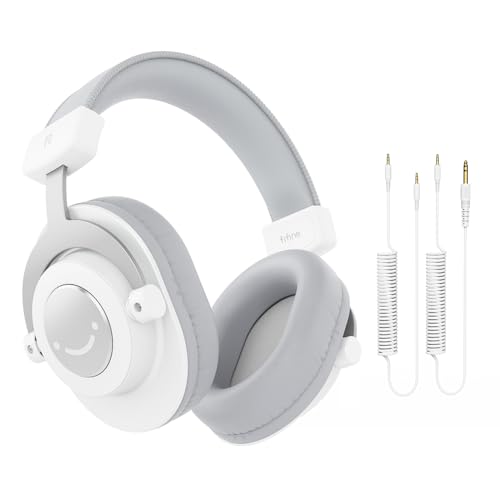
The white finish makes this one easy to spot in a gear bag full of black plastic. Its 50mm drivers sit at the larger end of what you’ll find in this category, which generally means more air moving and a fuller sense of bass and treble detail while you track vocals or check takes.
For someone setting up a first bedroom recording corner, the appeal is straightforward: plug into your interface, hear your voice clearly, and not worry about fussy controls. Owners commonly describe the over-ear cups as comfortable across long sessions, thanks to soft padding around the ears.
Where It Helps
- Large 50mm drivers deliver wide dynamic range, so quiet breaths and loud peaks both come through while recording.
- Soft leather-style earcups keep long vocal sessions comfortable instead of pinching after an hour.
- Simple plug-and-play wired setup means nothing to pair, charge, or configure before a take.
- The bright white colorway stands out visually if you film content or stream your sessions.
Things To Consider
- Light-colored earpads tend to show makeup, dye transfer, and grime faster than darker finishes, so plan on occasional cleaning.
- As a newer entrant, its long-term durability record is less documented than older rivals like the ATH-M20x.
Who It Suits Best
Vocalists and podcast beginners who want big-driver sound and comfort without navigating pro-tier features they won’t use yet.
Consider Something Else When
If you need a battle-tested tuning for detailed mixing decisions, the Shure SRH840A below is the stronger fit.
Where the FIFINE leans toward fun, full-bodied playback, the SRH840A is built for decisions. Shure designed this updated model around recording, mixing, and critical listening, and the tuning reflects that: bass stays controlled rather than bloated, mids carry vocal detail, and highs extend without turning harsh.
The closed-back, circumaural design means the cups fully enclose your ears, cutting outside noise and keeping your audio contained, which matters in shared apartments or untreated rooms. Editors and producers often keep a pair like this on the desk for hours of podcast cleanup, and the fit supports that kind of marathon use.
What Earns Its Place
- A tailored frequency response reveals sibilance and muddy low-mids you’d miss on consumer-tuned cans.
- Closed-back isolation lets you monitor accurately even with traffic or roommates in the background.
- Sound stays contained, so late-night editing won’t leak into the next room.
- Shure’s studio heritage backs a design refined specifically for mixing and content creation.
Worth Noting
- The wired-only format means cable management at your desk and no phone-friendly wireless option.
- Earpads are user-replaceable but will compress over years of daily wear, a normal maintenance cost for any studio staple.
Key Specs
Made For
Podcast editors, mix engineers, and content creators who need a reference-grade sound they can trust session after session.
Not Your Match When
You want wireless convenience for commuting; the ATH-M20xBTWH later in this list handles that role far better.
This is the entry door to Audio-Technica’s M-Series, and it holds up surprisingly well next to the pricier Shure above. The 40mm drivers use rare-earth magnets and copper-clad aluminum wire voice coils, spec choices that usually point to efficient, responsive playback rather than mushy bass.
In a rehearsal space or a loud dorm room, the circumaural cups contour around your ears and shut out a good chunk of ambient noise, which is exactly what you want when tracking over a backing track. A single-side cable exit keeps the cord out of your way at the desk or behind a drum kit.
Positive Takeaways
- Rare-earth magnet drivers respond quickly, keeping fast transients intact during tracking.
- Enhanced low-frequency tuning gives kick drum and bass guitar enough weight to follow along.
- Strong passive isolation means quieter headphone feeds at lower volumes in noisy rooms.
- Single-side cable routing simplifies setup with interfaces and instrument amps alike.
Trade Offs
- The fixed cable can’t be swapped if it wears out, unlike the detachable designs further down this list.
- Fit runs snug on some head shapes, which aids isolation but may feel tight during very long sessions.
At A Glance
Right Fit For
Students and first-time home recordists who want genuine studio behavior without stretching past entry-level budgets.
Look Elsewhere When
Cable replacement matters to you; step up to the ATH-M50X, whose detachable cord solves that problem outright.
Everything else on this list tethers you to a cable. This white M20x variant cuts the cord entirely, borrowing the wired M20x’s 40mm driver approach and adding Bluetooth, a built-in mic, and multipoint pairing, which lets the headphones stay connected to two devices at once, say a laptop and a phone.
The headline number is battery life: up to 60 hours per charge, enough to cover a week of commutes and editing blocks without hunting for an outlet. Frequent flyers and mobile creators commonly report that lightweight builds like this one matter most on long travel days, and the low weight here helps in that exact scenario.
Real-World Strengths
- Up to 60 hours of battery covers extended trips without carrying a charger.
- Multipoint pairing switches smoothly between laptop and phone during hybrid workdays.
- Enhanced-bass tuning from the 40mm drivers gives casual listening more energy than flat studio cans.
- The built-in mic handles calls and quick voice notes between sessions.
Minor Gripes
- Bluetooth adds latency, so this isn’t the choice for timing-critical recording or live monitoring.
- White earcups and headband collect visible scuffs over time compared with darker siblings here.
Feature Snapshot
Who Will Love This
Commuting creators and students who want studio-inspired sound quality in a cordless everyday package.
Another Choice May Suit
Desk-bound mixers should stick with the wired SRH840A, whose zero-latency signal suits critical listening better.
The M50X has been a default recommendation in home studios for years, and the reason shows up in the details. Large-aperture drivers produce a confident, punchy presentation, while sound-isolating earcups keep outside noise where it belongs. Compared with the M20x above, you’re paying for refinement: richer build materials, a more mature sonic signature, and, crucially, a detachable cable.
That last point changes ownership in a real way. A frayed cable becomes a two-minute swap instead of a repair decision, and you can switch between coiled, straight, and short cords depending on whether you’re at a mixer or on the move.
A Few Highlights
- Large-aperture drivers deliver the punchy, detailed signature that made this line famous among engineers.
- Detachable cable design extends usable life well beyond fixed-cord competitors like the M20x.
- Sound-isolating earcups keep mixes accurate in untreated rooms and busy spaces.
- Construction feels sturdy enough to survive gig bags and daily desk duty.
- Folding hinges make storage and travel simpler than bulkier studio designs.
Points To Note
- The bass-forward character flatters music more than a strictly neutral reference would, worth knowing before final mix calls.
- Clamping force runs firm out of the box, though owners commonly report it relaxes with regular wear.
Perfect Match For
Home studio owners ready to invest once in a durable, great-sounding pair that doubles for everyday listening.
Reach For A Different Pick When
Your budget is firmly entry-level; the ATH-M20x delivers core monitoring behavior for noticeably less.
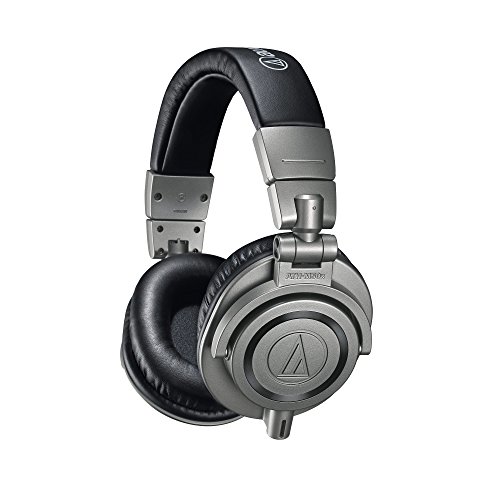
Same celebrated M50x formula, different wardrobe. The gun metal finish swaps the standard black for a muted metallic gray that photographs beautifully on camera and looks at home in a styled workspace. Underneath, you get the identical large-aperture drivers, isolating earcups, and detachable cable system covered in the black version above.
That makes this a decision about aesthetics rather than performance. Streamers and video-first creators often prefer gear that reads well on screen, and the gun metal colorway does that without shouting. The honest read: buy it because you like how it looks, not because it sounds any different.
Strengths Worth Knowing
- The gun metal finish gives a distinctive, camera-friendly look for streaming and studio tours.
- Detachable cabling carries over, so worn cords stay replaceable.
- Large-aperture drivers provide the same punchy, detailed monitoring signature as the black M50X.
- Isolating earcups support focused sessions in shared or untreated rooms.
Softer Spots
- Colorway availability can fluctuate, so stock may be harder to find than the standard black version.
- Metallic finishes can show fingerprints and smudges more readily than matte black surfaces.
Who Should Grab It
On-camera producers and style-minded listeners who want proven M50x performance in a less common finish.
Swap It Out When
Availability or taste points elsewhere; the classic black ATH-M50X offers identical sound with easier sourcing.
White headphones split opinion, and that’s part of the charm here. This variant wraps the standard M50x hardware, large-aperture drivers, isolating earcups, detachable cable, in a clean off-white shell that pairs nicely with bright desk setups and light-themed studios. Sonically it matches the black and gun metal versions already covered, so nothing changes in how your mixes translate.
In day-to-day rotation between editing, calls, and casual listening, this is the sort of pair that earns its spot on the desk permanently. Just know the trade-off: light finishes demand slightly more upkeep than their dark counterparts.
Everyday Advantages
- Identical M50x sound signature, so mixing decisions stay consistent with the rest of the family.
- Detachable cable keeps long-term ownership simple when cords eventually wear.
- The white finish brightens a workspace and coordinates with light-colored gear.
- Isolating cups double as effective focus tools in open offices or shared homes.
Honest Caveats
- White earpads show skin oils and denim transfer quickly; periodic gentle cleaning keeps them presentable.
- Some owners find the firm clamp tiring over multi-hour sessions until the pads break in.
Built With In Mind
Listeners who split time between production work and everyday enjoyment and care how their setup looks doing it.
Where A Sibling Pick Shines
Low-maintenance types should grab the black ATH-M50X instead, since its finish hides wear far better.
Not every monitoring job needs full-size cans. These in-ear monitors pack a hybrid setup, one dynamic driver for bass alongside one balanced armature for detail, into a polycarbonate shell finished with UV varnish. Balanced armature drivers are tiny components prized for clarity in the mids and highs, which is why hybrids have become common on stage.
For singers performing over loud backing tracks, the seal these provide beats any over-ear design here, including the OneOdio models coming up. Soft TPE ear tips and rear-mounted fins help them lock in place through movement, and the 4N oxygen-free copper cable keeps the signal path clean.
Why It Works Well
- The 1DD + 1BA hybrid layout blends deep bass with articulate upper detail.
- Soft TPE tips and ear fins hold position during active stage movement.
- An in-ear seal blocks stage noise far better than open over-ear designs.
- Oxygen-free copper wiring supports a clean, uncolored signal path.
- No built-in mic keeps the cable simple for pure monitoring duty.
Small Caveats
- Fit is personal with IEMs; tip sizing may take some trial to get a comfortable, sealed feel.
- Earwax buildup on the nozzle openings requires routine cleaning to protect the sound.
Quick Facts
The Right Fit
Stage singers and musicians who need discreet, secure monitoring that disappears into a jacket pocket between sets.
Where Another Pick Suits Better
Long mixing sessions favor over-ear comfort, so the Shure SRH840A remains the better desk companion.
DJ-oriented headphones prioritize energy, and this OneOdio brings plenty. Its 50mm drivers paired with neodymium magnets push a bass-forward presentation that makes beatmatching and casual listening genuinely fun. Neodymium magnets are strong for their size, letting big drivers stay responsive without demanding huge amplifier power.
Against the pricier Audio-Technica picks earlier, you trade some tonal neutrality for enthusiasm and savings. Practicing DJs, keyboard players jamming at home, and anyone wanting a second pair for the couch tend to find that trade acceptable. Padded cushions and an adjustable stretchable headband keep longer sets comfortable too.
Strong Points
- Large 50mm neodymium drivers deliver punchy bass that suits electronic music and DJ practice.
- Soft padded cushions isolate reasonably well and stay comfortable through extended sessions.
- The adjustable stretchable headband accommodates different head sizes easily.
- Hi-res-oriented tuning adds crispness to vocals and highs alongside the low-end emphasis.
Areas To Watch
- The bass tilt colors mixes, so final balancing decisions deserve a flatter pair like the SRH840A.
- Budget-tier plastics and joints generally won’t match the longevity of the M-Series construction.
Best Suited To
Budding DJs, hobbyist keyboardists, and casual listeners who want big sound on a modest budget.
Skip It When
Accuracy drives your purchase; the ATH-M20x costs little more and measures closer to neutral.
This dark blue sibling of the OneOdio above aims squarely at mixed setups: computer recording, podcasts, keyboards, guitars, and laptops. The standout practical touch is the dual-plug arrangement, a 1/4-inch jack for amps and mixers alongside a 3.5mm connection for computers and phones, so one pair spans nearly every device in a home rig.
The same 50mm neodymium drivers supply dynamic bass for DJing and monitoring, and the soft padded cushions plus adjustable headband keep long recording nights comfortable. Compared with the black OneOdio model, this version leans more versatile than flashy, and it slots neatly into beginner podcast kits.
The Practical Payoff
- Dual 1/4-inch and 3.5mm plugs connect directly to amps, interfaces, laptops, and phones.
- 50mm neodymium drivers provide the dynamic low end useful for beatmatching and bass checking.
- Padded cushions aid isolation so you can monitor at moderate volumes in untreated rooms.
- The stretchable, adjustable headband fits a range of users in shared spaces.
Room For Improvement
- Like its sibling, the warm tuning favors enjoyment over strict mix-reference accuracy.
- The included cabling arrangement can feel bulky when swapping between the two plug types mid-session.
Feature Rundown
Whose Shelf It Belongs On
Beginner podcasters and multi-instrument home recordists juggling several devices with one affordable pair.
A Better Fit Elsewhere
Purely studio-focused shoppers get tighter accuracy from the Audio-Technica ATH-M20x at a similar tier.
What Matters Most Before Choosing Monitoring Headphones
Sound Signature And Accuracy
Monitoring headphones exist to reveal flaws: harsh sibilance, boomy lows, buried vocals. Flat or lightly tuned models such as the Shure SRH840A serve mixing best, while bass-forward designs like the OneOdio pair suit practice and casual listening. Decide which job comes first before comparing anything else, because tuning shapes everything downstream.
Comfort For Long Sessions
Weight, clamping force, and pad material decide whether hour three feels fine or punishing. Circumaural cups that fully surround the ear spread pressure better than on-ear designs. In-ear monitors solve heat but depend on tip fit, so expect a short adjustment period with any IEM purchase.
Wired Versus Wireless
Wired connections deliver zero latency, which recording demands. Wireless freedom wins for commuting and casual use, and the ATH-M20xBTWH’s 60-hour battery narrows the gap considerably. Many people land on owning one of each rather than forcing a single pair into both roles.
Key Considerations Across These Picks
Traps First Timers Fall Into
The most common mistake is buying a bass-heavy pair for mixing, then wondering why tracks sound thin elsewhere. Fixed cables are another oversight; a detachable design pays for itself the first time a cord frays. Skipping pad maintenance shortens lifespan too, especially on light-colored finishes.
What Separates Premium From Basic
Higher tiers bring refined drivers, replaceable parts, sturdier hinges, and more consistent tuning from unit to unit. The jump from an M20x to an M50X buys durability and polish more than raw volume. Pay up once you’ve outgrown your starter pair, not before.
Frequently Asked Questions
Can I mix a full song on budget monitoring headphones?
You can, though translation checks on other systems become more important. Models like the ATH-M20x give honest enough feedback for serviceable mixes at home.
Are closed-back headphones always better for recording?
For tracking, yes, because they stop bleed into microphones. For mixing in quiet rooms, some engineers prefer open-back designs not covered in this list.
Do wireless headphones work for recording vocals?
Bluetooth latency makes real-time monitoring unreliable, so wired remains the studio standard. Wireless pairs like the ATH-M20xBTWH shine everywhere else.
How long do studio headphone earpads last?
With daily use, pads typically soften and flake within a few years. Detachable-cable models with replaceable pads, like the M50X, age far more gracefully.
Are in-ear monitors suitable for long studio days?
They suit shorter tracking and stage work best. Over-ear designs distribute pressure more comfortably across multi-hour mixing sessions.
Closing Remarks
There’s no single right answer here, only the right answer for your room, your budget, and your ears. Start with the ATH-M20x or a OneOdio if you’re building your first setup, and let the Shure SRH840A or ATH-M50X earn their place once your work demands more precision. Whichever direction you take, listen critically for a week before forming habits around a new pair.
