


Great headphones change how you hear music you thought you knew. Whether you mix tracks late at night, work from a shared apartment, or just want your vinyl collection to sound the way it was recorded, the right pair matters more than any other gear upgrade. This list covers wired studio monitors, wooden classics, planar magnetics, and wireless flagships so you can match a pair to how you actually listen.
Your Options, Compared

beyerdynamic DT 990 Pro X 48 ohm Open-Back Studio Headphones
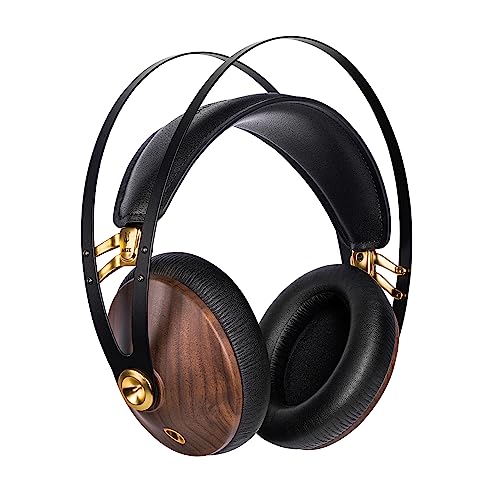
MEZE AUDIO 99 Classics Walnut Gold Closed-Back Headphones

Sony MDR-M1 Professional Reference Monitor Headphones

Sennheiser HDB 630 Wireless Audiophile Headphones
Sennheiser HD 505 Wired Over-Ear Headphones Copper Edition
FiiO JT7 Planar Magnetic Over-Ear Headphones

FiiO JT3 Open-Back Over-Ear Headphones with Mic

Bose QuietComfort Ultra 2nd Gen Bluetooth Headphones Black
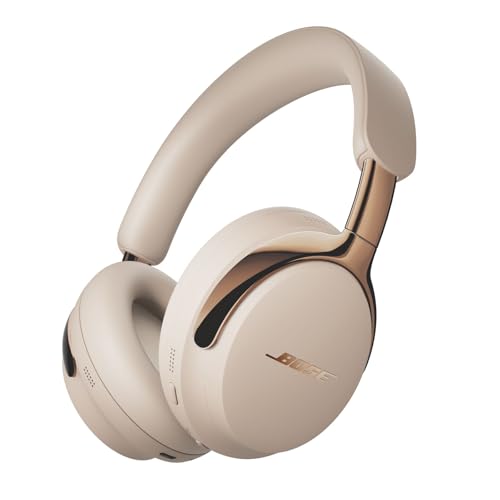
Bose QuietComfort Ultra 2nd Gen Driftwood Sand Edition

Bose QuietComfort Ultra 2nd Gen Desert Gold Edition
More Details On Our Top Picks
Open-back means the earcups are vented rather than sealed, so sound escapes naturally instead of bouncing around inside the cup. The result is a wide stage where reverb tails, room noise, and clipping artifacts stand out clearly, which is exactly what you want when editing or mixing.
The 48 ohm impedance keeps this version friendly to modest interfaces and headphone outs, unlike higher-impedance studio cans that demand an amp. Made in Germany, the DT series has long been a fixture in studios, and the Pro X continues that lineage with replaceable parts.
Where It Excels
- Wide, natural soundstage makes spatial imaging easy to judge in a mix
- Brilliant highs expose digital artifacts and noise you’d miss on consumer-tuned pairs
- 48 ohm design runs well straight from most audio interfaces without extra amplification
- Open-back construction reduces listening fatigue during long sessions
Small Caveats
- Sound leaks both ways, so quiet offices and shared rooms are awkward
- No isolation means street or fan noise competes with subtle details
- Velour pads collect dust over time and benefit from occasional cleaning
Key Specs
Who It Suits Best
Bedroom producers and editors working alone who need uncolored feedback and already have a reasonably quiet space.
A Better Fit Elsewhere
Anyone recording near others will get more done with the closed Sony MDR-M1 further down this list.
Few headphones look like furniture. Each pair of earcups here is carved from genuine walnut, and since wood grain never repeats, yours will be visually one of a kind. That matters more than it sounds when the cans live on your desk during video calls.
At 32 ohms they’re efficient enough to run happily from a laptop or phone, no amplifier required. Owners commonly report the self-adjusting headband settles comfortably over hours, which suits podcast sessions and long workdays alike. The warm, natural tuning leans musical rather than clinical, a nice counterpoint to the analytical beyerdynamic above.
Everyday Advantages
- Genuine walnut cups give every unit a distinct grain pattern
- Low 32 ohm impedance plays loud from phones and laptops with no amp
- Closed-back shell keeps your listening private in shared spaces
- Built-in mic handles calls and podcast recording without extra gear
Points To Note
- Wood finishes respond poorly to humidity swings, so bathroom desks are a bad home
- The warm signature softens fine detail compared with studio monitors
Made For
Listeners who want one beautiful pair for music, meetings, and casual gaming at home without touching an amp.
Swap It Out When
Serious mixing duties call for the flatter beyerdynamic DT 990 Pro X instead.
Sony built the MDR-M1 for people whose livelihood depends on hearing what’s actually in a file. The ultra-wideband playback stretches from 5Hz up to 80kHz, far beyond audible range, and that headroom translates into treble that stays composed rather than brittle.
Unlike the vented beyerdynamic, this is a sealed design, so you get real isolation while tracking vocals in an untreated bedroom or checking mixes on a train. Frequency response alone doesn’t tell the whole story, though the closed acoustic structure is engineered specifically to keep leakage low and balance intact across sources.
What It Does Well
- 5Hz to 80kHz response captures extreme highs and sub-bass cleanly
- Closed structure isolates well enough for tracking and travel use
- Reference-grade balance suits production, not just enjoyment
- High-resolution capability pairs nicely with lossless libraries
Honest Caveats
- Analytical tuning can feel dry for purely casual listening
- Sealed cups trap heat during summer sessions, something owners mention often
Quick Facts
Right Fit For
Music producers and content creators who need isolation and accuracy in one do-everything wired pair.
Another Choice May Suit
Listeners chasing a wider, airier presentation should compare the Sennheiser HD 505 below.
Wireless headphones usually ask audiophiles to compromise. The HDB 630 tries not to: Sennheiser’s own 42mm transducer sits behind minimal digital processing, and aptX HD plus aptX Adaptive support keeps hi-res streams intact over Bluetooth. The included hi-res dongle extends that quality to sources that need a boost.
In daily use, that means commuting without cables while still hearing lifelike mids and a wide, natural stage. You may find the neutral tuning less exciting than bass-heavy consumer pairs at first, but recordings reveal their depth once your ears adjust.
Useful Touches
- In-house 42mm transducer delivers neutral, detailed sound with minimal processing
- aptX HD and Adaptive keep wireless streams close to wired quality
- Hi-res dongle included, so older sources still get upgraded playback
- Wide soundstage unusual for a Bluetooth design
Worth Noting
- Wireless convenience carries a premium over comparable wired models
- Battery charging becomes part of your routine, unlike plug-in picks here
- Neutral tuning may underwhelm bass-first listeners
At A Glance
Who Should Grab It
Commuters and travelers who refuse to give up fidelity just because the cable is gone.
Look Elsewhere When
Desk-bound listeners save money with the wired Sennheiser HD 505 and lose very little at home.
The HD 505 occupies a sweet spot: transparent enough for careful listening, forgiving enough for all-day gaming and coursework. Its laminate diaphragm pushes crisp highs and clear mids forward while keeping bass controlled, so nothing smears into the midrange.
Being open-backed like the beyerdynamic, it breathes freely and sounds bigger than its size suggests, though the copper finish gives it a warmer personality than typical black studio gear. For students and gamers stepping up from budget cans, this tends to be the pair that makes upgrading feel obvious.
Positive Points
- Laminate diaphragm delivers crisp highs without harshness
- Controlled bass stays tidy during fast-paced games and busy tracks
- Open-back design creates an airy, spacious presentation
- Copper styling looks at home on a desk, not just in a studio rack
Things To Consider
- Open backs leak audio noticeably in shared rooms
- Wired only, so phone use needs a dongle on newer handsets
Whose Shelf It Belongs On
Students, gamers, and music lovers who want one versatile wired pair for desk, dorm, and downtime.
Reach For A Different Pick When
Tracking vocals or podcasting demands the sealed Sony MDR-M1’s isolation instead.
Planar magnetic drivers use a thin diaphragm suspended in a magnetic field rather than a cone, giving them famously quick, even movement. The JT7 runs a huge 95x86mm panel with a 3-micron-thin diaphragm, developed entirely in-house by FiiO, and the payoff shows up as deep bass with a wide stage.
It folds flat for storage, a rarity among planars, and the detachable cable supports both 4.4mm balanced and standard 3.5mm connections. Balanced output doubles the signal channels for cleaner separation, worth using if your DAC offers it.
The Practical Payoff
- Oversized planar driver produces powerful bass with planar speed
- 3µm ultra-thin diaphragm responds quickly to complex passages
- Folds down compactly for storage or transport
- Dual 4.4mm and 3.5mm detachable cables cover balanced and single-ended rigs
- Elastic support system improves fit stability over long sessions
Trade Offs
- Planars generally crave amplification, so phone-only listeners may feel shortchanged
- Larger driver housing adds bulk compared with dynamic rivals
Core Details
Who Will Love This
Hobbyists with a desktop amp or DAC who want planar character without flagship pricing.
Consider Something Else When
Amp-less listeners get easier results from the 32-ohm Meze 99 Classics reviewed earlier.
Most first “serious” headphones cost a fortune. The JT3 doesn’t, yet it borrows genuinely high-end ingredients: a 50mm dynamic driver, a hybrid PEK+PU composite diaphragm balancing rigidity with flex, and a lightweight CCAW voice coil sitting inside an N52 magnet for strong sensitivity.
Translation: it plays loud and lively from ordinary sources while sounding bigger than its price bracket usually allows. The included mic and detachable 3.5mm cable make it practical for gaming and calls too, which few open-backs bother with.
Good Reasons To Consider
- Large 50mm driver gives wide staging and punchy dynamics
- PEK+PU composite diaphragm balances detail with natural tone
- N52 magnet and light voice coil keep sensitivity high for easy driving
- Detachable cable with mic suits gaming and voice chat
A Few Limitations
- Open-back leakage rules out libraries, offices, and night-time shared spaces
- Finish and padding sit a tier below premium builds, as expected at this level
Feature Snapshot
Best Suited To
Students and first-time audiophiles wanting an affordable taste of open-back sound for desk use.
Skip It When
You need silence around you; the closed Bose QuietComfort Ultra below solves that entirely.
Everything before this point assumed a quiet room. The QuietComfort Ultra assumes the opposite: airplanes, trains, open-plan offices. Bose’s noise cancellation remains the benchmark many rivals chase, and CustomTune technology measures your ears each session to tailor the response individually.
Immersive Audio is the interesting part for music lovers, projecting sound in front of you rather than inside your head for a more speaker-like effect. Battery life reaches roughly 30 hours depending on features used, enough to cross an ocean without hunting for an outlet.
What Pays Off
- Noise cancellation quiets engine drone and office chatter effectively
- CustomTune personalizes sound to your ears automatically
- Immersive Audio places instruments outside your head spatially
- About 30 hours of playtime per charge covers long trips
Less Ideal Details
- Processing-heavy tuning won’t satisfy purists comparing against the wired picks above
- Ear cushions need periodic cleaning on daily commutes
The Right Fit
Frequent flyers and commuters who prioritize hush and comfort over reference neutrality.
Where A Sibling Pick Shines
Home-focused listeners preferring raw fidelity should stick with the FiiO JT7.
This is the same second-generation QuietComfort Ultra platform, with identical noise cancellation, CustomTune calibration, Immersive Audio, and roughly 30-hour battery life. What changes is the finish: Driftwood Sand swaps standard black for a warm, understated tone that photographs beautifully and hides scuffs better in daily carry.
Functionally nothing is sacrificed, so the choice comes down to taste. In our view, anyone wearing these visibly at work gets more enjoyment from a color that feels considered rather than corporate.
The Helpful Details
- Same flagship noise cancellation as the black version
- CustomTune adapts sound to your ears each wear
- Driftwood Sand finish looks refined in professional settings
- Up to about 30 hours between charges
Practical Considerations
- Limited-edition colors can see uneven availability over time
- Lighter finishes show dirt on headbands faster than black
Perfect Match For
Travelers who want Bose comfort and quiet in a finish that stands apart from sea-of-black cabins.
Not Your Match When
Maximum discretion matters more; the plain black QuietComfort Ultra above blends in anywhere.
Completing the trio, the Desert Gold edition carries the full second-generation spec: top-tier noise cancellation, spatialized Immersive Audio, CustomTune ear calibration, a built-in mic for calls, and playtime approaching 30 hours. Nothing technical separates it from its siblings except the colorway.
That gold tone leans bold, suiting travelers who treat headphones as part of the outfit rather than an afterthought. Long-haul passengers benefit most here, since the combination of hush, cushioning, and battery endurance is exactly what red-eye flights demand.
Useful Highlights
- Full flagship feature set including Immersive Audio and CustomTune
- Roughly 30-hour battery handles multi-leg journeys
- Desert Gold finish makes a confident style statement
- Integrated mic keeps calls clear on layovers
Factors To Weigh
- Bold color isn’t for minimalist wardrobes
- Special editions may be harder to replace later if parts wear out
The Numbers That Matter
Who Should Grab It
Style-led frequent flyers who want Bose’s quietest ride wrapped in a distinctive limited colorway.
Another Choice May Suit
Understated dressers will prefer the Driftwood Sand edition reviewed just above.
What Matters Most Before Choosing
Open Versus Closed Backs
Open-back designs vent the earcups for a wider, more natural stage, ideal for solo listening rooms. Closed backs seal sound in, adding isolation for travel, tracking, and shared spaces. Your environment decides this more than your taste does.
Impedance And Power Needs
Impedance measures how much electrical resistance a headphone presents; higher numbers demand more amplification. Models at 32 to 48 ohms run fine from laptops and phones, while big planars like the FiiO JT7 reward a dedicated DAC or amp. Match the headphone to the source you actually own.
Wired Versus Wireless Priorities
Wired pairs deliver maximum fidelity with zero charging routine. Wireless options such as the Sennheiser HDB 630 close the gap with modern codecs while freeing you from cables. Commuters lean wireless; desk-bound listeners rarely regret staying wired.
Fit For Long Sessions
Clamping force, pad material, and weight determine whether hour three feels as good as minute one. Self-adjusting bands and plush velour help, but hot climates favor breathable open designs over sealed cups.
Key Considerations Across These Picks
Traps First Timers Fall Into
Chasing the biggest driver number or the flashiest marketing leads many shoppers astray. Tuning matters more than size, and an unamplified planar can disappoint. Also check whether your phone even has a headphone jack before buying a wired pick.
When Paying More Pays Off
Higher tiers buy better drivers, sturdier materials, replaceable parts, and refinement you hear daily. Spend up for a pair you’ll use for years; spend carefully on features you’ll touch once.
Frequently Asked Questions
Do audiophile headphones need an amplifier?
Not always. Low-impedance models around 32 to 48 ohms run well from phones and laptops, while larger planar designs benefit greatly from dedicated power.
Are open-back headphones usable outdoors?
They leak sound in both directions and offer little isolation, making them poor companions for streets, planes, and offices.
What does planar magnetic mean?
It describes a driver with a thin diaphragm suspended in magnets, producing fast, even movement prized for detail and bass control.
How long do quality over-ear headphones last?
Well-built wired models commonly serve five to ten years, especially those with replaceable pads and detachable cables.
Is spatial audio worth having?
It depends on taste. Many enjoy the speaker-like presentation on movies and certain tracks, while purists sometimes prefer traditional stereo imaging.
Closing Thoughts
The right choice starts with honesty about where you listen. Quiet room and a love of detail points toward the beyerdynamic DT 990 Pro X or the Sennheiser HD 505. Noise around you points to Bose. Somewhere in between, the Meze 99 Classics balances beauty, ease, and warmth. Whichever direction fits your days, any pair here will make familiar albums feel newly recorded.
