


Mixing on laptop speakers is like painting in a dark room. You think you hear everything, then someone plays your track elsewhere and the bass vanishes or a vocal pokes out harshly. A proper pair of studio headphones fixes that without needing an acoustically treated room, and this list covers ten wired and wireless options built for tracking, editing, podcasting, and everyday critical listening.
A Side-By-Side Look

beyerdynamic DT 770 Pro X 48 Ohm Closed-Back Studio Headphones

beyerdynamic DT 770 PRO 32 Ohm Studio Headphones (Gray Velour)

beyerdynamic DT 770 PRO 80 Ohm Over-Ear Studio Headphones

Shure SRH440A Over-Ear Wired Studio Headphones

Sony MDR7506 Professional Large Diaphragm Headphone

Audio-Technica ATH-M50X Professional Studio Monitor Headphones (Black)
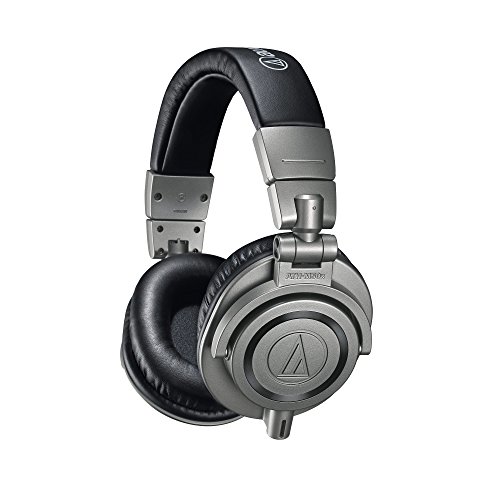
Audio-Technica ATH-M50XGM Professional Monitor Headphones

Audio-Technica ATH-M50X Headphones (White)

Audio-Technica ATH-M20x Professional Studio Monitor Headphones

Audio-Technica ATH-M20xBT Wireless Over-Ear Headphones (White)
What Each Pick Brings To The Table
The newest member of a family that has lived in studios for decades, the DT 770 Pro X pairs the familiar closed-back shell with updated STELLAR.45 drivers and a friendlier 48 ohm impedance. That middle-ground resistance means it pulls plenty of volume from a standard audio interface while still benefiting from dedicated amplification.
For anyone hunting sonic flaws late at night, the sealed earcups keep room noise out and your mix off your roommate’s radar. Handmade assembly in Germany shows in how these tend to hold up over years of daily sessions.
Where It Delivers
- STELLAR.45 drivers resolve fine detail in treble and bass, which helps you catch masking problems before release day
- Closed-back housing gives real sound isolation for tracking vocals in untreated rooms
- 48 ohm impedance strikes a balance between phone-friendly and amp-ready
- German hand assembly tends to translate into long service life
- Optional protection coverage handles drops, spills, and post-manufacturer malfunctions
Things To Consider
- The fixed cable means a damaged lead requires repair rather than a quick swap
- Velour-style pads collect lint over time and benefit from occasional gentle cleaning
Key Specs
Who It Suits Best
Serious home producers and mix engineers who want modern driver refinement inside a battle-tested closed-back chassis.
A Better Fit Elsewhere
Podcasters who mostly record voice and want maximum comfort per dollar may prefer the gray velour pads on the beyerdynamic DT 770 PRO 32 Ohm instead.
Impedance numbers confuse newcomers, so here is the short version: lower ohms need less power. At 32 ohm, this DT 770 variant gets loud straight from a laptop, tablet, or pocket recorder, no headphone amp required. The limited-edition gray velour ear pads breathe better than leatherette, which matters during three-hour podcast edits when heat builds up around your ears.
The single-sided cable keeps one side clear for moving around a desk, and the closed back still seals outside noise reasonably well. Compared with the 48 ohm Pro X above, you trade some driver refinement for easier drivability and a softer price point.
Everyday Wins
- 32 ohm rating delivers full volume from phones and laptops without extra gear
- Velour pads stay cooler than faux-leather alternatives during marathon sessions
- Single-sided cable routing leaves your working hand unobstructed
- Sealed cups suit mobile recording and gaming alike
Worth Noting
- Velour fabric traps dust and pet hair more readily than smooth pads, so plan on periodic cleaning
- The cable is hardwired, and owners commonly report it as the first part to wear with heavy coiling
Right Fit For
Podcasters, gamers, and students who monitor straight from consumer devices and prize all-day wearing comfort.
Swap It Out When
You already own a quality headphone amp and want finer low-end resolution, in which case the DT 770 PRO 80 Ohm makes more sense.
This is the version engineers have recommended to each other for years. The 80 ohm coil sits in the sweet spot: enough resistance to keep noise floors low on interfaces, not so much that a modest amp struggles. Its enclosed design blocks a good chunk of ambient sound, letting you hear reverb tails and sibilance that open offices would otherwise bury.
Against the 32 ohm sibling, the trade is simple. You gain tighter, more controlled bass and cleaner monitoring from powered gear, but a bare phone output will feel underwhelming. In our view, that math favors anyone with even a basic USB interface.
Useful Highlights
- 80 ohm impedance pairs naturally with audio interfaces for clean, quiet monitoring
- Enclosed earcups cut ambient noise for detailed editing anywhere
- Extended high-frequency detail helps expose harshness before mastering
- Reputation for durability means replacement pads are widely available years down the road
Small Caveats
- Quiet from unamplified phone outputs, so budget for an interface or dongle amp
- Clamping force feels snug at first; many owners report it eases after a break-in stretch
At A Glance
Made For
Working producers and editors who monitor through powered equipment and want a proven daily driver.
Another Choice May Suit
Beginners building their first setup without an interface will get louder, simpler results from the 32 ohm DT 770 PRO above.
Not every session happens at your desk. The SRH440A folds flat and collapses into a shape that slides into a backpack next to a laptop, which is why field recordists and journalists gravitate toward it. Shure refreshed this model with an enhanced frequency response aimed at revealing detail in both music and spoken word.
The standout practical feature is the detachable locking cable. It clicks firmly into the earcup so it won’t pull free mid-take, yet unplugs instantly for packing. That alone separates it from every fixed-cable beyerdynamic on this list when your gear lives out of a bag.
Bright Spots
- Collapsible yokes fold the whole unit into a compact travel footprint
- Locking detachable cable prevents accidental disconnects and simplifies storage
- Tuned frequency response exposes detail useful for both music and voice editing
- Closed-back construction supports monitoring in noisy locations
Honest Caveats
- Some listeners find the stock clamp tight until the headband relaxes with use
- Earcup padding wears faster with frequent folding; inspect the hinges if you commute often
The Right Fit
Location recordists, students hauling gear between campus and home, and anyone whose studio doubles as a kitchen table.
Look Elsewhere When
Your setup never leaves the desk; the DT 770 PRO 80 Ohm offers a plusher fit for stationary marathons.
Walk into any radio station or newsroom and odds are good you’ll spot this exact model hanging on a console hook. The MDR7506 has earned that presence through decades of honest, slightly forward midrange that makes speech editing effortless. Neodymium-magnet 40 mm drivers deliver punchy detail without flattering the material, exactly what you want when cutting interviews.
It folds up small for its class, and the long attached cord reaches across a control room comfortably. Compared with the Shure SRH440A, there’s no removable cable, though the plug is gold plated and a quarter-inch adapter ships in the box.
What Pays Off
- Midrange emphasis flatters nothing, which speeds up dialogue and vocal editing decisions
- Nine-plus-foot cord spans typical desk-to-rack distances without extensions
- Folding frame tucks into bags between shoots or sessions
- Included quarter-inch adapter connects directly to pro gear
Points To Note
- The cable is permanently attached; a frayed lead means a repair job rather than a swap
- Earpads are a known wear item, though inexpensive replacements exist everywhere
Quick Facts
Who Will Love This
Podcast producers, broadcast editors, and voiceover artists who live in spoken-word workflows.
Consider Something Else When
Bass-heavy electronic production calls for a different balance; the ATH-M50X below digs deeper into low frequencies.
Few studio cans cross over into daily life as gracefully as the M50X. Large-aperture drivers push a fuller low end than the Sony MDR7506, so mixes carry weight, yet the tuning stays analytical enough for serious work. Engineers have praised this line for years, and the X revision added the feature everyone asked for: a detachable cable.
Sound-isolating earcups hush a busy cafe or a loud tracking room, and the swiveling design folds away neatly. One thing worth considering: the boosted bass can nudge you toward mixing lows too lean until you learn its character.
Strengths Worth Knowing
- Large-aperture drivers give satisfying low-end weight for EDM, hip-hop, and film scoring
- Detachable cable lets you replace a worn lead in seconds instead of sending the unit away
- Isolating earcup seals block a meaningful amount of external noise
- Swiveling earcups enable comfortable one-ear DJ-style monitoring
Trade Offs
- Elevated bass response asks for a learning curve before trusting your mix translations
- Stock pleather pads can get warm; aftermarket velour options are a common upgrade
Feature Snapshot
Who Should Grab It
Producers who want one pair that handles evening mixing and morning commutes without compromise.
Reach For A Different Pick When
Strict neutrality outranks enjoyment; the beyerdynamic DT 770 PRO 80 Ohm stays flatter through the mids.
Everything said about the black M50X applies here, because underneath the paint this is the same critically regarded monitor. What changes is presentation. The gun metal finish swaps the studio-standard black for a muted metallic look that reads more lifestyle than lab, which matters when your headphones appear on camera or on your commute.
Functionally you still get large-aperture drivers, isolating earcups, and that detachable cable. The honest read is that you’re choosing aesthetics over any sonic difference, and there’s nothing wrong with buying gear you enjoy looking at.
A Few Highlights
- Gun metal finish looks sharp on stream setups and video calls
- Same proven M50X platform with detachable cabling
- Isolating closed cups suit shared apartments and open offices
Less Ideal Details
- Identical sound signature to the cheaper-looking black version, so you pay for finish
- Dark metallic coating can show scuffs where plain black hides them
Whose Shelf It Belongs On
Streamers, videographers, and commuters who want studio credibility wrapped in something less utilitarian.
Skip It When
Maximum value drives the decision; the black ATH-M50X delivers identical performance for less visual premium.
The third colorway rounds out the M50X trio, trading gun metal subtlety for bright white shells that pop against dark desks and camera frames. Sonically it mirrors its siblings: big low-end presence, crisp highs, and the same detachable cable system that makes long-term ownership painless.
Creators who film tutorials love white gear precisely because it photographs well. The flip side is maintenance. Light-colored earcups show makeup, skin oils, and grime far sooner than black ones, so expect more frequent wipe-downs to keep them presentable.
Real Benefits
- White finish stands out cleanly on camera and in minimalist desk setups
- Identical M50X tuning suits mixing, casual listening, and gaming
- Removable cable keeps the investment alive after inevitable cord wear
Details To Watch
- Light pads discolor visibly; regular cleaning becomes part of the routine
- Same bass-forward signature that demands adaptation for reference mixing
Best Suited To
Content creators filming regularly who want their audio gear to look intentional on screen.
Where A Sibling Pick Shines
Anyone prioritizing low upkeep should stick with the black ATH-M50X, which hides everyday wear far better.
Starting a home studio usually means the headphone budget is whatever remains after the microphone. The M20x respects that reality. Its 40 mm drivers use copper-clad aluminum wire voice coils tuned toward the low end, and the circumaural fit wraps fully around the ears for isolation that punches above the price bracket.
Against the M50X, you lose the detachable cable and some refinement, but you keep the essential trait that matters for tracking: a closed cup that keeps click tracks out of your vocal takes. For a first pair, that’s most of the battle won.
What Helps Most
- Circumaural seal blocks room noise well enough for confident overdubbing
- Tuned low end adds body to rough mixes without overwhelming vocals
- Single-side cable exit keeps the left hand free at the keyboard
- Entry-level cost leaves room in the budget for a better microphone
Potential Sticking Points
- Fixed cable, so a damaged lead ends the unit’s run
- Detail retrieval trails the pricier picks here once your ears train up
Who It Suits Best
First-time home recorders and students assembling a starter setup on a tight total budget.
Not Your Match When
You’ve outgrown entry-level clarity; stepping up to the ATH-M50X brings noticeably finer resolution.
Every other pick here needs a cable, and that’s deliberate: wired connections remain the studio standard for latency-free monitoring. The M20xBT exists for everything else. Built on the wired M20x platform, it goes Bluetooth with a built-in mic, multipoint pairing for juggling two devices, and a claimed battery life measured in days rather than hours.
Forty-millimeter drivers keep the enhanced-bass character of its wired sibling. Depending on your priorities, that’s either the point or the problem; Bluetooth compression and added latency make it a listener’s tool, not a tracking tool.
Advantages To Know
- Roughly 60 hours of battery life covers weeks of commutes per charge
- Multipoint pairing hops between laptop and phone without manual reconnecting
- Integrated mic handles calls and remote classes
- Lightweight frame stays comfortable across long travel days
Factors To Consider
- Wireless latency rules it out for recording or real-time monitoring work
- White earcups need regular cleaning to stay fresh-looking
Core Details
Who Should Grab It
Commuters, students, and remote workers who want studio-flavored sound untethered from a cable.
Another Choice May Suit
Anyone recording their own voice needs zero-latency monitoring, which points squarely at the wired ATH-M20x.
Choosing Between Quality Studio Headphones Without Guesswork
Impedance Is The First Filter
Ohms describe how much electrical resistance a headphone presents, and it decides what can drive it loudly. Values near 32 ohms wake up fully from phones and laptops, while 80 ohm designs reveal their best behavior through an audio interface or headphone amplifier. Match the number to your actual source device before anything else, because a brilliant headphone starved of power sounds thin and lifeless.
Open Versus Closed Back
Closed-back cups seal sound inside, blocking room noise and keeping your audio from leaking into a live microphone. That makes them the default choice for recording vocals and working in shared spaces. Open designs breathe and stage wider, but they leak badly and isolate poorly, so for most home setups covered here, sealed wins.
Comfort Outlasts Everything
A spec sheet can’t tell you how a headband feels at hour three. Clamping force, pad material, and weight determine whether long sessions feel like a pleasure or a chore. Velour pads run cooler than leatherette, and lighter frames reduce neck fatigue during full workdays.
Detachable Cables Save Money Later
Cables fail before drivers do, almost universally. A removable lead turns a five-minute fix into the end of the story, while a fixed cable can retire an otherwise healthy headphone. Frequent travelers and gigging creators especially benefit from locking connectors that resist accidental tugs.
Key Considerations Across These Picks
Traps First Timers Fall Into
Chasing raw bass is the classic error, since fun-sounding cans hide mix problems until playback elsewhere exposes them. Skipping the impedance check ranks close behind, leaving buyers with headphones too quiet for their laptop. And ignoring pad replacement costs invites surprises, since cushions are consumables on nearly every model listed above.
Where The Extra Money Goes
Higher-tier models spend your money on refined drivers, better materials, and replaceable parts. That translates into detail you can trust, longer service life, and resale value. Casual listeners rarely hear the difference; working producers usually do within a week.
Frequently Asked Questions
Are closed-back headphones necessary for recording?
Yes, in almost all home scenarios. They stop speaker bleed from reaching your microphone and block room noise so you hear the take clearly.
Can I mix entirely on headphones?
You can, and many people do in untreated rooms. Cross-checking on speakers or earbuds afterward catches translation issues faster.
Does higher impedance always mean better sound?
No, it means the headphone needs more amplification. Better sound comes from matching impedance to your source, not chasing bigger numbers.
How long do studio headphones typically last?
Well-made models often serve for many years. Pads and cables wear first, and both are commonly replaceable.
Is a wireless model suitable for studio work?
It works fine for reference listening and editing. Latency makes wireless unsuitable for recording yourself in real time.
Bottom Line
The right choice comes down to how and where you actually listen. Beyerdynamic’s DT 770 family anchors the wired camp with three impedance options, Shure serves the mobile crowd, Sony owns the voice-editing niche, and Audio-Technica spans budget to wireless. Pick the one that matches your source gear and session length, and your mixes will thank you sooner than you expect.
