


Recording your voice at home used to mean booking studio time. Now a decent microphone and a quiet corner get you most of the way there. This roundup covers ten options built for singers, podcasters, and streamers who want vocals that sound clean without a professional setup. Whether you’re tracking demos in a spare bedroom or going live on weekends, there’s a fit here for your room, budget, and workflow.
The Lineup, Simplified

Sennheiser XS 1 Handheld Dynamic Microphone

sktome BM-800 Podcast Equipment Bundle (AM200-V8)

MAONO PD200W Hybrid Wireless Podcast Microphone

Shure MV7+ USB-C & XLR Podcast Dynamic Mic

Mackie EM-91C Large-Diaphragm Condenser Microphone

TENLAMP G10 Audio Mixer Bundle with Microphone

Brvomussy Podcast Equipment Bundle for 2
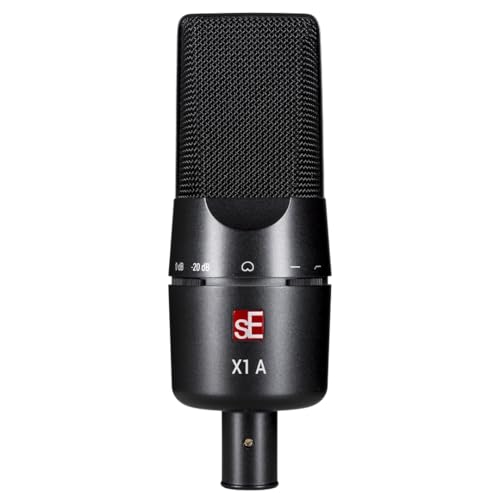
SE ELECTRONICS X1 A Large Diaphragm Condenser Microphone

SE ELECTRONICS V7 Dynamic Microphone for Singing

Dejasound Studio Recording Microphone with Isolation Shield
A Deeper Look At The Lineup
The XS 1 keeps things deliberately simple: a dynamic capsule, a cardioid pickup pattern, and an XLR connection. Cardioid means it hears what’s pointed at it and mostly ignores sound behind it, which helps in echoey bedrooms. There’s no software, no drivers, no learning curve.
Plug it into an audio interface and sing. The onboard silent mute switch lets you kill the signal between takes, something pricier handhelds often skip. A clip and carry pouch come in the box, so storage stays tidy between sessions.
Strong Points
- Dynamic design forgives imperfect rooms better than condensers do
- Silent mute switch gives you clean breaks between takes
- XLR output leaves room to upgrade interfaces later
- Clip and pouch make storage and transport painless
Things To Consider
- You’ll need an interface or mixer with phantom-free XLR input, since there’s no USB option here
- Owners commonly note the plastic body feels lighter than premium handhelds
Key Specs
Who It Suits Best
Absolute beginners recording vocals through their first audio interface who want a name-brand mic without complexity.
Where A Sibling Pick Shines
Singers wanting richer detail should step up to the SE ELECTRONICS X1 A, which trades simplicity for a more refined condenser sound.
Compared to the single-mic Sennheiser above, this kit hands you an entire desk setup at once. You get the BM-800 condenser microphone, a scissor-arm suspension stand, shock mount, pop filter, foam wind cap, power cable, and the V8 sound card that ties it together. Nothing else to order before your first session.
It’s aimed squarely at streaming, short video, and casual music recording on a laptop. The sound card adds voice-changing effects and live monitoring, which makes it fun for gaming broadcasts. In our view, treat it as a starter rig rather than a reference studio tool.
Noteworthy Benefits
- Complete kit means zero compatibility guesswork
- Scissor arm frees up desk space while positioning the mic precisely
- Pop filter and wind cap cut plosives right out of the box
- V8 sound card brings effects and monitoring into one unit
Small Caveats
- Condenser capsules like the BM-800 pick up keyboard clatter and fans easily, so a quiet room matters
- Bundled accessories are functional rather than rugged, and heavy daily handling may wear them out sooner
- More cables and parts mean more setup time than a single USB mic
The Right Fit
New streamers and YouTube creators who want a full broadcast desk assembled in one afternoon.
Another Choice May Suit
Solo singers focused purely on vocals will find the Dejasound isolation-shield mic less cluttered to live with.
Few mics let you choose how you connect, and that’s the PD200W’s whole personality. Go wireless when you’re moving around a room, USB when you want plug-and-play with a phone, tablet, or computer, or XLR once you’ve added an interface and want the stablest chain possible. One purchase covers three stages of your growth.
Inside sits a 30mm dynamic capsule with cardioid pickup, paired with noise cancellation software for cleanup. Dynamic construction again suits untreated spaces better than the condensers later in this list. The desktop stand form factor suits seated vocal work rather than handheld performance.
Advantages To Know
- Wireless mode untethers you during standing vocal takes or presentations
- USB works straight into phones and laptops with no extra gear
- XLR path future-proofs the mic for serious interfaces
- Noise cancellation trims background hiss before editing
Points To Note
- Wireless operation depends on battery management, so charging becomes part of your routine
- Desktop stand placement may feel restrictive for singers who prefer holding the mic
Built With In Mind
Content creators who record in different spots around the house and don’t want to buy three separate microphones.
Swap It Out When
Studio-focused vocalists after maximum fidelity should look at the Shure MV7+, whose auto-level processing goes further.
This is the pick you grow into rather than out of. The MV7+ accepts both USB-C and XLR, so today it plugs straight into your laptop and tomorrow it feeds an interface without replacing anything. Shure’s Auto Level Mode adjusts gain in real time based on your voice and distance, which quietly solves the problem that ruins most first recordings: inconsistent levels.
It ships with its own stand, and unlike the MAONO above, it leans fully wired for reliability. Singers tracking late at night benefit from the dynamic capsule’s tolerance of untreated rooms. The honest trade-off is weight on your wallet compared to every budget option here.
Strengths Worth Knowing
- Auto Level Mode keeps vocals consistent even as you lean in and out
- Dual USB-C and XLR inputs span beginner to intermediate setups
- Stand included, so it’s recording-ready out of the box
- Dynamic capsule shrugs off noisy-room backgrounds
Worth Noting
- Costs meaningfully more than the bundle kits, which include stands, filters, and mixers for similar money
- Desk-mic orientation favors seated recording more than stage-style singing
Quick Facts
Who Will Love This
Committed home studio owners recording vocals weekly who value consistency over gadget extras.
Reach For A Different Pick When
Budget-first shoppers should weigh the Mackie EM-91C, which costs far less while still sounding respectable.
Large-diaphragm condensers are the classic vocal-recording choice because they capture subtle detail in a voice, and Mackie’s EM-91C brings that format down to an approachable level. The cardioid pattern keeps focus on whoever’s in front of the grille. Construction is described as rugged for the class, which bodes well for years of bedroom duty.
Two things separate it from bare-bones rivals: the shock mount and an XLR cable ship in the box. That shock mount matters more than it sounds, since it isolates the capsule from desk thumps and foot taps. You will still need an interface supplying phantom power, so budget for one if it’s not already on your desk.
Useful Touches
- Shock mount included, cutting vibration noise from the start
- XLR cable bundled saves a separate purchase
- Large-diaphragm capture flatters sung vocals with natural warmth
- Rugged build suits frequent repositioning around a home studio
Honest Caveats
- Requires phantom power from an interface, adding cost the USB options avoid
- Condensers hear everything, so fan hum and street noise will show up in quiet passages
Whose Shelf It Belongs On
First-time studio builders with a quiet room and a basic interface who want genuine condenser character cheaply.
Consider Something Else When
Apartment dwellers battling thin walls should favor the Dejasound shield-equipped mic instead.
Where the sktome bundle centers on a mic with supporting cast, the G10 puts a mixing console at the center. The kit pairs an audio mixer with a condenser microphone and core accessories, designed as one coherent signal chain. Built-in noise reduction cleans up vocals as they pass through, and Bluetooth input lets you back your singing with tracks from a phone.
Voice effects and auto-tune are onboard, which singers performing live streams will appreciate since listeners hear the processed result instantly. It’s a lot of surface area to learn, though, so expect an evening with the manual before everything clicks.
What Makes Sense
- Bluetooth lets you sing over backing tracks wirelessly
- Onboard noise reduction lightens your editing workload
- Voice effects and auto-tune run live during streams
- Mixer plus mic sold together avoids mismatched gear
Details To Watch
- The mixer’s many controls carry a real learning curve for newcomers
- Condenser pickup still demands a reasonably quiet room for clean vocals
- More components on the desk means more dusting and cable tidying long-term
Core Details
Right Fit For
Singing streamers and live performers who want effects applied in real time for an audience.
Look Elsewhere When
Two-person podcasts need dual microphones, making the Brvomussy bundle the smarter shared-desk option.
Most bundles assume one voice. This one assumes two, shipping a pair of condenser microphones alongside a single audio interface with voice changer functions. Each mic uses cardioid pickup with intelligent noise reduction, and a double-layer pop filter plus windproof foam cap sit ahead of a DSP chip that polishes the final signal.
That layered noise control is genuinely useful for duets recorded in the same room, where two voices competing for space usually creates mess. Gaming duos and co-hosted shows are the obvious audience. Solo users, though, would be paying for capacity they won’t touch.
What Works In Its Favor
- Two microphones cover duets and interview formats immediately
- Double-layer pop filter tackles plosives more thoroughly than single layers
- DSP processing in the sound card keeps both voices clear and complete
- All-in-one interface removes the need for separate mixers
A Few Limitations
- Second mic sits unused for solo singers, tying up money and desk space
- With two condensers running, room noise doubles unless the space stays quiet
- Integrated units like this can’t be upgraded piece by piece later
Who Should Grab It
Gaming pairs, sibling duos, and co-hosted podcast teams setting up a shared recording corner.
Skip It When
Solo vocalists get better value from the TENLAMP G10, which concentrates one strong channel instead of splitting across two.
The X1 A builds on the original X1 platform with a newly developed capsule aimed at clear, balanced vocal reproduction. Two controls set it apart from the Mackie EM-91C reviewed earlier: a 100 Hz low-cut filter that strips rumble from traffic and HVAC systems, and a -20 dB pad that prevents distortion when a powerful voice gets close to the grille.
Those aren’t flashy features, but they’re the ones working engineers actually reach for. Loud singers especially benefit from the pad, since belting into a sensitive condenser otherwise clips takes. As with any XLR condenser, phantom power and a quietish room remain prerequisites.
The Upside
- 100 Hz low-cut filter removes low-frequency rumble before it reaches your track
- -20 dB pad protects loud vocal takes from clipping
- Newly designed capsule delivers balanced detail across vocal ranges
- Serves instruments and podcasting as well as singing
Potential Drawbacks
- Needs an interface with phantom power, unlike the USB picks in this lineup
- High sensitivity means untreated rooms will reveal themselves in recordings
Best Suited To
Intermediate singers with controlled rooms and interfaces who want expressive detail and manual tone control.
Not Your Match When
Performers needing a handheld for stage work will find the SE ELECTRONICS V7 far more practical.
Handheld dynamics usually force a compromise: tough build or refined sound. The V7 argues you can have both. Its custom aluminum voice coil produces crisp yet natural vocal clarity, and the supercardioid pattern narrows pickup tighter than a standard cardioid, delivering substantial headroom before feedback on loud stages.
An integrated shock mount inside the body reduces handling rumble, and the internal red windscreen tames pops without an external filter. The all-metal housing and spring steel grille suggest it survives gig bags and drops far better than plastic-bodied rivals. A clip, thread adapter, and carrying pouch round out the package.
What Stands Out
- Supercardioid pattern rejects feedback impressively on loud stages
- Aluminum voice coil yields crisp, natural vocal tone
- Internal shock mount cuts handling noise during energetic performances
- Metal housing and spring steel grille withstand touring abuse
- Carry pouch, clip, and adapter included for gig readiness
Trade Offs To Consider
- XLR-only connection requires an interface or PA system, with no USB fallback
- Tight supercardioid pickup punishes off-axis singing technique until you adapt
Technical Highlights
Made For
Gigging vocalists and worship leaders who need one durable handheld that records well in the studio too.
Another Choice May Suit
Bedroom producers who never leave the desk will find the Shure MV7+’s USB convenience more useful than stage toughness.
The DJM5 answers the biggest complaint about budget condensers: they hear too much room. An isolation shield wraps the capsule to block reflections from walls, and the included pop filter catches plosive blasts before they hit the diaphragm. Together those two additions fake a treated booth in an untreated apartment, which is why it earns a spot beside the pricier X1 A here.
Connection is USB, giving direct plug-and-play with PCs, laptops, and smartphones, no interface required. Setup takes minutes, and teardown fits small desks. The honest caveat: a shield helps but doesn’t equal acoustic panels, so very echoey rooms will still color recordings somewhat.
Where It Helps
- Isolation shield reduces wall reflections in bare rooms
- USB output connects straight to phones and computers
- Pop filter comes fitted, saving an accessory purchase
- Compact footprint suits cramped desks and shared spaces
Points To Keep In Mind
- A shield softens reflections but won’t match proper acoustic treatment in very live rooms
- USB-only design locks out future XLR interface upgrades
Essential Details
Perfect Match For
Apartment and dorm singers recording vocals directly into a phone or laptop with zero extra hardware.
Where Another Pick Suits Better
Vocalists planning a serious interface-based studio later should start with the Mackie EM-91C and its XLR foundation.
What Matters Most Before Choosing Recording Mics For Singing
Dynamic Versus Condenser Capsules
Dynamic microphones, like the Sennheiser XS 1 and SE V7, use a moving-coil design that responds mainly to close, loud sources. They forgive echoey rooms and handle powerful belts without distorting. Condensers such as the Mackie EM-91C and sE X1 A capture finer detail and air in a voice, but they also capture your refrigerator. Match the capsule type to your room first, your voice second.
Your Room Decides More Than Your Budget
An untreated bedroom reflects sound off hard walls, and a sensitive condenser will record every bit of it. Isolation shields help, as on the Dejasound, but soft furnishings and recording away from windows matter just as much. Singers in quiet, carpeted rooms unlock the full value of condensers; everyone else benefits from a dynamic’s selectivity.
Connections Shape Your Workflow
USB microphones plug straight into phones and laptops, trading some flexibility for speed. XLR models require an audio interface, which adds cost but opens cleaner preamps and upgrade paths. Hybrid designs like the MAONO PD200W and Shure MV7+ split the difference, letting you start simple and go professional without replacing the microphone itself.
Bundles Versus Single Mics
Bundle kits solve the “what else do I need” problem in one purchase, ideal for streamers assembling a desk from scratch. Single mics cost less overall and skip the accessories you may already own. Count what’s genuinely missing from your current setup before choosing a bundle.
Key Considerations Across These Picks
Traps First Timers Fall Into
The most common mistake is buying a sensitive condenser for a loud, echoey room, then blaming the mic for muddy recordings. Another trap is ignoring phantom power requirements on XLR condensers, which forces a surprise interface purchase. Check your existing gear against each pick’s connection type before committing.
When Paying More Pays Off
Higher-tier models earn their price through consistency, not gimmicks. The Shure MV7+’s auto-level processing removes hours of gain-riding, and the SE V7’s aluminum coil holds its tone night after night on stage. Spend up once your recording habit is weekly rather than occasional.
Frequently Asked Questions
Do I need an audio interface for these microphones?
Only the XLR models require one. USB picks like the Dejasound DJM5 connect directly to computers and phones.
Which type suits an untreated bedroom best?
A dynamic microphone handles reflective rooms more gracefully. The Sennheiser XS 1 or MAONO PD200W are sensible starting points.
Can one microphone work for both singing and podcasting?
Yes, several here are built for dual duty. The Shure MV7+ and SE V7 transition between vocals and spoken content cleanly.
What does a supercardioid pattern mean for my recordings?
It narrows the pickup area tighter than standard cardioid, rejecting more side and rear sound. That helps on loud stages but demands consistent mic technique.
Are bundle kits worth it over buying separately?
They suit anyone starting from an empty desk, since compatibility is solved for you. Owners with partial setups usually save money buying a single mic.
Closing Thoughts
Your room, your connection needs, and your ambitions should drive this decision more than any spec sheet. Start with a dynamic if your space is untreated, step to a condenser once you’ve softened the walls, and consider hybrids when your workflow spans devices. Every option here serves a distinct singer, and the right one is simply the one matching where you record today. Take your time, and happy singing.
