


Recording vocals at home used to mean booking studio time or settling for a laptop mic that made everything sound like a voicemail. That era is over. This roundup covers ten options for singers, podcasters, and voiceover folks who want clean vocal takes in a bedroom, dorm, or spare corner, whether you’re starting from zero or upgrading a single piece of an existing rig.
The Shortlist At A Glance

PreSonus AudioBox USB 96 25th Anniversary Studio Recording Package

Dmsky Microphone Isolation Shield with Pop Filter & Tripod Stand
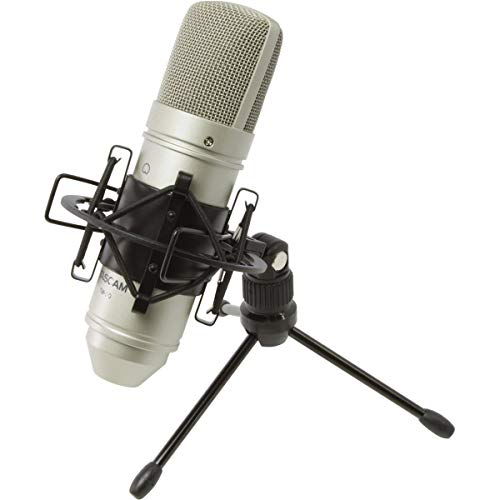
Tascam TM-80 Large Diaphragm Condenser Microphone (Silver)

LEWITT LCT440PURE Large Diaphragm Condenser Mic

Sktome Podcast Equipment Bundle BM-800 with Voice Changer (AM200-V8)

MAONO PD200W Hybrid Wireless Podcast Microphone (XLR/USB)

Mackie EM-Series EM-91C Large-Diaphragm Condenser Microphone

SwaykTech Studio Recording Microphone with Isolation Shield

Dejasound DJM5 Studio Recording Microphone with Isolation Shield

FIFINE K669D XLR Dynamic Microphone
More Details On Our Top Picks
Most first rigs fail because pieces get bought separately and don’t talk to each other. PreSonus solves that by bundling the AudioBox USB 96 interface, which converts your mic’s analog signal into digital audio your computer can record, alongside an M7 large-diaphragm condenser mic, HD7 monitoring headphones, and its Studio One Artist software. You unbox, connect over USB, and you’re tracking vocals the same afternoon.
The anniversary edition adds rugged housing around the interface, useful in a desk setup that gets knocked around. Compared with buying a standalone mic like the Tascam TM-80 further down this list, this bundle costs more up front but removes every compatibility guess.
A Few Highlights
- Everything needed to record arrives together, so there’s no waiting on a missing cable or stand.
- The M7 condenser suits both vocals and acoustic instruments, giving you room to grow past singing alone.
- Closed-back HD7 headphones let you monitor takes late at night without waking anyone.
- Included Studio One Artist software means you can edit and mix without extra purchases.
Things To Consider
- Condenser mics pick up room reflections, so an untreated bedroom may benefit from adding an isolation shield later.
- The bundle locks you into one mic choice; owners who outgrow the M7 typically upgrade separately.
At A Glance
Who It Suits Best
Absolute beginners building their first bedroom studio who’d rather buy one box than research five components.
Where Another Pick Suits Better
Already own headphones and software? The Mackie EM-91C gives you a stronger mic alone for less overall spend.
An isolation shield is the cheapest acoustic treatment most people will ever install. This Dmsky unit wraps three layers around the back and sides of your mic: a reflective outer panel, a filter layer, and dense absorbing foam. Together they soak up sound waves bouncing off walls before those reflections reach the capsule, which is why vocals recorded against bare drywall sound boxy.
The foldable panels collapse flat for storage, a real advantage in apartments where gear lives in a closet between sessions. It ships with its own tripod stand and pop filter, so singers using an XLR mic with an interface get a complete front-end upgrade rather than a shield alone.
Practical Advantages
- Triple-layer construction targets both reflected and ambient noise, cleaning up recordings made in echo-prone rooms.
- Folds down compactly, which matters if your recording spot doubles as a dining table or bedroom corner.
- Pop filter and tripod included, saving two separate accessory purchases.
Trade Offs
- It treats the area behind the mic only; ceiling and floor reflections still exist, though they’re usually less audible on vocals.
- The foam surface collects dust over time and needs gentle vacuuming to stay effective.
- Heavier XLR mics may need careful counterbalancing on the supplied stand.
Made For
Singers and podcasters recording in untreated rooms who already own a decent microphone and want cleaner takes immediately.
Consider Something Else When
You need the mic itself too; the SwaykTech package at number eight bundles a condenser mic with a similar shield setup.
Tascam has built recording hardware for decades, and the TM-80 carries that engineering discipline into entry-level territory. Its 18mm aluminum diaphragm sits inside a cardioid capsule, meaning it hears what’s in front of it and largely ignores what’s behind. Internal circuitry is tuned to keep hiss and distortion low while preserving a full, warm character on voices.
The headline number here is the maximum sound pressure rating of 136dB SPL. In plain terms, this mic won’t clip when you sing loudly or park it in front of a guitar amp, something many budget condensers can’t claim. That headroom makes it unusually versatile for the price bracket.
What Pays Off
- The high SPL rating lets one mic cover screaming vocals, drum overheads, and amplifiers, not just quiet singer-songwriter takes.
- Aluminum diaphragm construction responds quickly, capturing consonants and transient detail cleanly.
- Cardioid rejection helps in rooms where a computer fan or street noise sits behind the mic position.
Minor Gripes
- No shock mount is mentioned in the listing, so plan on a separate mount or a boom arm to isolate desk thumps.
- It’s an XLR mic requiring phantom power from an interface, which surprises buyers coming from USB plugs.
Right Fit For
Home recordists who already own an interface and want a dependable, loud-source-tolerant vocal mic without spending much.
Look Elsewhere When
You want maximum vocal refinement rather than versatility; the LEWITT LCT 440 PURE below trades some of this flexibility for finer detail.
This is the step-up pick for voices. Austrian brand Lewitt fitted the LCT 440 PURE with a one-inch true condenser capsule, the largest common capsule size, and true condenser designs generally resolve subtle breath, pitch, and texture differences more faithfully than cheaper back-electret alternatives. On a sung vocal, that translates into depth and clarity that survives heavy mixing.
Lewitt rates it well beyond vocals too: drums, cymbals, amps, and acoustic instruments all fall within its comfort zone. The cardioid pattern’s rear rejection keeps bleed from other instruments out of your take, which matters once you track multiple sources in one room. Against the Tascam TM-80 above, expect a more detailed top end and a price to match.
Strong Points
- The 1-inch true condenser capsule captures nuance that smaller budget capsules smooth over.
- Rear rejection from the cardioid pattern helps in multi-instrument home setups.
- Works across vocals, drums, cymbals, and amps, so it earns its desk space long after your first project.
Softer Spots
- That sensitivity cuts both ways; untreated rooms expose more background character than dynamic mics would.
- XLR connection means an interface with phantom power is required, adding cost for absolute newcomers.
- The polished finish shows fingerprints, a small thing you’ll notice during handling.
Quick Facts
Who Will Love This
Serious vocalists and producers who’ve outgrown starter mics and want studio-grade detail for tracking at home.
Not Your Match When
Your room is noisy and untreated; the MAONO PD200W’s dynamic capsule forgives imperfect spaces far better.
Where the PreSonus bundle targets music recording, this sktome package aims squarely at live content. The V8 sound card is the centerpiece: it handles real-time voice changing, effects, and level control while you stream, so your audience hears processed audio without post-production. Around it sit the BM-800 condenser mic, adjustable scissor-arm suspension stand, shock mount, pop filter, anti-wind foam cap, and power cabling.
For someone launching a YouTube channel or live broadcast from a laptop, having every mounting and filtering accessory in one shipment removes a lot of friction. Just know this is entertainment-first hardware rather than audiophile tracking gear.
Good Reasons To Consider
- The V8 sound card applies voice effects live, ideal for gaming streams and character content.
- Scissor-arm stand clamps to a desk and positions the mic exactly where you speak.
- Shock mount and pop filter come standard, taming desk bumps and plosives out of the box.
- Works for podcasts, streaming, short video, and music capture on a laptop.
Room For Improvement
- Owners commonly report a learning curve on the sound card’s button layout; expect an evening of fiddling.
- The BM-800 needs adequate gain from the sound card, so quiet speakers should test levels before going live.
Perfect Match For
Aspiring streamers and broadcasters who want effects and accessories bundled instead of assembled piecemeal.
A Better Fit Elsewhere
Pure vocalists chasing clean recordings should skip the effects chain and consider the Dejasound DJM5 at number nine.
Three connection modes on one mic is rare at this level. The PD200W runs wireless for untethered movement, USB for plug-and-play recording on a phone, tablet, or computer, and XLR for a stable pro setup through an interface. That last mode futureproofs your purchase: start simple today, add an interface later without replacing the mic.
Inside sits a 30mm dynamic capsule with a cardioid pickup pattern. Dynamic capsules are less sensitive than condensers, which sounds like a downgrade until you realize it means fewer fridge hums and hallway conversations in your takes. For creators recording in shared homes, that forgiveness is worth a lot.
Everyday Wins
- Wireless mode frees you to move during demos and standing segments.
- USB connectivity gets you recording on nearly any device within minutes.
- The dynamic capsule naturally rejects room noise, cutting cleanup time in editing.
- Companion software adds processing controls without third-party plugins.
Honest Caveats
- Dynamic mics reward close talking; singers used to working a foot back may find the tone thins out.
- Wireless operation means keeping batteries charged, one more habit before each session.
Who Should Grab It
Content creators who record in different rooms, different devices, or occasionally outdoors and refuse to be tethered.
Swap It Out When
You record seated in one treated spot and prioritize vocal detail; the LEWITT LCT 440 PURE serves that profile better.
Mackie built its reputation on mixers found in venues worldwide, and the EM-91C brings that practical streak to affordable condensers. It uses a large-diaphragm capsule with a cardioid pattern, housed in rugged construction meant to survive being set up, packed away, and set up again, which is exactly how home studios actually operate.
The inclusion list does the persuading here: a shock mount and an XLR cable ship in the box. Those are the two accessories new recordists forget to budget for, and together they handle vibration isolation and connectivity on day one. Set it beside the Tascam TM-80 and you’re choosing between Tascam’s louder-source tolerance and Mackie’s ready-to-mount completeness.
Benefits That Matter
- Shock mount included, so desk taps and floor vibrations stay out of your vocal takes.
- XLR cable in the box means recording the moment your interface arrives.
- Rugged build holds up to repeated teardowns between closet storage and desk duty.
- Cardioid pattern focuses on your voice and leaves room noise mostly behind the mic.
Points To Note
- Like any condenser, it wants a reasonably quiet space; a loud household will show up in recordings.
- Requires an interface supplying phantom power, an extra purchase for phone-first creators.
Built With In Mind
Home studio owners who already have an interface and want a complete, durable vocal mic without hunting accessories.
Another Choice May Suit
Creators without any interface yet will plug in faster with the Dejasound DJM5, which connects straight to USB.
This SwaykTech kit answers the question “what if I have neither a good mic nor good acoustics?” The condenser mic connects directly to PC, laptop, or smartphone with no additional drivers, while a five-panel foldable shield built from reflective and absorbing layers stands guard behind it. A metal tripod and pop filter round out the package.
The five-panel design wraps tighter than the three-panel Dmsky shield earlier in this list, catching more side reflections in cramped rooms. Cardioid pickup keeps the focus on whatever you point it at, producing a smooth front-facing sound suited to singing and spoken word alike.
Everyday Advantages
- Driver-free USB-style connection works with phones and laptops, no interface required.
- Five-panel shield folds flat and sets up in seconds on a desk or tripod.
- Pop filter catches plosive bursts before they distort your recording.
- Metal tripod base stays put better than lightweight plastic stands.
Small Limitations
- Condenser sensitivity means nearby keyboard typing can still leak into takes despite the shield.
- The folded panels need careful storage to avoid bending the foam layers over time.
The Right Fit
Students and apartment dwellers recording vocals in small, untreated rooms straight into a phone or laptop.
Reach For A Different Pick When
You already own a quality XLR mic and only need treatment; the Dmsky shield covers that job alone.
The DJM5 leans hard into simplicity. Its condenser capsule outputs over USB, plugging directly into a PC, smartphone, or laptop with nothing else to configure. No interface, no phantom power switch, no driver downloads. For a vocalist who records voice memos, auditions, or podcast segments between other tasks, that zero-setup workflow is the whole appeal.
Sound-wise, it delivers clean vocal capture suitable for podcasting and music production, and the included isolation shield plus pop filter address the two problems that plague beginner recordings: room echo and popped consonants. Think of it as the quieter sibling of the sktome bundle, minus the effects engine and scissor arm.
Notable Gains
- USB output means recording starts the second the cable is plugged in.
- Isolation shield tames reflections, noticeably tightening vocal recordings in bare rooms.
- Pop filter comes attached to the setup, protecting takes from harsh P and B sounds.
Worth Bearing In Mind
- USB-only connection caps your upgrade path; serious interfaces require an XLR mic eventually.
- No dedicated stand arm is listed, so positioning depends on the supplied mounting hardware.
Whose Shelf It Belongs On
Voiceover artists and hobbyist singers who value speed and simplicity over expandability in a home setup.
Skip It When
You’re planning an interface-based studio soon; the FIFINE K669D grows with that path instead.
Every list needs a tank, and the K669D wears the armor openly: an all-metal body built to shrug off life on a busy desk. As a dynamic mic, it pairs a low noise floor with a unidirectional cardioid pattern, focusing tightly on your voice while minimizing the tinny popping and booming that plague cheap recordings. Less background in means less time spent isolating noise in software afterward.
The trade-off is deliberate: XLR only, designed to pair with an audio interface or mixer. That’s the same philosophy as the MAONO PD200W but stripped of wireless and USB conveniences, leaving a simpler, sturdier tool for creators who’ve settled on a fixed setup.
What Helps Most
- All-metal construction survives daily handling and travel between rooms.
- Low noise floor keeps quiet passages free of hiss without heavy processing.
- Cardioid rejection reduces ambient clutter, shortening editing sessions.
- Reliable XLR connector plays nicely with interfaces and mixers alike.
Potential Drawbacks
- No USB option, so a phone-first creator gains nothing here without extra hardware.
- Dynamic mics favor close-miking technique; distance changes the tonal balance noticeably.
Best Suited To
Podcasters and gamers with an existing interface who record daily in acoustically imperfect shared spaces.
Where A Sibling Pick Shines
Beginners without any interface should start with the PreSonus AudioBox package, which supplies the whole chain.
What Matters Most Before Choosing Recording Mics For Vocals
Match The Mic To Your Room First
Your space decides more than your budget does. Condenser microphones hear everything, including bare walls and hard floors, so they shine in quiet, soft-furnished rooms. Dynamic microphones forgive imperfect acoustics by ignoring distant sound, making them the safer bet in shared households.
Connection Type Shapes Your Setup
USB mics plug straight into computers and phones, trading some flexibility for instant usability. XLR mics demand an interface with phantom power, the small voltage condensers need to operate, but they scale with better gear later. Hybrid models bridge both worlds at a modest premium.
Bundles Versus Single Purchases
Kits like the PreSonus AudioBox package remove guesswork for newcomers, while solo mics such as the LEWITT LCT 440 PURE suit anyone upgrading one link in an existing chain. Count what you already own before comparing prices across formats.
Accessories Aren’t Optional Extras
A pop filter, shock mount, and isolation shield fix the three most common recording flaws: plosives, desk rumble, and room echo. Several picks here include them, which often tips the value math in their favor.
Key Considerations Across These Picks
Mistakes Worth Dodging
The classic error is buying a sensitive condenser for a loud, untreated room, then wondering why recordings sound hollow. Check your environment honestly first. Skipping the shock mount is the second trap; even solid desks transmit keyboard taps straight into the capsule.
The Case For Spending Up
Higher-tier mics earn their cost through capsule size, internal circuitry, and consistency between units. The leap from a basic condenser to something like the LCT 440 PURE shows up as detail that survives compression and EQ. Spend up once your skills demand it, not before.
Frequently Asked Questions
Do I need an audio interface for these microphones?
Only the XLR models do, since they require phantom power and proper preamps. USB and hybrid options connect directly to computers and phones.
What does cardioid mean?
It describes a heart-shaped pickup pattern that captures sound in front of the mic while rejecting noise behind it. Nearly every pick here uses it for exactly that reason.
Can one mic work for both singing and podcasting?
Yes, and several here are built for it. Condensers flatter sung vocals, while dynamics suit spoken word in noisier rooms.
How important is an isolation shield really?
In untreated rooms, it’s the fastest improvement available, cutting wall reflections that make vocals sound boxy. It won’t replace full acoustic treatment, though it narrows the gap considerably.
Do condenser mics break easily?
They’re more delicate than dynamics due to their sensitive capsules, so avoid drops and humidity extremes. Stored sensibly, they last for years of regular use.
Wrap Up
Your room, your devices, and your ambitions point to different answers on this list. Complete beginners get the smoothest start with the PreSonus package, apartment recordists lean toward the SwaykTech or Dejasound kits, and committed vocalists will hear the difference the LEWITT makes. Whatever you choose, record something today; gear improves slowly, but practice compounds fast.
