


More laptops and tablets have dropped the old headphone jack, and that leaves parents scrambling when a school list says “wired headphones.” These ten picks solve that problem directly, covering both classic 3.5mm options and true USB-C digital models that plug straight into modern Chromebooks. Whether you’re outfitting a kindergartner or a high schooler, there’s a fit here.
A Closer Look At The Lineup

iClever HS19 Kids Headphones

iClever HS19S Kids Headphones
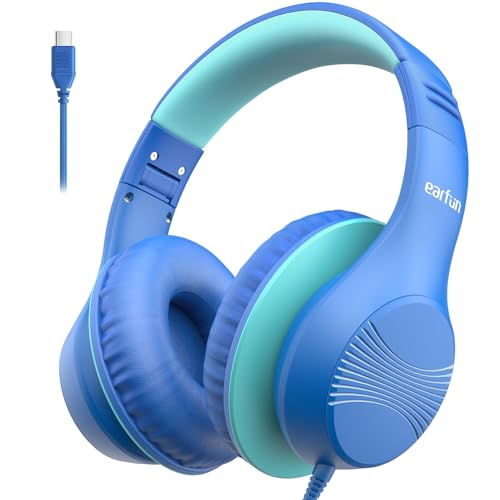
EarFun K3 USB Type C Kids Headphones (Blue)
KVIDIO USB C Wired Headphones (Black)

KVIDIO USB C Wired Headphones (Black Red)

KVIDIO USB C Over Ear Headphones (Blue)

KVIDIO USB C Over Ear Headphones (Pink)

ADOOPE Wired Kids Headphones USB C Plug
KVIDIO USB C Wired Headphones (Green)

KVIDIO USB C Wired Headphones (Pink)
A Breakdown Of The Leading Choices
The HS19 sticks to the familiar 3.5mm jack, which still rules in classrooms full of older Chromebooks, Switch consoles, and Fire tablets. That wide reach is the whole appeal here: one pair covers nearly every device a young student touches during the day.
An inline microphone handles voice calls and online lessons without extra adapters. For households juggling several gadgets, that flexibility saves real frustration.
Strong Points
- Plugs into Chromebooks, iPads, laptops, PCs, and gaming handhelds with no dongles
- Inline mic makes video classes and voice chats straightforward
- Volume limiting is built in to keep listening levels gentle on young ears
- Over-ear design helps block hallway chatter in busy classrooms
Things To Consider
- Won’t connect to jack-less phones and tablets, so check your child’s device first
- Cords on kid headphones commonly take abuse at backpack zippers, so store them loosely coiled
Key Specs
Who It Suits Best
Families with mixed-device homes who need one dependable wired pair for everything from tablets to laptops.
Where Another Pick Suits Better
Owners of newer jack-less devices should look at the EarFun K3 below, which plugs in over USB-C instead.
Where the HS19 leans on compatibility, this sibling focuses on sound quality. Its 40mm drivers push fuller stereo audio than most budget kids’ pairs manage, which matters once your child starts noticing flat-sounding cartoons.
The 3.5mm plug keeps it usable across the usual school lineup of Chromebooks and tablets. Volume capping stays in place too, so younger listeners can’t crank things to uncomfortable levels.
The Upside
- 40mm drivers deliver balanced, fuller sound than typical kids’ models
- Output limited around 85dBA to protect growing ears during daily use
- Standard 3.5mm plug suits Chromebooks, Fire tablets, iPads, and laptops
Small Caveats
- No USB-C option, so jack-less devices need an adapter you’d have to buy separately
Made For
Toddler and early-elementary listeners whose parents want safer listening levels without sacrificing decent audio.
Consider Something Else When
Students carrying only USB-C gear will find the KVIDIO black model in fourth place a more direct match.
This is the pick for families whose devices have already lost the headphone jack. The K3 connects digitally over USB-C, which means clean audio straight into modern Chromebooks and tablets with zero adapters.
Comfort gets real attention here too. Softly cushioned ear pads and an adjustable headband let the fit grow alongside your child, useful for kids who wear headphones through back-to-back virtual classes.
Practical Pluses
- Native USB-C connection skips adapters entirely on newer devices
- 40mm dynamic drivers produce deep bass and clear vocals for movies and music
- Padded cushions reduce ear fatigue during long school days
- Adjustable headband accommodates growth spurts over multiple years
- On-ear profile keeps weight low for smaller heads
Room For Improvement
- Digital USB-C audio needs a data-capable port; charge-only ports won’t pass sound
- No 3.5mm fallback for older school equipment
- On-ear cups press against rather than surround the ear, which some kids notice after hours
Feature Snapshot
Right Fit For
Elementary and middle schoolers on USB-C-only Chromebooks who spend long stretches in virtual classes.
Look Elsewhere When
Homes still running 3.5mm-equipped tablets are better served by the iClever HS19 at number one.
The black KVIDIO keeps things simple: plug into a data-enabled USB-C port and go. There’s no pairing, no battery anxiety, and nothing to forget at home overnight, which parents of forgetful kids tend to appreciate.
One honest caveat deserves attention up front. Because these use digital audio, they won’t work in charge-only USB-C ports or anything with a 3.5mm, USB-A, or Lightning connection. Confirming your laptop supports USB-C audio takes two minutes and prevents a return trip.
A Few Strong Suits
- True plug-and-play behavior on most USB-C laptops and tablets
- Built-in microphone supports class calls and voice chat
- On-cable volume control lets kids adjust levels without touching the screen
Points To Note
- Incompatible with charge-only ports, so verify the port carries data before relying on it
- Laptops occasionally default to another audio source, requiring a quick settings change
Details At A Glance
Whose Shelf It Belongs On
Older students with a single modern USB-C laptop who want a set-and-forget daily pair.
Swap It Out When
Anyone wanting a hearing-level cap for a young child should choose the ADOOPE model further down.
Same core hardware as the black KVIDIO above, dressed in a black-and-red finish that appeals to kids who find plain black boring. Functionally you’re getting the identical package: digital USB-C audio, a working microphone, and cable-based volume control.
The port requirements carry over too. Data-capable USB-C only, and no support for 3.5mm or Lightning gear. In shared households, labeling which cable goes where saves confusion later.
What Stands Out
- Distinctive colorway that’s easy to spot in a crowded backpack
- Mic and volume control cover both class calls and media time
- Over-ear cups help kids stay focused in noisy rooms
- No battery means it’s always ready, unlike wireless sets
Trade Offs
- Charge-only USB-C ports won’t produce any sound at all
- Identical internals to the cheaper-feeling siblings mean no upgrade in sound
The Right Fit
Style-conscious students who want the practicality of a wired USB-C pair in something less generic.
Not Your Match When
Listeners needing softer long-session comfort may prefer the pink KVIDIO variant reviewed next.
The blue version rounds out the KVIDIO family’s brighter finishes. Everything functional matches its siblings: USB-C digital input, integrated microphone, and inline volume control aimed squarely at school use.
For families buying multiple pairs, matching colors per child cuts down on the morning argument over whose headphones are whose. That sounds trivial until you’ve lived through it.
Practical Advantages
- Color coding simplifies sharing between siblings
- Mic-ready for remote learning platforms and voice assignments
- Volume adjustments happen on the cable, keeping hands off screens
Less Ideal Details
- Won’t function on charge-only USB-C ports, a common gotcha on budget hubs
- Requires selecting it as the active audio device on some desktops after first plug-in
Who Should Grab It
Multi-kid households assigning each child a distinct color to end ownership disputes.
Another Choice May Suit
Shoppers wanting a hearing-volume cap for younger children should step down to the ADOOPE pair.
Pink joins the KVIDIO lineup with the same over-ear construction and USB-C digital connection. Kids with sensory sensitivities often do better with over-ear cups than earbuds, since nothing sits inside the ear canal.
The microphone and volume control make it equally capable during live lessons. Setup on laptops follows the same pattern as the other KVIDIO colors, occasionally needing the device selected in sound settings.
What Helps Most
- Over-ear cups avoid in-ear pressure that bothers some children
- Integrated mic handles attendance calls and recorded readings
- Wired design removes charging routines entirely
- Bright pink shell stands out in shared classrooms
Honest Caveats
- Data-supported USB-C ports only; charge-only connections deliver silence
- No 3.5mm plug limits use on legacy school equipment
- Pad surfaces collect oils over a school year and benefit from occasional wiping
Built With In Mind
Sensitive listeners and kids who simply prefer a fun color on their everyday school gear.
Reach For A Different Pick When
Audio quality matters more than color, the EarFun K3’s 40mm drivers offer a stronger sonic case.
ADOOPE builds this pair around one priority: keeping volume at a level that won’t stress young ears. The hard cap sits at 85dB, a threshold widely referenced in hearing-safety guidance for children’s audio products.
The tangle-resistant cord earns quiet praise too. Anyone who has untangled a knotted cable five minutes before an online class knows why that detail matters. Note this specific variant ships without a microphone, which suits listening-focused use.
Points In Its Favor
- 85dB volume ceiling protects hearing during music, videos, and learning apps
- Adjustable headband grows with your child across several school years
- Slightly rotating ear cups improve the seal on different head shapes
- Tangle-free cord cuts pre-class fussing
- Light purple and pink palette appeals strongly to younger kids
What To Weigh
- No microphone in this variant, ruling out voice-based assignments
- Fixed volume cap frustrates older kids wanting louder movie nights
Core Details
Perfect Match For
Parents of preschool and early-elementary children who treat hearing safety as non-negotiable.
Where A Sibling Pick Shines
Students who need call capability should move to the KVIDIO green model, which includes a mic.
The green KVIDIO closes out the color range with the same reliable formula. Digital USB-C audio, a built-in microphone, and cable-mounted volume control arrive exactly as they do on the black, red, blue, and pink versions.
First-time setup is the part worth knowing about. Some laptops and desktops don’t switch automatically, so you’ll select the headset as the active input and output once in sound settings. After that, it behaves like any native device.
Useful Highlights
- Works across most USB-C laptops and tablets without software installs
- Mic supports spoken responses and live class participation
- Inline volume control keeps adjustments quick during lessons
Factors To Consider
- Charge-only ports produce no audio, so confirm the port passes data
- Initial device selection in sound menus trips up some first-time users
Technical Reference
Who Will Love This
Students sharing a family laptop who need a durable, always-charged pair in a less common color.
Skip It When
Your household still relies on 3.5mm tablets, where the iClever HS19S remains the smoother choice.
This second pink entry differs from the over-ear pink at seventh place mainly in naming and listing, while delivering the same essential kit: USB-C digital sound, a microphone for calls, and on-cable volume control. For shoppers, the practical takeaway is flexibility in finding stock of whichever KVIDIO colorway is available.
The never-needs-charging argument holds across every wired option here, but it matters most for kids who routinely leave devices uncharged. Plug in, and the lesson starts on time.
Everyday Perks
- Zero battery management compared with wireless alternatives
- Mic-equipped for interactive school platforms
- Volume control sits right on the cord within easy reach
Things That May Matter
- Data-capable USB-C ports are mandatory; charge-only sockets stay silent
- No analog fallback for older 3.5mm equipment
- Similarity to sibling listings can cause ordering mix-ups in a hurry
Best Suited To
Busy families wanting a spare or backup pair that works the moment it’s plugged in.
A Better Fit Elsewhere
Younger children needing capped volume belong with the ADOOPE model rather than this open-output pair.
What Matters Most Before Choosing Usb C Headphones
Match The Plug To Your Devices
Start by auditing what your child actually plugs into. A Chromebook issued by school, a home tablet, a gaming handheld: list them all. If even one lacks a headphone jack, a 3.5mm-only pair creates friction you’ll feel weekly. Conversely, a USB-C digital headset fails silently on charge-only ports, so verify the port carries data before committing.
Volume Safety For Young Ears
Children rarely self-regulate listening levels, which is why built-in caps matter. Models like the ADOOPE lock output near 85dB, a figure widely cited in hearing-conservation guidance. Older kids and teens generally handle open volume controls responsibly, making the mic-and-control KVIDIO layout a reasonable fit there.
Comfort Through Full School Days
Padding quality determines whether headphones survive a six-hour schedule. Cushioned over-ear cups spread pressure better than hard on-ear shells, and adjustable bands extend usable life across growth spurts. Kids wearing glasses especially benefit from softer pad material that doesn’t press temples inward.
Wired Reliability Versus Wireless Convenience
A wired pair never runs flat mid-lesson and costs far less to replace when lost. The trade-off is a cable that snags on desk edges and backpack zippers. Tangle-resistant cords and loose coiling habits offset most of that annoyance.
Key Considerations Across These Picks
Traps First Timers Fall Into
The biggest misstep is assuming every USB-C port plays audio. Charge-only ports, common on cheap hubs and some power banks, pass power but not data, leaving headphones silent. The second trap is skipping the sound-settings check on laptops, where the new headset often isn’t auto-selected. One manual selection fixes it permanently.
What Separates Premium From Basic
Spending more typically buys larger drivers, like EarFun’s 40mm units, which produce noticeably fuller bass and clearer vocals than tiny budget drivers. It also buys refined padding, sturdier hinges, and safety features such as hard volume caps. For daily school use over several years, those upgrades pay off; for occasional tablet use, basics suffice.
Frequently Asked Questions
Do USB-C headphones work on any USB-C port?
No, they require a data-capable port. Charge-only ports supply power without passing audio signals, so the headphones will appear silent even though connected.
Can I use a 3.5mm-to-USB-C adapter instead?
Often yes, though quality varies widely between adapters. A purpose-built USB-C headset usually delivers more consistent results than an inexpensive converter dongle.
Are volume-limited kids’ headphones quieter than regular ones?
Yes, models like the ADOOPE cap output around 85dB regardless of device settings. That protects young ears but may feel too restrained for adults or teens.
Why does my laptop show no sound from USB-C headphones?
Most systems need the headset selected as the active input and output device once. Open sound settings, choose the headphones, and the setting typically persists afterward.
Wired or wireless for school, which lasts longer?
Wired pairs win on lifespan because batteries degrade and wireless sets get lost more easily. Their main weakness is cable wear, which careful storage largely prevents.
Closing Remarks
Choosing among these comes down to one question: what plugs does your child’s gear actually accept? Match the connector first, then weigh volume caps, comfort, and color. Any of these ten will handle a school year without drama, and the right match simply makes every lesson start a little smoother.
